Gorilla Permits Rwanda — 6 Years of Trusted Service
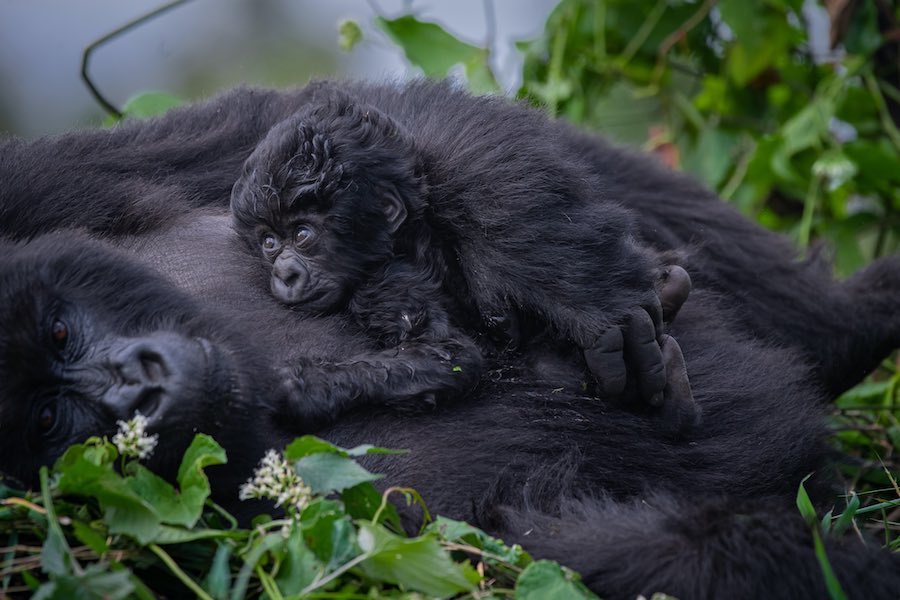
For most visitors, one hour with a habituated gorilla family is the summit of a Rwanda safari. For a smaller, more determined minority, it is just the appetiser. The gorilla habituation experience, or GHE, offers something the standard trek cannot: up to four hours in the forest with a family of gorillas that is still being habituated, watched over by the very researchers and trackers who are building the trust that makes gorilla tourism possible.
A gorilla habituation experience begins with the process by which wild gorillas learn, gradually and entirely on their own terms, to tolerate the presence of human observers. It takes months or years of daily visits by the same team, moving closer as the gorillas’ comfort grows, until the family can safely host tourist groups. Rwanda’s habituation programme is one of the most sophisticated conservation operations in Africa, and the GHE lets you sit inside that process rather than simply enjoying its results.
The experience is physically demanding, emotionally intense, and fundamentally different from a standard trek. This guide explains what the GHE actually involves, what it costs, how to book it, and how to decide whether it is right for you.
The GHE is a special permit that allows a small group of visitors to spend up to four hours with a gorilla family that is in the process of being habituated. Unlike the classic trek, where the family is already comfortable with visitors, the habituating family is still getting used to human presence, and the visit is conducted under strict protocols designed to protect both the gorillas and the process.
Because the gorillas are not yet fully habituated, the encounter rules are even stricter than on a standard trek. Groups never exceed six visitors, the researchers and trackers remain in control at all times, and visitors must be patient, silent, and utterly passive observers. The gorillas may stay at a distance, they may come close, and they may simply ignore you: the encounter follows their lead, and the reward is watching authentic wild behaviour without the subtle adjustments that full habituation brings.
The most famous habituating groups in recent years have been the families in the eastern sector of the park, and the gorilla habituation experience has become increasingly popular with wildlife professionals, researchers-in-training, photographers, and travellers who want the deepest possible gorilla encounter. If the classic hour feels like a window into the gorillas’ world, the GHE is a seat inside the laboratory where that window is being built.
The gorilla habituation experience day begins even earlier than the standard trek. You gather at the park headquarters in Kinigi around six in the morning, register, and meet your research team: rangers, trackers, and the habituation experts who know the family intimately. After the briefing, the group drives to the trailhead and sets out in the first light, following the trackers’ radio updates on the family’s overnight location.
The approach trek can be long and demanding. Habituating families often live deeper in the forest than the fully habituated groups, because they have not yet been drawn toward the familiar trail systems. Expect two to three hours of steep, muddy, vegetation-choked walking at altitude, and prepare accordingly. The trackers carry machetes to clear the route, and porters are absolutely essential: this is the hardest trekking in the park.
When the team makes contact, it settles into observation. The group spends the four hours following the family as it feeds, travels, rests, and interacts, with the researchers recording behaviour and the visitors watching in near silence. You take lunch on the move, away from the gorillas, and the day does not end until the researchers call the session, usually early to mid-afternoon, followed by the long walk back out.
The GHE permit costs US$1,500 per person, the same as a standard gorilla permit, which is remarkable value when you consider that you are getting four times the time, a smaller group, and access to the research process. The permit is issued by the Rwanda Development Board and is subject to the same booking dynamics: it must be secured in advance, it is date-specific, and it is non-refundable.
Supply is extremely limited. Only a small number of GHE permits are available per day, split between the habituating families. Demand comes from photographers, conservation students, and repeat visitors, and peak-season GHE permits can sell out months ahead. If the GHE is on your wish list, book it early and be flexible with dates.
The price covers the park experience and the researcher team, but not transport, accommodation, or porters. As with the standard trek, we strongly recommend hiring a porter, and tips for the trackers and researchers are customary at the end of the experience. When you book through us, all of these logistics are arranged as part of your safari package, so the only decisions left are personal ones.
This is the most physically demanding gorilla habituation experience in Volcanoes National Park, and fitness is the difference between a memorable day and a punishing one. The combination of altitude, steep terrain, dense vegetation, and a full day on your feet requires genuine preparation. Start a walking and stair-climbing routine at least eight weeks before your trek, build up to sustained efforts of three to four hours, and practise on uneven ground where possible.
Gear matters more here than anywhere else. Knee-high gaiters, heavy-duty waterproof boots, thick gloves, long sleeves, and a high-quality rain shell are non-negotiable. Carry electrolyte tablets, high-energy snacks, and more water than you think you need, and let your porter carry the load. The research team will carry your lunch, but your daypack is your lifeline.
If you are building the GHE into a longer itinerary, place it carefully. Do not trek the GHE the day after a hard climb, and do not follow it with a long drive if you can avoid it. A rest day after the GHE is a luxury worth planning for, and our 8-day Rwanda adventure safari is structured to let you do exactly that.
For the majority of travellers, the answer is no, and that is not a criticism of the gorilla habituation experience: it is a question of fit. The standard gorilla trek delivers the world’s most famous wildlife encounter with a fraction of the physical toll, and for most visitors one hour with a silverback family is precisely the right dose. The GHE is for travellers who want more, who are comfortable with silence and uncertainty, and who understand that the gorillas may keep their distance.
For those travellers, the GHE is transformative. Four hours of following a gorilla family through its daily life, without the pressure of a timed encounter, reveals behaviour you simply never see in the standard hour: the full range of feeding, travel, social grooming, infant play, and dominance displays. Photographers return with portfolios that no other encounter can replicate anywhere on Earth.
There is also an ethical dimension worth weighing. The GHE supports the habituation programme directly, and habituation is how Rwanda expands its tourist-accessible gorilla population while keeping the rest of the forest untouched. Every GHE permit is an investment in the long-term expansion of gorilla tourism and conservation, and travellers who care about that story find the experience deeply meaningful.
The table of differences is simple. Standard trek: up to eight visitors, one hour with a fully habituated family, moderate fitness, wide availability, US$1,500. GHE: up to six visitors, up to four hours with a habituating family, high fitness, scarce availability, US$1,500. Same price, same park, entirely different encounter.
There is one more difference that matters: unpredictability. In the standard trek, you are virtually guaranteed a close, satisfying encounter because the family is used to people. In the GHE, the gorillas are still learning, and on some days they simply move deeper into the forest and the group must follow, or the encounter stays at a greater distance. The researchers manage the risk with skill, but the experience genuinely depends on the gorillas’ mood.
If that sounds like an adventure rather than a risk, the GHE is for you. If you prefer certainty, stick with the classic trek and add the golden monkeys for a second primate hour. Both routes are superb, and both are included in our Rwanda safari collection.
For photographers, the gorilla habituation experience is the holy grail of gorilla encounters, and it rewards preparation. The longer observation window means more chances for natural behaviour, better light through the day, and the rare opportunity to capture moments that tourist-facing groups rarely show: yawning silverbacks, infant nursing, chest-beating displays, and the quiet dignity of a resting family.
Pack for the conditions: a weather-sealed body, a versatile zoom covering 70-200mm, a fast prime for low light, and batteries to spare, because four hours is a long time to shoot. Keep your kit protected from rain and dust, and keep your movements slow and minimal. The researchers will guide you to the best angles, and their patience is a masterclass in fieldcraft.
Above all, resist the urge to shoot constantly. The GHE is a rare opportunity to be present with wild gorillas for hours, and some of the best memories are the ones with no camera between you and them. Balance the photographs with the moments, and you will return with both a portfolio and a story.
Build a gorilla habituation experience into a longer itinerary, because the permit, the fitness, and the day itself deserve context. A common shape is a 4-day package with the GHE on day two, golden monkeys on day three, and buffer time around both. Add Nyungwe or Akagera afterwards, and you have a complete Rwandan wildlife story.
Book the GHE as early as you can, and let your operator match your dates to availability. Bring a willingness to walk, an open mind about what the gorillas will offer, and the patience to let the day unfold. The habituating families are the future of gorilla conservation, and spending four hours with them is the closest you will ever come to witnessing conservation being built in real time.
If the GHE is calling to you, talk to us about dates, and we will handle the permit, the logistics, and the rest of the itinerary around it.
To understand the gorilla habituation experience fully, it helps to walk through the day in detail. The morning starts at the park headquarters in Kinigi, where the habituation team introduces itself: the lead researcher, the rangers, the trackers, and the porters. The briefing covers the protocol for the day, the family’s recent behaviour, and the ground rules for the encounter, which are stricter than the standard trek because the gorillas are still learning. The briefing tells you to keep voices at a whisper, to stay behind the researcher at all times, and to be ready for the family to behave unpredictably.
The drive to the trailhead is usually shorter than for the standard trek, because the habituating families live in their own sector of the park, but the walk that follows is typically the longest and toughest of your safari. The trackers locate the family from the night’s nesting site, and the group climbs through farmland edges, bamboo, and tangled forest to reach the point where the family is feeding. Along the way, the researcher talks about the habituation process, the family’s history, and the individual gorillas you are about to meet, which makes the long approach feel like a field lecture with a wilderness soundtrack.
Once with the family, the four hours begin in earnest. The researcher calls out behaviour notes in a low voice, the trackers keep the family in view, and the visitors observe, photograph, and simply exist in the gorillas’ world. The group takes breaks away from the family, usually in a small clearing, while the porters serve a packed lunch. By mid-afternoon, the researcher calls the session to a close and the group walks out of the forest, tired, quiet, and carrying one of the most unusual days in African travel. The walk out is a time for reflection, and most guests arrive back at their lodge with the feeling of having witnessed something genuinely rare.
Whatever your reasons for choosing the habituation experience, plan a buffer day afterwards: the physical toll is real, and a slow morning at your lodge is part of the experience.