Gorilla Permits Rwanda — 6 Years of Trusted Service
In the southern hills of Rwanda stands the King’s Palace at Nyanza. It is less publicised than the volcanoes and the gorillas, but every bit as rich. The kings of Rwanda held court at this palace in Nyanza. They kept their sacred cattle here and directed the affairs of the nation. Today the site, on the hill of Rukari above the town of Nyanza, is a national museum and a living piece of heritage. It is one of the most atmospheric places to spend an afternoon in the south.
The King’s Palace at Nyanza centres on the traditional royal residence, the most celebrated of the old grass palaces of Rwanda. Built entirely in the traditional manner, with a tall conical roof of woven thatch, walls of reed and a frame of young trees, the palace was rebuilt with extraordinary care. As a result, visitors can walk through its rooms and understand how a king lived. Beside it stands the more modern palace erected at the end of the royal era. This colonial-influenced building has empty rooms that speak of a monarchy that ended by referendum before its residence was ever truly occupied.
Herds of the famous long-horned Ankole cattle surround the palace, elegant beasts with sweeping white horns that the kings treasured. The royal cattle were the great wealth of the kingdom, both as a source of milk and as a symbol of status. The herd at Nyanza descends, in spirit if not always in exact bloodline, from the animals that once grazed these same slopes. In fact, herdsmen guard the cattle with a ritual care that reaches back to the oldest Rwandan customs.
A visit to Nyanza is a step away from the wildlife and into the country’s memory. It combines beautifully with the southern route. It also makes a natural companion to a gorilla trek in the north. The story it tells, of the kingdom and of the people, is the story behind every other cultural site in Rwanda.
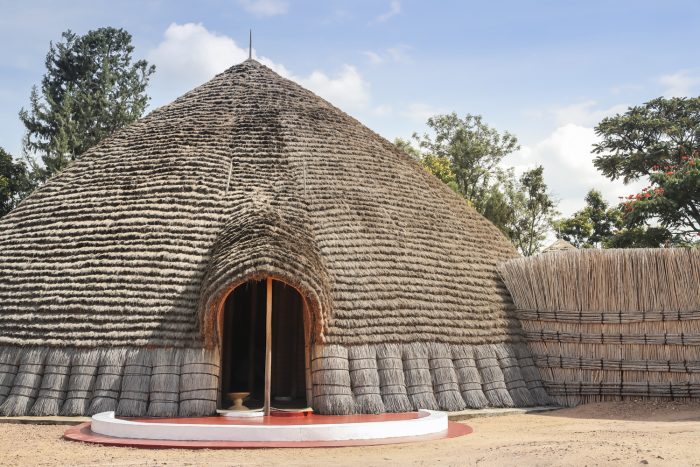
The heart of the museum is the reconstructed royal residence, the grandest of the old-style palaces. Building such a palace was a communal work of art. It required, as the site’s exhibitions explain, the skills of many villages: the frame, the thatch, the inner rooms and the fine inner wall. The finished structure is one of the largest of its kind in the country. A ring of wood supports its dome of thatch, and its silence is the first thing every visitor notices.
You enter through the low woven door, bend beneath the crown of the roof and step into the dim, cool rooms. The interior is arranged as it would have been in the time of the king. You see the seat of honour by the central pillar, the milking area, the room of the queen and the chamber of the royal guards. The guides of the site know the family history of the royal house. They explain each space, the court ceremonies, the guests from across the region and the customs of the royal household.
A visit to the King’s Palace at Nyanza starts with this great grass hut. The kings of Rwanda built the palace as the heart of their court. Meanwhile, the palace at Nyanza now welcomes travellers from around the world, and its walls of reed and thatch still shelter the memory of the kingdom.
What makes the hut so moving is the sense of the real: the smoke-darkened walls, the milk gourds hanging in their place, the worn floor. Walking through the rooms, you understand why Rwandans describe the palace as the soul of the country built in grass. For a people whose kingdom was lived in this way, the hut is not merely a museum object. It is a home of the national memory.
The reconstruction used the same methods as the original, with the same grasses and the same patterns. Today’s visitors see the palace much as its old guests did. The museum has turned this care into a daily demonstration, and on many days you can watch artisans repairing the thatch in the traditional manner. It is a living workshop gathered around the house of power.
Beside the traditional hut, separated by a wide grass lawn, stands the other palace of Nyanza. The modern building rose in the final years of the kingdom, with verandas and rooms arranged around concrete corridors. It was planned as the residence of a monarchy that was changing with the century. Thus, the building combined the ceremonial life of the court with the modern functions of a state.
The story of the modern palace is the story of an era that did not arrive. The building was barely finished when the monarchy ended in the early 1960s and the royal family went into exile. The kings never lived in it, and the palace at Nyanza became a museum instead. The site therefore preserves it as a witness to that passage. The museum now fills it with rooms of royal and cultural heritage: photographs, ceremonial objects and the records of the family that carried Rwanda through its history.
The two palaces side by side say more about the country than either alone. The traditional hut is the deepest Rwandan memory; the modern palace is the country’s rapid and painful turn towards the twentieth century. The site is careful to present both, and it manages the visitor’s attention with a balance that is thoughtful and respectful.
For the traveller, the modern palace also offers the most comfortable pause. Its verandas are shaded, and you can sit against the wall of the colonial building. Indeed, you can watch the cattle move across the far lawn like a painting from the old court.
No visit to Nyanza is complete without a moment with the cattle. The Ankole-Watusi are the celebrated breed of the region. They carry enormous horns and white coats, and they walk to the water with a graceful step. In the old kingdom the herd at the King’s Palace Nyanza was both a treasury and a symbol. The number of the cattle and the beauty of their horns announced the might of the court. Their milk was reserved for the royal household, and the kings of Rwanda measured their wealth in the cattle that grazed at the Nyanza palace.
At the palace the herd grazes on the lawns, and the herdsmen, in their traditional cloth, treat the animals with an honour that seems almost religious. Visitors may approach the fence. On many afternoons the keeper explains the duties of the herdsmen, the names of the animals and the central place of the cow in Rwandan culture. It is a calm, timeless scene. The sight of the white horns against the southern sun is one of the most photographable moments in the country.
The cattle of Nyanza are also a bridge to the old stories. There are tales of the beautiful queen and the young hero, and of the gift of a cow as the highest of honours. The herd at the palace is the living museum of that system. Its presence completes the picture of the kingdom that the two palaces open.
The court of Nyanza was not only the king’s home; it was a centre of government, justice and ceremony. Chiefs travelled from across the country to bring their disputes and their tribute. Princes were educated at court, while the drummers and dancers of the royal house performed for the guests. It was the cultural engine of the kingdom, and its customs, radiating outward, reached every hill of the country.
The kings palace nyanza court governed a country of hills and clans. Kings and their advisors held court at this palace in Nyanza for generations. The palace in Nyanza remained the symbolic heart of the kingdom even when the king travelled. Today the court lives on in the stories the guides tell.
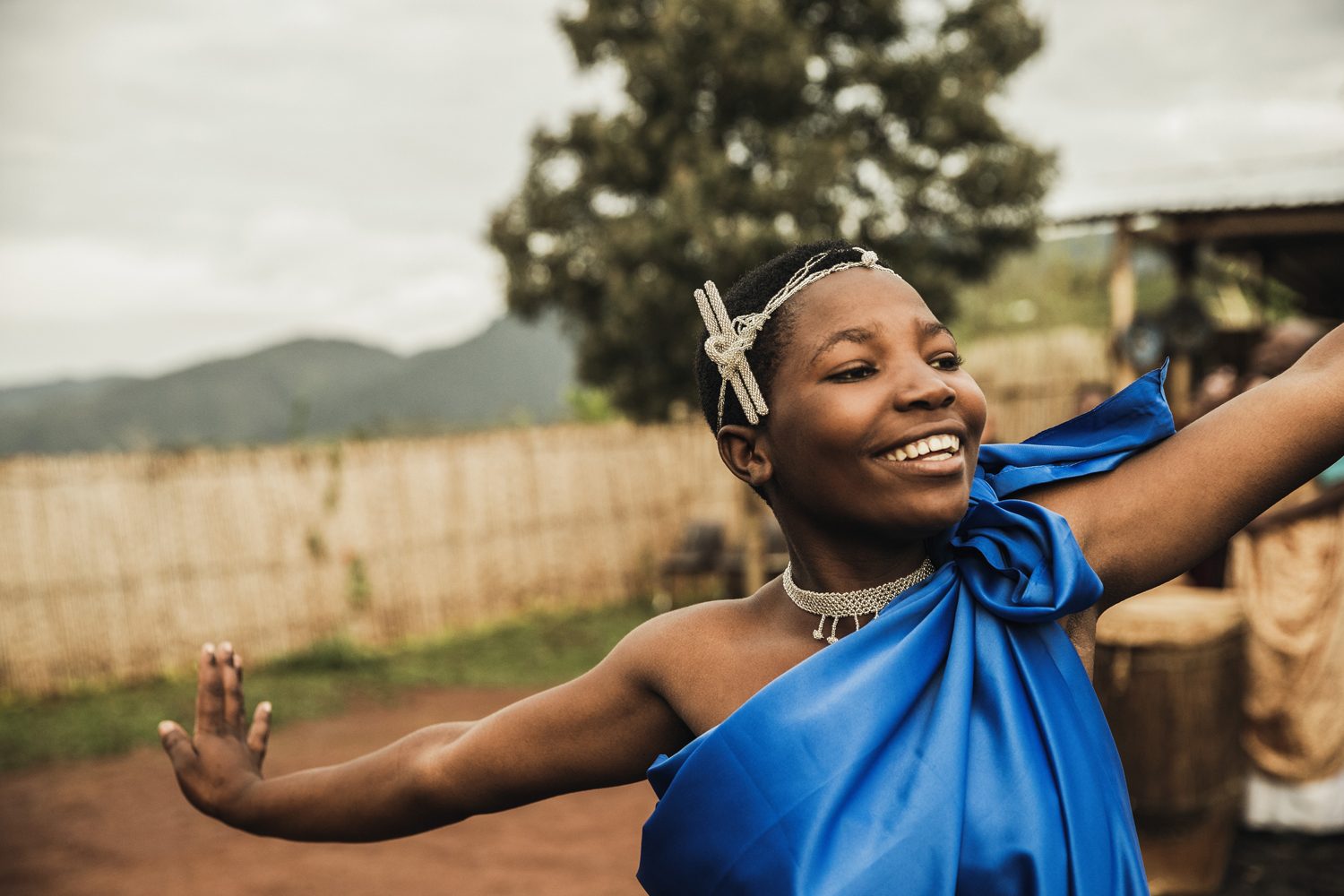
At the site today, the staff revive the old arts of the court systematically. Traditional dancers have performed on the lawns, and the royal drums keep their time. The museum buildings also host exhibitions on the kingdom period, the art of the court and the photography of the region. Finally, the visitor carries the place away through both the senses and the mind.
Walking down from the palace to the market that climbs the path, visitors meet the community of today. Women sell woven baskets, while children run between the stalls. This quiet commerce has always lived in the shadow of the court. The royal history and the communities of the present are the two faces of the site, and its guides know them equally well.
The palace has a special role in a Rwandan itinerary. It is the headline of the south, the region most visitors cross on their way north to the volcanoes. It is also one of the most complementary stops to a four-day gorilla trekking trip. Besides the wildlife parks, the south of Rwanda is a quiet land of hills, tea and workshops, and the palace is its royal seam. The Rwanda Development Board lists the site among the country’s leading cultural attractions.
Visitors who travel the south usually combine the palace with the craft workshops of the region. Further south, the highlands lead towards the Nyungwe forest. The kings chose Nyanza for their palace because the southern hills offered space, pasture and calm. The site’s location, about ninety minutes from the capital along the main southern highway, makes it an easy and rewarding stop for anyone crossing the country.
For a longer journey, the south connects naturally with the western route, where the road from Nyanza curves toward the rainforest and the lakes. A visit to Nyanza can therefore open a route towards Lake Kivu, the clear inland sea of the west. The two together give the traveller the full sweep of the old kingdom’s lands.
To understand the palace of Nyanza it helps to understand the kingdom it served. Rwanda was ruled for centuries by a line of kings. They united the hills under a court that was part royal, part spiritual and part administrative. The king was not simply a ruler. He was the head of a living order of ceremonies, of the sacred drums, of the cattle of the court and of the deep chains of alliance that bound the regions together. Indeed, the crown expressed its power as much in the arch of a thatched roof as in any law or army.
Nyanza was one of the great residences of that order, and the site preserves its memory with remarkable even-handedness. The museum does not invite visitors simply to admire a vanished monarchy. It invites them to understand how the kingdom formed the character of the Rwandan people. In fact, their manners, their arts and their sense of belonging to a common house all carry that mark. Nothing in the daily life of the region, from the way people greet each other to the way they hold their ceremonies, is untouched by that inheritance.
The royal drums of Rwanda were the voice of that order, and a session at Nyanza may include a demonstration as well as an explanation. Travellers from the world of the gorillas and the green forest often tell us the palace gave them the missing frame. Here was the society that shaped the hills above the volcanoes. The same hills now welcome visitors on a gorilla and culture journey. The forest and the court, the ranger and the courtier, belong to one and the same country.
For those who wish to go deeper, the regional museums and the oral history projects in the south open the same windows. Here, for example, are the stories of the royal line, the memory of the great occasions, and the way the court exchanged gifts, titles and duties with the countryside. Nyanza is the doorstep of that exploration. Its calm makes it one of the most restful days of the whole safari, a day of grass, cattle and the quiet patience of southern Rwanda.
Access is simple and direct, and the site is arranged with visitors in mind, from the parking at the gate to the paths across the lawns. The town of Nyanza also offers simple restaurants and coffee. The surrounding hills are worth a slow drive at the end of the afternoon.
The palace of Nyanza is many things at once. It is an architectural treasure, a museum of the cow, a memorial of the kings and a living window on the African royal court. For the visitor it gathers all these stories into one walkable afternoon. Nevertheless, it returns them with a gravity that stays in the mind long after the journey south is over.
It is also a companion piece to the rest of a Rwandan holiday. The same hills that kept the throne now receive travellers with the patience of the region. Similarly, the customs that once organised the court now shape the welcome offered to guests. To visit Nyanza is to add the royal line to the geographic width of your itinerary, and the picture of the country becomes complete.
When you plan your Rwandan trip, we are happy to arrange a day at Nyanza with a knowledgeable guide and a good route connecting with the rest of the country. Talk to our team and let us build the palace into your gorilla and culture safari. Your Rwandan holiday then holds both the living country and the memory of the kingdom. For official visitor information, see the Visit Rwanda tourism board.