Gorilla Permits Rwanda — 6 Years of Trusted Service
There is a moment, about an hour into a family gorilla trek in Rwanda, when the forest guide stops and points silently into the bamboo, and it becomes the defining memory of the whole family safari. What happens next depends on your children: some gasp, some freeze, some whisper “there’s a gorilla” a hundred times in a row. But almost every child, whatever their reaction, will describe that moment for years afterwards. A family safari in Rwanda is one of those rare trips that genuinely changes how children see the natural world, and it is far more accessible for families than many parents assume.
This guide covers everything you need to plan a family safari in Rwanda: the minimum ages and the trekking rules, how to prepare children for the forest, what to expect on trek day, where to stay, how to build a balanced itinerary, and the practical details of travelling with kids in a country that is more family-friendly than almost any other destination in Africa. Whether you are travelling with a sturdy nine-year-old or a determined twelve-year-old, a Rwandan safari can be shaped around your family, and this article will show you how.
One of the first questions parents ask is whether a Rwanda family safari is worth the distance, and the answer from families who have done it is a confident yes. A Rwanda family safari can be shaped around children of almost any age, and this guide shows how. Keep it simple, keep the pace gentle, and the country does the rest.
A Rwanda family safari works because the country is compact, safe and gentle, and it is, in many ways, the easiest country in East Africa to visit with children. It is compact: you can cross the whole country by road in a day, which means no endless game-drive days and no exhaustion-heavy transfers. The roads are good and well maintained, the towns are orderly and welcoming, and the general atmosphere of the country is calm, safe and courteous, which parents notice within the first hour. The climate of the highlands is mild, and the altitude keeps the heat gentle even in the middle of the day.
Then there is the wildlife itself. The mountain gorillas are the most family-friendly of the great animals: they are used to humans, their daily life is slow and unhurried, and their behaviour is endlessly fascinating to watch. Families do not need a dramatic kill or a chase to be thrilled; the quiet minutes of a mother grooming her infant are exactly the kind of wonder that children absorb best. Add the golden monkeys, the chimps of Nyungwe, the boat safaris of Akagera and the beaches of Lake Kivu, and you have a country-sized menu of experiences that suit children of different ages and attention spans.
The other great advantage is the attitude of Rwandans to children. Children are treasured in Rwandan culture, and families are welcomed warmly everywhere, from the park gates to the lodges and the restaurants. The people you meet will dote on your kids, the guides will tailor their explanations to the age of their audience, and the general warmth of the welcome makes parents relax. For a family, this friendliness is not a minor detail; it is the difference between a stressful trip and a joyful one.
The first question every family asks is the age of their children, and the age rules are the first thing to plan in any Rwanda family safari. The official rule of the Volcanoes National Park is that gorilla trekkers must be at least fifteen years old, and this is a firm rule: the minimum age for the gorilla trek is fifteen, and it is enforced at registration, so it is not possible to book a younger child onto the gorilla trek itself. Parents of younger children sometimes find this frustrating, but the rule exists for sound reasons: the trek demands fitness, the forest has no shortcuts, and the experience is intense for both the visitor and the gorillas.
Fifteen is the boundary for the gorillas specifically, but it is not a boundary for Rwanda in general. Children under fifteen can enjoy most of the rest of the country without restriction: the golden monkey trek in the same park is open to younger children, the chimpanzee tracking of Nyungwe is generally open from twelve, the savannah game drives of Akagera are perfectly suited to children of almost any age, and the canopy walkway, the boat trips and the lakeside activities have no serious age limits at all. A family with younger children can build a wonderful Rwandan itinerary around these experiences and save the gorillas for the year the youngest turns fifteen.
It is also worth noting that the age limit is about safety and experience, not about interest. A fifteen-year-old who has been prepared for the trek will be ready; one who has been dragged along without context may struggle with the early start and the mountain slopes. The rule of thumb we share with parents is simple: if your child is old enough, excited enough and reasonably fit, they will love it; and if they are younger, the rest of the country will more than fill the trip.
The gorilla trek is the centrepiece of any family itinerary, and preparation is the difference between a great morning and a hard one on a Rwanda family safari. Start with the basics of the day: the trek begins with a morning briefing at the park headquarters, followed by a drive or walk to the trailhead and a climb through farmland, forest and bamboo to reach the gorilla family. The walk can take anywhere from under an hour to several hours depending on the day’s group location, at altitudes above 2,500 metres, which is tiring even for fit adults.
Prepare your children physically with short practice walks in the weeks before the trip, and mentally with books, documentaries and honest conversations about what the day involves. Explain that the gorillas are wild animals, that the rules exist to protect them, and that the best moments come to the patient. Explain the one-hour limit: the visit with the gorillas is strictly one hour, a fact that frustrates adults but actually suits children, whose attention is best served by a focused hour of wonder.
On the day itself, the essentials are the same for children as for adults: good boots that are already broken in, layered clothing, long trousers, gloves for the nettles, plenty of water, snacks, and a waterproof cover in the rainy months. A walking stick from the porters is a genuine help on the slopes, and hiring a porter for the family is one of the best decisions you can make: they carry bags, steady hands on steep sections and lighten the whole morning. Many families also find that a quiet child’s natural instinct to whisper, watch and wait is actually perfect behaviour in the forest, where loud talk is discouraged anyway.
A Rwanda family safari trek day begins early, and the guides match your family to the gorilla group. Most lodges organise wake-up calls and early breakfasts, and the transfer to the park headquarters takes around half an hour from the Musanze and Kinigi area. At the briefing, guides allocate families to gorilla groups, matching the group’s location to the fitness of the visitors, which is a real advantage for families: mention that you have children and the team will do their best to assign you to one of the nearer families on a shorter trek day.
The walk itself is the physical heart of the day. Families ascend through the farmland and the forest edge, and the guides point out birds, tracks, plants and the famous golden monkeys along the way, which keeps younger legs moving. When the trackers have located the group, the encounter begins: the rangers clear a route through the undergrowth, and you spend your hour in the presence of the family, watching feeding, grooming, playing and the sheer presence of animals that weigh more than twice as much as most adult humans.
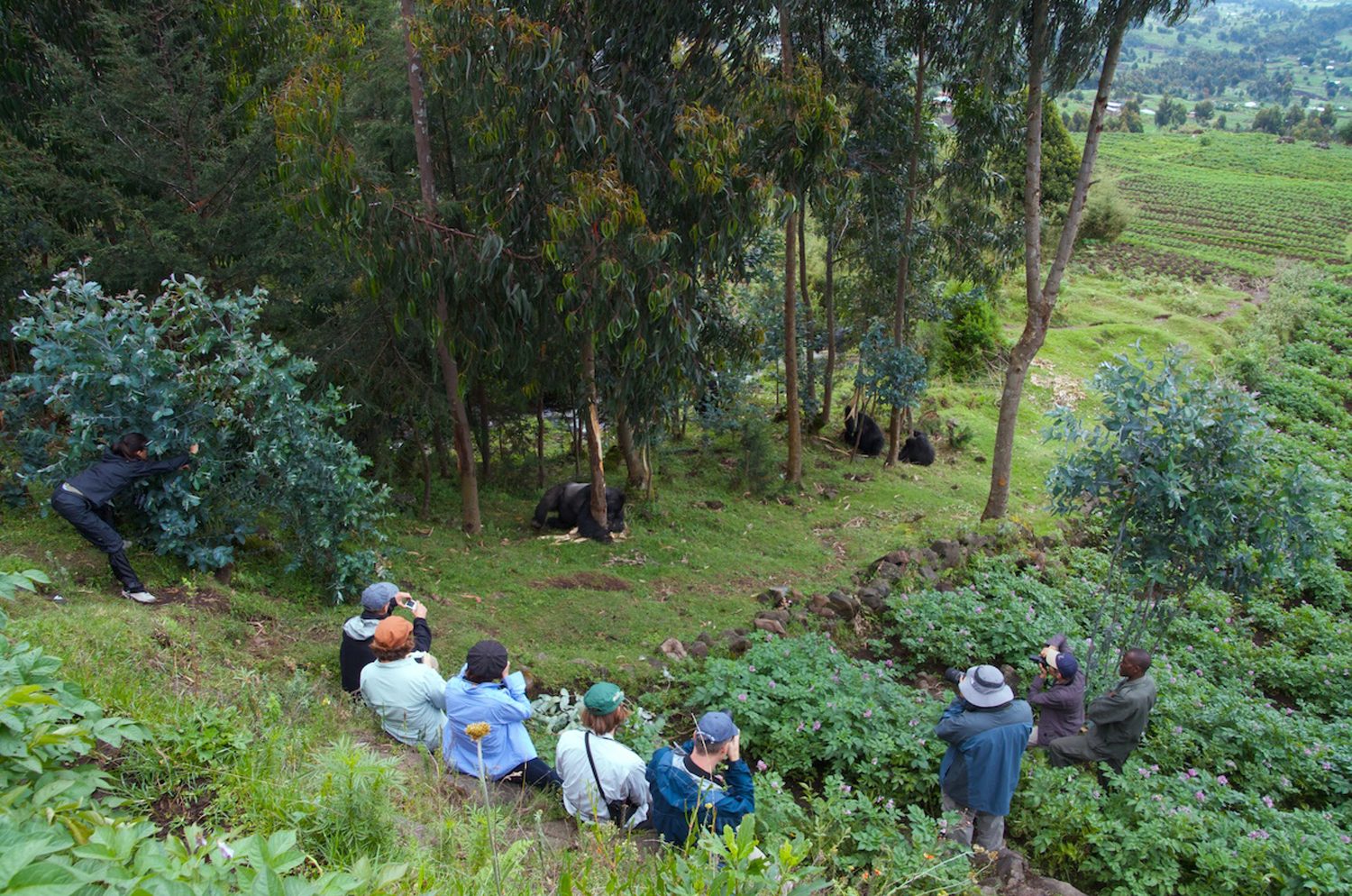
The rules for the encounter are strict but easy to follow: keep at least seven metres from the gorillas, do not eat or drink in their presence, keep voices low, and follow the rangers’ instructions exactly. The rangers are experienced at managing families, and their calm authority is part of what keeps the encounter safe for both sides. After the hour, the descent is usually quicker than the climb, and the day ends with a certificate presented to each trekker, which children treasure, and a long lunch, which parents appreciate. The whole family returns to the lodge tired, sunlit and very, very happy.
Where you stay shapes the family experience as much as the trek itself, and the Rwanda family safari lodges that genuinely welcome children range from simple guesthouses to premium properties. Around the Volcanoes National Park, in the Musanze and Kinigi area, the range runs from simple guesthouses to comfortable mid-range lodges and a handful of premium properties, and several of the better family-oriented options provide family rooms, interconnecting suites, child-friendly menus and staff who are delighted to look after younger guests during the early trek mornings.
The key question for parents is practical: does the property genuinely suit children, or does it merely tolerate them? Family-friendly lodges in the north offer large enough rooms for the whole family, flexible meal times, gardens and safe outdoor space, and sometimes babysitting or kids’ activities for the early trek mornings and the rest days. The premium lodges of the volcano region, with their fireplaces, views and impeccable service, are popular with multi-generational family groups, while the mid-range properties offer the best balance of comfort, space and price for families on a normal budget.
It is also worth planning the accommodation across the whole country, not just the north. Kigali has excellent family hotels with pools, which children adore after long travel days. The lakeside lodges of Lake Kivu offer beaches, kayaks and swimming, and the lodges of Akagera and Nyungwe provide comfortable bases for the game drives and forest trails. Our team can match each property to your family’s ages and energy levels, which is one of the reasons families book their Rwanda trips through specialists.
Pace is the golden rule of any Rwanda family safari, and the second rule is variety. Children do not need to do everything; they need to do the right things with enough time in between to rest, play and digest what they have seen. A typical family week in Rwanda might open with two or three days in Kigali, recovering from the flight and exploring the capital at a gentle speed, followed by the journey north and the gorilla trek with a rest day either side, and then a slower final section at the lake or in the east before flying home.
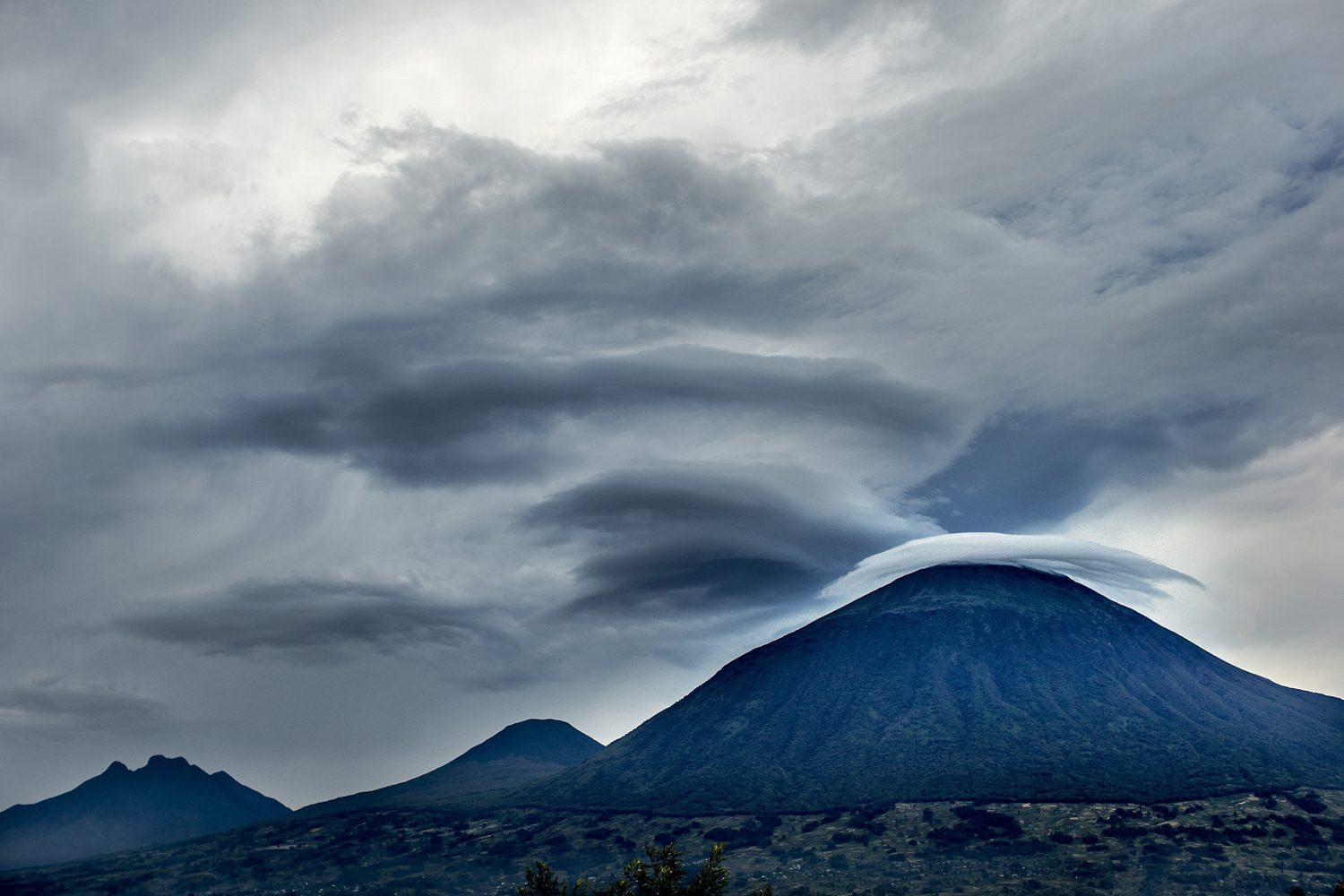
In the north, the combination that families love is the gorilla trek plus the golden monkey trek, which is shorter, cheaper and open to younger children, and which provides a second primate encounter with much less effort. The hike to the top of the volcanoes is available for the adventurous, and the villages, coffee farms and cultural visits of the region give the children a taste of Rwandan life beyond the parks. Every element of the itinerary can be adjusted to the family’s fitness and mood, and good planning leaves room for the unplanned afternoon by the pool.
For the rest of the country, the savannah of Akagera National Park is the perfect safari introduction for children, and Akagera’s official site details the family activities: game drives in open vehicles, elephants and giraffes at easy viewing distances, and boat trips on the lakes where hippos and crocodiles put on a show. The rainforest of Nyungwe offers the canopy walkway and the chimpanzees for older children, and the lakeshore of Lake Kivu is the soft landing every family deserves: beaches, kayaks, islands and the famous sunsets, with no wildlife demands at all. A family itinerary that touches the capital, the volcanoes, the savannah and the lake covers every mood of a family holiday.
The packing list for a Rwanda family safari follows the adults’ list with a few additions. For the gorilla trek: broken-in boots for every member of the family, long trousers and long sleeves for the nettles, a warm layer and a waterproof layer, gloves, a hat, sun protection, water and snacks, and a spare set of clothes for the ride home. For the rest of the trip, the essentials are comfortable shoes, swimwear for the hotel pools and the lake, insect repellent, a small first-aid kit with plasters and the usual medicines, and a few quiet entertainments for the transfer days.
Health preparation matters more than packing. Check with your travel clinic about vaccinations and malaria advice before you go, and carry the usual remedies for minor stomach upsets and altitude adjustment, which is a mild factor in the volcano region. The altitude at 2,500 metres is not a problem for most children, but it makes the trek harder, which is why the practice walks and the porter hire are good investments. Carry water everywhere, and remember that the sun is strong at altitude even when the air is cool.
The practical infrastructure for families is genuinely good. Kigali airport is efficient and modern, the roads between the parks are sealed and smooth, and the lodges, restaurants and attractions are used to hosting children. Car seats can be arranged with advance notice, and the transfer vehicles used by our team have room for the whole family and all its luggage. Families travelling with younger children can expect the same convenience they would find in Europe or North America, which is rare in the safari world and worth planning around.
A Rwanda family safari is outstanding for multi-generational groups, where grandparents, parents and children travel together, and the country’s calm, gentle character suits the blend of ages. The gorilla trek itself works well across the generations: fit grandparents trek alongside teenagers, while the less mobile members of the family can take the shorter walks, join the golden monkey treks and enjoy the lodges, while the boat safaris of Akagera and the lakeside days of Kivu suit every age at once. The lodges of the volcano region and the lakes handle multi-generational groups with ease, and the shared evening discussions of the day’s wildlife are often the best moments of the trip.
For grandparents who trek, the porters and the walking sticks make the slopes manageable, and the rangers are practised at pacing the group to its slowest member. For those who prefer to opt out, the lodge lounges, gardens and viewpoints of the north are lovely places to spend a morning, and the family can reunite over lunch with the day’s stories. The flexibility of the Rwandan itinerary, where every day can be tailored to different energies, is exactly what multi-generational travel needs.
Parents planning a Rwanda family safari want to know the trip is safe, and Rwanda’s record makes it one of the easiest countries to reassure yourself about, as Rwanda’s official tourism board explains for family travellers. The country is widely regarded as one of the safest in Africa for visitors: it is orderly, stable and well policed, crime against tourists is rare, and the roads and parks are professionally managed. The park rules that protect the gorillas also protect the visitors, and the trekking operation has an excellent safety record, with experienced rangers controlling every step of the encounter.
The health environment is similarly reassuring. Rwanda’s public health system is among the strongest in Africa, the capital’s hospitals and clinics are well equipped, and the main travel risks are the standard ones of any tropical destination, all of which are addressed by a travel clinic visit before you go. The most common family problems are the universal ones of travel: tiredness, dehydration, and the small accidents of energetic days, all of which are manageable with preparation and a well-stocked first-aid kit.
The final reassurance is the professionalism of the operation. When you book a family safari with our team, the details are handled: the right lodges, the right trek days, the right permits, the transfers with car seats and the advice that comes from decades of hosting families. Our planners are parents themselves, and the itineraries we build for families are designed with the pace, the rest days and the flexibility that children need. You can travel with confidence because the people arranging your trip have already thought about everything that could go wrong, and made sure it does not.
A Rwanda family safari is more than a holiday; it is an experience that your children will carry for the rest of their lives. The moment of meeting a silverback, the hours in the forest, the lakes and the savannah, the warmth of the people: these become reference points in a child’s understanding of the world, the way the natural world should be treated, and the places that deserve protection. The trip is also a lesson in conservation delivered in the most effective way possible: by letting children fall in love with the thing that needs saving.
And the practical side is kinder than you think. The flights are long but manageable, the roads are short, the welcome is warm, and the lodges are ready. The 4-day gorilla trekking safari is a classic shape for families with teenagers, while the longer gorilla and Lake Kivu itinerary adds the lakeside days that families adore. Check the permits for your dates, read our packing guide for the trek, and talk to our team about a family itinerary. The gorillas are waiting, and so is one of the greatest family adventures the continent can offer.