Gorilla Permits Rwanda — 6 Years of Trusted Service
Rwanda is one of Africa’s finest birding destinations, and its northern highlands hold one of the continent’s most unusual wetlands. The Rugezi Marsh stretches across a high plateau near the Ugandan border – a wilderness of papyrus, open water and floating islands where some of the most sought-after birding specialities in Africa make their home.
Rugezi is the heart of the Albertine Rift’s wetland birdlife: a place of grey crowned cranes, papyrus specialists and the occasional shoebill, wrapped in mist and silence. For birders it is unmissable; for everyone else it is simply one of the most atmospheric corners of Rwanda.
This guide explains what makes Rugezi special, the birds to look for, and how to plan a birding visit.
The Albertine Rift – the chain of mountains, lakes and wetlands running along the borderlands of Rwanda, Uganda, Burundi and the Democratic Republic of Congo – is one of the most biologically important regions on earth. Its forests and wetlands support more endemic bird species than almost any comparable area on the continent: species found nowhere else on the planet.
Rwanda, at the heart of the rift, offers an extraordinary density of these rarities: forest endemics in Nyungwe and the volcano parks, savannah species in Akagera, and wetland specialists like those of Rugezi. A serious birding itinerary can tick off an enormous slice of the Albertine list in a single country.
Rugezi Marsh, Rwanda’s premier wetland birding site, lies in the far north of Rwanda, in the hills between Lake Burera and the Ugandan border, at an altitude of around 2,100 metres. It is a landscape of giant papyrus, lagoons and floating vegetation mats, fed by rivers draining the high volcanic plateau.
The marsh feels remote and untouched: on a misty morning, with cranes calling and the wetland stretching to the horizon, it could be a scene from an earlier Africa. It is a protected wetland of international importance – designated a Ramsar site – and a crucial store of water for the rivers that flow from these highlands towards the Nile.
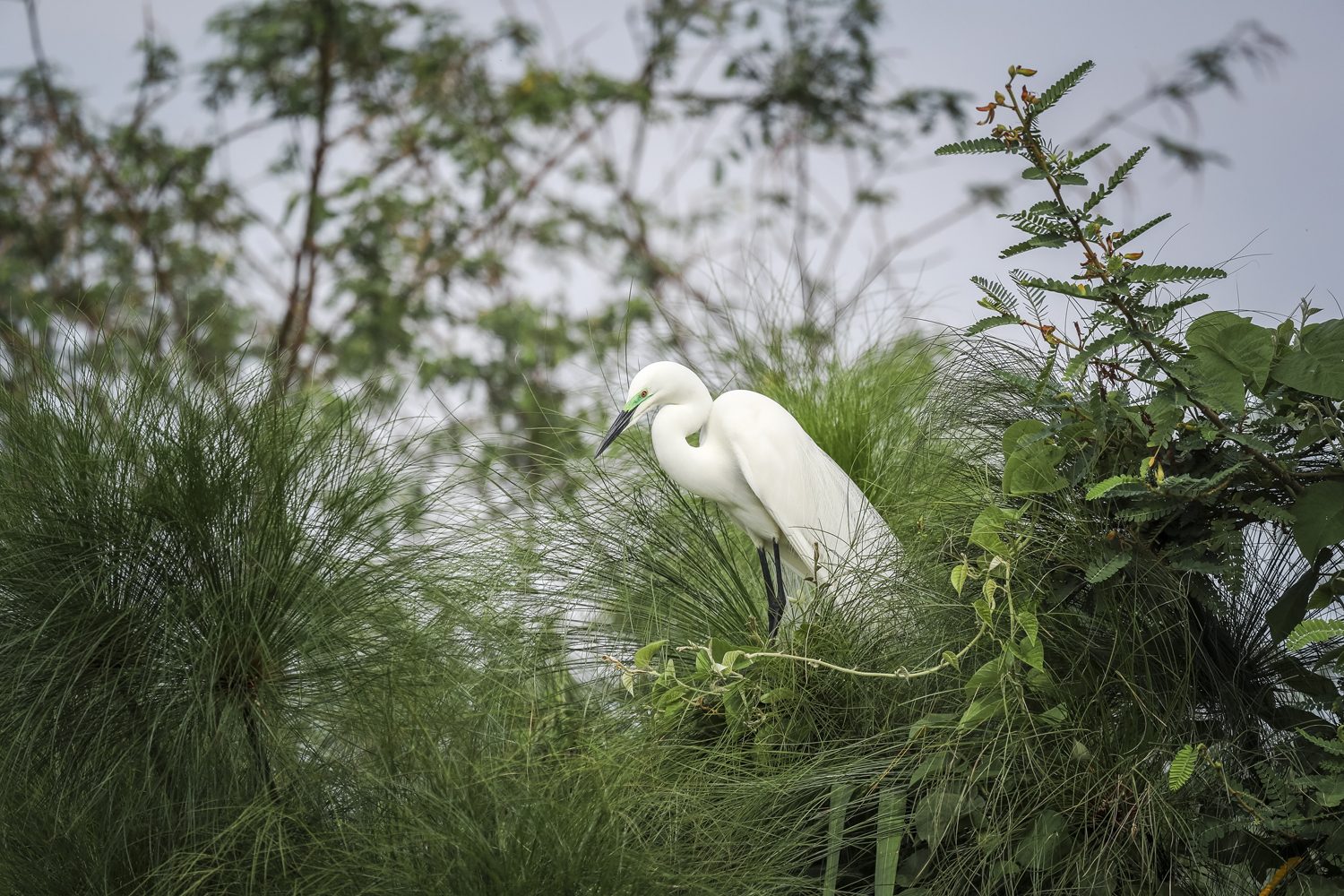
Rugezi Marsh’s birding speciality is its papyrus-dependent birds. The papyrus gonolek – a black and crimson bird with a chattering song – is one of the most sought-after on the continent, and Rugezi is one of its strongholds, alongside the papyrus yellow warbler and the white-winged swamp warbler, all of which are restricted to papyrus wetlands across East Africa.
Over the open water and reed beds, watch for herons, egrets, ibises, cormorants and kingfishers, while the surrounding grassland adds wheatears, cisticolas and larks. The great prize is the shoebill – an enormous, prehistoric-looking bird that is occasionally recorded here – and a sighting of it is the stuff of birding legend.
Rwanda’s national bird, the grey crowned crane, is a common sight around Rugezi, and no Rugezi Marsh birding morning is complete without it, its golden crown and elegant gait making it one of Africa’s most beautiful birds. Flocks of them move across the marsh and the surrounding farmland, and their calls carry across the wetland at dawn.
Beyond the birds, the marsh supports other wetland life: the secretive sitatunga antelope lives in the papyrus, otters fish the channels, and the reed beds shelter frogs and dragonflies in profusion. A morning here is a complete wetland ecosystem on display.
The best months for Rugezi Marsh birding are the dry seasons – June to September and December to February – when the paths are firmer and the birds concentrate on the remaining water. Early mornings are essential: arrive at first light, when the marsh is at its most active and the mist adds drama to every view.
Birding is done on foot along the marsh edges, with a local guide who knows the territory, and from the viewpoints above the wetland. Bring binoculars, a scope if you have one, sturdy boots and patience – the shoebill, if it appears, will do so on its own schedule.
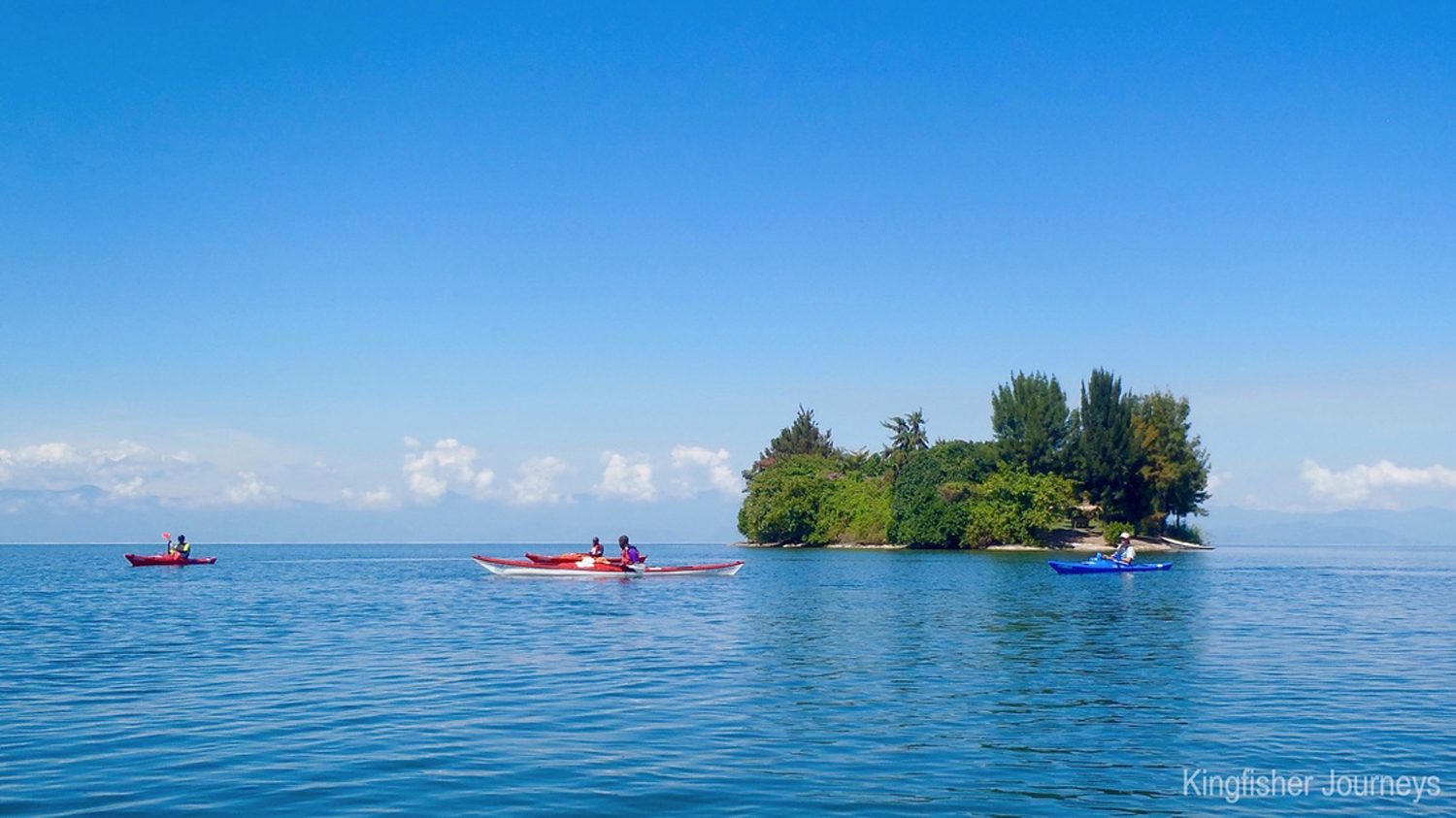
Rugezi is an easy excursion from the north: roughly two hours from Kigali, and close to Musanze and the twin lakes of Burera and Ruhondo, which makes it an ideal addition to a gorilla itinerary. There are no formal park gates or fees; guides are arranged locally, and the marsh is best visited on foot with a local expert.
Accommodation is in Musanze or in the guesthouses around the twin lakes, and the marsh works perfectly as a half-day extension. It is a place for slow visits – the kind of birding where the list matters less than the quiet.
Rwanda packs an astonishing amount of bird diversity into a small country. In a single week a determined birder can move from the wetlands of the north through savannah and acacia to high-altitude forest, ticking off species that in most countries would require a multi-country tour. Geography is the secret: Rwanda straddles the Albertine Rift and sits close to Lake Victoria, gathering both endemic and widespread species.
The result is a birding country where the highlight list is long, from wetland papyrus specialists to forest endemics such as the great blue turaco, and Rwanda’s official tourism board lists the top sites for visitors planning a Rugezi Marsh birding trip. Beyond the marsh itself, the big open-country species of Africa’s savannahs. A skilled local guide is the difference between a good list and a great one – and Rwanda’s guides are among the best-trained on the continent.
So the answer to the question ‘is Rwanda worth a birding trip’ is the country’s landscape. Rugezi, combined with the northern forests and the lakes, makes a convincing argument that small countries pack the best birding into the shortest time.
The core of northern birding is a circuit that links Rugezi to the twin lakes and the shores of Lake Burera. It is a day’s drive between the sites; the circuit begins with Rugezi Marsh birding at first light, and together the stops deliver a cross-section of the region’s aquatic life: the papyrus wetlands of Rugezi, the open water of the lakes, and the grassy edges.
On this circuit, a single morning can produce cranes, herons, egrets and the papyrus gonolek, then a lakeside afternoon of ducks, grebes and waders, and a golden-hour shore where the fishing birds gather. It is the most relaxed birding in the country – no long drives, no permits, no hurry.
Because the wetlands are also water catchments, birding here is doubly worthwhile: the birds you record are indicators of the health of the marsh, and many local guides contribute to monitoring the very species you are hoping to find.
Birding at Rugezi is a walking affair, and it rewards preparation. Good binoculars are essential – several of the specialities are small and active. A spotting scope helps over open water, and the mist and drizzle that play over the marsh call for a dry bag and a rain cover.
A full day of Rugezi Marsh birding rewards good boots and binoculars, and ethics matter here as much as fieldcraft: keep to the paths, avoid disturbing breeding birds, and let the guides hold their binoculars over yours before they move in. Rugezi’s birds are the product of generations of quiet coexistence, and they reward patience above everything.
Arrive early and stay quiet, and you will hear the marsh long before you see it. All good birding is a form of listening.
If Rugezi is the star of the north, it is far from the only stage. Rwanda’s bird list for the Albertine Rift runs through a range of species that avid birders on wider trips will want to chase:
Between the marsh, the forest and the lakes, a full northern circuit can connect well over a hundred of these species into one list, and the birding will be remembered long after the last entry is ticked. For those chasing Africa’s great lists, Rugezi and the northern highlands belong on every itinerary.
A classic Rugezi Marsh birding morning starts early – before first light from Musanze, or at dawn if you are staying nearby. Arrive as the sun clears the hills, and before you even lift your binoculars, listen: the marsh announces itself with the calls of cranes, weavers and the dawn chorus of the reed beds.
Walk the marsh edges with your guide as the light improves. Expect cranes in the open grass first, then the weavers and cisticolas in the reed margins, and finally – as the sun climbs – the papyrus specialists deeper in the wetland, where the gonoleks call from the thickets.
Mid-morning, settle at the open-water pools where herons, egrets and the occasional wader feed. A scope will earn its weight here, and patience may yet deliver the shoebill, ghosting through the channels like a memory of the ice age.
By eleven the marsh quietens as the heat builds. That is the moment to walk back, share notes with your guide, and plan the afternoon around the twin lakes or a slow lunch – a morning at Rugezi is complete, and it is already a story.
Rugezi is not only a home for birds; it is a working part of Africa’s water machinery. The marsh is a catchment on the northern plateau, and the rivers that drain it feed into the Nyabarongo system, the Kagera and finally the Nile. The water that rains on this wetland travels a long way downstream.
Wetlands do what reservoirs do, without a single dam: they store rain, filter it, and release it slowly, smoothing the flow of rivers through wet and dry seasons. Destroy a marsh and you get floods in the wet months and droughts in the dry ones – downstream, far beyond the marsh itself.
That is why Rugezi’s Ramsar status – an international designation for wetlands of global importance – matters. It puts the marsh under an international spotlight and commits Rwanda to keeping it whole.
For the visitor, this makes a morning here quietly profound: the birds you watch are citizens of a system that links Rwanda to Egypt, and the health of the papyrus is measured in continents.
Rugezi sits in the far north, around two hours from Kigali by road, and it is easily combined with a stay in Musanze or a day among the twin lakes. Rugezi Marsh birding needs no permits, only a guide and an early start: there are no gates, no ticket office and no formal paths, and the marsh is visited on foot with a local expert arranged through your operator or the guesthouses nearby.
Accommodation is simple and scattered: the hotels of Musanze make a comfortable base, the guesthouses around the twin lakes put you closer to the marsh, and a couple of small lodgings serve the immediate area. For a birding trip, staying near the lakes is the practical choice.
Bring the right kit: good binoculars, a scope if you have one, rain protection for the morning mist, and sturdy boots for the damp paths. Arrange your guide in advance, because the best birding knowledge in the region is held by people who are not standing at a ticket window.
Your operator can arrange the whole day – transport, guide and a plan that combines the marsh with the lakes or the volcanoes – and the 8-day safari routes of the north build birding time in naturally. The marsh deserves a morning; the northern circuit deserves a place in every serious birding itinerary.
Rwanda’s birds are best enjoyed across the whole country: wetland species in the north, savannah species in Akagera, and the forest endemics of Nyungwe and the volcanoes. The 8-day Rwanda best adventure safari weaves the country’s highlights into one itinerary, while the 2-day Akagera safari adds the lakeside birding of the east, where Akagera National Park boasts more than 500 recorded species.
A dedicated birding trip should give Rugezi Marsh at least a morning, and a local expert guide makes an enormous difference – the birds are here, but they are often hidden. Our team can help you design a birding-focused itinerary around Rugezi and the country’s other great sites; contact us and we will do the planning for you.