
Mountain Gorilla Facts: 40 Things You Did Not Know
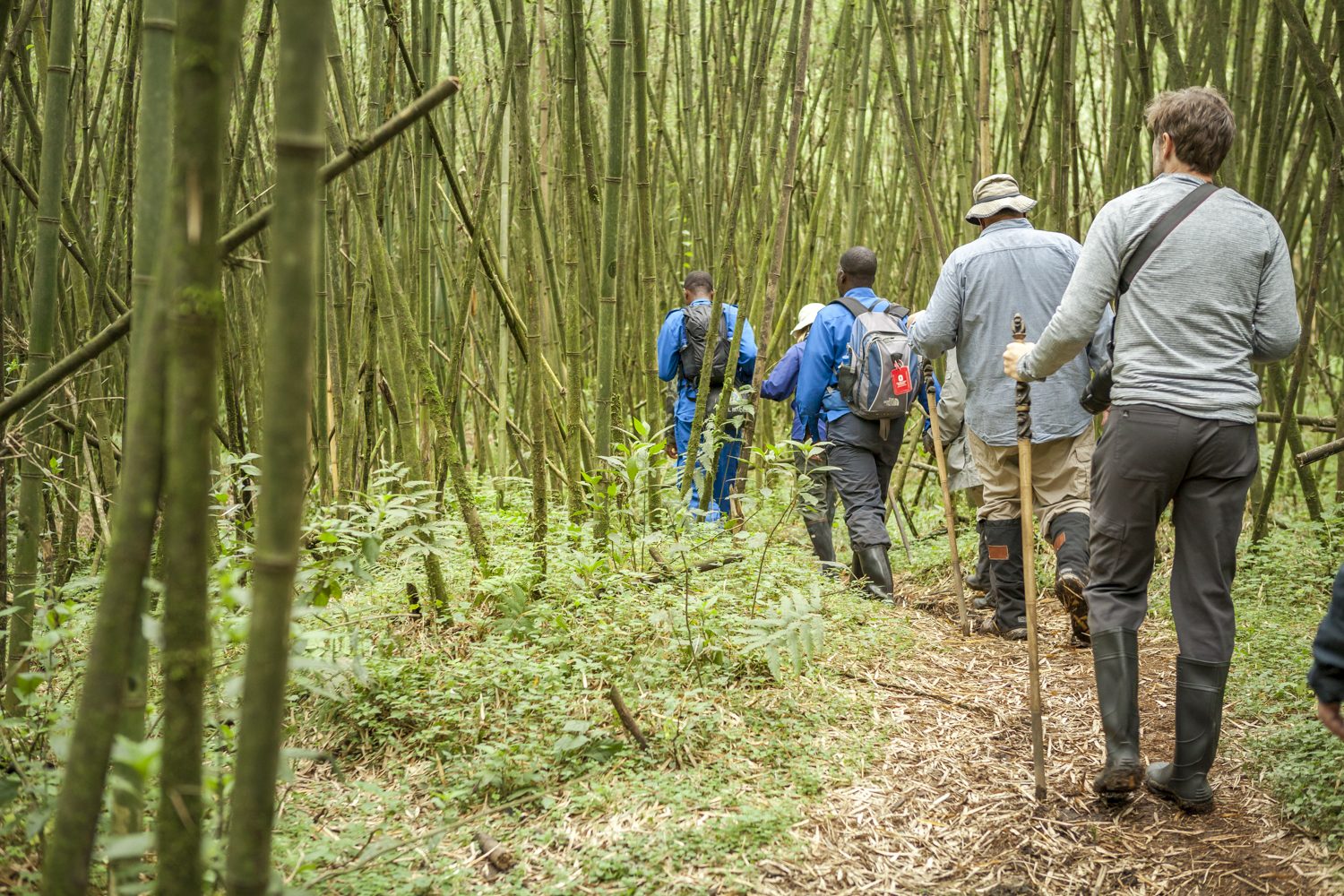
The mountain gorilla facts collected here begin with the headline you already know: they are big, they are endangered, and they are magnificent, and yet most visitors arrive at Volcanoes National Park knowing only that headline: they are big, they are endangered, and they are magnificent. The real story of the mountain gorilla is stranger, richer, and more hopeful than the headlines, and understanding it transforms the hour you spend with them.
Mountain gorillas are one of two subspecies of eastern gorilla, along with Grauer’s gorillas, and they live in exactly two places on Earth: the Virunga volcanic mountains that straddle Rwanda, Uganda, and the Democratic Republic of Congo, and the Bwindi Impenetrable Forest in Uganda. Every mountain gorilla on the planet lives in one of these two small forests, and their entire population numbers barely a thousand individuals.
These mountain gorilla facts are arranged so you can read them in order or dip in and out, and each one stands on its own. A surprising mountain gorilla fact can change how you watch the family during your full hour. The mountain gorilla facts that matter most, though, are the ones about their survival, and those come at the end of this guide.
This collection of facts covers their biology, their behaviour, their history, and the extraordinary conservation story that brought them back from the brink. Some of these facts will surprise you, some will move you, and all of them will deepen the meaning of your time in the forest. If you are planning to see them for yourself, our 3-day gorilla safari is the perfect way to meet them.
The Basics: What Makes a Mountain Gorilla
Mountain gorillas are the largest living primates, and the basics of mountain gorilla facts start with size, because size is the first thing every visitor notices. An adult male, the silverback, stands about 1.7 metres tall when upright and can weigh between 150 and 220 kilograms, more than twice the weight of an average adult woman. Females are significantly smaller, typically weighing 70 to 100 kilograms. Their powerful build is adapted for a life of feeding on tough vegetation and defending their families in the mountain forest.
Their name comes from where they live, not what they eat: the mountain gorillas inhabit the high-altitude forests of the Virunga volcanoes and Bwindi, between 2,200 and 4,300 metres above sea level. They are the only great ape to live routinely at such altitudes, and their dense fur, longer than that of any other gorilla subspecies, is a direct adaptation to the cold mountain climate. Their skin is black, and their hair, which appears grey on mature males, gives the silverback his name.
Mountain gorillas are herbivores, and their diet is astonishingly simple for animals of their size: leaves, shoots, stems, bamboo, fruit when available, and the occasional taste of bark and roots. A large silverback consumes up to thirty kilograms of vegetation a day, and a family group’s feeding grounds are constantly on the move as they work through the forest’s supply. They rarely drink water, because their food is so rich in moisture.
Family Life: Mountain Gorilla Facts About the Silverback’s World
Gorillas live in family groups led by a dominant silverback, a mature male whose leadership structures everything the family does, and most mountain gorilla facts about behaviour describe that family world. The group size varies from a handful to over forty individuals, and it typically includes the silverback, several adult females, and their offspring of various ages. The silverback’s role is protective: he decides when the group feeds, travels, and rests, and he faces down any threat, from rival males to, historically, poachers.
Some families are led by multiple silverbacks, usually related males who cooperate to defend the group, and the dynamics of these groups are endlessly fascinating to researchers. The dominant male fathers most of the offspring, but subordinate males mate too, and the family’s social structure is complex, fluid, and organised around the silverback’s authority and the females’ alliances.
Females leave their natal group when they reach maturity, usually between eight and ten years old, and transfer to other groups, a strategy that prevents inbreeding and keeps the population genetically healthy. Males may also leave to found new groups, either by taking over an existing family or by attracting females as a lone silverback. The constant churn of group membership keeps the population dynamic, and the researchers who track these transfers have written entire careers on the patterns.
The Silverback Years: Life in the Wild
Silverbacks develop their distinctive grey saddle between ten and twelve years of age, and chest-beating is the mountain gorilla fact everyone remembers, so it is worth understanding what it actually means. and a silverback’s prime typically runs through his twenties. In the wild, mountain gorillas live to around forty years, although the earliest and latest records have exceeded that, and the dominant silverback of a family is usually in his prime mid-life. As a silverback ages, his rule can be challenged by younger males, and the famous transfer battles of the forest are among the most dramatic events researchers record.
The behaviour that makes silverbacks legendary is chest-beating, and it is worth understanding what it actually means. Chest-beating is a display, not an attack: a rapid drumming of cupped hands on the chest that carries through the forest, and it signals presence, strength, and mood. Silverbacks chest-beat to warn rivals, to attract females, and occasionally just to announce themselves to the forest. They also vocalise with a range of calls, from soft grunts of contentment to sharp barks of alarm, and researchers can interpret a family’s mood from its soundscape.
When a silverback displays, he may stand, beat his chest, and charge. The charge is almost always bluff: the animal is communicating, not attacking, and habituated silverbacks rarely take a charge anywhere near a human group. The rangers read the displays perfectly, and the correct response from visitors is stillness and calm. Understanding that the display is communication, not aggression, transforms how you experience it: you are watching the gorilla’s language, not a threat.
Infants and Mothers: The Heart of the Family
Gorilla mothers carry their infants constantly for the first few months, with the infant clinging to her chest, a mountain gorilla fact that explains the tender moments of your hour with the family. and later riding on her back. Infants nurse for up to three years, and the bond between mother and infant is intense, patient, and endlessly watchable. The mothers are attentive, protective, and surprisingly playful with their young, and the interaction between a mother and her infant is one of the most moving sights in the forest.
Juveniles spend their time in play: wrestling, chasing, swinging, and testing the limits of their world. Play is how young gorillas learn the physical and social skills of adulthood, and a family with several juveniles is a riot of activity around the feeding adults. The silverback tolerates the chaos with patient dignity, and visitors consistently rank watching infant play among the highlights of their hour.
The birth of a gorilla infant is a national event in Rwanda. Each year, the newborns are named at Kwita Izina, the gorilla naming ceremony that has become a global conservation celebration, and the ceremony is a testament to how deeply the gorillas are woven into Rwandan identity. You can read more about the ceremony, and plan a visit around it, in our Kwita Izina guide.
Intelligence, Emotion and Communication: Mountain Gorilla Facts
Mountain gorillas are among the most intelligent animals on Earth, and one of the most moving mountain gorilla facts concerns their emotional lives, which are documented in ways that make the scientists who study them unequivocal: gorillas grieve, celebrate, cooperate, and even appear to mourn. Researchers have observed the gentle interactions of mothers with dying infants, the vigil of a family around a dead silverback, and the extraordinary patience of caregivers with a group’s oldest members.
Communication in gorillas is rich and layered. They have an extensive vocal repertoire, from quiet grunts and hums that signal contentment to the staccato barks of alarm. They communicate with posture, with eye contact, and with the subtle gestures that make up a sophisticated social language. The famous sign-language gorillas, like Koko in the United States, demonstrated that gorillas can learn hundreds of human signs, and researchers in the wild have documented the gorillas’ own gestural systems.
The implications for conservation are profound: animals with this level of intelligence and emotional depth deserve protection not only as a species but as individuals. Every hour you spend with them, every permit you buy, and every community programme your money funds is a direct response to that ethical reality.
The Numbers: Mountain Gorilla Facts From the Brink to a Thousand
The conservation story of the mountain gorilla is the greatest turnaround in modern wildlife protection. In 1981, the world’s mountain gorilla population was estimated at just 254 individuals, pushed to the edge by poaching, habitat loss, and civil conflict across the region. The species was considered critically endangered, and many experts quietly believed the mountain gorilla was heading for extinction.
Decades of combined effort, including the work of Dian Fossey’s Karisoke Research Center, the development of gorilla tourism, and the cooperation of governments across three countries, turned the tide, and the same ground is covered by the international gorilla charity that funds much of this work. The census numbers are the mountain gorilla facts conservationists quote most, and they are the proof that the model works. The 2015 census counted 880 mountain gorillas, and the most recent full census, completed in 2018, counted 1,063, spread across the Virunga massif and Bwindi. The species was reclassified from critically endangered to endangered, a rare and celebrated step in the right direction.
Today, Rwanda’s share of the population numbers in the hundreds, and the growth continues, driven by the same tourism model you are supporting when you buy a permit. Our guide to conservation and communities explains exactly how the money flows, and why your trek matters to the species’ future.
Threats and Protection: More Mountain Gorilla Facts
The mountain gorilla’s survival is real but not secure, and the mountain gorilla facts that matter for the future start with the threats, because survival is a daily effort. The threats are persistent: habitat loss as forest edges are cleared for agriculture, disease transmitted from humans, poaching pressure on the wider ecosystem, and the ever-present risk of conflict in the neighbouring region. The Virunga massif is a political as well as an ecological landscape, and the gorillas depend on the cooperation of Rwanda, Uganda, and the DRC to protect their forest home.
The response is an ecosystem of protection: anti-poaching patrols by park rangers, the veterinary care provided by the Gorilla Doctors programme, the daily habituation work that makes tourism possible, and the community programmes that give local people a financial stake in the gorillas’ survival. Each layer reinforces the others, and the funding that sustains it flows largely from the tourism industry.
When you trek in Rwanda, you are not merely observing the gorillas: you are financing their protection. The permit fee, the porter hire, the lodge stays, and the community projects all trace back to the same simple equation, a living gorilla is worth more than a dead one, and the visitors who keep coming are the reason the equation holds.
Where to See Them: The Two Forests
The mountain gorillas live in two distinct forest complexes. The Virunga massif spans the border region of Rwanda, Uganda, and the DRC, and it is the home of the Rwandan gorillas in Volcanoes National Park, the most accessible and best-managed gorilla destination in the world. The Bwindi Impenetrable Forest in southwestern Uganda is the other stronghold, a UNESCO World Heritage site whose dense jungle shelters a similar population.
The Rwandan experience is distinguished by accessibility, infrastructure, and conservation success, and for visitors the mountain gorilla facts that matter most are practical ones. The trek from Kigali is straightforward, the park is impeccably managed, and the visitor experience is world-class. The 2-day Rwanda gorilla trek is the classic introduction, and for travellers comparing destinations, our Rwanda versus Uganda comparison lays out the differences honestly.
Whichever forest you choose, the experience is the same in its essence: an hour with the most magnificent primates on Earth, earned by a walk through their home, and paid for in a way that protects them. The facts of the mountain gorilla are remarkable, but the encounter is beyond facts, and it is waiting for you in the forest.
If the facts have done their work and you are ready to see them in person, plan your gorilla safari with us.
Gorilla Trekking and Responsible Wildlife Tourism
Understanding the facts of the mountain gorilla makes you not just a more informed visitor but a more responsible one, and responsibility is the heart of modern gorilla tourism. The model is careful, deliberate, and fragile: the habituated families tolerate a handful of visitors each day, the revenue covers their protection, and the whole system depends on visitors who respect the rules and the forest. The seven-metre rule, the mask policy for unwell visitors, and the strict photography limits all exist to keep the gorillas physically and psychologically safe, and they are the price of admission to a genuine conservation partnership.
Beyond the park, your choices ripple outward. Hiring porters supports the families who live beside the gorillas. Staying at community lodges puts money into the villages that chose long ago to support conservation. Buying crafts at the cultural villages and eating at community restaurants turns tourism revenue into schools, clinics, and water projects. The collective effect of all those choices is the economic foundation on which the mountain gorillas recovery stands, and it is why Rwanda’s approach has become a global model, a story told around the world by Rwanda’s official tourism board. The mountain gorilla facts about tourism are simple: the habituated families tolerate a handful of visitors each day, and the revenue covers their protection.
If you want to go further, there are ways to deepen the connection, from joining conservation-focused community projects during your stay to simply spreading the story when you return home. Every photograph you share, every conversation you spark about mountain gorillas, and every reader who then books a permit adds a brick to the same wall. The mountain gorilla’s story is one of the great successes of modern conservation, and you are invited to be part of the next chapter of it.