Where to Stay for Gorilla Trekking: Musanze and Kinigi Lodges

Where you stay for gorilla trekking in Musanze shapes the whole experience, because the night before the trek is when the adventure truly begins. The gorilla region of Rwanda, around Volcanoes National Park in the far north-west of the country, offers an extraordinary range of accommodation, from world-class luxury lodges tucked into the forest with views of the Virunga volcanoes to friendly budget guesthouses in the market town of Musanze. Choosing the right base for your style, budget and schedule is one of the most enjoyable parts of planning a safari, and this guide will help you get it right.

In this article we look at the two main areas to stay, the categories of accommodation available, the practical details that matter on trek day, and how to get the best from your booking. We also explain how your choice of lodge connects with the wider logistics of the trip, so that the morning of your trek runs like clockwork. Whether you are looking for romance, family comfort or simple value, there is a perfect place to rest your head among the green hills of the north.

The simple rule is that gorilla trekking in Musanze works from either base, and this guide weighs both honestly. Every serious gorilla trekking Musanze itinerary starts with one question: town or foothills? We answer it with the practical details that matter most on trek morning.

Musanze or Kinigi: Best Base for Gorilla Trekking?

The first decision is location, and for most visitors gorilla trekking in Musanze means one night in town and one night in the foothills. Musanze is the regional capital of the north, a lively town with markets, banks, restaurants and a genuine sense of local life. It is the practical base: everything is available here, from medical facilities to shops where you can buy last-minute trekking essentials. Staying in Musanze means you are part of the daily rhythm of a real Rwandan town, and prices tend to be lower than at the forest-edge lodges. The park headquarters is about a fifteen-to-twenty-minute drive away.

The alternative is to stay closer to the park itself, in the foothills and villages around Kinigi, where the trek briefing point is located. This is where the famous luxury lodges are found, often perched on hillsides with sweeping views of the volcanoes and, in some cases, within walking distance of the park gate. The advantage is obvious: on trek morning you have a shorter transfer and more time to soak up the atmosphere of the mountains. The trade-off is that this area is quieter, and you are more dependent on your lodge for meals and transport.

Many travellers enjoy the best of both by spending one night in each area, arriving in Musanze the evening before the trek and moving to a foothills lodge afterwards to celebrate. However you arrange it, both locations work well, and the difference between them is about atmosphere rather than convenience. We can advise on the right mix based on your itinerary, the rest of your route and the feel you want for your trip.
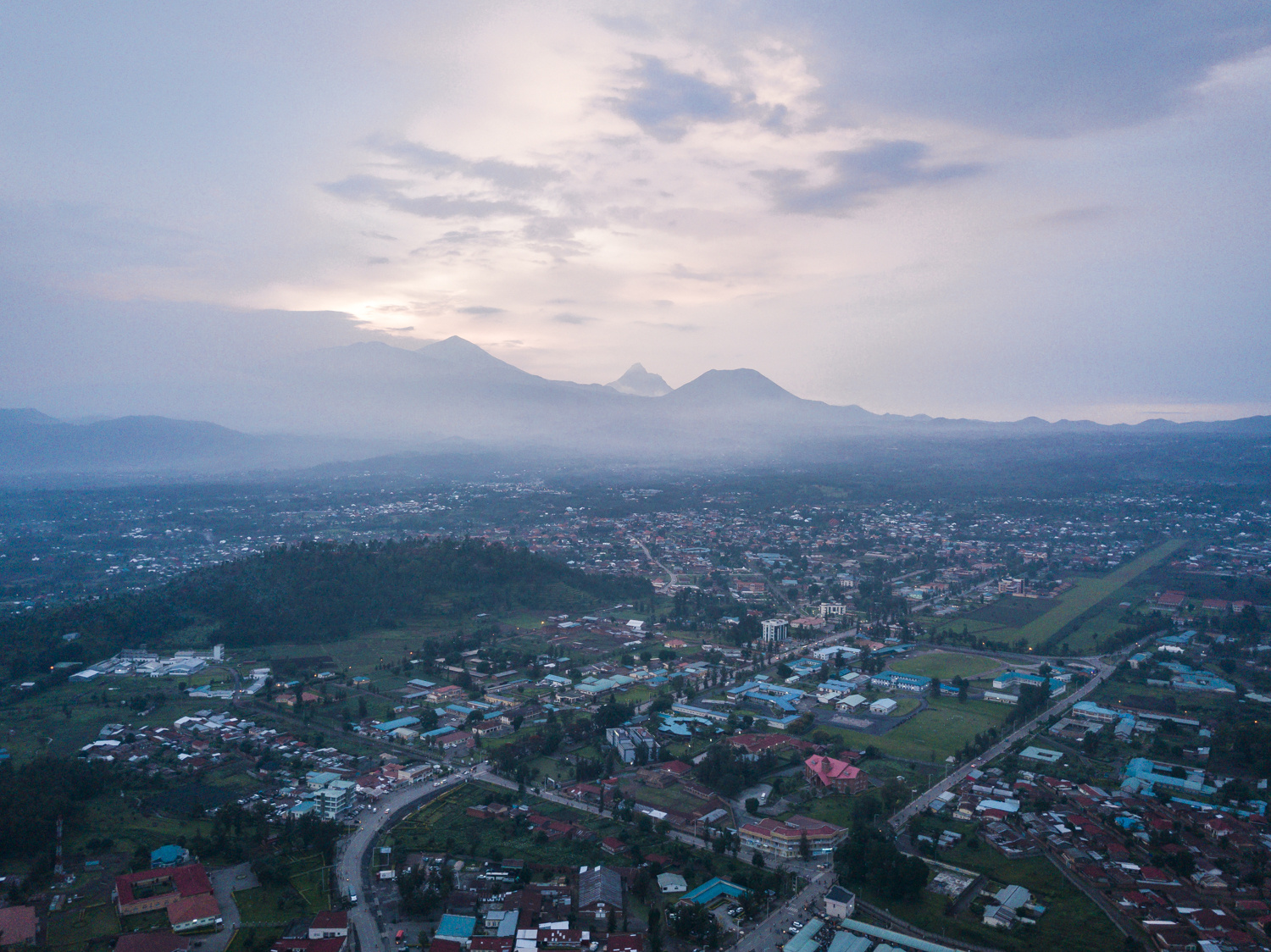
Sunset over Musanze, where gorilla trekking trips begin

Luxury Lodges for Gorilla Trekking in Musanze

Rwanda is home to some of Africa’s finest safari lodges, and Rwanda’s official tourism board profiles the best of them. These lodges are the most famous places to sleep before gorilla trekking in Musanze, and they are destinations in themselves, with several of the very best clustered around the Virunga foothills. These are not just hotels; they are destinations in themselves, with dramatic architecture, attentive service and panoramic views that make the altitude worth it. Expect stone cottages with fireplaces, hot-water bottles tucked into your bed at turndown, candlelit dinners under a canopy of stars and staff who seem to anticipate your every need. Some lodges even offer private verandas from which you can watch the sunrise paint the volcano summits.

The luxury experience extends to trek day itself. Lodges arrange early breakfasts so you can eat before the briefing, pack a gourmet boxed lunch for the forest, provide walking sticks and gaiters, and welcome you back after the trek with a warm towel, a drink and often a massage to ease the muscles. For honeymooners and celebration travellers, many lodges offer private sundowners, in-villa dining and bespoke touches that turn a safari into a genuinely memorable occasion. It is an investment, but for many travellers it is the heart of the whole holiday.

If you are planning a special trip, consider combining your luxury stay with our 4-day gorilla trekking package, which gives you time to settle into the lodge properly, trek at leisure and enjoy the surrounding forest. Alternatively, our 2-day gorilla trekking option is a focused way to include a luxury night with minimal time away from other plans. Whichever you choose, the lodges of the Virungas are an experience in their own right, and they set a standard that rivals the great camps of East Africa.

Mid-Range Lodges and Boutique Hotels

Between the top-end lodges and the budget guesthouses lies a sweet spot of mid-range hotels and boutique properties that offer real comfort without the premium price, and it is where most gorilla trekking in Musanze visitors land, with a standard that has risen steadily in recent years. These are the choices most travellers settle on, and the standard in this category has risen steadily in recent years. Expect clean, comfortable rooms with hot showers, good beds and reliable electricity, a restaurant serving tasty Rwandan and international food, and warm, professional service. Many mid-range properties also have lovely gardens and views of the surrounding hills.

The mid-range options are found in both Musanze and the Kinigi area, and they are particularly popular with families and small groups who want space, comfort and value. Some offer family rooms or interconnecting rooms, and several have playgrounds or games areas for children. Breakfast is typically served early to accommodate trek schedules, and most will prepare a packed lunch for the forest. If you are combining the gorillas with other destinations, a mid-range base keeps your overall budget balanced while still feeling like a proper safari stay.

When you book your trip through our team, we match you with properties in this category based on your plans, whether you are on our 3-day Rwanda gorilla trekking safari or a longer route that takes in Lake Kivu and the south. Because we work with these hotels regularly, we know which ones deliver on their promises, and we will confirm your room type, meal plan and early-morning arrangements before you arrive.

Budget Guesthouses and Hostels

For backpackers and travellers on a tight budget, Musanze has a growing selection of guesthouses and hostels that keep costs low without sacrificing a warm welcome, which makes gorilla trekking in Musanze affordable without losing the welcome. Simple, clean rooms with shared or private bathrooms are available at very affordable rates, and several hostels have become meeting points for trekkers from around the world, with communal meals, bonfires and invaluable exchange of trekking tips. The atmosphere at these places is often the friendliest of any accommodation in the area, and the staff can arrange everything from porters to packed breakfasts.

Budget accommodation is a sensible choice if you intend to spend your days out exploring rather than lounging at the lodge, and it frees up budget for the experiences that matter, such as gorilla permits, extra park activities and transfers. Remember that the trek itself is the same whatever your bed; the permits, the rangers and the gorilla families are identical for every guest. For travellers who prefer to invest their money in experiences rather than rooms, the guesthouses of Musanze are a genuinely good option, and they give you a closer connection to the life of the town.

What to Look For on Gorilla Trekking Day in Musanze

Whatever your budget, certain practical details matter more than others when you are staying for a gorilla trek, and the early-morning routine is the part of gorilla trekking in Musanze that makes or breaks the day. The most important is the early-morning routine: your lodge should be able to serve breakfast from around 5.30am so you can eat before the 7am briefing at park headquarters. Ask about packed lunches for the trek, and about the transfer time from the property to the gate. A lodge that has hosted trekkers for years will have this routine down to a fine art, and it shows in the smoothness of your morning.

Other details worth checking include laundry services, since your trekking clothes will return caked in mud, secure storage for valuables, and the availability of trekking aids such as walking sticks and gaiters. If you are travelling with children or older guests, ask about the terrain around the property and the transfer arrangements, so everyone knows what to expect. And do not underestimate the importance of a warm duvet and hot water: the nights in the mountains are genuinely cold, and a comfortable bed is the difference between a good night’s sleep and a restless one before the big day.

  • Early breakfast served from 5.30am for trek mornings,
  • Packed lunch options for the forest,
  • Reliable transfer arrangements to the park gate,
  • Laundry services for muddy trekking clothes,
  • Heating, hot water and warm bedding for cold mountain nights,
  • Secure storage and charging points for electronics,
  • Local staff who know the trek routes and conditions.
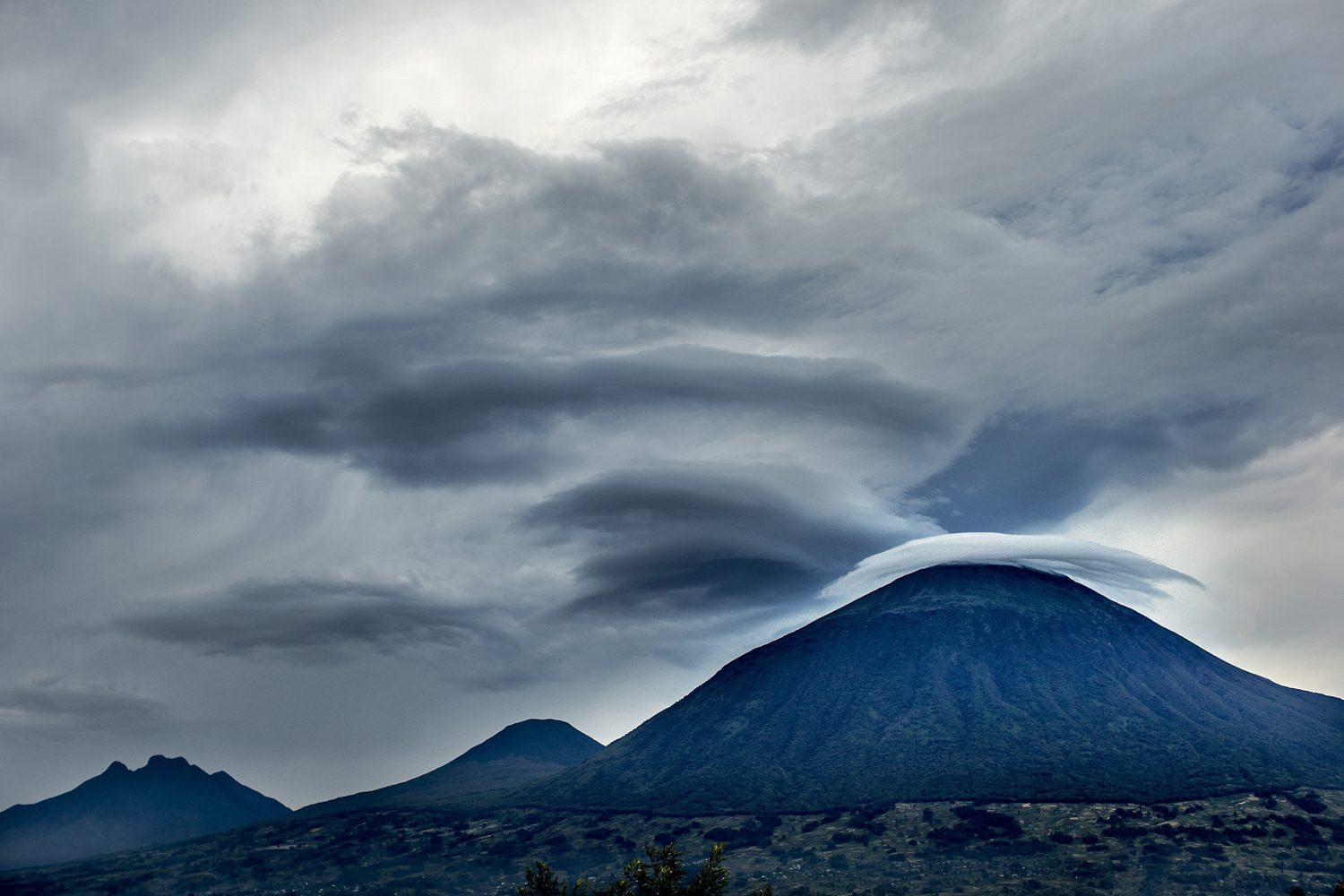
A volcano view from the gorilla trekking region

Family-Friendly Options for Gorilla Trekking in Musanze

Families travelling to the gorillas have specific needs, and the accommodation market in the north has responded well, because families doing gorilla trekking in Musanze need space, flexibility and early breakfasts. Family rooms, interconnecting suites and self-contained cottages are now common in the mid-range and upper categories, and several lodges run genuine children’s programs, with guided nature walks, local crafts and early suppers that leave parents free to enjoy the evening. Meal times are flexible, menus include child-friendly staples alongside the gourmet offerings, and staff are unfailingly attentive to younger guests. For multi-generational groups, where grandparents join the trek, the lodges of the Kinigi foothills are the most comfortable choice, because the terrain around them is gentler and the atmosphere more serene.

A few practical points make family stays much smoother. Ask whether the property can provide a separate bed for a child, confirm the transfer time to the park gate in a vehicle with enough seats, and check that the evening routine, including heating, works for small children in the cold mountain nights. The best family lodges in the region also help with early trek departures, preparing children’s packed lunches and arranging a quiet room for an early bedtime. We book family properties regularly and know which ones genuinely cater for children, so tell us your children’s ages when you plan, and we will steer you to the right places rather than leaving it to chance.

Booking Early for Gorilla Trekking Musanze: Best Price

Accommodation for gorilla trekking in Musanze books out quickly, and the very best lodges can be full months in advance, particularly in the two dry seasons that are most popular for trekking, so start early and follow the calendar published by the Rwanda Development Board. If you have your heart set on a particular property, book as early as you can, ideally at the same time as your permits. For travellers with flexibility, booking outside the peak periods, or choosing mid-week dates, opens up more choice and sometimes better rates. Our team holds allocations with many of the best properties and can often secure rooms when they are otherwise fully booked.

When comparing prices, remember that the quoted nightly rate is not the whole story. Check what is included: full board or bed and breakfast, transfers to the park, laundry, tea and coffee, and any extras such as spa treatments or cultural visits. A higher headline rate that includes everything can work out better value than a cheap room with add-ons at every turn. We always quote transparently, with a clear breakdown of what your stay includes, so you can compare fairly and know exactly what you are paying for.

Combining Your Stay with the Rest of the Itinerary

Your base for gorilla trekking in Musanze should also work well with the rest of your route. Most visitors arrive from Kigali, about two and a half hours to the south, and many continue west to Lake Kivu, so think about how your nights here connect with your transfers. If you are heading to the lake afterwards, a lodge on the northern side of the volcano region makes sense; if you are returning to the capital, consider a stop that breaks the journey. Getting the order of your itinerary right saves hours of driving and makes the whole trip flow better.

The gorilla region also has plenty to do beyond the trek itself, so it is worth allowing time to enjoy it. The Volcanoes National Park offers golden monkey trekking, the scenic hike up Mount Bisoke, and its official website lists the full range of activities, and visits to the graves of famous gorillas, while the surrounding area is home to cultural villages, coffee cooperatives and craft markets. Many travellers extend their stay by a night or two to take these in, and we can build them into your itinerary alongside the main event. However you shape your trip, choosing the right place to stay is the foundation of a memorable gorilla safari, and we are happy to guide you through the options to find the perfect match for your needs.

Getting Around Rwanda: Transport Guide for Safaris

Rwanda is often called the Land of a Thousand Hills, and for good reason: its landscape is a rolling, green mosaic of terraced farms, dense forest and volcanic peaks. Getting around Rwanda is easier than most travellers expect, and this guide explains every option, from private drivers to motorbike taxis – see the official overview on Rwanda’s official tourism site. The country is small by African standards, roughly the size of Belgium, which is excellent news for travellers because it means the distances between the main attractions are short. With good roads, honest driving and a well-organised transport network, you can comfortably move from the capital to the gorilla mountains, on to the shores of Lake Kivu and even to the rainforests of Nyungwe in the space of a week without ever feeling rushed.

This guide covers every practical way to get around Rwanda, from private vehicles with drivers and self-drive hire to public buses, motorcycle taxis and domestic flights. We also give honest driving times between the country’s key destinations, so you can plan your itinerary realistically and avoid the classic mistake of trying to do too much in one day. Whether you are a first-time visitor on a guided safari or an experienced overlander, understanding how transport works in Rwanda will make your trip smoother, safer and far more enjoyable.

Rwanda’s Roads: Better Than You Expect

One of the great surprises for travellers is the quality of Rwanda’s road network. The main routes connecting Kigali to Musanze, Rubavu, Huye and beyond are well-surfaced tarmac, maintained to a high standard and clearly signed. Roadworks are managed efficiently, and even secondary roads are generally in far better condition than travellers expect from East Africa. Driving is on the right-hand side of the road, speed limits are respected, and the standard of driving is noticeably calmer and more courteous than in many neighbouring countries.

The flip side of the beautiful terrain is that Rwanda’s roads are winding and hilly. A straight-line distance of eighty kilometres can easily translate into two hours of driving as the road climbs and descends through the highlands. This is not a problem once you know to expect it, but it is worth building realistic travel times into your plan rather than assuming you can cover ground at highway speeds. The upside is that every transfer becomes part of the experience, with constant views of green valleys, tea plantations and village life unfolding outside the window.

Getting around Rwanda by car on Kigali's clean, well-ordered roads

Getting Around Rwanda by Private Vehicle and Driver

For the great majority of safari travellers, the most comfortable and flexible way to get around Rwanda is with a private vehicle and an experienced driver-guide. This is the model we use for all our tours, and for good reason. Your driver knows the roads, the shortcuts and the best viewpoints; he will handle the paperwork at park gates, recommend good lunch stops and take you to places no sat-nav will find. You travel at your own pace, stop when you want to take photographs, and never worry about timetables or negotiating fares.

A private vehicle also works out surprisingly well value when you consider what it includes. The cost covers the car, fuel, driver’s time and the flexibility of a custom itinerary, and it removes the stress of self-driving on unfamiliar mountain roads. For families, couples and small groups sharing a safari, it is almost always the right choice, and it is the reason our itineraries such as the 3-day Rwanda gorilla trekking safari and the 6-day gorilla trekking and Lake Kivu tour run so smoothly. Every transfer, every park entry and every early-morning departure is handled for you.

Self-Driving: A Flexible Way of Getting Around Rwanda

If you prefer to be behind the wheel, self-drive is a perfectly viable option in Rwanda. A number of international and local rental companies operate from Kigali International Airport and the city centre, offering everything from small hatchbacks to 4x4s. The roads are well-maintained, signage is good, and GPS navigation works reliably across the country. You will need a valid licence and an international driving permit, and it is wise to choose a 4×4 if your route includes the rougher tracks around the parks.

Self-drive suits travellers who are confident on winding mountain roads and who enjoy the independence of making their own schedule. It is also an option for those who want to keep costs down, although the saving is smaller than many expect once you add fuel, insurance and the risk of unfamiliar conditions. For the national parks, bear in mind that Akagera’s game-viewing tracks are best done in a high-clearance vehicle, while the gorilla trekking region is reached on good tarmac. If you self-drive, plan your days carefully, avoid driving after dark on unknown roads, and always carry water and a phone.

Getting Around Rwanda by Public Bus and Minibus

For budget travellers, Rwanda’s public bus network is an excellent and safe way to move between towns. Modern coaches and smaller minibuses operate on the main corridors, connecting Kigali with Musanze, Rubavu, Huye, Cyangugu and most regional centres. Buses are cheap, reasonably punctual and generally well maintained, and the journey is a great way to see the country up close. Services fill up at the major stations, so arriving early is recommended, and tickets are bought at the terminal rather than in advance online.

  • Main coach routes run from Kigali’s Nyabugogo station to all regional capitals,
  • Minibuses cover shorter routes and depart when full,
  • Fares are very affordable by international standards,
  • Buses run throughout daylight hours; night services are limited,
  • Keep your luggage with you and arrive early in busy periods.

Public transport works well if you are travelling light and between towns, but it adds a layer of complexity when you are visiting parks and lodges, because you will then need taxis or transfers from the bus stop to your accommodation. For travellers on a guided safari the bus network is rarely needed, but it is good to know it exists as a backup option, and it is the way most Rwandans themselves travel between cities.

Motorcycle Taxis and City Transport

In Kigali and the larger towns, the moto, a motorcycle taxi, is the fastest and cheapest way to move around. Drivers wear numbered, helmeted vests, and it is normal for passengers to hop on the back for short trips across the city. Fares are low and can be negotiated before you set off, and ride-hailing apps in Kigali have made the experience even more convenient and transparent. If you use a moto, always take the helmet offered, hold on securely and agree the fare in advance.

Kigali also has a clean, efficient bus network run on dedicated routes, with smartcard payment and reliable schedules, and conventional taxis are available for longer or luggage-heavy journeys. The city is compact and safe, and many visitors find they can walk between the main sights in the central districts, with the city’s famous hills providing a pleasant challenge. For airport transfers and early-morning departures, a pre-booked taxi or hotel transfer is the most reliable option.

Domestic Flights and Helicopter Transfers

For travellers short on time, Rwanda offers a growing network of domestic flight options. Light aircraft charters connect Kigali with key safari destinations, and the Rwanda Development Board publishes official details on licensed operators, including the Volcanoes National Park region and Akagera, cutting travel time from hours to minutes. These flights are especially popular with travellers combining several regions in one trip, such as those on our 8-day Rwanda best adventure safari, where saving a full day of driving genuinely changes what the itinerary can include.

At the very top end, helicopter transfers are available from Kigali to the volcanoes, offering an unforgettable aerial view of the Virunga range on the way to your lodge. It is a once-in-a-lifetime experience that some honeymooners and celebration travellers choose to mark the occasion. Domestic aviation in Rwanda is well regulated and professional, and for travellers whose budget allows it, flying between the country’s regions is a luxurious and time-efficient way to travel.

Street scene in Musanze town, gateway to the gorillas

Driving Times Between the Highlights

To help you plan your days, here are realistic driving times between Rwanda’s main destinations. These assume good conditions, a private vehicle and the winding mountain roads that make the country so scenic:

  • Kigali to Musanze and Volcanoes National Park: about 2.5 hours,
  • Kigali to Akagera National Park: about 2.5 to 3 hours,
  • Kigali to Nyungwe National Park: about 5 to 5.5 hours,
  • Kigali to Rubavu on Lake Kivu: about 3.5 to 4 hours,
  • Musanze to Rubavu via the highlands: about 3 hours,
  • Rubavu to Nyungwe along the Congo Nile Trail: a full day of scenic driving,
  • Volcanoes National Park to Akagera: about 5 hours across the country.

These times are honest estimates, and they explain why the most popular itineraries in Rwanda work the way they do. A classic week can pair the gorillas with Lake Kivu, or Akagera with the volcanoes, without spending your whole holiday in the car. When you build your route with our team, we balance driving time against sightseeing time so that every day feels full but never rushed.

Organised Transfers on a Guided Safari

For most visitors the transport question is answered before they arrive, because a guided safari includes every transfer in the itinerary. This is worth understanding before you book because it changes what you actually have to think about. On a typical tour with our team, you are met at the airport by a driver who holds a board with your name, transferred to your hotel in a private, air-conditioned vehicle, and then driven from destination to destination by the same professional throughout your stay. The vehicle travels with you, the luggage is your driver’s responsibility at every stop, and the itinerary’s driving times are baked into the schedule so that you never need to consult a map.

This organised model is particularly valuable around the parks, where timing is everything. Gorilla treks begin with an early briefing at the park gate, and a driver who knows the road from your lodge to the headquarters, the traffic patterns and the coffee that is worth stopping for along the way, is a genuine asset. On safari days, the transfers to the trailheads simply appear at the lodge at the scheduled hour, saving you the admin of car hire on unfamiliar mountain roads. And because your driver-guide also assists with park entries, permits and recommended local stops, the transport is not a separate element of the trip but part of the experience of travelling with a professional team. Including transfers in a ready-made itinerary is the simplest answer for most travellers.

Practical Tips for Getting Around Rwanda

Whichever mode of transport you choose, a few practical habits will make getting around Rwanda easier. Carry a mix of cash and card: cards work in cities and larger lodges, while cash is essential for markets, small restaurants and park gratuities. Keep a portable charger for your phone, since GPS and maps will be among your most-used tools. And always tell someone at your lodge or hotel where you are going if you are travelling independently, especially in the more remote areas of the west.

Weather is also worth factoring into your plans. Rain can arrive suddenly, especially in the afternoon during the wet seasons, and road conditions, while good, can slow you down on a downpour. Your driver will build sensible margins into the day, and if you are self-driving, carry a rain jacket and check the forecast before long mountain drives. The country’s infrastructure is genuinely good, but the hills and the weather deserve respect, and travellers who allow a little extra time are always the ones who enjoy themselves most.

Finally, remember that getting around Rwanda is part of the adventure itself. The transfers between destinations are where you will see ordinary life, wave at schoolchildren, buy fresh fruit at roadside stalls and watch the landscape change from tea fields to rainforest to lake shore. Whether you are travelling on the 9-day luxury flying safari or exploring independently, we recommend keeping your itinerary flexible enough to stop when something catches your eye. If you would like help planning the transport side of your Rwanda trip, from private drivers to internal flights, contact our team and we will put together a seamless plan that lets you focus on the landscapes and the wildlife.

How to Get to Rwanda: Flights, Visas and Entry Requirements

Rwanda may be one of Africa’s smallest countries, but it has become one of the continent’s most talked-about travel destinations. The Land of a Thousand Hills draws travellers from every corner of the globe, many of them here for a single, unforgettable goal: coming face to face with mountain gorillas in the misty forests of Volcanoes National Park. The good news for first-time visitors is that Rwanda flights, visas and entry requirements are far easier to manage than most people expect. A modern international airport, a straightforward online visa process and a well-organised road network mean the journey from almost anywhere in the world is smooth, comfortable and surprisingly stress-free.

Think of this as your one-stop Rwanda flights and visas checklist, plus entry requirements. This guide covers every step of travelling to Rwanda, from choosing your flight and understanding the airlines that serve Kigali International Airport to applying for your eVisa, sorting out entry requirements and planning what happens in your first hours in the country. We also look at the practical logistics of getting from the capital to the gorilla region. How to time your arrival so that you are rested, relaxed and ready for the trek of a lifetime. By the end of this article you will know exactly what to prepare before you fly. What to expect when you land.

Rwanda Flights: Kigali International Airport

Rwanda’s principal international gateway is Kigali International Airport, known by its three-letter code KGL. Located on the eastern edge of the capital, about twenty minutes from the city centre by road, it is a compact but modern facility that handles flights from across Africa, Europe and the Middle East. For a first-time visitor the airport is a pleasant surprise: queues move quickly, the terminal is clean and orderly. The arrival experience is calm and welcoming. It sets the tone for the rest of the country, where efficiency and courtesy are the norm.

Rwanda flights from Europe, the Gulf and East Africa all land here. The airport has been expanded over the years to keep pace with the growing tourism industry. There are plans for a new international airport at Bugesera, south-east of the city. Will eventually become the country’s main gateway. For now Kigali International Airport serves the capital well, with daily arrivals from the region and beyond. Because it sits so close to the city centre, you can be at your hotel within half an hour of touching down. Makes even late-night arrivals easy to manage and gives you a full, relaxed first day if you land in the morning.

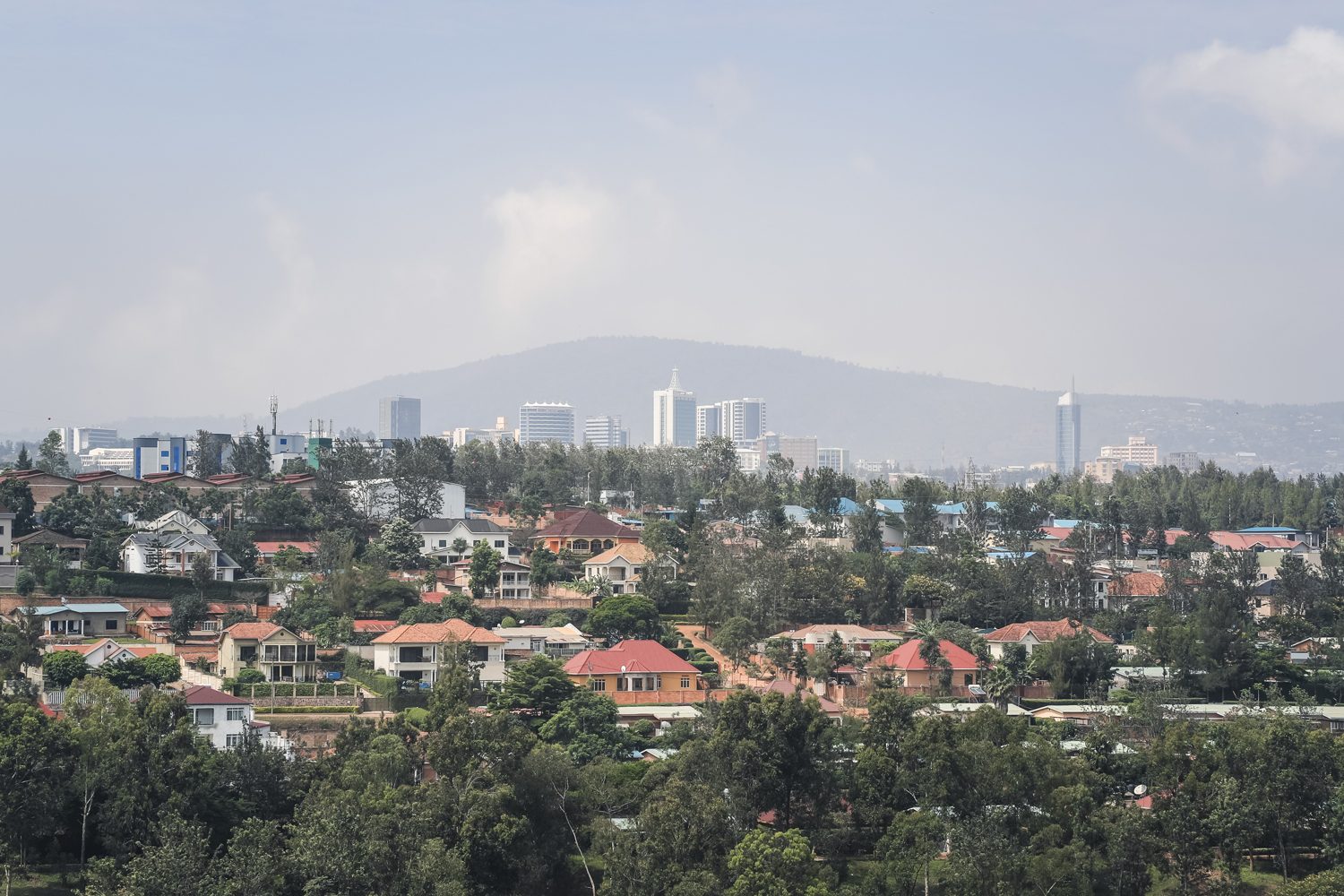
Rwanda flights and visas: Kigali city skyline seen from the hills

Which Airlines Operate Rwanda Flights?

The national carrier, RwandAir, is the airline most travellers associate with the country. For good reason. It operates a growing network from its Kigali base, connecting Rwanda to major cities in East and Southern Africa as well as to Europe and the Middle East. Its long-haul routes have made Rwanda far more accessible than it was a decade ago. Its modern fleet and strong safety record have earned it a solid reputation among safari travellers who fly regularly to East Africa.

RwandAir is not the only option, and between the national carrier and the international airlines, Rwanda flights are easy to find from most continents. Choose your route by price, timing, and how your Rwanda flights and visas fit together. A number of major international airlines serve Kigali, giving travellers a genuine choice of carrier, route and fare:

  • RwandAir, the national carrier, with the widest network out of Kigali,
  • European carriers flying from hubs such as Brussels, Paris and London,
  • Middle Eastern airlines offering connections through Dubai and Doha,
  • African regional airlines linking Kigali with Nairobi, Addis Ababa and Johannesburg.

Flight times to Rwanda are shorter than many travellers expect. A direct flight from Europe takes roughly eight to nine hours. Connections from the Gulf take about six. From East African hubs such as Nairobi or Addis Ababa, the flight is under two hours. This accessibility is one of the reasons Rwanda has become such a popular safari destination: it is genuinely easy to reach, whatever part of the world you are travelling from.

Rwanda Visas: Applying Online Is Simple

One of the best travel developments in recent years is Rwanda’s online visa system. Most nationalities can apply for a tourist visa in advance through the official immigration portal. The process takes only a few minutes. The latest visa rules are always summarised by Rwanda’s official tourism board. You complete a short online form, upload a passport-style photograph and a copy of your passport bio page, pay the modest fee by card. Within a few working days you receive your approved eVisa by email. It really is that simple. It removes the need to queue for a visa at the airport.

Whatever your nationality, check Rwanda visas for your passport before you book flights, because planning Rwanda flights and visas together saves you both time and money. The eVisa is linked electronically to your passport. You do not need to print anything, although carrying a copy is always a sensible backup. A standard single-entry tourist visa is typically valid for thirty days. Is ample time for a gorilla trekking safari, a stay on Lake Kivu and a few days exploring Kigali. If you are travelling from a country that requires a visa, we strongly recommend applying at least two weeks before departure to allow for processing time, especially during busy periods.

The official portal is straightforward and secure, and the government has worked hard to make the process genuinely user-friendly. Most applicants report receiving approval within three to five working days. The visa fee is payable by credit or debit card. If you run into any difficulty with the form, our team is happy to talk you through it as part of arranging your safari. We always confirm the visa situation for each guest before their departure.

Rwanda Visas on Arrival and the East African Tourist Visa

Visa on arrival means you can book Rwanda flights even at the last minute, which suits travellers who sort their Rwanda flights and visas in the same week. For travellers who prefer not to apply in advance, Rwanda also offers visa on arrival at Kigali International Airport for most nationalities. The process is efficient: you present your passport at the immigration desk, pay the fee. Receive your visa in a matter of minutes. This is a convenient fallback if your plans have come together at short notice. It works smoothly in practice. Still, applying online in advance remains the most relaxed option. It means one less thing to think about at the airport.

If your trip combines Rwanda with neighbouring Kenya or Uganda, look into the East African Tourist Visa. Covers all three countries on a single multiple-entry visa. It is excellent value for travellers building a wider East African itinerary, such as a Kenya safari followed by gorilla trekking in Rwanda. The application process is the same online portal. The visa covers the entire East African community tourism circuit, making it one of the smartest travel documents available in the region.

Entry Requirements for Rwanda Flights and Visas

Gather your documents hand in hand with your Rwanda flights and visas booking, and double-check the entry rules the same day you pay for your tickets. Before you fly, take a few minutes to check the entry requirements that apply to your nationality. The essentials are consistent for most visitors: a passport valid for at least six months beyond your planned departure date, a return ticket or proof of onward travel. Confirmation of where you will be staying. Immigration officials at Kigali International Airport are professional and friendly. As long as your paperwork is in order, the process is quick.

On the health side, a yellow fever vaccination certificate is required for travellers arriving from countries where yellow fever is present. It is wise to carry it even if you are not strictly required to. Most visitors also choose to take malaria prophylaxis, particularly if their itinerary includes lower-altitude areas such as Akagera National Park or parts of the Lake Kivu shore. Your travel clinic can advise on vaccinations and medication based on your specific itinerary. We recommend booking that appointment at least six weeks before you travel.

It is also worth carrying comprehensive travel insurance that covers emergency medical treatment, evacuation and cancellation. Healthcare in Kigali is good by regional standards. Insurance gives you complete peace of mind. It is genuinely important for an active trip that includes trekking. Keep digital copies of your passport, visa and insurance documents in your phone or email, and leave a copy with family at home so that every contingency is covered.

Arriving in Rwanda: What to Expect

After the long Rwanda flights, the arrival process is mercifully quick, and landing at Kigali is a memorable moment in itself. Most travellers find their Rwanda flights and visas sorted means a stress-free first hour. The approach crosses the green, terraced hills of the Rwandan countryside. On a clear day you can see the patchwork of farmland and forest that gives the country its nickname. The airport terminal is bright and welcoming, with efficient immigration, baggage reclaim and a small but useful selection of shops, currency exchange counters and ATM machines where you can withdraw Rwandan francs at a fair rate.

Once you are through customs, the arrivals hall is where your safari really begins. If you have booked your trip with us, your driver will be waiting with a name board, ready to take you to your hotel or straight to the north of the country. There are also metered taxis and ride-hailing apps available if you are travelling independently. The short drive into Kigali gives you a first taste of the capital: clean streets, gentle hills and a sense of calm order that surprises most first-time visitors.

The Virunga volcanoes rising above the Rwandan hills

From Kigali to the Volcanoes and the Gorillas

Once your Rwanda flights land you in Kigali, the volcanoes are a short drive away. For most visitors the journey north to the gorilla region is the main event of the first day. The drive from Kigali to Musanze, the gateway town to Volcanoes National Park, takes around two and a half hours on good tarmac roads, passing through the rolling green landscape that makes Rwanda so distinctive. Along the way you will see banana plantations, tea fields and villages going about their daily life. The gradual approach of the Virunga volcanoes on the horizon is genuinely stirring.

We usually recommend spending at least one night in the Musanze area before your trek. This lets you rest, acclimatise to the altitude and wake up near the park, ready for the early start that gorilla trekking demands. The town of Musanze and the surrounding villages offer a range of lodges and hotels, from simple guesthouses to luxury safari lodges with views of the mountains. We cover the full range in our guide to where to stay. A night here also gives you the chance to explore the area, whether that means visiting local coffee cooperatives or taking an evening walk to see the volcano silhouettes at sunset.

If you are on a very tight schedule, it is possible to fly in, trek and fly out in a day. This leaves little margin for delays and none of the atmosphere. The relaxed approach is to give yourself time. Our most popular option is the 3-day Rwanda gorilla trekking safari, which covers arrival, the trek itself and a comfortable return, with all transport and permits arranged for you. For travellers who cannot spare three days, the 1-day gorilla trekking option from Kigali is a fast and efficient way to see the gorillas when time is tight.

Planning Your Arrival Around Your Trek

Because gorilla trekking starts early in the morning, the night before your trek is almost as important as the trek itself. Park briefings begin around 7am at the park headquarters. Staying the night before in Musanze or a lodge near the park is strongly recommended. This gives you a relaxed morning, time for breakfast. A short, scenic drive to the briefing point. The alternative, driving up from Kigali on the morning itself, means leaving the city before dawn and adds unnecessary stress to one of the most special days of your trip.

Your gorilla permit is the key piece of paperwork for the whole holiday, and it should be booked well in advance, ideally together with your flights and accommodation. Permits are issued by the Rwanda Development Board and tied to a specific date. Permits are limited to a fixed number per day. They sell out weeks or months ahead during peak seasons. When you book your safari through our team, we secure your permits as part of the package, confirm the dates with the park authorities. Make sure everything is in order before you leave home. That way your arrival is genuinely relaxed. The hardest piece of planning is already done.

Practical Tips for a Smooth Arrival After Your Rwanda Flights

To make your arrival in Rwanda as smooth as possible, keep a few practical tips in mind. Book your Rwanda flights with a buffer of at least one night before your trek, in case of delays, and remember that Rwanda flights and visas paperwork should be finished before you leave home. Pack your trekking essentials in carry-on luggage, including sturdy boots and a rain jacket. A lost checked bag cannot then ruin your plans. Carry a little US currency or a working bank card for your first evening. Download the maps and documents you need while you still have good internet at home.

Rwanda’s capital and its roads are safe and well organised, but the usual travel sense applies: keep your valuables secure, use registered taxis or hotel transfers in the evening. Follow the advice of your guide and driver. The country’s people are famously welcoming. A friendly greeting goes a long way. If you have any questions before you fly, or would like us to handle the flights, visas, permits and transfers for you, contact our team and we will take care of the details while you look forward to the adventure. Rwanda is a country that rewards careful planning. Getting your arrival right is the first step towards an unforgettable safari.

The Complete Gorilla Trekking Packing List

The Complete Gorilla Trekking Packing List

Putting together your gorilla trekking packing list is a subject of endless debate, conflicting advice, and expensive mistakes. The reality is simpler than the forums suggest: the Virunga forest is cool, wet, muddy, and steep, and everything on your packing list should serve one of four purposes, keeping you warm, keeping you dry, keeping you safe from the vegetation, or helping you capture the experience. Get those four goals right, and the trek takes care of itself.

The most common packing error is over-packing. You are not going on a safari in a Land Cruiser with unlimited space: you are carrying a daypack up a volcano, and every unnecessary kilogram is paid for in effort on the trail. The second most common error is under-preparing for the cold. Travellers arriving from the heat of the lowlands forget that the trekking zone sits above 2,400 metres, where the mornings are genuinely cold and the forest holds its chill all day.

This packing list is the one we give to every guest, refined over years of guiding in Volcanoes National Park. It covers clothing, footwear, equipment, toiletries, and the small luxuries that make the difference between a good trek and a great one, and it tells you what to leave at home. Pair it with our quick essential checklist and you will arrive in Kinigi carrying exactly what you need and nothing more.

Footwear: The Most Important Item on Your Gorilla Trekking Packing List

Your boots are the single most important item on the gorilla trekking packing list, and they deserve your attention and budget. The trails of Volcanoes National Park are steep, muddy, root-covered, and frequently flooded by rain runoff. You need genuine walking boots with deep tread, waterproof construction, and ankle support, not running shoes, not fashion hiking sneakers, and certainly not sandals. A twist on a root or a slip in the mud is the most common trekking injury, and good boots are your primary protection.

Break your boots in before you arrive. A brand-new pair of boots on a three-hour mountain climb is a recipe for blisters that can ruin the trek and the days after it. Wear them on daily walks for at least two weeks before departure, and carry plasters and blister pads as insurance. If you are buying boots specifically for this trip, buy them early and walk in them constantly.

Consider gaiters. These simple fabric shields wrap around the top of your boots and the lower leg, keeping mud, water, and debris out of your footwear. On the muddy trails of the green season they are transformative, and even in the dry season they keep the forest floor out of your socks. Lightweight gaiters cost little, pack flat, and earn their weight many times over.

Clothing on the Gorilla Trekking Packing List: Layers Are Everything

The Virunga weather is a masterclass in temperature swing, and building the perfect gorilla trekking packing list starts with the layering system below. You start the morning in the cold of the park headquarters, sweat on the climb, feel the chill return in the forest shade, and finish in warm midday sun. The only way to manage this is layers: a base layer, a mid layer, and a shell, adjusted as you go. The guides will manage your clothing changes on the trail, but the layers themselves are your responsibility.

Your base layer should be moisture-wicking, not cotton. Cotton absorbs sweat, holds it against your skin, and turns cold the moment you stop walking. A synthetic or merino base layer keeps you dry and warm for the whole trek. On top, a mid layer of fleece or light down adds warmth that you can peel off during the climb. Your outer layer is a waterproof, breathable shell jacket with a hood, because the forest generates its own rain and you will be glad of it the moment a shower arrives.

On your lower half, wear long trousers in a durable, quick-drying fabric, and avoid denim at all costs. The forest undergrowth is full of stinging nettles, thorns, and the sharp-edged leaves of giant lobelias, and exposed or flimsy fabric is an invitation to scratches. Tuck your trousers into your gaiters or socks to keep insects and debris out, and consider lightweight trekking trousers with zip-off legs for versatility off the mountain.

Accessories That Earn Their Place

Gloves are the most underrated item on the trekking list. You will grip vines, bamboo, and rock on the steep sections, and bare hands come out of the forest shredded. A pair of lightweight gardening or trekking gloves, bought for a few dollars, protects your hands and adds surprising grip. Carry a second pair in your daypack for the walk back if the first gets soaked.

A hat and sunglasses cover you for the exposed sections of the drive and trailhead, and the sun at altitude is stronger than it feels. A warm beanie or buff is worth having for the cold morning start at Kinigi. And your daypack itself matters: choose something between fifteen and twenty-five litres, with a rain cover built in, and keep it organised so you can find your camera, your water, and your jacket without unpacking everything on a muddy trail.

Your porter will carry your daypack for you, so weight on your shoulders is not the main constraint, but size matters: a porter should be able to manage your pack alongside their own. Keep your kit compact and organised, and you will both have an easier day.

Gear for the Encounter: Cameras and Optics

Your camera is the tool that brings the memory home, and it deserves planning. Any modern camera or phone with a good zoom will produce outstanding images in the forest, because the gorillas are habituated and the encounters are close. A mirrorless or DSLR with a 70-200mm lens is the professional’s choice, but a high-end phone with a telephoto lens delivers more than enough for most travellers.

Take spare batteries and memory cards, because cold weather drains batteries faster than you expect and the forest is not a place for shopping. Take a compact, weatherproof bag for the camera that your porter can carry, or a sturdy strap if you will shoot on the move. And take a basic understanding of your camera’s settings: dial in a fast shutter speed to freeze movement, raise the ISO for the dim forest light, and shoot in burst mode during displays. Our wider guide to Rwanda also covers the photography opportunities across the rest of the country.

Binoculars are a nice-to-have that becomes a must-have in practice. The gorillas may feed at a distance, and the golden monkeys positively reward binocular viewing. A compact 8×42 pair is the sweet spot: bright enough for the forest gloom, small enough for the daypack, and invaluable for spotting wildlife on the drive out of the park.

Health and Comfort Essentials

Whatever else your gorilla trekking packing list contains, water is non-negotiable: carry at least one and a half litres, and high-energy snacks: nuts, dried fruit, or energy bars that you can eat on the move before the encounter. The porters carry extra water for the group, but your own bottle is your lifeline. Carry electrolyte tablets as well, because the combination of altitude and exertion depletes salts quickly.

Sun protection is easily forgotten on a trek that feels like a rainforest hike. The exposed sections at the trailhead and above the treeline are surprisingly strong, so carry sun cream, lip balm with SPF, and your sunglasses. Insect repellent earns its place in the forest, particularly in the green season when the mosquitoes are active at lower altitudes. And a small first-aid kit with plasters, blister pads, antiseptic wipes, and painkillers belongs in every daypack, because the forest is a long way from a pharmacy.

Finally, carry your documents: your passport, your permit confirmation, and any park documentation, kept in a dry bag. The park checks documents at the briefing and at the trailhead, and a sodden passport is a stressful way to start the encounter. A small dry bag or ziplock for your documents and phone is one of the cheapest insurance policies on the list.

What to Leave off the Gorilla Trekking Packing List

Leave the drone at home: drones are prohibited in Volcanoes National Park and across Rwanda’s national parks, and carrying one invites confiscation and fines. Leave the tripod unless you are a serious photographer with a plan, because there is no stable ground in the forest and it will simply weigh you down. Leave the plastic bags, which the park discourages, and leave anything white or brightly coloured, which startles the gorillas and photographs poorly.

Leave your expectations of a dry trek. The forest is what it is, and the rain is part of the experience. The park’s rangers have seen every weather condition, the gorillas could not care less, and a muddy, rain-washed trek often produces the most memorable photographs. Pack for the rain, embrace it when it comes, and let the forest do its thing.

And leave the fear. Gorilla trekking is one of the safest adventure activities in Africa when conducted through reputable operators, and the park’s protocols are world-class. Pack for the conditions, trust your guides, and save your energy for the hour that matters.

Seasonal Variations on Your Gorilla Trekking Packing List

The gorilla trekking packing list adjusts with the season. In the dry season, from June to September and December to February, the trails are firmer and the rain shell spends more time in the pack than on your back, but the cold mornings are sharper and a warmer mid-layer earns its place. In the green seasons, from March to May and October to November, the mud is the defining feature: gaiters become essential, a second pair of boots or a good drying strategy helps, and quick-drying everything is the rule.

The season also changes the light. In the dry season, the forest light is clearer and the photography is easier; in the green season, the saturated colours and dramatic clouds make for more atmospheric images. Pack accordingly, and if you are choosing between seasons, our seasonal guide will help you decide.

Whatever the season, the golden rule of the packing list is to test everything before you go, and the weather forecasts published by Rwanda’s official tourism board are a useful last-minute check. Wear the boots, carry the pack, shoot with the camera, and adjust before you board the plane. The forest will provide plenty of surprises, but your kit should not be one of them.

The Final Gorilla Trekking Packing List

Here is the complete gorilla trekking packing list in one place: waterproof walking boots, broken in; gaiters; moisture-wicking base layers; fleece or down mid layer; waterproof shell jacket; long quick-drying trousers; trekking gloves; hat, beanie, and sunglasses; 15-25 litre daypack with rain cover; camera with spare batteries and memory cards; binoculars; one and a half litres of water and a refill plan; high-energy snacks; electrolyte tablets; sun cream, lip balm, and insect repellent; a small first-aid kit; passport, permit confirmation, and a dry bag for them; and a small stash of cash for porter tips and souvenirs.

Carry that list into Kinigi and you are carrying everything you need and nothing you do not. The forest will supply the mud, the mountains will supply the altitude, and the gorillas will supply the rest. If you want the trek arranged around your dates, from permits to porters to the perfect lodge, talk to our team, or start with our 1-day gorilla trekking tour for the classic quick trip.

Renting Versus Bringing Gear

One question that comes up in every planning conversation is whether to bring your own equipment or rent it in Rwanda. If your gorilla trekking packing list is missing something, renting beats over-buying every time. The honest answer is a mixture. Boots, clothing, and your camera should always be your own: comfort and fit are personal, and rental boots in particular are rarely in the condition you want for a mountain trek. But many lodges in the Musanze area offer quality rental gear, including waterproof jackets, gaiters, walking sticks, and occasionally even boots, and hiring a walking stick in the park is a smart, cheap move regardless of what else you bring.

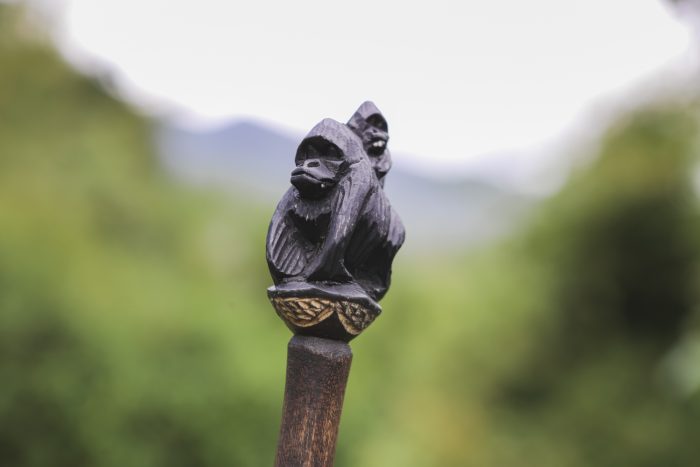
Walking sticks deserve a special mention. The park and local entrepreneurs rent sturdy wooden hiking sticks at the trailhead for a small fee, and they are a genuine asset on the steep descents, where they take a surprising amount of strain off your knees. Buy or rent one at the last minute rather than hauling a heavy trekking pole pair through the airport. Your porter can also secure one for you, and the guides routinely recommend them to every group.

If you find yourself short of something vital, Musanze’s shops stock most basics, and the lodges are helpfully equipped with forgotten items, from rain jackets to insect repellent. The practical rule is to bring what you cannot replace easily and tolerate flexibility on the rest. A little improvisation is part of the adventure, and the forest cares about your boots and rain shell far more than about the rest of your kit.