Gorilla Permits Rwanda — 6 Years of Trusted Service
Hiking Mount Bisoke to the crater lake is the most famous climb in Volcanoes National Park. The cone is perfectly symmetrical, and its summit hides a deep blue crater lake. The lake is reached after a long but rewarding single-day climb from the park headquarters at Kinigi. At 3,711 metres, Bisoke is not the tallest of the Virunga chain, which shares the border of Rwanda, Uganda and the Democratic Republic of Congo. It is, however, the most climbed. The trek takes a single day, and the view over the neighbouring peaks and the dark water of the crater lake is one of the most striking sights in East Africa.
Hiking Mount Bisoke is demanding. The trail climbs more than 1,000 vertical metres through dense mountain rainforest. The thin air at the summit will slow even fit hikers to a steady shuffle. But the effort is the point. This guide covers the trail in detail, the permit costs, and how to pack. It also explains how to combine the climb with a gorilla trekking safari on the same trip, so you can plan the day with confidence.
Hiking Mount Bisoke to the crater lake takes one full day. The crater lake at the summit of Mount Bisoke is roughly 400 metres across, the highest in the Virunga range. Hiking Mount Bisoke rewards you with a crater rim view over five other volcanoes. That crater lake view is the reason the mountain is so popular.
There are eight major volcanoes in the Virunga range, and six of them lie inside Rwanda’s Volcanoes National Park. Gorilla trekking brings most visitors to the park, but the volcanoes themselves are a growing attraction in their own right, and Bisoke is the entry point for most hikers. The reasons are practical as much as scenic. The trailhead is easy to reach from Kinigi, and the climb takes a single day. You do not need to camp on the mountain to see the crater lake.
The summit rewards hikers with a spectacle that few mountains in Africa can match. The crater at the top of Bisoke holds a lake roughly 400 metres across. Its water is a deep green-blue that looks almost black beneath the rim walls. On a clear day, the lake sits in shadow while the surrounding peaks catch the sun. The wind whips spray from the surface far below. The whole view, from the terraced hills of Rwanda to the flat green mass of the Congo basin, is worth every steep metre of the climb.
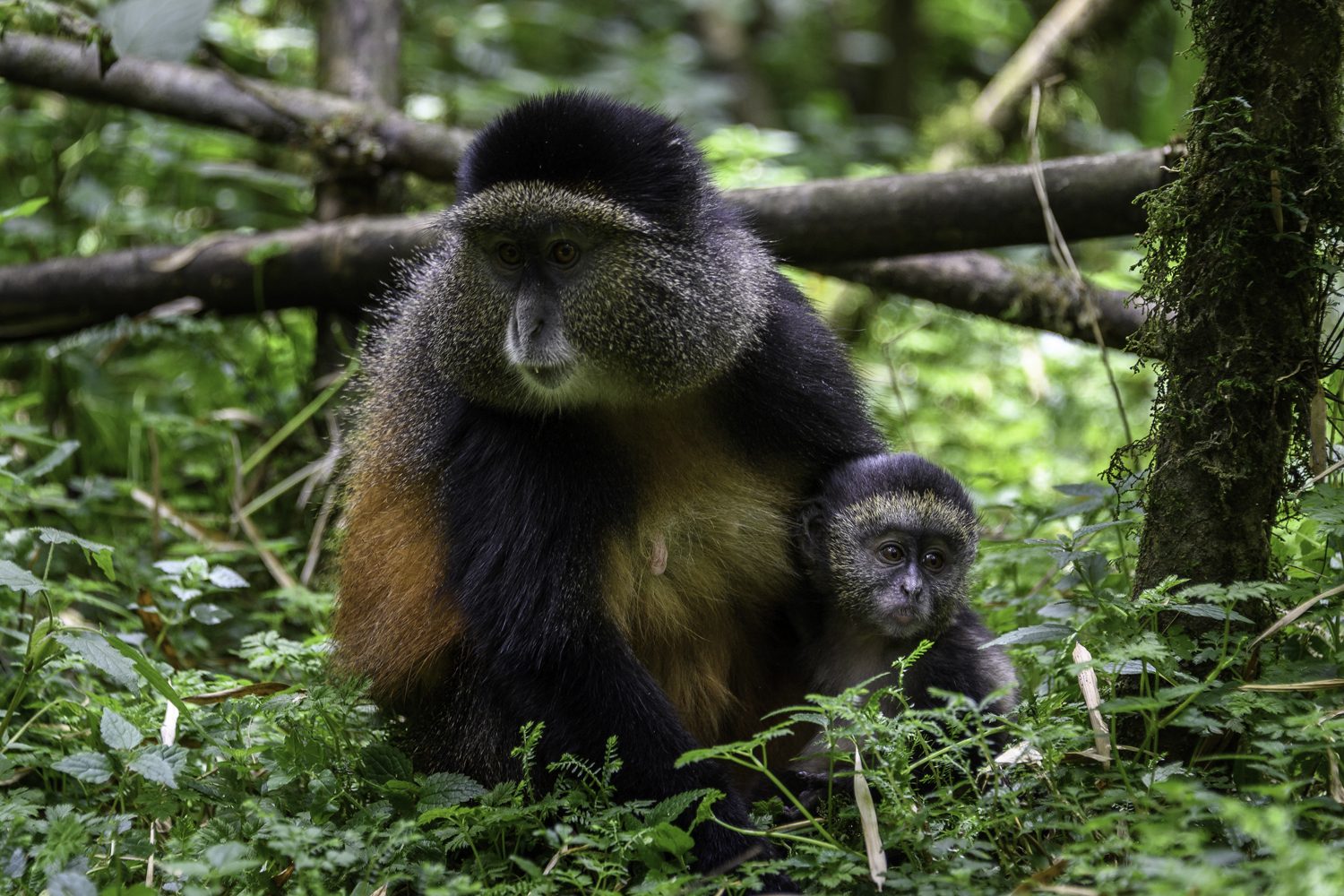
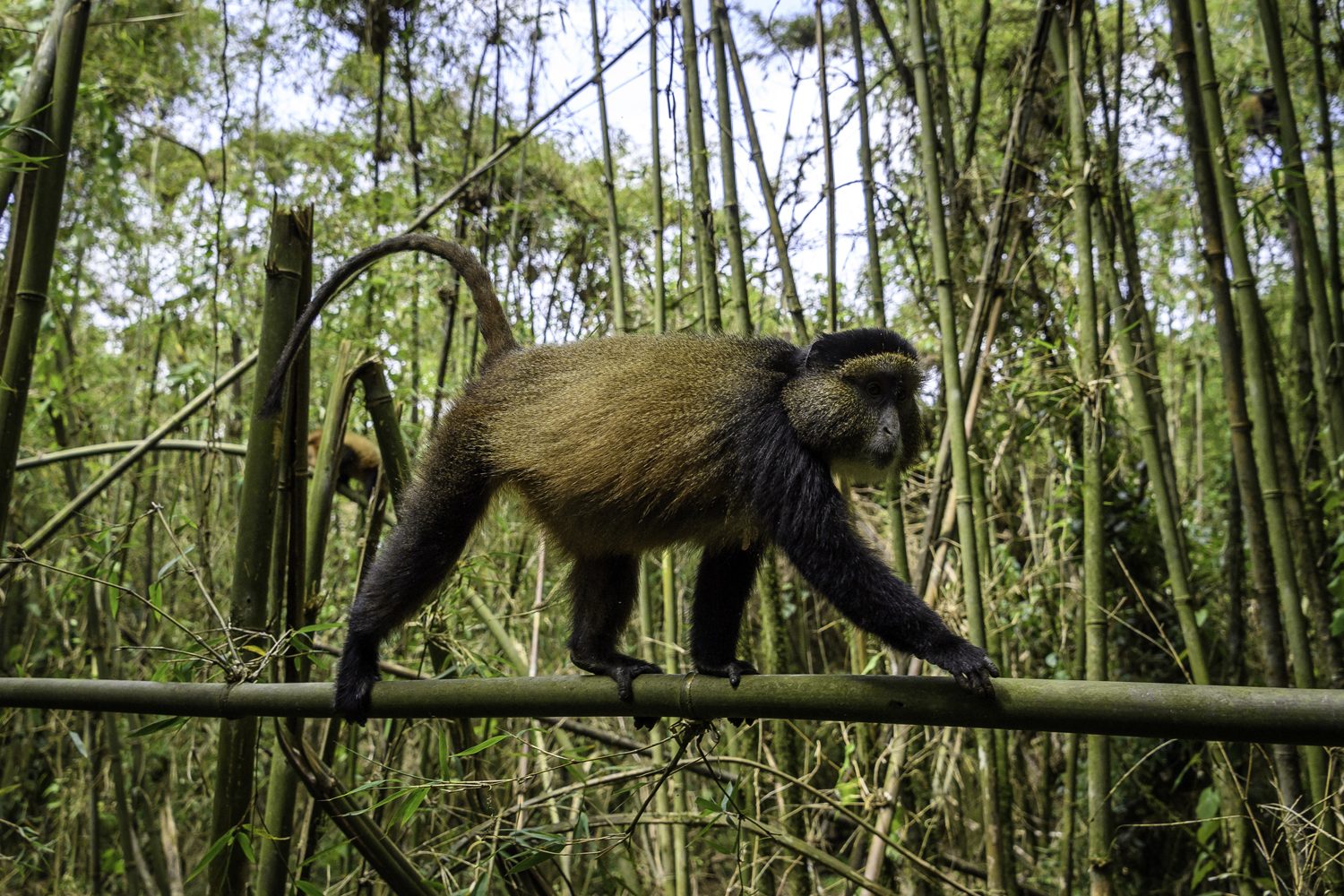
Bisoke is also one of the best places in the park to encounter the montane forest and its wildlife. The lower slopes are bamboo thickets where golden monkeys move in noisy troops. Higher up, the trail crosses Hagenia forest draped in moss, where colobus monkeys leap between branches and the rare mountain gorillas sometimes visit. The volcano is sacred to local people. The Rwandan side of the mountain is protected as part of the national park, a UNESCO World Heritage Site along with the other Virunga volcanoes.
You organise the climb through the Volcanoes National Park office in Kinigi, and you must book it in advance. You cannot simply turn up at the gate and start walking. Every visitor needs a hiking permit. Because the number of permits is limited each day, availability can run out weeks ahead during the high season. Most visitors book through a licensed tour operator who handles the permit, the guide and the transport in one package.
The trailhead is at Nyabigingo, on the edge of the park. From Kinigi it is a short drive, and your driver will wait at the gate while you hike. You set out early, usually around 7 a.m. The climb takes most of the day, and the descent should be completed before dusk. At least one armed ranger accompanies each hiker as part of the park’s anti-poaching programme. You can also hire a porter at the gate for a modest fee to carry your pack.
The ascent follows a narrow trail that is muddy for most of the year. You climb through the bamboo zone first, where the stems arch overhead and the path can be slippery even in the dry season. Then you enter Hagenia forest, whose gnarled trees are draped in moss and lichen. The forest grows thinner as you rise. In the final section, above about 3,400 metres, you walk through open meadows of giant lobelia and groundsels that look as though they belong to a different planet. The last push to the rim is a steep, rocky scramble that demands care.
From the rim, the crater lake is a short walk around the edge. Most hikers spend 30 to 60 minutes at the top, taking in the view and eating lunch, before starting the descent. The way down is hard on the knees, and the mud makes it slow. Plan for it to take nearly as long as the climb. The full day, from gate to gate, usually runs between 7 and 10 hours.
The crater lake at the summit of Bisoke is the reason most people make the climb, and it does not disappoint. The water sits in a bowl formed by the collapsed mouth of the volcano, ringed by sheer cliffs that drop from the rim to the surface. Its colour changes with the light, from deep blue to almost black. Cloud often covers part of the lake, which only adds to the atmosphere.
There is no path down to the water, and visitors may not descend into the crater. The national park protects the lake, and the rim is the only viewpoint. The crater lake is the destination, and hiking Mount Bisoke is the journey that earns it. This crater lake sits at the summit of Mount Bisoke, reached after hours of steady hiking through the forest. Standing on the rim is one of the great moments of a Rwandan trip, with the wind coming off the water and the other volcanoes of the Virunga chain around you. On very clear days you can see Mount Karisimbi to the southwest and the smoking summit of Nyiragongo in the Democratic Republic of Congo to the north.
The Rwanda Development Board issues the hiking permit for Mount Bisoke, and it is separate from the gorilla trekking permit. It is far cheaper, but the price varies by nationality and residency status. The park has adjusted its fee structure several times in recent years, so confirm the current rate when you book. As a general guide, foreign visitors should expect the permit to cost several hundred US dollars per person for the day.
On top of the permit, budget for a guide and a porter if you want one. Most package bookings include guides, and in practice they are mandatory. Porters cost a small fee paid in cash at the gate. The drive to and from the trailhead, a packed lunch, plenty of water, and park entry arrangements are normally bundled into the tour price. That is why most visitors book the climb as part of a wider package, such as a two-day Rwanda gorilla trekking tour that pairs the volcano with the park’s gorillas.
Bisoke permits are limited and sell out during the dry seasons, so book well in advance, ideally two to three months ahead for peak dates. The park office at Kinigi opens early on hiking mornings, and permit holders must present identification at the gate before the group departs.
You can climb the mountain all year round, but the two dry seasons are the best windows. The main dry season runs from June to September, with the clearest skies and the driest trails. The shorter dry season in December and January is also good. During the long rains from March to May and the short rains in November, the trail turns to deep mud. Visibility drops, and the summit is more often hidden in cloud.
Even in the dry season, weather on Bisoke changes fast. Mornings are usually clear, with clouds building over the summit by late morning, which is why the early start matters. Temperatures at the trailhead sit in the high teens during the day. On the summit, the wind and altitude can make it feel close to freezing. Rain can arrive at any time of year, and a good rain jacket is non-negotiable.
Keep the pack light. The porter will carry most of the weight, but you carry what you need for the day. Every extra kilo is felt on the climb. Trekking poles help enormously with the mud and the descent, and many hikers wish they had brought them.
Hiking Bisoke is a serious physical effort. The 1,000-metre elevation gain from the trailhead to the rim is continuous, with no flat sections to recover on. The altitude above 3,500 metres thins the air dramatically. Hikers who are new to mountain walking should train with regular hill work beforehand and expect to move slowly in the upper section.
Altitude sickness can affect anyone. The common symptoms are headache, nausea and shortness of breath, and if they become severe the only reliable cure is to descend. Take the climb at a steady pace, drink plenty of water, and tell your guide immediately if you feel unwell. The rangers carry basic first aid and can radio the gate in an emergency. There is no shelter and no road on the mountain, so fitness and preparation are your best protection.
Most visitors to Volcanoes National Park come for the mountain gorillas. Bisoke is the perfect companion to a trekking safari because both activities start from Kinigi. The gorilla groups most often visited by tourists, including the Sabyinyo and Amahoro families, roam the forest on the lower slopes of the very volcanoes you will climb. Seeing the gorillas one day and the summit of their home the next is a memorable way to understand the park.
Gorilla permits are expensive and strictly limited, so plan the two activities together. The gorilla permits page on this site explains the current prices and how booking works. Our mountain hiking guide covers all the other volcanoes in the park, from the short Mugabura day hike to the two-day Karisimbi climb. You can build the right combination for your fitness and your schedule. If you want to extend the trip, the twin lakes of Bulera and Ruhondo lie just below the volcanoes. They make a calm and beautiful third day in the north.
For most itineraries, the standard advice is to book the gorilla trek first and the hike second. Tired legs from the mountain should not spoil the encounter with the gorillas. Both bookings should be made through a licensed operator. Permits are released for sale on a rolling basis, so the earlier you confirm your dates, the better.
Can beginners hike Mount Bisoke and reach the crater lake? Fit, determined beginners can make it, but it is a hard day. Hiking Mount Bisoke to the crater lake takes most of the day and plenty of water. If you are unsure, train with hill walks beforehand and book a porter to lighten your pack.
How long does the hike take? Most hikers complete the round trip in 7 to 10 hours, with roughly an hour at the summit.
Do I need a gorilla permit for the climb? No. Bisoke requires its own hiking permit, which is separate and cheaper. The gorilla trek is a different activity.
Is the crater lake safe to swim in? No. The national park protects the lake, and there is no path down into the crater. The rim is the only viewpoint.
Can I climb Bisoke and Karisimbi in one trip? Yes, with enough days. Karisimbi is a two-day climb, so plan at least three nights in Musanze for the two mountains.
Mount Bisoke rewards planning. Book your hiking permit early, arrive at the gate before seven in the morning, and let the mountain set the pace. The crater lake that waits at the top has been a landmark of the Virunga range for millennia, and the view from its rim is one of the finest in Rwanda. Every hiking Mount Bisoke story ends with that crater lake view, and the hike earns it.
We organise Bisoke climbs as part of hiking and gorilla itineraries, with permits, guides, porters and transport all arranged in advance. Contact our team to plan the details, and let us take care of the paperwork while you focus on the summit. A permit in hand is the difference between a plan and a climb, and the crater lake is worth the effort. For official park updates, check the Volcanoes National Park website and the Visit Rwanda tourism board.