Gorilla Permits Rwanda — 6 Years of Trusted Service
There are lakes, and then there are lakes you paddle. Kayaking Lake Kivu puts you in the second kind — one of Africa’s great lakes, a vast inland sea of more than 2,700 square kilometres sitting at an altitude of around 1,460 metres in the western arm of the Rift Valley. Its water is clear, cool and remarkably calm, its shoreline is a maze of islands, bays and forested peninsulas, and its shores are ringed by the green hills that make Rwanda the Land of a Thousand Hills. For a kayaker, it is close to paradise.
Kivu is unusual among Africa’s great lakes in almost every way. It is one of the highest great lakes on the continent — at nearly 1,500 metres above sea level, it sits far above the lowland lakes of the east — and its position in the volcanic rift means its deep waters hold dissolved gases that bubble up in places, a reminder of the geology beneath. The lake has more than a hundred islands, from tiny rocky outcrops to the large island of Idjwi, and its shoreline is shared between Rwanda and the Democratic Republic of Congo.
This guide covers everything you need to know about kayaking Lake Kivu: the best paddling bases, the routes and islands, what you will see along the way, and the official lake guide from Visit Rwanda’s tourism siteay, and how to combine a kayaking trip with the rest of a Rwanda safari. If you are planning a full holiday around the lake, our Lake Kivu destination guide and the six-day Rwanda gorilla trekking and Lake Kivu safari are the best places to start.
Lake Kivu belongs to the family of African great lakes — the chain that includes Victoria, Tanganyika and Malawi — but it stands apart from them in almost every way. It is by far the highest of the great lakes, sitting at roughly 1,460 metres in the western branch of the East African Rift, and it is one of the most deeply embedded in its landscape: the hills rise directly from its shores, and the lake fills what is in effect a volcanic basin between the Congo and Nile watersheds.
The lake’s size is hard to grasp from the shore. At more than 2,700 square kilometres it is one of the largest lakes on the continent, stretching about ninety kilometres from its northern end at Rubavu to its southern outlet at Rusizi. Its islands number well over a hundred, and its shoreline — shared between Rwanda and the DRC — runs to hundreds of kilometres of bays, beaches and peninsulas. On its western side the hills of the Congo rise steeply from the water, and the lake has the feel of a mountain lake magnified to a scale that defies the word.
For paddlers, the geography is a gift. For example, the lake’s position in the hills shelters much of its water from the strong winds of the open rift, so its surface is frequently calm — glassy in the mornings, rippled in the afternoons. Its water is clear and clean, drawn from the hills and the springs of the rift, and it stays cool at altitude, which makes swimming and paddling comfortable through the middle of the day. This is not a lake you battle; it is a lake you glide across.
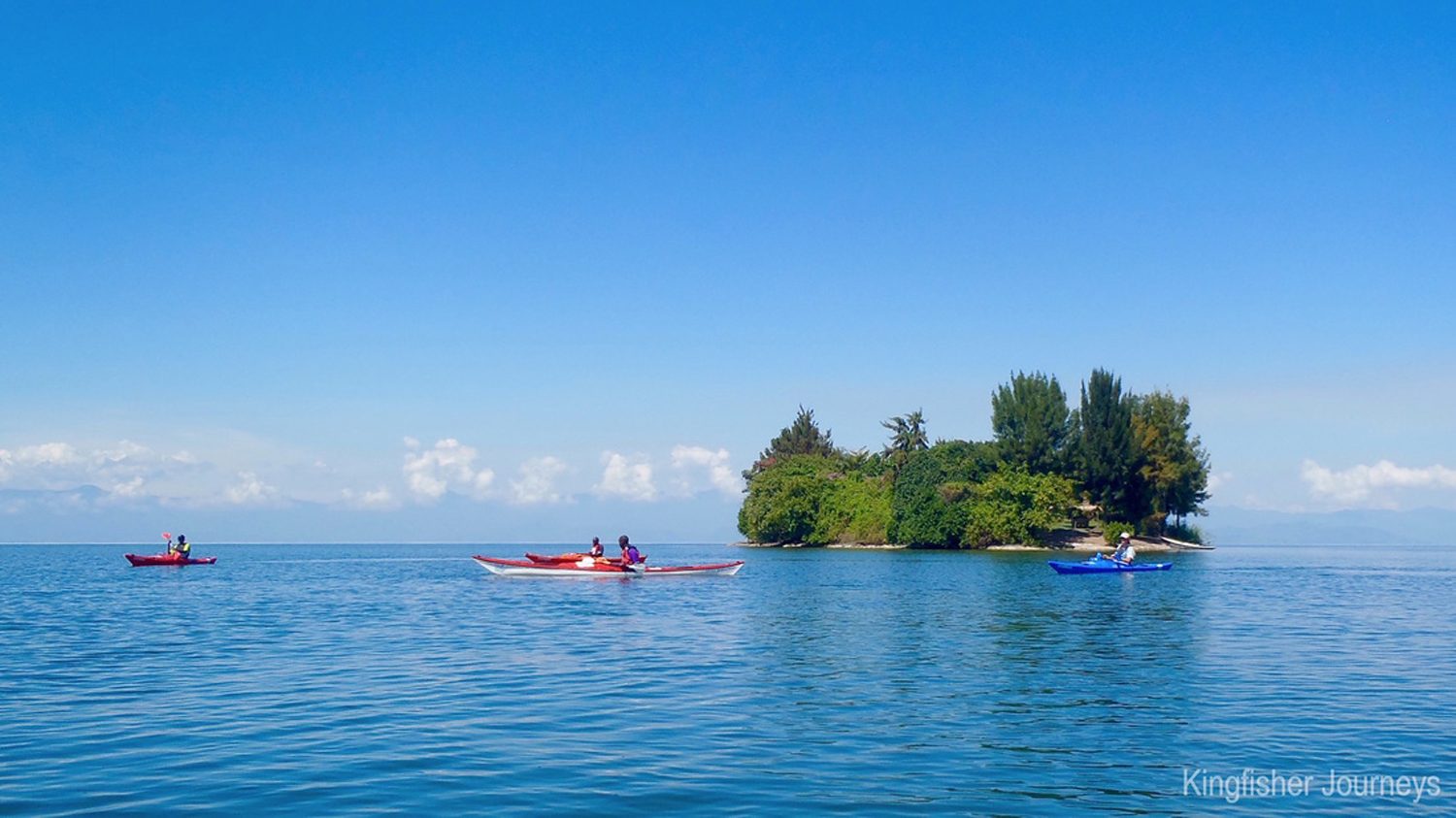
Kayaking Lake Kivu moves at the lake’s own pace, which is exactly why it is the perfect way to experience the lake. From a kayak you can slip between the islands, follow the shoreline into coves that are invisible from the road, and approach the lake’s fishing villages the way the lake’s own people do — across the water, quietly. Within an hour of launching, the road and its noise are gone, and the lake becomes a world of water, birds and hills.
The lake’s islands, meanwhile, are the paddler’s playground. Most are uninhabited or lightly settled, covered in forest or grass, and they make perfect destinations for a picnic paddle — launch in the morning, cross a channel, swim off an island beach, paddle back in the late afternoon. The larger islands have villages with their own rhythms: coffee washing stations, banana groves, children who paddle their own small boats. Meeting them from the water is one of the great pleasures of the lake.
Kayaking on Kivu is accessible to everyone. The lake’s calm waters suit beginners, while its size and its many islands give experienced paddlers room to plan real expeditions. Local operators along the lake offer kayaks and guides, and trips range from a two-hour morning paddle to multi-day island-hopping expeditions with camping on the islands themselves. The paddling is gentle; the memories are anything but.
The best kayaking Lake Kivu has to offer starts in two places. At the northern end, the town of Rubavu — known to everyone as Gisenyi — has a long beach and calm, shallow water that is ideal for a first paddle, with views across the lake to the Congolese town of Goma and, on clear days, the volcanic cones of the Virunga range behind it. A morning paddle at Rubavu, looking across the water to another country, is a gentle introduction to the lake.
The true heart of Kivu kayaking is Kibuye, the town also known as Karongi, in the middle of the lake’s Rwandan shore. Kibuye sits on a peninsula of hills covered in forest, with islands scattered around it and some of the calmest water on the lake. The paddling here is superb: you can cross to the island of Napoleon Hat, circle the pine-forested islands offshore, or simply follow the shoreline’s coves and cliffs. Operators in Kibuye run guided kayak trips, and it is the base for most of the lake’s overnight kayak expeditions.
Multi-day kayaking Lake Kivu is a genuine expedition. A two or three-day route from Kibuye paddles south along the shore, camping on beaches and island forests, meeting fishing villages along the way and finishing at the southern towns of the lake. The pace is set by wind and weather — mornings are calm, afternoons can be breezy — and the guides who run these trips know the lake’s moods. For paddlers who want the full experience, this is the trip to plan for.
The lake’s wildlife is visible from a kayak in a way it never is from the shore. Fish eagles sit in the trees along the shore and launch over the water; herons and cormorants work the shallows; flocks of weavers and sunbirds move through the lakeside vegetation. The birdlife of Kivu is rich, and a kayak is the perfect platform for watching it — silent, slow and level with the water.
The landscapes change constantly as you paddle. In the north, the hills are steep and the shore is rocky; in the middle, forested peninsulas and islands break the water; in the south, the hills ease back and the lake opens out. Tea plantations climb the slopes above the lake, their green terraces meeting the blue water, and villages of neat brick houses sit in the folds of the hills. Every bay has its own picture, and every hour of paddling brings a new one.
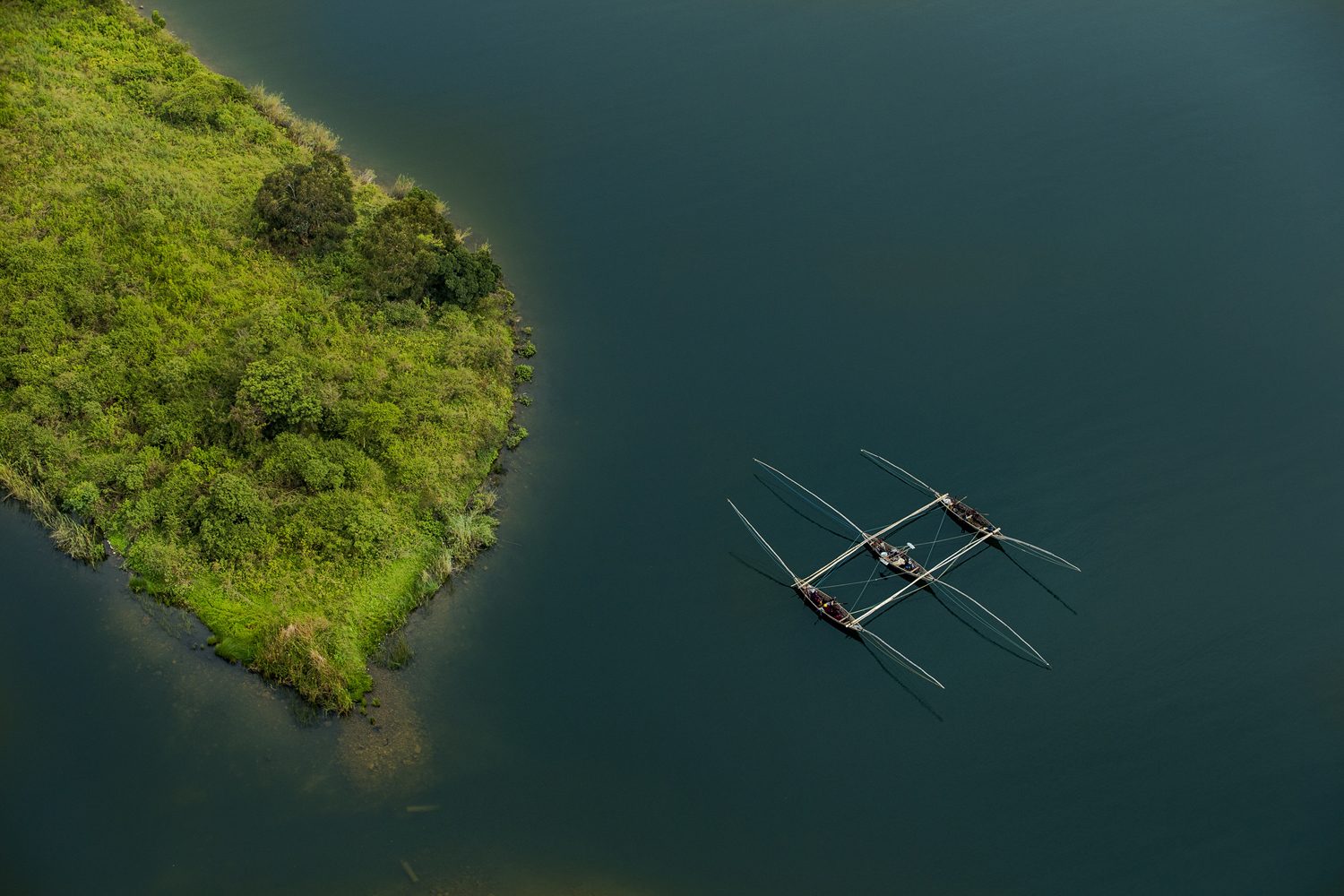
The people of the lake are part of the landscape too. Fishermen set out in the evenings in dugout canoes, their silhouettes black against the sunset; on some stretches you will see the famous singing fishermen, paddling in unison and singing as they row. From a kayak, you are part of the lake’s traffic — welcome in the villages, greeted from the shore, part of a water-world that has its own customs and its own life.
The islands of Lake Kivu are one of its great attractions, and from a kayak they are all within reach. Small rocky islands rise from the water like green hats, covered in forest and busy with birds; larger islands are farmed and settled, their villages connected to the mainland by boat. A paddle around any of them takes you through water that is completely yours, with the hills of the mainland on one side and the island forest on the other.
The largest island in the lake is Idjwi, which lies on the Congolese side of the water and is one of the largest lake islands in Africa. It is not a typical kayak destination from the Rwandan shore — the crossing is long and the border must be respected — but it is visible from many paddling routes, a long green mass that anchors the western horizon. Within the Rwandan side of the lake, the paddling islands are smaller, closer and easier, and they are the ones most trips visit.
Island stops are where the lake reveals its best side. A beach landing, a swim in the clear water, a picnic under the trees, the silence of a lake with no roads — then a lazy paddle back as the afternoon breeze builds. The islands give Kivu kayaking its structure: you paddle from island to island, and each one is a small adventure in its own right.
Kayaking Lake Kivu is a year-round activity, but the best conditions follow the seasons. In the dry periods — roughly January to February and June to September — the mornings are calm and clear, the water is at its most inviting, and the views of the hills and islands are at their sharpest. In the rainy seasons, however, the lake is still paddlable, but the afternoons bring more frequent showers and the wind can pick up quickly.
The daily rhythm of the lake matters more than the calendar. Mornings on Kivu are almost always calm — the classic time to launch — while afternoons often bring a breeze that builds from the south. Experienced paddlers plan their crossings for the morning, use the afternoons for swimming, beaches and island stops, and respect the lake’s moods: Kivu is gentle, but it is still a great lake, and the wind can change in minutes.
Whatever the season, the essentials are simple. The lake’s altitude keeps its water cool, so a light wet suit or a rash vest is comfortable for long swims; the sun at 1,460 metres is strong, so cover up and carry water. Your operator will brief you on conditions before every trip, and the guides keep a close eye on the weather.
All of the lake’s established kayak routes can be arranged through local operators, and travellers who prefer everything pre-booked can fold a kayaking day into a wider itinerary — from a half-day paddle at Kibuye to a multi-day island expedition with camping on the lake. Indeed, the lake is a year-round paddling destination, and the calm of its waters has a way of becoming the calmest part of any Rwanda holiday. To lock in your dates and your guide, book your kayaking trip with our team, or simply contact us and we will fit the lake into your plans.
Kayaking Kivu does not require much, but the right kit makes the trip better. In addition, operators provide the kayaks, paddles, safety equipment and guides; what you bring is personal:
Travel light on the water — the kayaks have limited dry storage — and trust the guides to handle the logistics. The lake will do the rest.
Lake Kivu is the centrepiece of western Rwanda, and it combines effortlessly with the country’s other great experiences. The lake is the heart of the Congo Nile Trail, the long hiking and cycling route that follows its shore from Rubavu to Rusizi, and a kayak trip is the perfect complement to a trail journey — a day on the water after days on the hills, or a morning paddle before a day of cycling.
To the north, the volcanoes of the Virunga chain rise beyond the lake, and the gorillas of Volcanoes National Park are a few hours’ drive from the lakeshore. A classic combination is a two-day gorilla trekking tour followed by a few days at the lake — the quiet of the water after the drama of the forest. To the south, the forests of Nyungwe hold chimpanzees and the canopy walkway, and the southern lakeshore makes a natural gateway to them.
The complete western Rwanda journey — volcanoes, lake and forest — is covered in our eight-day Rwanda best adventure safari, and for travellers who want the lake front and centre, the six-day Rwanda gorilla trekking and Lake Kivu safari builds a full holiday around it. Whatever you plan, leave the lake at least a full day: one paddle, one swim, one sunset. It will be the calmest day of your trip.