Gorilla Permits Rwanda — 6 Years of Trusted Service
Cycling in Rwanda is an invitation rather than a warning: the country calls itself the Land of a Thousand Hills, and every hard-won summit repays the rider. The country’s roads climb and fall through an endless landscape of green ridges, tea plantations, lakes and volcanic peaks, and every hard-won summit is repaid with a view that would be the highlight of most cycling trips anywhere in the world. Add smooth, well-maintained roads, light traffic away from the main highways and a cool, dry climate at altitude, and you have one of Africa’s finest cycling destinations.
Rwanda has also embraced cycling as a culture. The Tour du Rwanda has grown into one of the continent’s major stage races, professional teams train in the hills between seasons, and village children line the roads when riders pass. Everywhere you ride you are met with enthusiasm: local riders fall in alongside you for a stretch, farmers pause to wave from the fields, and the country’s own cyclists are proud to share the roads they love.
This guide covers the best of cycling in Rwanda: the signature routes, what the riding really feels like, the seasons and conditions, the packing list, and how to combine a cycling holiday with the country’s wildlife highlights. For the full picture of the lake you will ride beside, our Lake Kivu destination guide has everything you need.
Cycling in Rwanda works for every level of rider, from first-timers on the lakeshore to racers chasing the Tour du Rwanda’s climbs. This guide covers the routes, the seasons, the hire options and the practicalities, and it is the closest thing to a complete cycling Rwanda handbook you will find. Whether you want a single day in the saddle or a full two weeks, the hills are waiting.
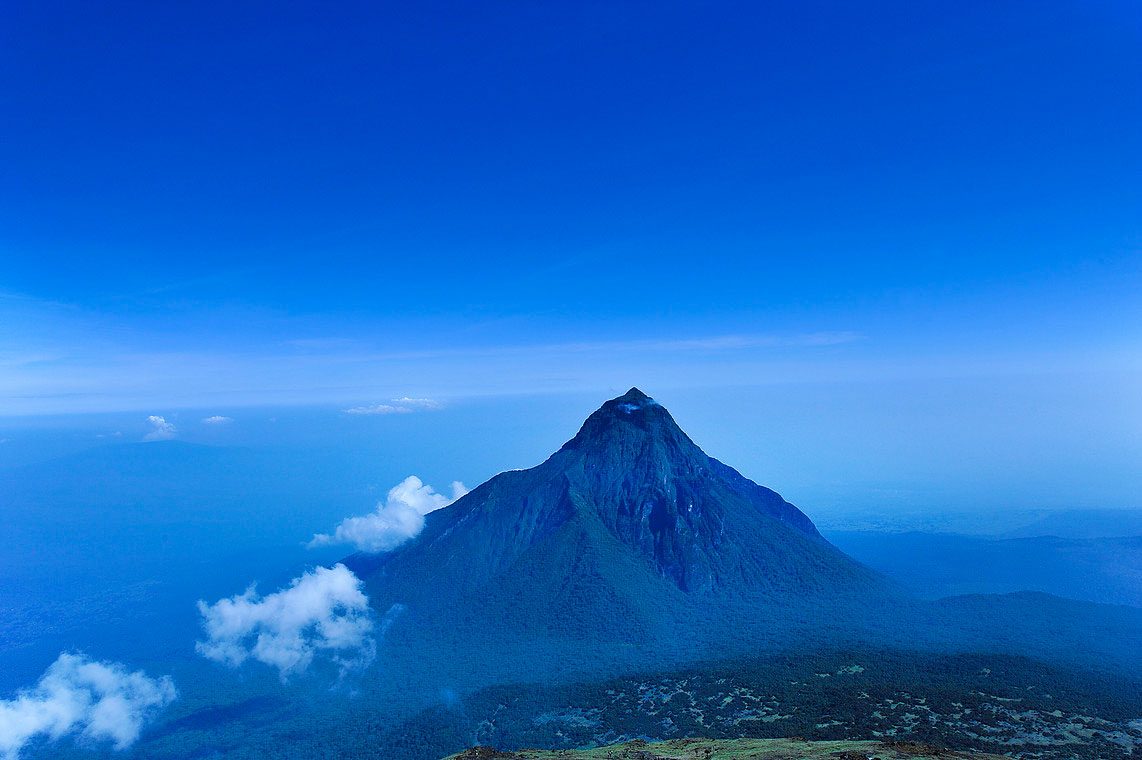
Start with the roads, which are the first reason cycling in Rwanda is exceptional: Rwanda has invested heavily in its road network over the past two decades, and the quality of its main routes is exceptional for the region: smooth, well-drained, well-marked and safe to ride. Away from the major arteries, quiet district roads thread through the hills and valleys, and on the slopes behind the lakes and volcanoes the traffic all but disappears, leaving you with tarmac, hills and silence. For a cyclist this is the difference between a pleasant ride and a memorable one.
Then add the altitude, which is the second reason cycling in Rwanda feels so good. Most of Rwanda sits between about 1,400 and 1,800 metres above sea level, which means cool air, strong sun and remarkably comfortable riding temperatures. The climbs are hard, but the descents are fast and shady, and even at midday the hills provide pockets of shade and breeze. It is a country made for cycling in the way other countries are made for sailing or skiing, and riders who come for the wildlife often leave converted to the wheel.
Finally, add the scale. Rwanda is small enough that you can cross most of it in a few days of pedalling, connecting the volcanoes of the north, the lakes of the west and the rainforest of the south by road, yet big enough that touring never feels rushed. Every stage ends in a village or town with a guesthouse, food and cold water, and every morning brings fresh tarmac and new hills.
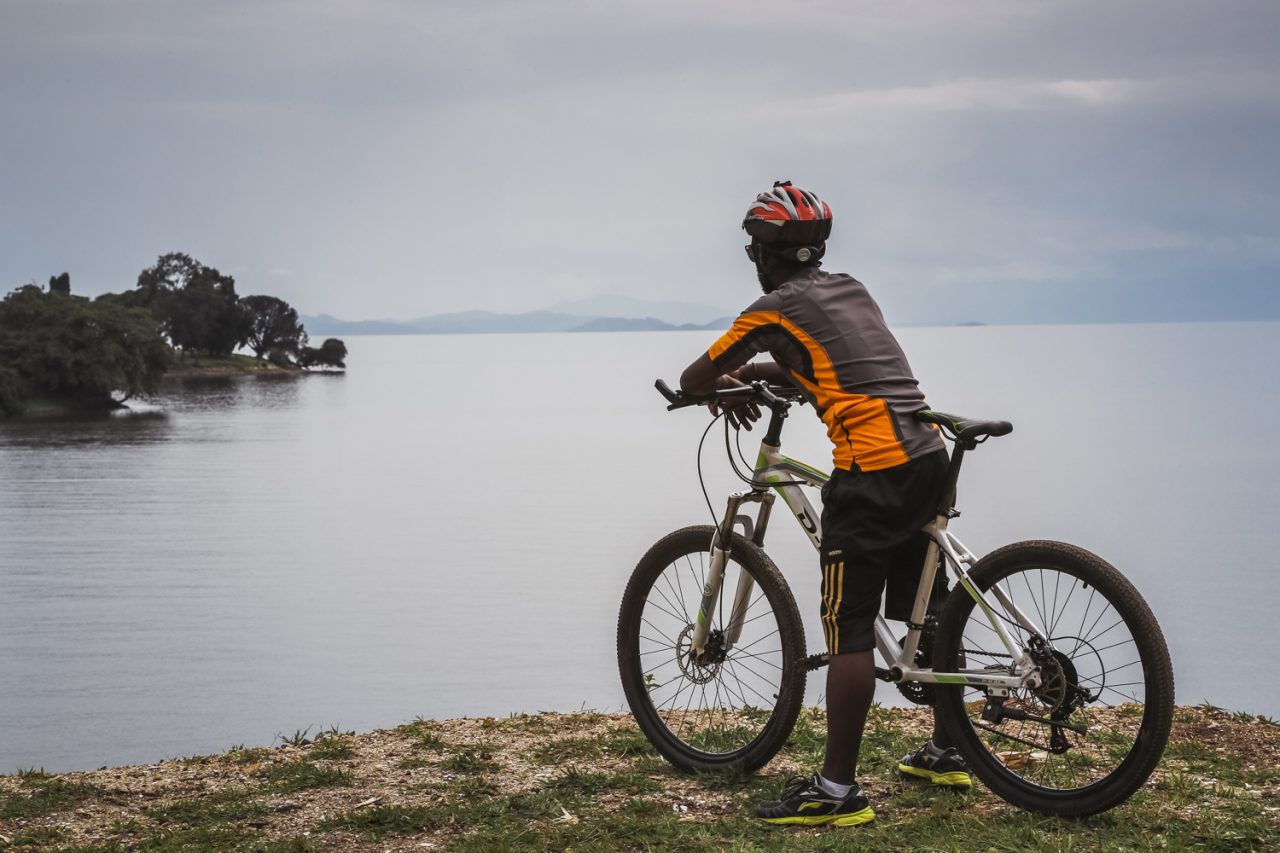
The Congo Nile Trail is the showpiece of cycling in Rwanda: roughly 227 kilometres of rolling, lake-facing riding between Rubavu in the north and Rusizi in the south, with the lake as your companion the whole way. The route follows the shore of Lake Kivu through tea fields, fishing villages and forest, and the lake is your companion the whole way, its blue water appearing and disappearing through the green. Most cyclists plan for four to six days on the trail, with daily stages of between forty and sixty kilometres.
The riding sits in a sweet spot, which is why most cyclists who try cycling in Rwanda start on the northern half of the trail: demanding enough to feel like an achievement, manageable enough for a touring holiday. The hills are short and stiff rather than long and gradual, the surfaces mix smooth tarmac with firm earth, and the reward is a rhythm that few long-distance routes can match. On good days you spin along the lakeshore with the islands and the Congolese hills mirrored in the water; on hard days you grind up a ridge and are handed the whole valley in return. Both kinds of day end at a village bed, a cold drink and a swim.
The trail’s overnight stops have grown up with it: guesthouses and beach camps welcome riders, luggage can be transferred between stages, and local guides know every climb. Many riders tackle the northern half of the route, which offers the most dramatic scenery and the easiest logistics, and leave the full length for a later, longer trip. The trail is best ridden slowly rather than fast, because the tea pickers, the fishermen and the lakeside villages are what make it memorable.
North of the lake, cycling in Rwanda reaches its most dramatic landscapes around the Virunga volcanoes, where the roads around Musanze climb through the hills at the foot of the peaks, with the cones of Bisoke, Sabyinyo and Karisimbi rising above the farmland. These are some of the most beautiful riding roads in Africa, and they lead naturally to Volcanoes National Park, whose official website covers the park’s attractions, where the same forests hold the mountain gorillas. A day in the saddle here is a day spent in the shadow of the chain’s great peaks.
Around Kigali, cycling in Rwanda has its cultural heart: the hills roll without mercy, and the capital has become the centre of Rwandan cycling culture: weekend pelotons, training camps and a growing network of riders. The roads climbing out of the city are the training ground for the country’s professionals, and the descents into the tea-scented valleys to the north reward anyone willing to earn them.
To the south, the roads between the Nyungwe forest and the southern shores of Kivu combine forest climbs, tea country and a warm lakeside finish, while the gentler terrain of the east offers easier spins for riders building their confidence. The whole country is, in effect, one great route sheet, and the days you spend in the saddle connect the country’s landscapes better than any other way of travel.
The rhythm is the first thing a newcomer to cycling in Rwanda absorbs, and it is why Rwanda’s official tourism board markets the country as a cycling destination. There are no Alpine passes and no desert headwinds; instead the road rolls over ridge after ridge in short, sharp climbs and welcome descents, and the trick is to pace yourself to the day rather than fight it. A route that looks relentless on paper becomes manageable once you settle into the cadence of the hills.
The welcome on the road is one of the great gifts of cycling in Rwanda. You are greeted at every village: children sprint alongside you for a few hundred metres, farmers stop work to wave, and drivers give you generous room. Local riders will fall in beside you for a stretch, and in the market towns your arrival is an event. For a visiting cyclist, Rwanda is one of the most welcoming countries in the world in which to turn the pedals.
Be ready for the small realities of the terrain: the strength of the sun at altitude, the cool rush of the descents and the afternoon build-up of rain in the hills. Riders new to Africa are often surprised by how little traffic they encounter; the real demands are the sun, the climbs and your own legs. Dress for the morning cool, protect yourself from the midday sun, and you will find the riding as comfortable as it is beautiful.
You do not need to bring your own bike for cycling in Rwanda, because hire quality has improved greatly as the country’s cycling scene has grown. Kigali, Musanze and the towns along Lake Kivu all have hire bikes, and the Congo Nile Trail has operators who deliver well-maintained mountain bikes to Rubavu and collect them at the end of the route. The quality of hire bikes has improved greatly as the country’s cycling scene has grown, and a decent mountain bike is the right tool for most of the trail.
Support is available at every level of cycling in Rwanda. Self-guided riders carry their own luggage or use the transfer services of the guesthouses along the trail; supported riders travel with a vehicle that carries the bags, provides spares and water, and has a guide who handles the logistics. The supported option is popular with first-timers who want the riding without the planning, and it lets you cover more ground in less time.
Two good habits will serve you well: Rwanda drives on the right and the roads are shared with motorbikes and minibuses, so ride defensively and single-file in the hills, and the Rwanda Development Board publishes the trail conditions each season; and the sun at altitude burns quickly, so carry sunscreen and drink constantly. Water can be refilled at almost every village, bananas and grilled plantains are the fuel of the road, and at the end of the day there is usually a lake within reach.
The dry seasons, roughly January to February and June to September, are the best months for cycling in Rwanda, offering the best riding conditions: firm trails, clear mornings and reliable views of the hills and lakes. The Congo Nile Trail is at its most enjoyable in these months, when the surfaces are dry and the swimming is perfect at the end of the day. It is also when the country’s own racing season is at its peak, so you may share the roads with training groups.
In the rainy seasons the trails are muddier and the afternoons bring regular showers, but the country is at its greenest and the hills are quieter. Many experienced riders enjoy the wet-season riding precisely because the roads are empty and the landscape is vivid; a good rain jacket and a willingness to get muddy are all it takes. For most riders, though, the dry months are the safest bet.
Whichever season you choose, the mornings are the golden hours: the air is cool, the views are clear and the roads are quiet. Plan your riding for the early part of the day, take a break through the hottest hours, and use the late afternoon for shorter loops or a swim. Rwanda’s altitude keeps the climate mild all year, and there is rarely a month when the riding is not worthwhile.
Pack small and ride light; everything unnecessary is extra weight on the climbs. The essentials above cover both the supported and the self-guided trip, and the local shops will supply whatever you forget. Bring a good attitude and a sense of humour: the hills of Rwanda give back exactly what you invest in them, and riders who embrace the climbs are rewarded with the country’s best views.
The mountain roads of Rwanda are shared, and the etiquette of cycling in Rwanda takes minutes to learn. Cyclists ride on the right, pass on the left, and ride single file when a vehicle appears, which on the Congo Nile Trail is constantly on the descents. Villages are busy with people, bicycles, motos and market stalls, so slow down and sound a polite warning before you reach a crowd. Schoolchildren love to shout greetings, and the friendliness of the road is one of the great gifts of riding in Rwanda, but it also means you must keep your eyes up at all times.
The big descents are where most accidents happen. The gradients on sections of the trail let you comfortably reach high speeds, and with potholes, gravel and the occasional herd of cows, that is a speed to resist. Brake early, take the corners wide, and always hold your position between heavy trucks, which share these routes. Plan each day so you climb in the cool of the morning and take the long downhill in the afternoon, when the light is warm and the traffic on the lakeshore road is at its quietest.
For the full Lake Kivu experience in the saddle, the Lake Kivu destination guide on this site describes every stage of the lake, and the six-day Rwanda gorilla trekking and Lake Kivu safari ends where the riding begins. Whether you come for a single stage or ride the whole trail end to end, book your fully supported ride with our team and we will handle the transfers, the luggage and the good guesthouses that make the hills a pleasure rather than a punishment.
Cycling in Rwanda is also the perfect skeleton for a wider safari. The country is small and the roads are good, so a riding trip can be built around the wildlife: the Congo Nile Trail by bike, then a short transfer to Volcanoes National Park for gorilla trekking, then south to the rainforest of Nyungwe. For travellers who want both the riding and the animals, our six-day Rwanda gorilla trekking and Lake Kivu safari strings the trail and the lake together, and the eight-day Rwanda best adventure safari adds the volcanoes and Nyungwe to the mix.
The classic combination is a few days on the trail followed by a day with the gorillas: the saddle legs are an excellent warm-up for the walking, and the wildlife days provide a welcome rest for the wheels. In the north, the climbs around Musanze bring you to the park gates; in the south, the forest roads of Nyungwe are themselves worth riding. The lake, the volcanoes and the rainforest are all within reach of the pedals.
Whatever your plan, measure your fitness honestly and start smaller than you think you need. The support is there when you want it, from the trail operators and the guesthouses to our own team, and the hills make every day a story. Contact our team to book a fully supported ride, and give yourself the time to enjoy the Land of a Thousand Hills at the speed it deserves.