Gorilla Permits Rwanda — 6 Years of Trusted Service
For most of the time you spend in a rainforest, you see the forest from below: the trunks of the giants, the curtains of the lianas, the flood of light far above your head. In Nyungwe, Rwanda has built a way to change that view. The Nyungwe canopy walkway is a suspension bridge of about 160 metres, strung some 70 metres above the forest floor, crossing a deep gorge at the level of the treetops in one of Africa’s oldest rainforests.
The walkway is the highest structure of its kind in the wider region, and it has become the symbol of the park, the image on every postcard and every itinerary. But no photograph prepares you for the moment you step out onto the deck: the slow sway of the bridge, the ocean of green canopy far below you, the birds flying at eye level, and the long quiet of the forest around you.
This guide covers the walkway in detail: what it is, what the crossing feels like, what you will see, the practical details of visiting, and how the canopy fits into a wider exploration of Nyungwe and Rwanda. For the bigger picture of the park’s trails, waterfalls and wildlife, our Nyungwe destination guide is the ideal starting point.
The Nyungwe canopy walkway is a long suspended footbridge that carries visitors across a forested gorge at the height of the tree crowns. The bridge measures about 160 metres in length and stands roughly 70 metres above the floor of the forest below, high enough that the canopy looks like a solid, rolling plain from the deck. It is built from timber planks, strong cable and rope, suspended between the great trees of the gorge and engineered to move gently with the wind.
The bridge sits at the end of the Igishigishigi trail, a beautiful twenty-minute walk through the forest from the Uwinka visitor centre. The trail climbs gradually to the rim of the gorge, where a safe platform gives onto the bridge itself, and the crossing leads into the forest on the far side before the path loops back through the trees. The full circuit, trail plus bridge, takes about two hours at a relaxed pace.
The bridge was built with a double purpose. The first is access: before it existed, the forest canopy at Nyungwe was effectively unreachable, an entire habitat of birds, monkeys and plants visible only from below. The second is conservation: the walkway gives the park an unforgettable attraction whose future depends on the forest staying intact, and the visitor fees it generates help protect the very trees it crosses. Rarely has tourism and preservation worked so closely together.
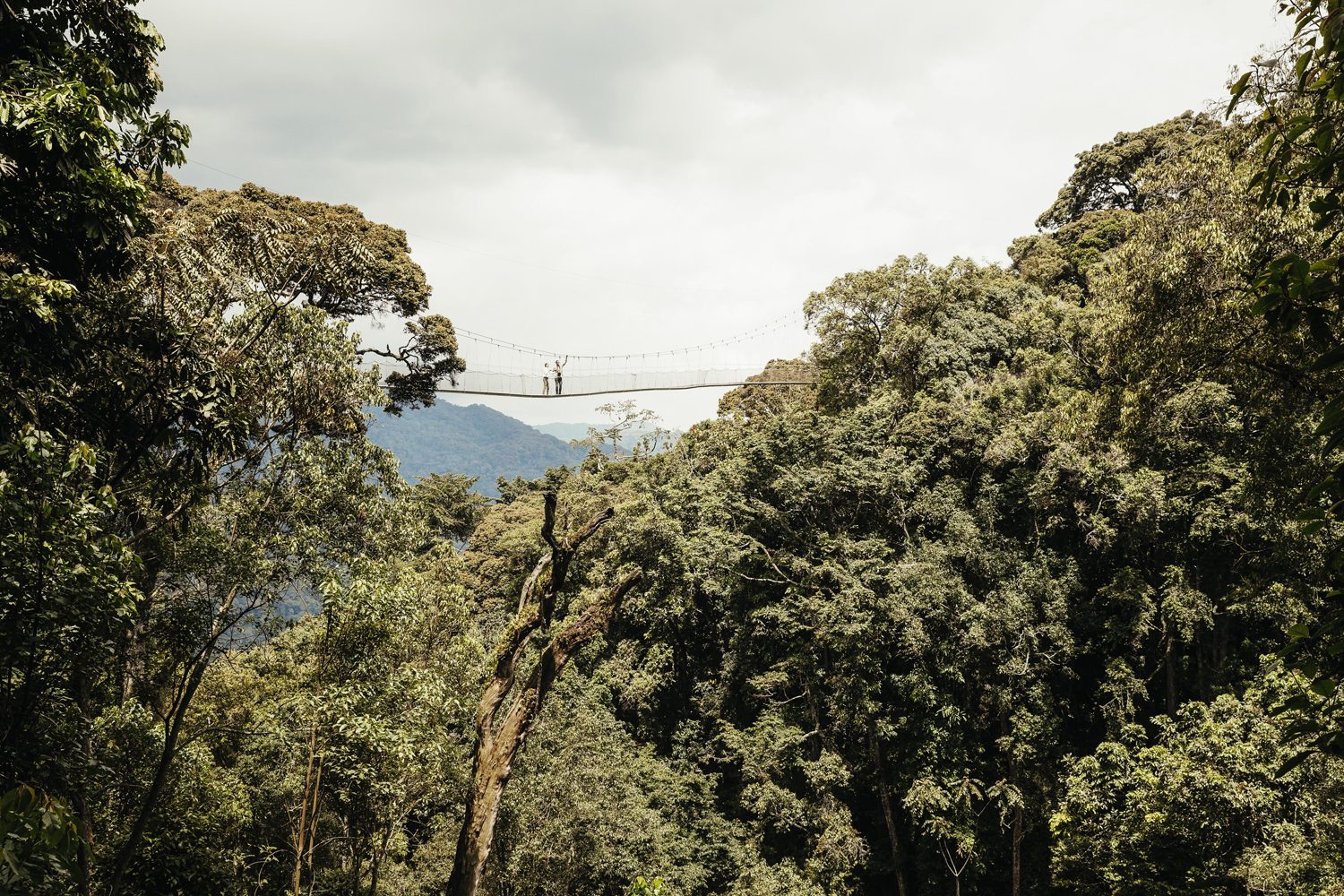
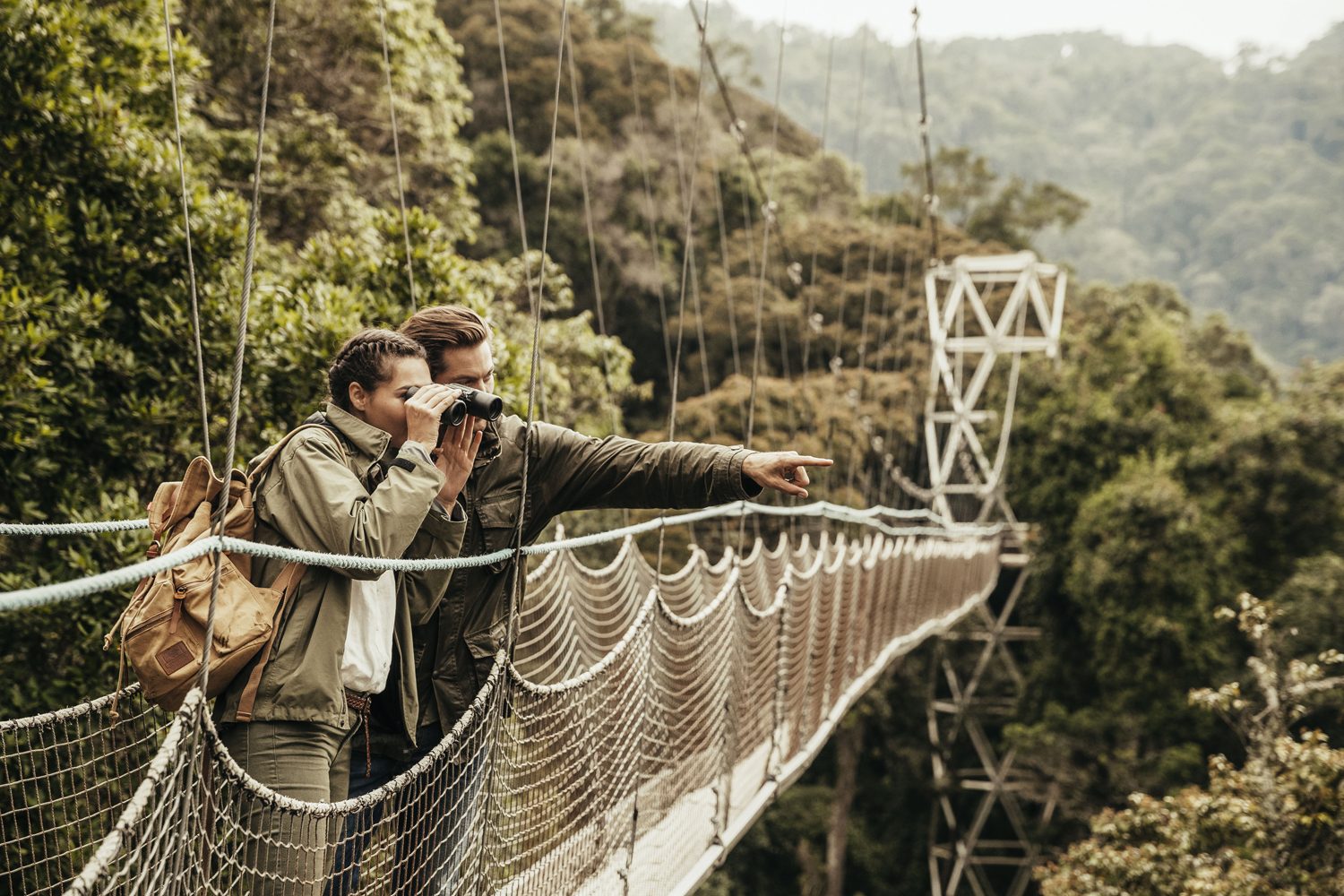
Stepping onto the Nyungwe canopy walkway is the moment you remember. The deck is firm underfoot, but it moves: a slow, easy sway that sets into a rhythm as you walk, and through the gaps between the planks you see the forest floor a long way down. For most people the first steps are the hardest; for almost everyone, the far half of the crossing is pure delight. The sway becomes soothing, the height becomes a privilege, and the green world of the canopy opens up around you.
The views are the whole point. From the deck you look across the gorge at the crowns of the great trees, each a platform of leaves and flowers; below you the forest falls away in layers to the stream at the bottom of the gorge; and all around, the birds move at your level, a perspective that no amount of ground-level walking can ever give. In the mornings, when the mist hangs in the valley, the bridge appears to float above the clouds, and the photographs are unforgettable.
The crossing is carefully managed. Groups are kept small, the bridge is crossed in single file, and the rangers are firm about the simple rules: no running, no jumping, nothing dropped, and no drones or selfie sticks at the height. The height is genuine and the sway is genuine, and visitors who are nervous should know that the structure is engineered to the highest standards and crossed by the rangers many times every day. Most people who are hesitant on the first step are smiling by the far side.
The canopy is the busiest habitat in the rainforest. It is here, among the crowns of the great trees, that most of the forest’s fruit and flowers are found, and it is here that its animals do almost all of their living, energy concentrated in the leaves and light above the shaded floor. From the Nyungwe canopy walkway you are a guest at the table of the canopy: monkeys move through the branches at your level, birds pass close enough to hear their wings, and the whole soundscape of the forest surrounds you.
The monkeys are the stars. Black-and-white colobus leap between crowns with ease, their long white tails streaming behind them, and troops of blue monkeys chatter their way across the bridge line. If you are lucky, and quiet, you may see the chimpanzees making their way through the trees, or catch the passing of a great blue turaco as it crosses the gorge. A pair of binoculars and a little patience turn the ten minutes on the bridge into the richest hour of the day.
The plants of the canopy are just as remarkable. Every large branch is hung with ferns, mosses and orchids, the epiphytes that live entirely in the air of the treetops, and the ancient trees themselves support whole gardens in their crowns. From the bridge, for the first time, you understand the forest not as an assembly of trunks but as a layered world: floor, understorey, canopy and sky, all of it interconnected and alive.
The Igishigishigi trail that brings you to the bridge is one of the finest short walks in the park in its own right. It climbs through old-growth forest where some of the tallest trees in Nyungwe stand, crosses clear streams on small bridges and gives a proper sense of the forest’s scale before you step out above it. The path is easy and well maintained, and the ranger leading the group will point out the medicinal plants, the nesting birds and the tracks of the animals along the way.
Plan the crossing for the morning. The light is level and soft then, the birds are at their most active, and the mist that gathers in the gorge makes the bridge into something out of a story. The whole excursion, the drive from the gate, the trail, the crossing and the return, fits easily in half a day, leaving the afternoon free for lunch among the tea or for another trail in the forest.
The Nyungwe canopy walkway is reached from the Uwinka visitor centre in the heart of Nyungwe, itself reached by a scenic drive through the tea country of the far west of Rwanda. The park and its trails can be visited for a few hours or a few days; a single park entry covers the first day, and the canopy is usually booked as part of that same entry to make the most of the time. Permits and ranger fees are sorted by your tour operator, or check the park’s official website for current entry details; the walkway is the most straightforward of the park’s activities to arrange.
Because Nyungwe sits high, the weather on the bridge changes fast: cool and misty in the morning, warm and sunny at midday, with the chance of rain at almost any hour. Dress in layers, wear sturdy shoes for the short woodland walk, and carry a light rain jacket even if the sky is blue. The forest makes its own weather, and a downturn on the bridge in light drizzle, with the leaves turned to silver, is one of the experiences you will not forget.
The bridge is suitable for most visitors, including children and older, well-mannered travellers; the walk is short and the structure is secure. It is less suitable for those with a serious dread of heights: the height is real. If you are at all uncertain, walk the trail for the forest and watch the crossing from the platform; the forest itself is, after all, a gift, and the canopy is a privilege rather than a test.
No special gear is needed for the walk: no harness, no helmet, no climbing school. Leave drones and selfie sticks at base, secure anything that could fall from the bridge, and bring the list above and nothing more. The forest and the bridge will do the rest, and the view has a way of doing the whole lifting itself.
The Nyungwe canopy walkway is a suspension structure of boards, steel spans and support towers, long enough to cross the gorge in a series of linked sections. The deck sags and gives beneath your feet, which is the point: the whole platform moves with the treeline, swaying gently in the air. Maintenance is checked each morning by the park, and because the system is inspected to a very high standard, the walk is safe even for people who do not love heights, provided they keep their eyes on the canopy and off the gap.
Visitors cross in small groups led by a ranger, and the pace is leisurely. The wooden deck creaks as you walk, the wind moves the trees, and above the gorge a great column of air separates the bridge from the streams of the forest floor far below. The numbers matter less than the sensation of walking through the top of the forest rather than simply above it, with the crowns of the trees at the level of your chest and the bird calls rising all around you.
The walkway is a small part of a much larger park, and for many visitors it is the bright introduction to Nyungwe’s network of trails. Combine the visit with the longer walks and the chimpanzee trek, and book your Nyungwe day through our team so the timing of the walkway and the rest of the forest is in good hands.
The Nyungwe canopy walkway steals the headlines, but it is only the most famous of a range of ways to know the forest. The park offers long day trails to waterfalls, lakeside viewpoints and the quiet stretches of the canopy, and the best rhythm for a visit is one highlight per day: a morning on the walkway, a day on the trails, a chimpanzee trek. The Nyungwe National Park guide sets out all of it, and the two-day chimpanzee tracking safari adds the great primate day to a walking itinerary.
Two days in Nyungwe is the comfortable minimum for a rounded visit, and three allows the park to show its full range. The canopy walkway gives the forest its famous image, and the trails give it its depth; together they make one of the best walking destinations in Africa. Book your walkway crossing with our team, and then climb down from the canopy to meet the rest of the forest on its own terms.
The Nyungwe canopy walkway is the headline, but the forest of Nyungwe has many highlights, and the canopy fits naturally into a longer stay. The classic combination is the walkway on one morning and a chimpanzee tracking session on another; the two are the great experiences of the park, treetops one day, apes the next. Our two-day Nyungwe chimpanzee safari centres on the apes, and the walkway is easy to add to the schedule on the drive in or out.
The waterfall trails and the summit walks of the park lie within reach of the same base, and a couple of full days in Nyungwe lets you meet the forest in all its moods. For travellers building a bigger Rwandan itinerary, the eight-day Rwanda best adventure safari combines the rainforest with the volcanoes of the north and the lakes of the Kivu region in the right order. The lessons of the canopy, the forest, the water and the mountains together make a picture of Rwanda that is hard to beat.
Standing on the bridge in the morning, with the mist above the green ocean and the calls of the forest sounding from below, is one of the defining images of Rwanda. The canopy walkway is quick to visit and impossible to forget, a few minutes above the trees that stay with you for years. Book your Nyungwe day with our team, walk the Igishigishigi trail, and step out over the gorge; the forest has been waiting a long time to show you this view.