Gorilla Permits Rwanda — 6 Years of Trusted Service
Nyungwe forest trails and waterfalls define the green heart of south-west Rwanda: a vast rainforest that has stood on the mountains of the western rift for millions of years, making it one of the oldest forests in Africa. Its surface is rugged, its rainfall is generous and its interior is one of the richest storehouses of life on the continent: a forest where waterfalls, swamps and valleys lie beneath a great canopy, and where the calls of chimpanzees echo through the morning mist.
The forest is protected as a national park, and the best way to enter it is on foot. Unlike the open savannah of the east, Nyungwe is a world of close trees and bright streams, and its great gift to the visitor is a network of marked forest trails: paths that lead into the interior, past giant trees and hanging orchids, beneath the canopy and beside the roar of the waterfalls. The trails of Nyungwe open up a whole country of walking.
People often come to Nyungwe for the chimpanzees, but it is the forest itself they remember. This guide covers the walking side of the park: the principal Nyungwe forest trails, the waterfalls, the canopy walkway, the wildlife you will meet and the practicalities of planning your days on foot. For an overview of the park and its animals, our Nyungwe National Park guide is the best place to begin.
Nyungwe is not just a forest; it is a survivor, and its forest trails and waterfalls are, in fact, the best way to meet it. Scientists describe the rainforest here as one of the oldest in central Africa, a block that persisted through the great swings of climate that turned much of the continent to savannah. This is the ecological memory of the region, a place where the mountain passes have stood as a refugium for hundreds of thousands of years while the forests around them shrank and grew.
The park covers close to a million hectares wrapped around the crest of the rift, lying between about 1,600 metres in its valleys and close to 3,000 metres at its highest summit. Its position on the water divide, moreover, makes it vital to the whole country: the rain that falls on Nyungwe drains in two directions, toward the Congo basin in the west and the Nile system in the east, supplying springs, rivers and wetlands for millions of people and animals beyond the park.
That mix of age, altitude and isolation has produced extraordinary richness. Nyungwe is home to more than a thousand species of plant, several hundred species of birds, dozens of mammals and more than a dozen species of primates, among them chimpanzees, several kinds of monkey and the notable colobus. Every step on the trails passes species that have been living in this forest since before humans set foot in it.
The greatest strength of Nyungwe as a hiking destination is, for example, its forest trails and waterfalls, which let visitors choose their own level of adventure. The walks range from short loops of an hour or two to full-day expeditions, and each one leads through a different face of the forest: the deep and quiet of the primary forest, the bright clearings and their ferns, the steep ravines of the big streams.
Between them, indeed, these trails cover the full range of the forest experience: the gorge of Isumo and its thunder, the open, secret valley of the swamp, the altitude and the wind of the summits, and the deep nave of the old-growth forest. Each is led by a park ranger, the convention across Nyungwe, and the rangers are a walking encyclopaedia: they know where the chimps have moved, where the colobus feed, and where the light comes through the canopy best.
Most of the trails begin from the Uwinka volunteer base high on the ridge, reached along the road that cuts through the forest between the tea estates of the park and the agricultural valleys. The scale of the place is hard to take in at once: the forest stretches to every horizon, the air is heavy and green, and the noise of the day comes from the trees themselves.
The most beloved waterfall on the Nyungwe forest trails, however, is the Isumo falls, a route that leads steadily down through the forest toward the roar that grows ahead. Isumo is not a modest stream; it is a great watercourse, a broad ribbon of water that falls from the escarpment into a pool of green, its sound filling the whole valley. In the wet season it speaks anew, and the point where the path meets the falls, with the mist on the forest and the light playing on the water, is one of the most memorable in Rwanda.
On the plateau above, meanwhile, the Kamiranzovu trail tells a different story. Here the ground opens in the valley of a slow stream and the forest gives way to a broad swamp, a place where the water spreads wide and birds go about their work: the reeds with nests, the edges and the calls. It is the launch for the most patient of bird watchers and for the walker who enjoys the moody landscape that the sun cannot entirely dominate.
Water, in fact, is the thread that pulls the Nyungwe forest trails together, and waterfalls mark its loudest moments. The streams that cross the trails take the rain from the high forest on their way to join the headwaters of the great rivers, and where the trail strikes water it does so with bridges and stepping stones, usually at the point where the current is easiest. Walking Nyungwe is always walking with water, between the splashing of the streams at the bottom of the valleys and the big rain that returns to the canopy.
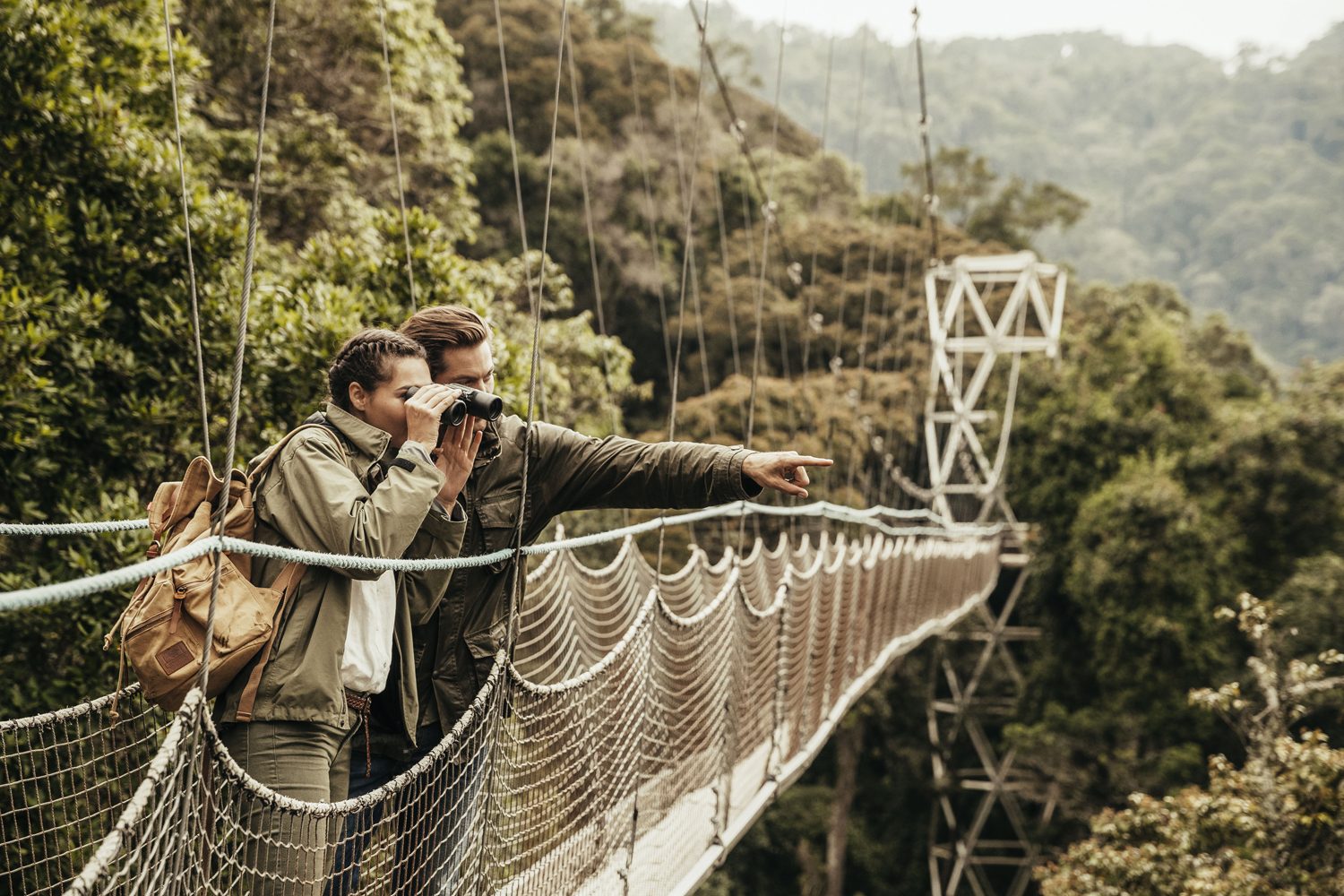
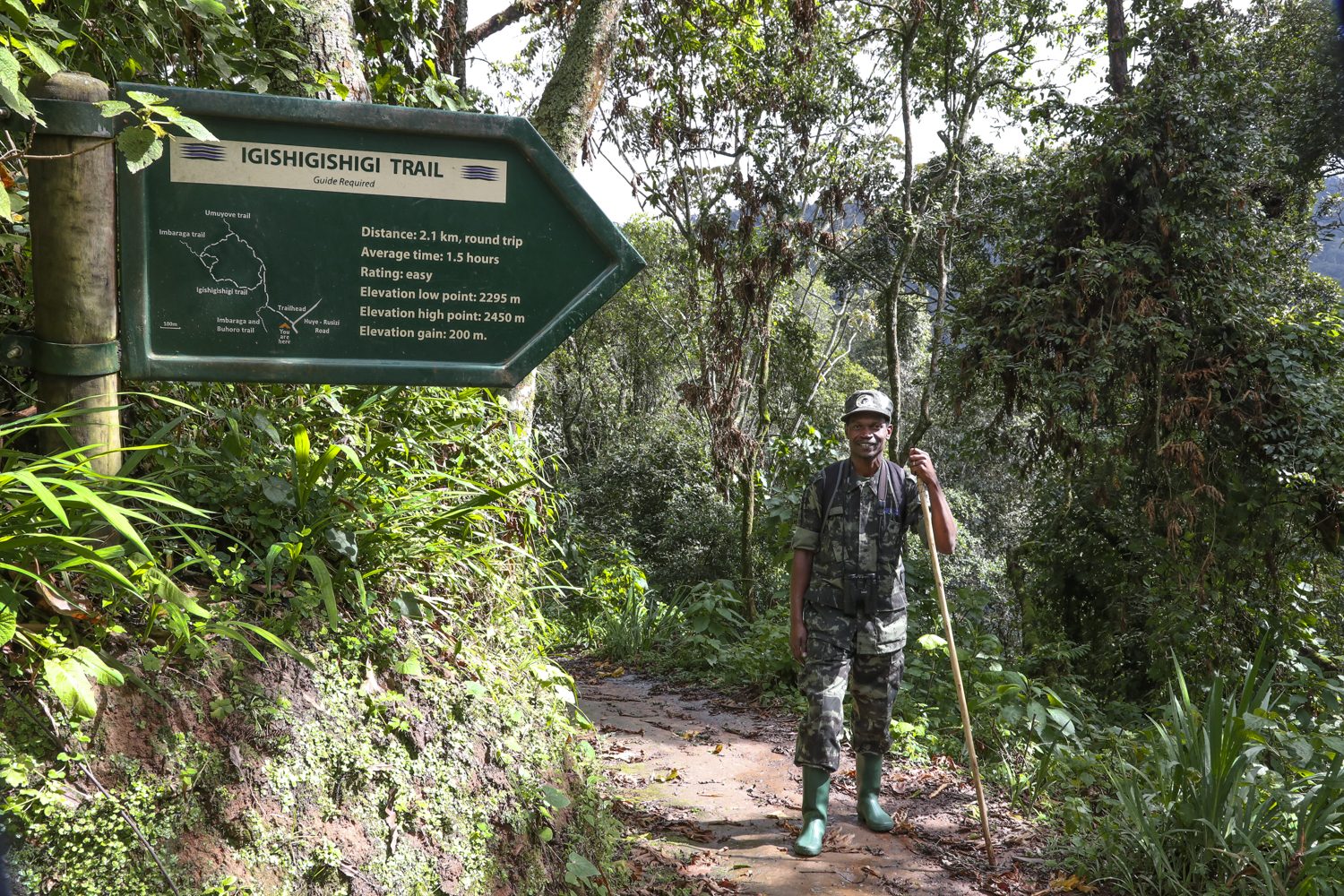
No account of the trails is complete, however, without the canopy walkway, the spectacular bridge that swings above the forest gorge at the end of the Igishigishigi trail. The bridge spans about 160 metres and hangs some 70 metres above the forest floor, carrying you across the gap at the level of the crowns of the trees. It gives ten minutes of the best view in the park and the truest, most level of the forest.
Walking the region’s trails lets you stand on the high of the canopy, where the leaves of the treetops look like a solid, rolling plain, and where the birds and sleeping monkeys level off around you; the photographs from this bridge improve everywhere you look. Our canopy walkway guide has the full practical detail; in addition, the crossing makes a perfect answer to a day of the forest, particularly when teamed with a morning on the great areas. For those who would rather stay on the ground, the viewpoints from the far side of the gantries are wholly enough.
Nyungwe’s primates are the headline for many visitors. The chimpanzees, the high-jacked stars of the park, are best met on a special fellowship and tracking system inside the forest, and a morning walk with researcher-led trackers is one of the finest wildlife experiences in Africa. The chimpanzees of the park have been studied for decades and are partly habituate, so the encounters are frequently intimate while always on the animals’ terms.
The ordinary trails are the place to meet the other residents. Along the paths, for example, you may meet the long-nosed colobus moving through the crowns, family groups of blue duikers, the shy of the trees and, with patience and a quiet, golden and other monkeys. The forest is not shy of its own mystery; the rangers will share that they are loaded with the habits of the animals they have followed for a lifetime, and their eyes find the movement that a visitor would miss. Do not be surprised to spend an hour which to grow nothing but then everything, all from the same spot of the trail.
Nyungwe’s nick-name among the park rangers is the forest of the big forest, and it is earned: the trails of the national park are the only way to be empty of crowds. You will share the forest with the trackers, with monkeys and birds, and with very little else; this is a forest of immense age and perfectly satisfying riches that has grown used to the occasional, respectful visitor.
Above all, make the walking days the heart of your plans: Nyungwe forest trails and waterfalls are the reason to linger. A day of the trails covers sixteen to twenty kilometres if you combine the canopy bridge with the Isumo trail, or the forest loop with the sunset; a full day around the base of the canopy and the headquarters covers the ground a visitor rarely finds. The park is walker friendly and the rangers are superb; the challenge is the choice, and the memory.
Please be ready for the season of the forest. Nyungwe’s altitude, above 1,600 m in its trails up to 2,950, brings rain almost every the day, and the visibility in the forest is limited to the arms of the hour. The layout: plan a proper fit, to arrive at the trail head at the hour of open, with your rain jacket; they walk with your head up. The falls and the streams are best in the morning, the truer of the afternoon may beat the planets over the canopy.
The practical fact is superb: a single entrance fee covers your time in the park, permits are sorted by your operator, the ranger instructs the trail and goes with you, and the trails are secure. The park also offers a lodging at the gate and in the near forest, so a walker can take two or three full days in the park and sleep in the rim of the forest, waking to the chimpanzees on the boundary of the canopy.
The seasoned walker of Nyungwe will not mind that the answer is alive with rain; the water is indeed the forest’s strongest asset, and the trails reward those who walk in the open, warm jacket. The forest bag follows the advice of the rangers, and the forest itself is the joy of the walking.
Nyungwe receives rain in every month of the year; however, these forest trails and waterfalls are walkable year-round with good timing. The drier stretches fall between June and September and again in the short dry pause of December, when the trails hold their shape and the forest opens to the light. In the rains, which concentrate around March to May and October to November, the paths are slippery and the river crossings rise, but the waterfalls are at their loudest and the forest is a brilliant loud green, and the rangers simply route the day around the downpour.
Whichever season you choose, start early. The rangers open the trails at dawn, the morning is the coolest for climbing, and the primate groups, which feed in the early hours, are most visible in the first hours of light. Carry rain gear whatever the season, take a second bottle of water, and let the guide set the pace. The forest is forgiving of extra time and unforgiving of bad preparation, and the reward for patience is measured in birds, monkeys and the quiet of the great canopy.
The day trails described on this page are the heart of a Nyungwe visit, and they combine naturally with the park’s signature experiences. The Nyungwe National Park destination guide puts the whole forest in context, and the two-day Nyungwe chimpanzee tracking safari, in addition, adds the best of the forest’s wildlife days to your trail plans. Let our team plan the walking days for you, so the timing of the park, the camps and the seasons works in your favour.
Nyungwe is the climactic part of any Rwanda itinerary, and the trails are its beating heart: the waterfall trails, the canopy bridge, the swamp forest, the summit, the chimpanzees encountered along the way are the summit of the whole western journey. Many visitors travel straight from the park to the Congo River Nile lake of the trail and the lakes; few stretch to go from the volcanoes to the forest and the Kivu shore in one trip. For a specialised time in the forest, the two-day Nyungwe chimpanzee safari combines the tracking with the best trails, and the full country is covered in our eight-day Rwanda best adventure safari, which gives Nyungwe the two things the forest really deserves: time and mileage.
You can afford to travel the park in a version of the name is long and old and green. Give it at least a couple of days; take the rangers’ advice; and be prepared, above all, for the canopy of the great forest, which is the hardest of any in Africa on a walking scale. The trails of Nyungwe are the finest walking in Rwanda, and the forest that holds them is close to the best in the story of the continent. Entry fees and trail news are published by Rwanda’s official tourism board.