Gorilla Permits Rwanda — 6 Years of Trusted Service
The volcano country of northern Rwanda is famous for what rises above the ground: the great cones of the Virunga chain and the mountain gorillas that live in their forests. But beneath this same landscape lies a different kind of wonder, hidden in the dark. The Musanze Caves are a network of volcanic tunnels formed by the lava flows of the Virunga volcanoes, and a guided walk into their cool darkness is one of the most atmospheric experiences in the country.
These are lava tubes. When the mountains erupted in the distant past, rivers of molten rock poured across the land. The surface cooled into a crust while the centre stayed liquid and drained away, leaving long natural tunnels behind. The Musanze system is among the largest and best preserved of its kind in the region. It runs for a considerable distance beneath the farmland and forests at the foot of the park.
The caves were known to local people for generations as a place of shelter and legend. They opened to visitors only in recent years, and quickly became a favourite stop on the northern circuit. This guide covers the geology, the legends, the tour itself, the wildlife of the underground and how to combine a visit with the mountains and gorillas above. For the practical details of the area, see our Musanze caves page and the Volcanoes National Park destination guide.
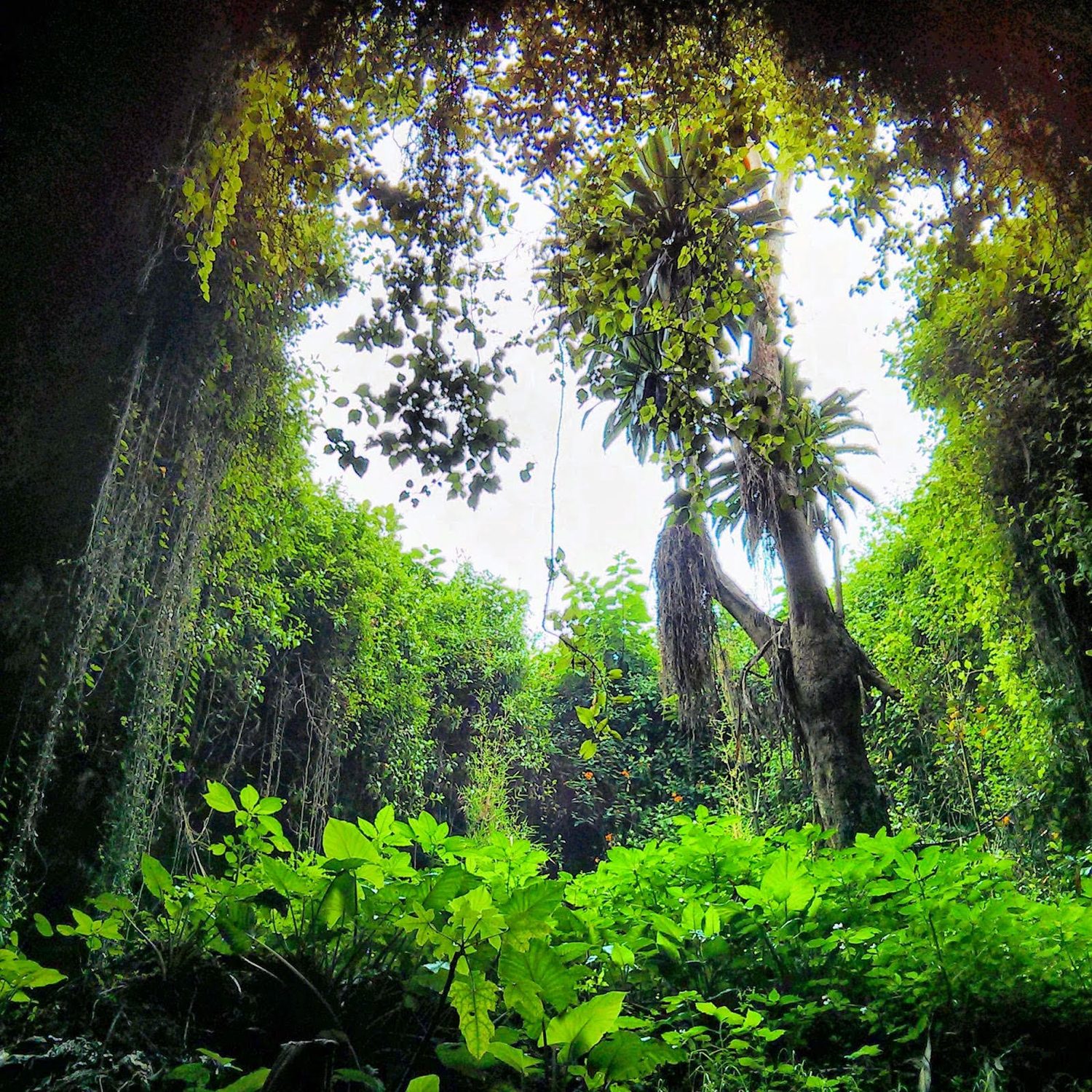
The Musanze Caves are a textbook volcanic formation. When one of the nearby cones of the Virunga chain erupted, lava streamed down the slopes in rivers. The rivers lost heat on the surface and hardened into a crust, while the molten centre continued to flow beneath. When the eruption ended and the liquid drained away, an open tunnel remained under the hardened crust. This lava tube is roughly circular in section, and sometimes tall enough to stand up in.
The main system opened to visitors runs for around two kilometres beneath the foothills. It shows all the signatures of its volcanic birth. Look for smooth, glassy rock on the walls, irregular floors of solidified stone, and roofs that curve like the inside of a wave. In places the roof has collapsed, opening skylights through which trees reach down and shafts of light fall onto the cave floor.
Because the tubes formed underground, they stay remarkably stable. The temperature inside is cool and constant year round. The air is still and damp, and the sounds of the forest above recede into a deep silence. The geology of the Virunga chain is young by the standards of the earth. Standing in the caves, you are inside one of the most recent chapters of the range’s story. The same volcanic forces that built the mountains also hollowed out their feet.
The caves carry more than geology. For the people of the region they have long been a place of refuge and story. They were a shelter in times of conflict, a cool storeroom for the harvest, and a hideaway in the wars that rolled across the hills. The tunnels were part of the landscape of memory long before they became a tourist attraction. The rangers who lead visits are proud to tell the stories their grandparents told them.
Some of the lore is pure legend. Villagers say the tunnels run all the way to the shores of Lake Kivu, or that they connect to the Congo. Travellers are told of the people who once sheltered here for weeks at a time. Like all good legends, these are impossible to prove and impossible to resist. Standing in the darkness at the end of a tunnel, the idea that it might go on forever feels entirely plausible.
In more recent memory the caves played a sobering role. During the genocide against the Tutsi in 1994, many people hid in these tunnels seeking safety, and some did not survive. A visit to the caves today is therefore also a place of remembrance, and the guides speak of it with gravity. It is a reminder that the landscape of Rwanda is woven into the country’s history, in both its light and its dark.
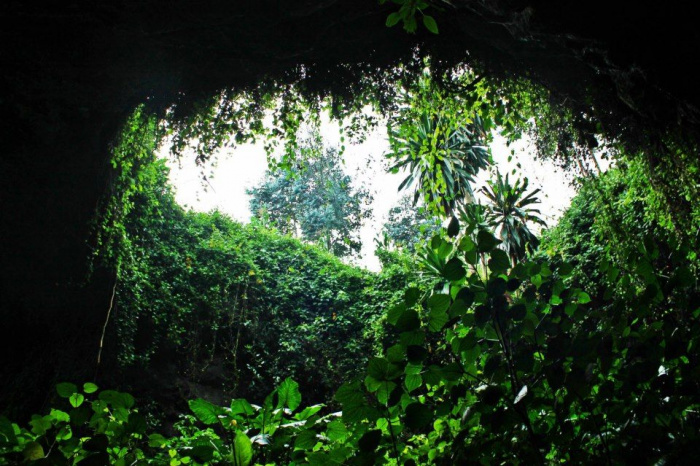
A visit begins at the entrance to the caves, where rangers brief the group, hand out helmets and headlamps, and lead you down a short path to the mouth of the tunnel. The transition is immediate. One moment you are in the green, warm daylight of the foothills. The next you are in the cool, still air of the underground, guided only by the pools of light moving ahead of you.
The walk itself is a genuine cave experience rather than a museum one. The floor is uneven stone, and the roof is close in places and high in others. The light of the headlamps picks out the textures of the lava rock and the occasional drip of water. The route is well maintained and safe, and the rangers manage the pace. Most visits last about an hour, which is enough time to feel the scale of the place without feeling rushed.
For guests who want more, some sections of the cave system are more adventurous, requiring stooping and careful footing. The guides will tailor the route to the group’s comfort. A few reminders make the experience better for everyone. Stay with the group, avoid touching the fragile walls, and keep your camera flash away from the bat colonies. The creatures of the cave are its true residents.
The most famous residents of the Musanze Caves are the bats. Colonies roost in the ceilings of the tunnels, clinging to the rock in dense clusters. They are usually quiet and invisible in the dark, yet their presence is unmistakable. Listen for the faint high-pitched calls, the occasional sound of wings, and the signs they leave on the floor. The rangers know where the colonies hang and will point them out without disturbing them.
The bats are not the caves’ only life. The tunnels support a small ecosystem of their own. Cave insects, spiders and fungi live on the wet rock. Mosses and ferns gather beneath the skylights where sunlight falls through. This underground world is fragile, which is why the park asks visitors to stay on the route and keep hands off the rock. Every visitor who passes through leaves the cave a little different, and the park works hard to keep the impact small.
There is also, simply, the atmosphere. The caves are cold, dark and still in a way that few places on the surface can match. For the hour you are inside, the world above becomes a distant idea, with its hills, its animals and the noise of travel. Many visitors say the silence is what they remember: a silence so complete that you can hear your own heartbeat and the drip of water from the roof.
The Musanze Caves sit on the outskirts of Musanze town, in the same hill country as the Volcanoes National Park gates. They are easily reached from Kigali, with a drive of roughly two or three hours along good roads. The drive is a pleasant introduction to the northern highlands. The Rwanda Development Board manages the park and the caves. The caves operate during daylight hours, and the park rangers recommend a visit in the morning, when the light is at its best and the site is quiet.
Entry to the caves requires a modest fee and a guided visit, and the ranger, the helmet and the headlamp are all included in the price. Booking is straightforward, through a licensed operator or at the site itself. Arrive early in the day in the high season. The visit suits families and travellers of all ages: the walking is easy, the cave is cool, and the reward is a memory of the underground.
Because the caves sit at the foot of the volcanoes, they combine naturally with everything else on the northern circuit. A classic day pairs the caves with a walk to one of the nearby crater lakes, with an afternoon drive past tea and eucalyptus, or with the golden monkey trek when those are running. The region’s tour operators, including our team, package the caves easily into a full agenda of the northern trails.
Whoever you travel with, the Musanze Caves fit easily into the day. The Musanze Caves tour needs no booking months ahead, unlike gorilla permits. You can simply arrive in the morning and join the next group. It is one of the most relaxed add-ons on the northern circuit.
A visit to the cave is not a strenuous activity: it is an hour of easy walking in the dark, so there is no need for hiking boots or special gear. The main requirements are comfortable shoes, a warm layer and an open mind. Leave your expectations of polished corporate cave tours at home; this is a raw, honest, ordinary underground world, and that is exactly why it is worth visiting.
The Musanze Caves are lava tubes. This type of cave forms when a river of molten rock flows downhill and crusts over on the surface while the interior continues to move. When the eruption that helped build the Virunga chain halted, the empty tube was left behind. It is a long, cathedral-like corridor of smooth basalt, with dripper walls, smooth floors and occasional skylights where the roof collapsed. These lava tubes are among the longest in East Africa, and walking through one is a rare chance to see the anatomy of a volcano from the inside.
The tubes follow the slope of the volcano, so the descent is gradual. The floor is mostly firm rock rather than mud, which is why the walk suits families. In places the chamber widens into great vaulted rooms, and in others you must duck beneath low arches. The guide will point out the markings of the flows, the rounded boulders rolled along by the moving lava, and the patches of broken rock that tell you how the eruption ended. It is geology you can literally walk through.
The caves sit on the edge of Volcanoes National Park, and they make a perfect counterpoint to the mountains above them. If you are also planning the climbs of the park, the mountain hiking guide on this site covers Bisoke, Karisimbi and the rest of the volcanoes, and the gorilla permits page explains how to book the trek at the same park gate. A morning in the caves and a day on the mountains is one of the fullest ways to see the Virunga chain.
The Musanze Caves are unusual in the park circuit because they ask nothing of your fitness. You do not need to climb, camp or cover long distances. The walking tour lasts about half an hour. It suits families, senior visitors and anyone returning from a hard day on the slopes. The cave floor is uneven in places, so sure shoes and a rested day help. The route is short, dry and under cover, which makes it a brilliant option when jungle weather interrupts the mountains.
Because the caves are so close to the town of Musanze, they slot easily into any northern circuit. Pair them with the twin lakes of Bulera and Ruhondo above the town, or with a day on the volcano trails, and you have a rounded day of close contact with the country above and below the ground. We can arrange the cave guide, the transfers and the permits together with your whole northern itinerary, and our team is happy to plan a day that fits the pace of your holiday.
The caves make a perfect piece of a northern itinerary built around the volcanoes and the gorillas. A two-day gorilla trekking tour can be paired with a cave visit on an off day. Travellers hiking the volcano trails, whether Bisoke, Karisimbi or Sabyinyo, will find the caves a welcome contrast. Where the mountains test your lungs, the caves exercise your imagination. The two experiences sit within an hour of each other, and together they show the full scale of the volcano country.
The twin lakes of Bulera and Ruhondo are close by, offering a quiet afternoon afloat to balance the dark of the caves. The tea estates and farmland of the surrounds are a landscape in themselves. For visitors working out the details of a full northern trip, our mountain hiking guide covers the climbs in depth. Our gorilla trekking packages put the great wildlife days in place with the logistics handled.
The caves ask very little of their visitors and give a great deal back. They are quick to visit, simple to arrange and unlike anything else in Rwanda. This is a genuine walk into the underworld of the Virunga chain, complete with bats, legend and the long silence of the rock. Add them to your northern circuit, go down with your headlamp, and come back up with a story. For official visitor information, see the Visit Rwanda tourism board. Contact our team if you would like help planning the day.