Gorilla Permits Rwanda — 6 Years of Trusted Service
Rwanda may be famous for its mountains, but its most unexpected treasure is a lake. This Lake Kivu travel guide is your key to it. Lake Kivu stretches along the country’s entire western border, a vast inland sea of deep blue water set against the green hills of the Congo-Nile Divide. With its palm-lined beaches, its scattered islands, its fishing villages and its world-class trail, it is the place where Rwandan safaris slow down.
For travellers, Lake Kivu is many things at once, and this Lake Kivu travel guide treats the lake as a destination in its own right: a beach destination, a water-sports playground, a cultural heartland and a place of remarkable calm. It is also the perfect antidote to the intensity of gorilla trekking. A few days of sun, water and long lunches after the forests of the north. Our Lake Kivu destination guide is a good starting point for the essentials.
This guide covers the lake’s geography, the lakeside towns, its beaches and islands, the Congo Nile Trail and how to plan your visit.
Lake Kivu is one of the largest lakes in East Africa, around 2,700 square kilometres of water straddling Rwanda and the Democratic Republic of Congo, with most of the Rwandan shoreline running through the country’s west. Its waters are deep, in places close to 500 metres, and its surface sits at a breathable 1,400 metres above sea level, which keeps the climate mild and the air fresh.
The lake fills the valley of the Western Rift, walled in by steep hills that plunge straight into the water, giving it a coastline of dramatic beauty. It is also a geologically active lake, underlain by volcanic rock and dissolved methane. A quirk that has made it a pioneer in green energy projects but leaves its surface untroubled and calm.
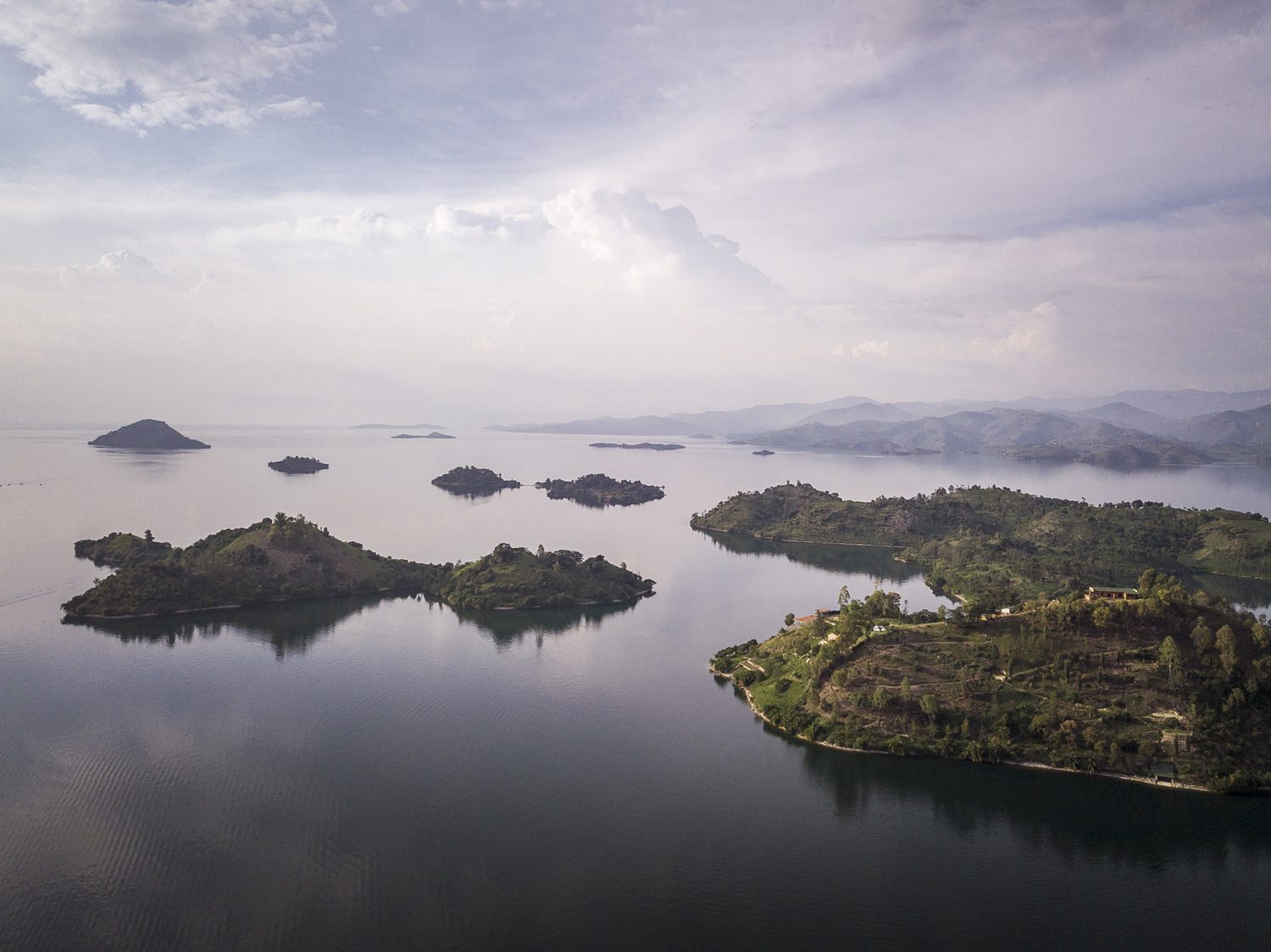
Rwanda’s side of the lake is dotted with towns, each with its own character. Rubavu (also known as Gisenyi) at the northern end is the lake’s classic resort town. Bougainvillea, sandy beaches, colonial-era buildings and a weekend buzz. Its beachfront is the place to swim, paddle and watch the sun set over the island of Idjwi.
Karongi, in the middle of the lake, is quieter and more scenic. The lakeside town with islands on the doorstep and the best access to the lake’s star attractions. Rusizi (also called Cyangugu) at the southern end is a working border town with a wilder, more remote feel. Between them, smaller villages offer coffee farms, fishing ports and community projects.
Lake Kivu is one of the few large African lakes where swimming is genuinely enjoyable: its water is clean, clear and free of the bilharzia that affects many other lakes on the continent. The beaches at Rubavu and Karongi are the main hubs, with sunbeds, lakeside restaurants and a relaxed, family-friendly atmosphere.
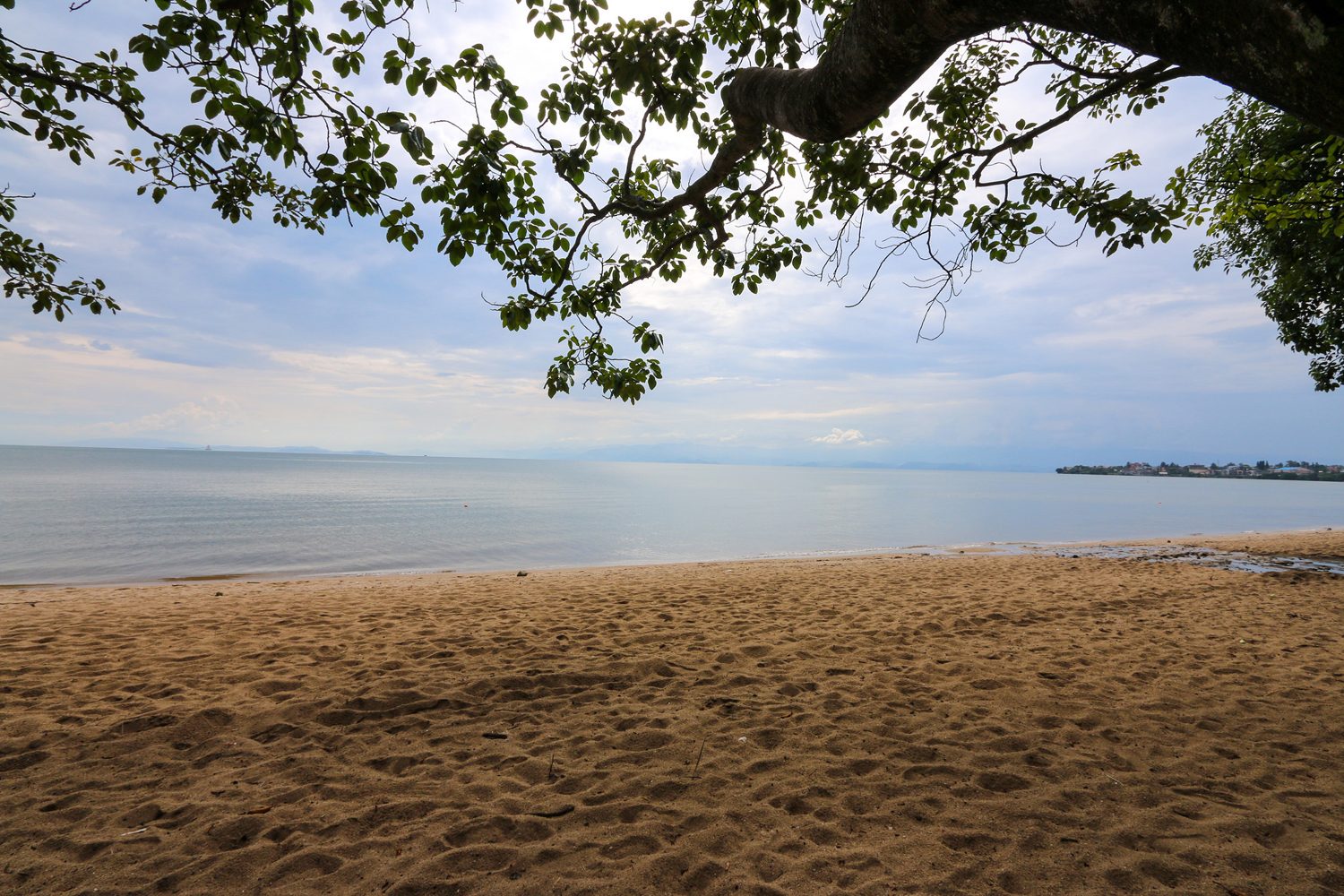
Kayaking has become one of the lake’s signature activities, and no Lake Kivu travel guide would be complete without its water sports. Paddling along the shore at dawn, past fishermen casting nets and kingfishers diving into the water, is an unforgettable way to see the lake. Stand-up paddleboarding, swimming tours and boat trips to the islands are all easy to arrange on the spot.
Scattered across the lake’s mid-section are dozens of islands, most of them uninhabited or home to tiny fishing communities. The best-known is Napoleon Island, where tens of thousands of fruit bats stream out of the forest at dusk. A spectacle that has to be seen to be believed. Nearby, Amahoro Island offers beaches and a community lodge built by former refugees.
Island hopping deserves its own page in any Lake Kivu travel guide. It is usually done from Karongi with boats and guides arranged locally. A half-day trip takes in two or three islands, with swimming stops, picnics and long views across the water. And, on a clear day, the volcanic peaks of the Virunga range far to the north.
One of East Africa’s great multi-day adventures runs the entire length of the Rwandan shoreline. For hikers and cyclists the Congo Nile Trail is the longest chapter in the Lake Kivu travel guide. The Congo Nile Trail. Roughly 227 kilometres from Rubavu in the north to Rusizi in the south. Was developed as a cycling and hiking route. It has become a bucket-list trip for active travellers. The trail climbs and dips through terraced hillsides, tea plantations, rainforest edges and villages where the welcome is unforgettable.
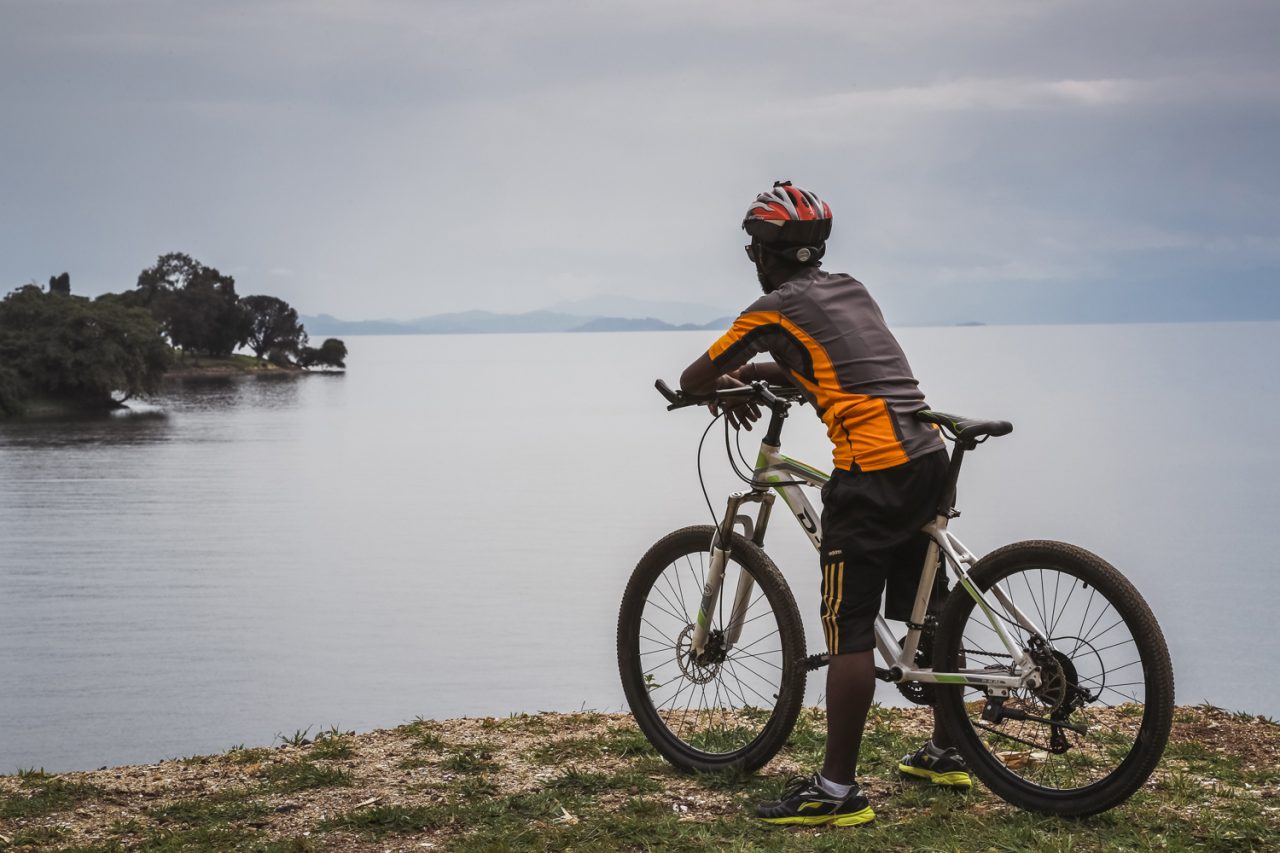
Cyclists typically take four to seven days, with nightly stops at simple guesthouses and community camps built for trail travellers. Walkers can take the same route at their own pace. Along the way the trail delivers some of the finest scenery in Rwanda: the blue lake below, the green mountains above. The Democratic Republic of Congo shoreline on the far side.
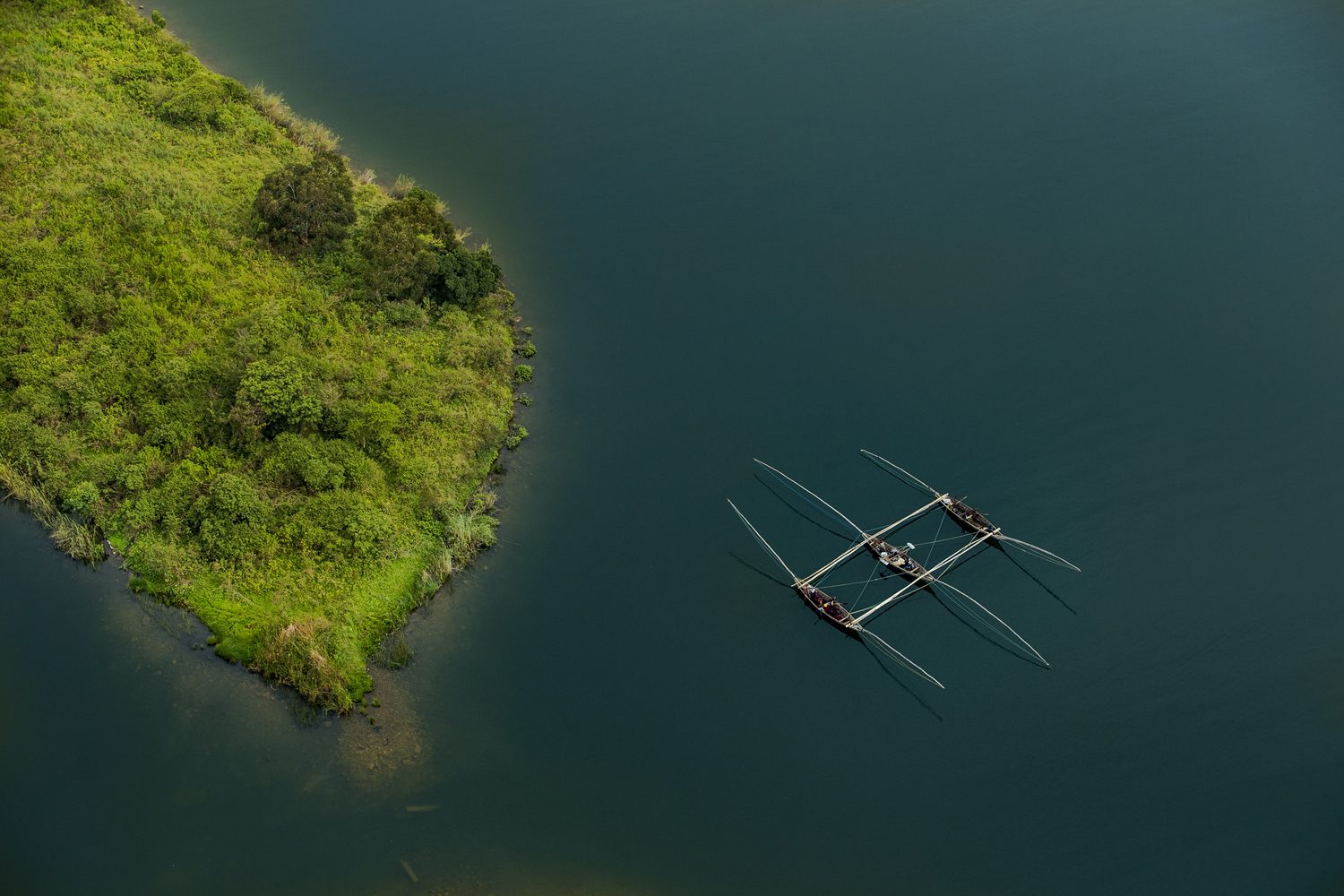
Life on Lake Kivu revolves around fish, and a Lake Kivu travel guide that missed the singing fishermen would miss the lake’s soul. The lake’s famous singing fishermen. Crews who row out at night beating the water and singing in rhythm, then return at dawn with the catch. Are part of the lake’s living heritage. Watching them is one of its most atmospheric experiences.
The lake’s culture also includes coffee, one of Rwanda’s great exports: plantations and washing stations around Karongi and Rubavu welcome visitors. A coffee tour is a perfect half-day activity. The people of the lakeshore. Fishermen, farmers, boat builders. Are famously hospitable. Community tourism initiatives offer homestays and village walks.
The lake is at its best in the dry seasons, from June to September and December to February, when the water is calm and the sun reliable. Seasonal conditions are summarised by Rwanda’s official tourism board, which also lists the lakeside events calendar. The rainy months bring greener hills and quieter towns. The lake remains a year-round destination for swimming and kayaking.
There are no entry permits for the lake itself, and activities are easy to arrange on arrival. Choose a base that matches your style: Rubavu for beaches and nightlife, Karongi for islands and scenery, the trail for adventure, and build in a day or two of pure relaxation. Malaria precautions apply in this lowland area.
Lake Kivu is served by good roads on the Rwandan side, and the two main resort towns are easily connected: Rubavu in the north, around two and a half hours from Kigali. Karongi below it, a scenic drive of about two hours further south, with Rusizi a while beyond that. Private hire with a driver is comfortable and affordable. Shared taxis link the towns for budget travellers.
On the water, motorboats connect the main towns and islands, while the lake itself is calm enough for kayaks and the small fishing pirogues that ferry locals between the shores. For cyclists, the Congo Nile Trail doubles as a slower, richer way to travel the whole coast. Many visitors break it into stages with overnight stops in the villages along the way.
Rwandan time works in your favour here. Distances are short, so a lake holiday can be exactly as active or as lazy as you like. And because the towns are small, you will quickly fall into local rhythms of market days, sunrise swims and early nights.
The hills above Lake Kivu grow some of Rwanda’s most celebrated coffee. The lake itself is threaded through the story of that success. Around Karongi and alongside the trail north, washing stations welcome visitors to watch the whole journey, from cherry sorting and fermentation to drying on raised tables, and to taste the difference that altitude and care make in the cup.
Sitting on a plantation veranda with a lakeside view, a fresh cup of Rwandan arabica in hand, is the kind of moment that turns a holiday into a story. The coffee economy also puts money into the same communities whose hillsides you have been photographing. Buying beans to take home supports farms directly.
If coffee is not your drink, the lakeside offers plenty more to savour: fresh fish grilled beside the water, local beans and plantains. Cold beers served with a view that makes every evening feel like an occasion.
Where to stay depends on your style, and this Lake Kivu travel guide covers every budget: accommodation around the lake ranges from elegant lakeside hotels with infinity pools to simple guesthouses, community camps and homestays run by local families. In Rubavu, the historic boulevard is lined with lodgings within a short walk of the beach. In Karongi, the hillside slopes are scattered with chalets that frame the islands and the sunset.
For travellers who want the lake to be a loop, the Congo Nile Trail’s camps offer the most authentic overnight. Raised tents, bunkhouses or dormitories above the water, run by villagers, with home-cooked dinners and the sound of waves as the lullaby.
Wherever you land, book ahead at weekends and holidays, when Rwandan families flood to the lake to swim. Ask your host about local boatmen and kayak rentals. The best experiences are rarely bookable online and often arranged over breakfast.
Lake Kivu is a gentle lake, and responsible travel takes little effort. The water is safe to swim along the main beaches, life jackets are carried on all the boat trips. The main safety advice is common sense: don’t swim alone far from shore, don’t drink the lake water. Respect the local safety advice of your boat crew.
The lake is a friendly water, but the highland sun is strong: pack good sunscreen and a hat for the boat decks. Apply malaria precautions as you would for any lowland Rwandan destination. The towns are safe, the people are welcoming. The greatest risks to your itinerary are the temptations to stay another day.
Three days is enough to know the lake properly, and this mini Lake Kivu travel guide itinerary shows why. Day one: arrive in Rubavu, swim and paddle in the afternoon. Watch the sun go down over the water with a cold drink at the beach. Day two: drive south to Karongi in the morning and spend the afternoon island-hopping by boat, with a swim stop and a picnic. Day three: visit a coffee farm, kayak the calm morning water. Drive home or continue south with a full heart.
With four or five days, add stages of the Congo Nile Trail. A cycling morning between villages and an overnight at a community camp make a perfect addition. Finish with a slow day at Rusizi in the south, where the lake and the forest meet. The longer you stay, the deeper the lake’s rhythm enters your bloodstream.
For families, the gentle version works beautifully: swimming mornings, boat picnics at noon, early dinners. The joy of a beach that belongs to nobody in particular. The lake is one of the easiest destinations in Africa for travelling with children.
Note the driving times: Kigali to Rubavu is around two and a half hours, Rubavu to Karongi around two. Karongi to Rusizi a little more. The distances are small. Is precisely why the lake feels like a holiday rather than an expedition.
From Rubavu’s beaches you can see a long dark line on the western horizon. The island of Idjwi, the second-largest freshwater island in Africa. Belongs to the Democratic Republic of Congo. The border runs through the middle of the lake. For travellers the sight of Idjwi is a daily reminder of how shared this great water is.
Crossing to the Congolese shore requires border formalities and should never be done casually with local boatmen. The lake crossing for tourists is normally arranged through formal channels and only when it is safe and sensible. On the Rwandan side, though, the communities of the shore are open and welcoming. Their villages. Boat builders, fishermen, market women. Are a highlight of any stay.
The lake’s history is deep and human: colonial explorers arrived in the 1890s. For a century the water served as frontier, marketplace and meeting point. Today the shore is a borderland at peace. Its energy is the energy of trade, laughter and ordinary life.
For visitors, the far shore is best appreciated from the Rwandan side: a sunset view of Idjwi, a story from a local boatman. The quiet satisfaction of having seen one of Africa’s great lakes at its most alive.
Lake Kivu sits naturally on the route between the volcanoes of the north and the rainforests of the south-west. Whatever direction you travel, the Lake Kivu travel guide advice is the same: slow down.. Makes it a perfect middle act on a cross-country safari. Many travellers trek the gorillas, then unwind on the lakeshore before heading south to Nyungwe. A pattern captured in our 6-day Rwanda gorilla trekking and Lake Kivu safari.
Others finish their whole Rwanda trip here, trading the forest for the beach and the trekking boots for a kayak. For those who want to see the country from the air as well as the water, our 9-day Rwanda luxury flying safari makes a superb fit. Whichever way you plan it, leave yourself time to slow down. The lake has a way of making schedules disappear. Our team can help you choose the right lakeside base and build the lake into your itinerary.