Gorilla Permits Rwanda — 6 Years of Trusted Service
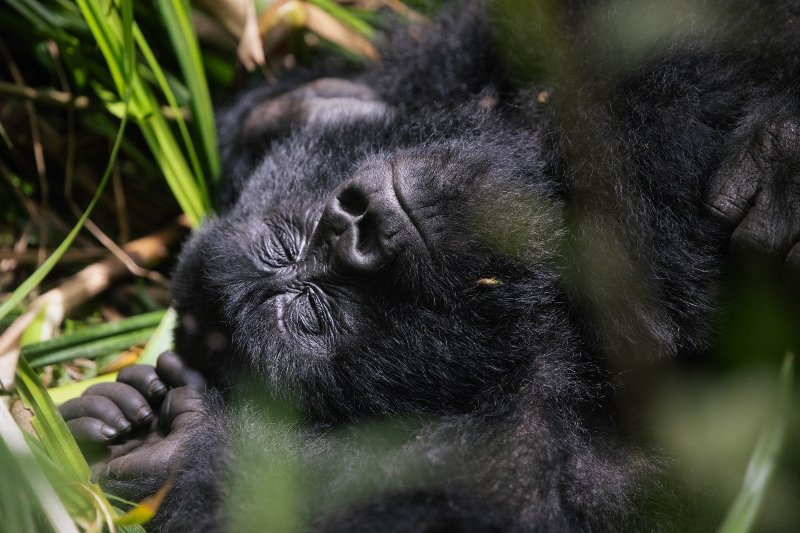
When a mountain gorilla wakes up in the mist, the first thing it does is eat, and the Virunga reforestation ecosystem is what keeps its table full. The forest around it provides the bamboo shoots, the leaves, the wild celery, and the fruits that make up its daily diet, and the gorilla family rarely travels far from the green heart of the Virunga Massif. The forest is not just the gorilla’s home; it is the gorilla’s supermarket, pharmacy, nursery, and fortress. But that forest has not always been secure. For much of the twentieth century, the Virunga ecosystem was shrinking, eaten away by farming, cattle, and the needs of a growing population, and the gorillas were shrinking with it.
The recovery of the mountain gorilla population, from a low of around 254 individuals in 1981 to more than one thousand today, is usually told as a story of anti-poaching and tourism. It is also, quietly, a story of reforestation. Trees have been replanted, bamboo restored, boundaries stabilised, and degraded land returned to the forest, and none of it would have happened without the communities who live at the edge of the park. This article explores the reforestation of the Virunga ecosystem, why it matters, and how it is protecting the gorilla forest for the future.
The story of the Virunga reforestation ecosystem begins with pressure. The Virunga Massif, a chain of eight volcanoes shared by Rwanda, Uganda, and the Democratic Republic of Congo, once wore a continuous cloak of forest from the lowland slopes to the high bamboo zone. For centuries, the forest held its ground. But in the twentieth century the pressures multiplied: human populations grew rapidly, farmland was needed, and the forest, seen as unused land, was the easiest source of it. In Rwanda, the slopes of the Virungas were progressively cleared for fields, and the famous boundary between farm and forest became a line of conflict rather than a line of protection.
The damage was not only to the trees. As the forest shrank, the gorillas lost habitat, food, and the corridors that connected their groups. Soil washed down the bare slopes, springs dried up, and the rivers that fed the surrounding farmland ran with mud. The destruction of the forest hurt everyone: the gorillas above the line, and the farmers below it. The lesson was written in the landscape: a forest is not a rival to farming, it is the infrastructure that farming depends on.
By the 1970s and 1980s, conservationists were documenting the losses and pushing for a reversal. The first parks had been gazetted in the colonial era, but their boundaries meant little when they were not enforced and the forest they protected was not defended. The turnaround required a change in both law and attitude: the park boundary had to be respected, and the land beyond it had to be farmed better, so that no one needed to push into the forest to survive.
Reforestation in the Virunga ecosystem is not one project but many, carried out over decades by the park authorities, conservation organisations, scientists, and, above all, communities. The work began with the most degraded areas: bare slopes inside the park boundary where the soil had been exposed, and buffer zones where forest had given way to exhausted fields. The replanting was methodical, with nurseries growing indigenous species, bamboo, and the pioneer trees that could stabilise the soil and shade the return of the forest.
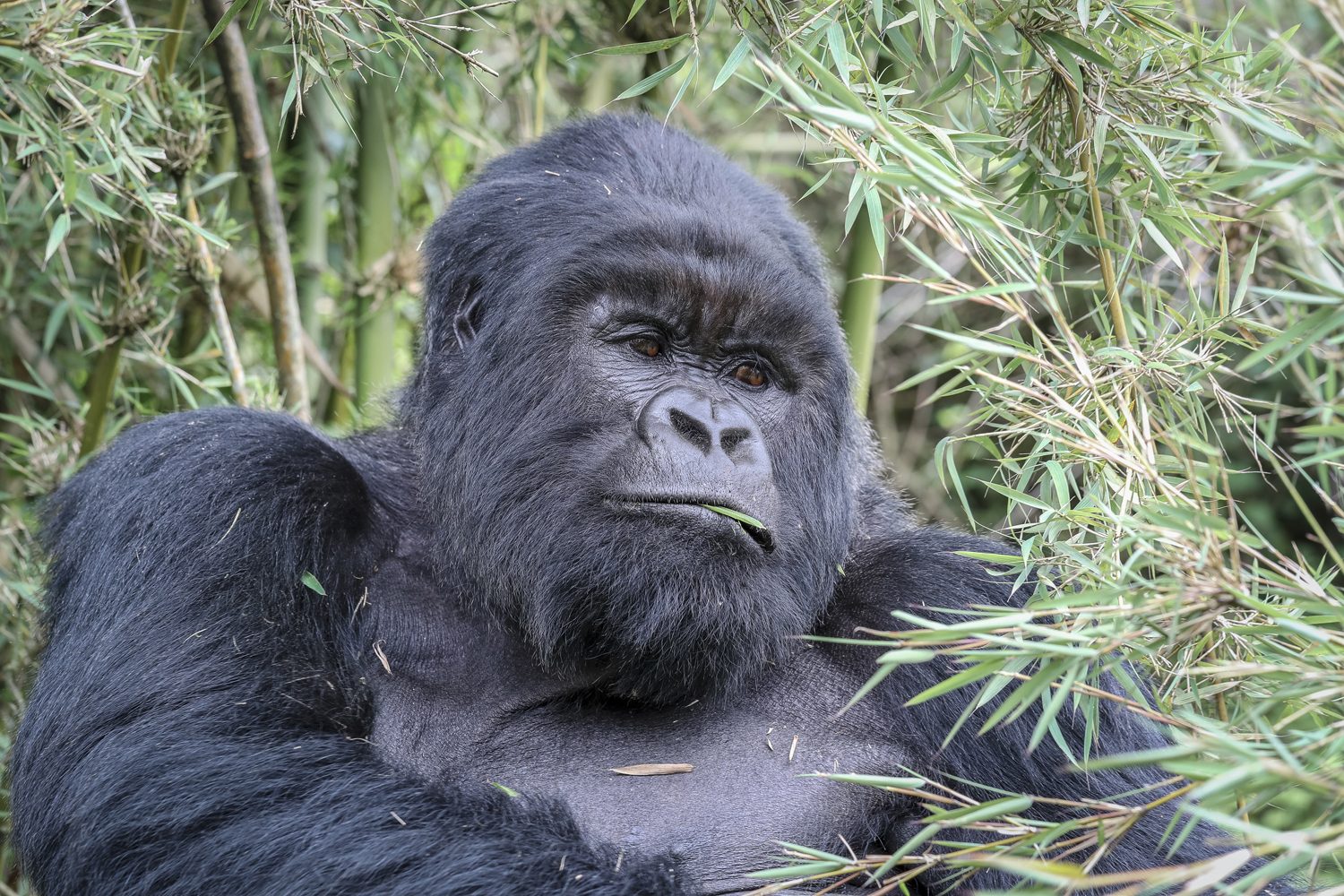
Bamboo deserves special mention, because it is the gorilla’s staple food and the fastest way to restore a degraded slope. Bamboo grows quickly, holds the soil with its dense root systems, and provides the tender shoots that gorillas eat in season. Large areas of the park have been replanted with bamboo, both for the gorillas and for the stability of the mountainside, and the sight of a young bamboo forest recovering where cattle once grazed is one of the quiet victories of the park’s restoration.
The replanting is matched by an equally important subtraction: the removal of the pressures that caused the loss. Grazing inside the park has been controlled, illegal cultivation has been cleared, and the boundary has been surveyed and marked so that everyone, farmer and ranger alike, knows where the line runs. Reforestation works when it is paired with protection, and the Virunga programme has treated the two as one job.
The deepest insight of the Virunga restoration is that trees grow best when the people who plant them are paid, which is why the communities are the true owners of the Virunga reforestation ecosystem. Around the park, community nurseries raise indigenous seedlings, and households are employed to plant and care for them, earning an income from the restoration itself. The money, much of it channelled through the revenue-sharing model that returns ten percent of park tourism income to neighbouring communities, gives families a reason to watch the young trees survive.
This is where reforestation meets social policy. A family that plants trees on a degraded hillside is not only restoring the forest; it is feeding its children with the wages. A village whose school was built with park funds, and whose fields are protected by beehive fences, has no interest in letting the forest slip back. The restoration of the Virunga ecosystem is inseparable from the restoration of the mountain economy, and both have been paid for, in large part, by gorilla tourism.
There are also practical alternatives being offered to the practices that used to destroy the forest. Energy-saving stoves reduce the demand for firewood, improved farming techniques raise yields so that less land is needed, and alternative income projects, from beekeeping to handicrafts, give households ways to earn without cutting trees. The result is a cushion of alternatives around the park: people who do not need the forest for survival are people who will defend it.
The Virunga reforestation ecosystem is a water system as much as a wildlife home. The forest of the Virungas is not only the gorillas’ home; it is the region’s water system. The volcanic slopes catch the rain and release it slowly into the streams and rivers that irrigate the tea fields, the farms, and the towns of the region, including large parts of Rwanda. When the forest is intact, the water flows clear and steady; when it is cleared, the soil erodes, the rivers flood in the rains and run thin in the dry season, and the damage reaches far beyond the park boundary.
There is also the climate. A standing forest holds carbon, keeps the hillsides cool, and moderates the rainfall of the mountain region. The Virungas are among the most important water towers of East Africa, and their forest cover is a climate service for millions of people who will never see a gorilla. Reforestation here is therefore not a luxury of conservation; it is an investment in the region’s water, agriculture, and climate resilience.
And of course there is the biodiversity. The Virunga forest is home to the mountain gorillas, the golden monkeys, and hundreds of bird, butterfly, and plant species, many of them found nowhere else on Earth. Every hectare restored is a hectare returned to that community of life, and every corridor of young trees is a route by which species can move and survive. Reforestation in the Virungas is the most literal form of protection: it is building the house that the gorillas live in.
Corridors are the connective tissue of the Virunga reforestation ecosystem. Restoring the forest inside the park boundary is only half the work; the other half is reconnecting the fragments. Over the decades, the Virunga forest was broken into pieces, and isolated populations of wildlife lost the ability to move, mix, and recover. Reforestation programmes have therefore focused on corridors: strips of restored habitat that link the forest blocks, allowing animals and plants to travel between them and giving the ecosystem a resilience it lost when the pieces were separated.
The gorillas themselves are the best evidence of the value of connection. The habituated families of Volcanoes National Park move across the slopes within the protected area, and their ranges depend on the quality and continuity of the forest. Where bamboo has been restored and corridors replanted, the gorillas have moved in. The relationship is measurable: plant the forest, and the gorillas will come.
None of this is fast work. A bamboo stand takes years to mature; a forest corridor takes a generation to look like a forest. The people who began the replanting in the 1980s are only now seeing the full canopy, and the generation that maintains it will not see the finished landscape. Reforestation is an act of faith, and the Virunga ecosystem is being restored by people who are planting trees they will never sit under.
The measurable results of the Virunga reforestation ecosystem are already visible. The park boundary is more stable than it has been in decades, the bamboo zone has expanded, and the forest cover of the Rwandan side of the massif has stabilised and, in places, grown. The gorilla population, which once had to squeeze into a shrinking refuge, now occupies a healthier forest, and the monitoring teams report families ranging across areas that were bare slopes a generation ago.
The ecological signs are everywhere for those who know how to read them. Springs that had dried up are flowing again, the streams that leave the park run clear, and the birdlife of the restored areas has returned. The restoration has also reduced the conflict at the boundary: with the forest’s edge stable and the buffer projects working, elephants and buffalo are less likely to push into farms, and farmers are less likely to push into the forest.
The achievements are measured in more than hectares. They are measured in the health of the gorilla population, in the water that reaches the farms, in the jobs created by the nurseries, and in the changed relationship between the park and the people around it. Reforestation in the Virungas has moved from emergency repair to long-term stewardship, and the forest that the gorillas need is growing again.
None of this means the job is finished: the Virunga reforestation ecosystem is not a campaign with an end date, it is a permanent responsibility. The Virunga ecosystem is under permanent pressure, and the restoration must continue to hold the line that past generations drew. New degraded areas need attention, the corridors need ongoing care, and the buffer zone needs ever-better alternatives for the people who live there. Reforestation is not a campaign with an end date; it is a permanent responsibility of the park and its partners.
The funding for this permanent work flows, in large part, from the same source: tourism, with the replanting programmes supported by partners including the International Gorilla Conservation Programme. The gorilla permits that visitors buy, and the conservation programmes that trekking supports, help pay for the nurseries, the planting teams, the boundary patrols, and the community projects that keep the forest intact. Every visitor who walks into the bamboo is, whether they know it or not, financing the next generation of trees.
There is a hopeful arithmetic at work here. More gorillas bring more visitors; more visitors bring more funding; more funding brings more forest; and more forest brings more gorillas. The Virunga ecosystem has become a virtuous circle, and the circle is held together by one simple act: planting a tree where the forest once stood. That act, repeated thousands of times by the communities of the volcanoes, is reforestation, and it is the quiet half of the gorilla success story.
The best way to appreciate the Virunga reforestation ecosystem is to walk through its results. A trek in Volcanoes National Park takes you through the bamboo zone, past the young plantings and the mature stands, and into the forest that the replanting saved. The 3-day gorilla safari is the classic way to do this, and the golden monkey trek offers a gentler walk through the restored canopy.
Even from the road, the restored forest is visible: the trail maps and park updates published by Rwanda’s official tourism board show how far the replanting has spread. From the road you can also see the sharp line where the fields end and the green begins, the stands of bamboo marching up the slopes, and the mist that settles on the canopy. The visitor who understands what they are seeing, a forest that was nearly lost and is coming back, will read the landscape differently. What looks like ordinary green is actually a working restoration, financed by every permit sold and guarded by every patrol that walks the boundary.
Reforestation is not glamorous conservation, but the forest is growing back, everyone who treks here is part of the planting, and the Virunga reforestation ecosystem is the quiet engine of it all. It does not make the headlines that a new lion or a new baby gorilla makes. But it is the foundation under everything else: the forest is the stage on which all the other stories are played. The next time you watch a silverback feeding in the bamboo, remember that the bamboo may have been planted by a community member who was paid by a visitor’s permit. The forest is growing back, and everyone who treks here is part of the planting.