Gorilla Permits Rwanda — 6 Years of Trusted Service
There is a moment in every safari where the vehicle falls silent. It happened in Akagera National Park in May 2017, when a crate was opened and the first eastern black rhino set foot on Rwandan soil in a decade. The park’s staff, who had worked for years to make that moment possible, watched as the animal walked into the enclosure, its great horn swinging low, its feet finding the ground of a country that had once been its home. The rhinos return to Rwanda had begun.
The rhinos’ return to Rwanda completed a transformation that had been years in the making. Akagera, a park that had been badly degraded by conflict and neglect, had already welcomed back lions in 2015, and with rhinos it would finally claim the full Big Five: lion, leopard, elephant, buffalo, and rhino. This article tells the story of how the rhinos returned, why it matters, and what it means for travellers who want to see them.
Rhinos were once a natural part of Akagera’s wildlife. The park’s savannahs and woodland, stretching along the Akagera River on Rwanda’s eastern border with Tanzania, provided exactly the habitat the animals need: open grassland, dense thickets, water, and relative isolation. But in the 1990s, during Rwanda’s civil conflict, the park’s protection collapsed, and the rhinos were among the first casualties, hunted by poachers and lost in the chaos of the times.
The loss of the rhinos was devastating for the park’s ecology and its reputation. Rhinos are what conservationists call ecosystem engineers: their grazing shapes the savannah, their dung spreads seeds, and their wallows create waterholes used by other species. Their disappearance was both a symptom of Akagera’s decline and a cause of further degradation, and it would take more than two decades to reverse.
For Rwanda, the rhino’s absence was also a national wound; however, the rhinos’ return became a national goal. The country had built its international reputation on conservation, with the mountain gorillas of the Virunga volcanoes as its flagship, but the eastern savannah, the other half of Rwanda’s wildlife heritage, had lost its most spectacular large animal. Restoring the rhino became a symbol of the country’s broader recovery, a statement that Rwanda’s wild places could be rebuilt just as its cities had been.
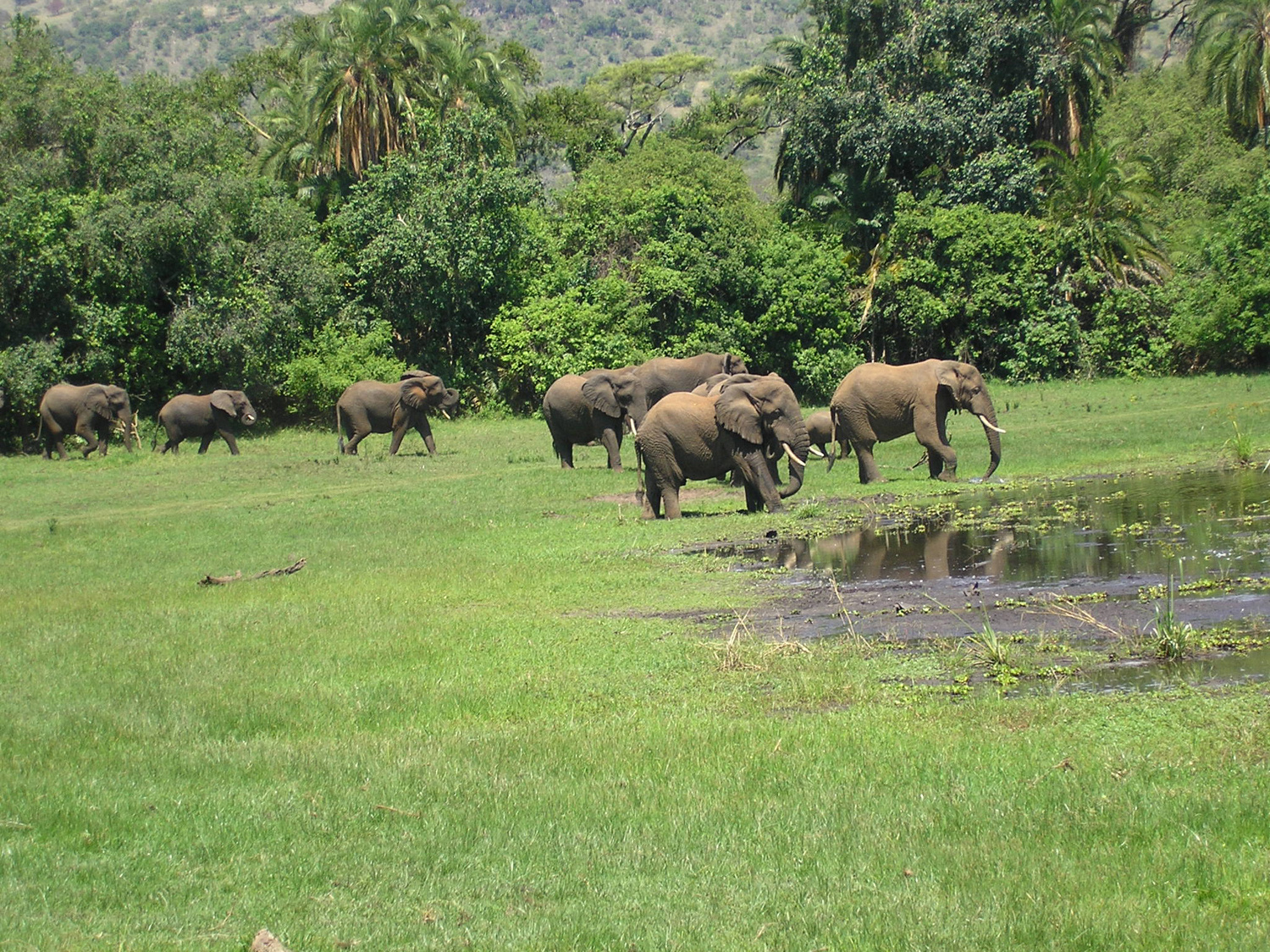
In fact, the foundation for the rhinos’ return to Rwanda was laid by the same partnership that brought back the lions. When African Parks took over the management of Akagera in 2010, in partnership with the Rwanda Development Board, the first job was security: rebuilding the park’s law enforcement capacity, ending illegal grazing, and re-establishing a credible anti-poaching presence across the reserve. Without that security, no reintroduction could possibly succeed.
By 2016, the park was ready for its next challenge. The plan was audacious: to bring eastern black rhinos back to Akagera, sourced from European zoos that held them as part of coordinated breeding programmes. Black rhinos are notoriously difficult to translocate, and the project involved years of planning, veterinary preparation, and international diplomacy, with each rhino’s health, temperament, and genetics assessed before the long journey began.
In May 2017, the first group of eastern black rhinos arrived, flown from Europe to Rwanda and transported overland to Akagera. The release, the culmination of the rhinos’ return to Rwanda, made the country one of the few in Africa to have restored a rhino population from scratch. The animals were released into a secure area of the park, with rangers monitoring them around the clock in the first weeks.
Rewilding rhinos is never simple, and Akagera’s pioneers faced serious challenges in their first months. The rhinos had spent their lives in the controlled environments of European parks, and the transition to a wild African savannah was enormous: new food, new terrain, new predators to consider, and no fences between them and the wider world. The park’s team had to learn to track and manage animals that were both rare and valuable beyond measure.
There were losses. In the first years after the reintroduction, some of the translocated rhinos died, from the stress and hazards of their new environment. Each loss was a painful reminder of the stakes, and each prompted a careful review of the management programme: diet, monitoring, territory, and the rhinos’ interactions with the park’s other wildlife. Conservation, the park’s managers knew, is a discipline of failures corrected.
But the programme was also learning, and the park persisted. Meanwhile, in 2019, a second group of eastern black rhinos arrived from Europe, reinforcing the rhinos’ return to Rwanda and broadening the genetic base of the new herd. The arrivals signalled confidence: the first rhinos had survived, the park had proven it could manage them, and the international community was willing to invest more animals in Rwanda’s future.
Consequently, the rhinos of Akagera are a functioning wild population, proof that the rhinos’ return to Rwanda worked. They have settled into the park’s thickets and open plains, and sightings, while never guaranteed, have become increasingly regular as the animals have grown comfortable in their territory. The park’s rhino monitoring team follows them daily, a dedicated unit whose members know each animal’s identity, history, and favourite haunts, and whose reports guide the management decisions that keep the population safe.
The rhinos’ presence has completed the park’s ecological restoration. With lions and rhinos both restored, Akagera’s wildlife community is, for the first time in decades, essentially whole: the full suite of large mammals that the ecosystem evolved to support, from the grazing herds to the apex predators, is back in place. The park’s annual wildlife counts show healthy and growing populations across the board, a confirmation that the restoration is working.
Security remains the rhinos’ best friend and the park’s greatest expense. Akagera’s anti-poaching teams are among the best-equipped and best-trained in the region, with rangers, trackers, and a canine unit, and the rhino monitoring team never rests. The rhinos of Akagera are arguably among the most carefully guarded wild animals in Africa, a level of care that is the price of their survival.

With the rhinos in place, Akagera achieved something historic: it became one of the only parks in East Africa where visitors can see all of the Big Five in a single game drive. Lion, leopard, elephant, buffalo, and rhino now all roam the same savannah, and with them the park claims its place among Africa’s serious safari destinations.
The achievement transformed the park’s fortunes. Visitor numbers have grown steadily since the rhinos arrived, new camps and lodges have been built, and Akagera has become a must-include destination on Rwanda itineraries. The economic effect has rippled into the surrounding communities, where jobs in guiding, hospitality, and park management have multiplied, and where the park’s success has become a source of local pride.
The completion of the Big Five also changed Rwanda’s positioning as a travel destination. Rwanda now offers a combination that very few countries can match: mountain gorillas in the north, Big Five safaris in the east, and chimpanzees in the south-west, all within a few hours’ drive of each other. For the traveller, it means a single trip can cover experiences that elsewhere would require three separate safaris.
For the visitor, the rhinos of Akagera are the ultimate reward of patient game driving. The park’s mornings and evenings are the best time to search, when the animals move to open ground, and the experienced guides who work the park know where the rhino territories lie. A sighting of an eastern black rhino, its massive shoulders and prehensile lip close enough to photograph, is one of the great experiences of African wildlife, and in Akagera it is a realistic ambition, not a distant fantasy. Finally, for those who wait, the rhinos’ return to Rwanda delivers one of the great moments of African wildlife.
Beyond the rhinos, an Akagera National Park safari delivers the full East African experience: elephants in the woodlands, giraffes on the floodplains, zebras and antelope in their thousands, hippos and crocodiles in the lakes, and the famous lions of the park’s prides. The park’s variety is remarkable for its size, and its accessibility, a few hours from Kigali, makes it the easiest Big Five destination in Africa.
Our Akagera safaris are designed around the park’s rhythms, with expert guides, comfortable stays, and game drives timed for the best light and the best wildlife activity. If you are combining the east with the volcanoes, contact our team and we will build an itinerary that includes gorilla trekking and a Big Five safari in one seamless trip.
The rhinos of Akagera are more than a conservation success; they are a statement about Rwanda itself. A small country, recovering from a history of conflict, has rebuilt one of Africa’s great wildlife sanctuaries from the ground up, restored its lions and its rhinos, and made conservation a central part of its national identity. The rhinos’ horns, worth a fortune on the illegal market, remain on their heads, protected by a system that works.
The story is also a lesson in patience. The rhinos did not come home because of a single heroic act; they came home because a government and a management team spent years rebuilding the foundations: security, law enforcement, community trust, and tourism, and only then flew the animals in. Conservation in Akagera was built in the right order, and that is why it has lasted.
When you stand at the park’s lookouts, watching the sun fall over the floodplains, consider what you are seeing: a place where extinction was reversed, where the Big Five is a reality, and where the animals you photograph are the beneficiaries of one of the boldest restoration programmes in modern conservation history. Ultimately, the rhinos’ return to Rwanda is complete, and they are here to stay.
Behind the rhinos’ return to Rwanda is a human story that rarely makes the headlines. The negotiations with European zoos took years, with each partner park weighing genetics, health, and the political realities of sending their animals to Africa. The veterinarians who prepared the rhinos for travel spent months monitoring their health and conditioning. The Rwandan team that received them rebuilt a section of the park, constructed the enclosures, and trained the monitors who would follow the animals for the rest of their lives.
In the communities around Akagera, the arrival of the rhinos was met with a mixture of pride and practical interest. The park had become an employer, a source of infrastructure, and a partner in education and health projects, and the rhinos were the clearest sign yet that the reserve’s future was bright. School visits to the park grew, local media celebrated the arrivals, and the rhinos became a fixture of regional identity, proof that the land around the Akagera River was home to something the whole world valued.
None of that happens without the quiet, unglamorous work of the park’s staff. The trackers who find the rhinos each day, the rangers who guard the perimeter, the managers who plan the patrols, and the vets who check the animals’ health all operate far from the cameras. They are the reason the reintroduction survived its difficult first years, and they are the reason the rhinos’ future is secure. Their work is the real engine of the comeback.
The rhinos of Akagera have simple requirements from those who come to see them: patience, respect, and distance. Rhino viewing is not like a zoo visit. The animals move on their own schedules, they disappear into thickets for hours, and they are most active in the cool of the morning and evening. The guides who know the territories will work hard to find them, but a safari is an exercise in attention, not certainty, and the reward for patience is one of the rarest sights in Africa.
Respect means following the rules of the park: staying in vehicles, keeping noise down, and never approaching the animals. Black rhinos are notoriously wary and short-sighted, and a vehicle that crowds them or a sudden sound can trigger a charge. The park’s rules exist for the animals’ welfare first and the visitor’s safety second, and every guide in Akagera will insist on them for good reason.
When you plan your trip, give the park time. A single day can work, but two days give you the morning and evening game drives that dramatically improve your chances, and they give the park’s landscapes, lakes, and floodplains time to reveal themselves. The rhinos are the prize, but the park around them, the birds, the hippos, the antelope, the lions, is the experience. Come for the Big Five, stay for the whole picture, and leave knowing that your visit, like your permit, is part of the system that keeps the rhinos safe.