Gorilla Permits Rwanda — 6 Years of Trusted Service
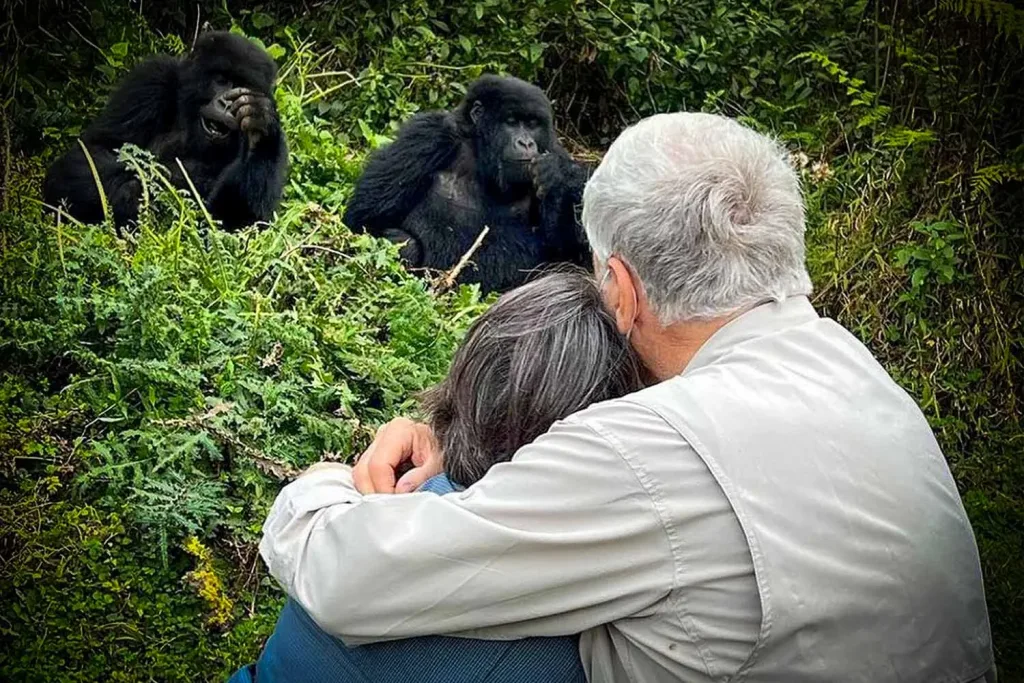
Gorilla trekking in Rwanda is a genuine rainforest expedition: steep volcanic slopes, dense bamboo, stinging nettles, and weather that changes three times before lunch. Pack correctly and the trek becomes one of the great travel experiences of your life; pack wrong and it can become a wet, cold, miserable grind. The difference between the two is entirely in your bag.
This guide covers the 10 essential things to pack for gorilla trekking in Rwanda – and just as importantly, what to leave at home. Every item here earns its place based on real treks in Volcanoes National Park, where rain is guaranteed at some point, mud is a certainty, and comfort is a choice. You can also check the latest park news and travel advice on Rwanda’s official tourism board website.
If you buy only one thing for a gorilla trekking in Rwanda trip, make it a pair of sturdy, waterproof, broken-in hiking boots with aggressive tread. The trails of Volcanoes National Park are steep, rocky, and slick – after a rainy morning they become rivers of mud, and the difference between gripping boots and smooth-soled sneakers is the difference between a confident hike and a dangerous slip.
Buy them at least a month before travel and wear them everywhere – walking, work, shopping – so they are moulded to your feet by the day of the trek. Expect them to return home as a two-tone artwork of mud and leather; that is the badge of a real gorilla trekker. Lightweight trail runners work for the fit and experienced, but for everyone else, full boots with ankle support are the safer call on slopes that are often more vertical than they look.
Three small upgrades separate great trekking footwear from merely adequate ones: laces that stay tied under strain (or a quick-lace system), a toe cap that survives the rocks and roots of the descent, and insoles you have broken in at home rather than the ones that came in the box. If your boots are at all doubtful, Musanze rents good-quality pairs – but nothing beats your own broken-in boots, and the US$10-15 rental fee is money better spent on a porter.
The classic layering system works perfectly for gorilla trekking in Rwanda. Base layer: a quick-dry long-sleeved synthetic or merino shirt that wicks sweat and protects your arms from nettles and branches – a sun hoodie is ideal because it also guards your neck. Mid layer: a fleece or thin insulated jacket for the cold dawn hours. Outer layer: the waterproof jacket from your rain kit. Long hiking trousers – not shorts, not jeans – complete the outfit.
In your daypack carry one spare base layer and a pair of dry socks: the moment the trek ends, stripping off wet layers and pulling on dry ones is the most luxurious feeling in Africa. A warm hat and light gloves for the summit sections, plus sunglasses for the sun that always seems to appear on the way back down, round out the system.
The Virungas generate their own weather – one valley in sunshine, the next in downpour – and a genuinely waterproof, breathable rain jacket is the item trekkers regret leaving home most. Look for taped seams and a hood that fits over a hat; a poncho is a reasonable backup but flops in the undergrowth. Rain trousers are optional: on most treks your legs will get soaked and muddy anyway, and quick-dry hiking trousers recover fast.
Rain decides the mood of many gorilla trekking in Rwanda days, so treat your rain kit as part of the plan, not an afterthought. Waterproof your pack too: a pack cover or a few dry bags inside will keep your spare clothes, phone, and camera safe when the sky opens. Trekkers who follow this simple rule finish the day warm and dry inside; those who do not spend the transfer back to the lodge shivering.
Rwanda’s two dry seasons (June to September and December to February) change the kit’s emphasis for gorilla trekking in Rwanda: dust and sun replace mud, mornings are crisp and clear, and the trek can be done in lighter layers. Pack a lightweight sun hoodie, quick-dry trousers, and a foldable windbreaker; a full rain jacket is still worth carrying, because the Virungas reserve the right to rain in any month, but you will likely spend most days in the sun.
In the wet seasons (March to May and October to November), the rain jacket, waterproof boots, and dry bags move to the top of the pack, and an extra pair of socks and a second pair of gloves become genuinely important – wet gear doubles in weight and misery on the return climb. Whichever season you travel in, remember that the park sits at altitude, so a warm layer for the pre-dawn briefing is non-negotiable year-round; you can always shed it as you climb. Check the month-by-month picture in our best time to visit Rwanda guide before you finalise your kit.
Gardening gloves – the cheap, grippy kind – are the unsung heroes of gorilla trekking. You will grab vegetation constantly for balance on the steep slopes, and in the wet season that vegetation is often stinging nettles, thorny brambles, or simply slippery. A pair of padded work gloves lets you grip fearlessly, saves your hands, and costs almost nothing. Take two pairs: one gets soaked fast.
Trekking poles help far more than people expect – they take the load off your knees on the descent and give you a third point of contact on the worst slopes. Most operators provide them on request, but if you prefer your own, collapsible carbon poles are the ones that earn their place in a carry-on.
A 20-30 litre daypack is the right size for gorilla trekking in Rwanda – big enough for everything, small enough that a porter carries it without complaint. Whatever you pack, remember the rules of the forest: no food, no drinks, and no litter are allowed in the presence of the gorillas, so anything consumable stays zipped away until the hour is over.
Plan the hand-off before the trek: most operators let you leave the daypack with a porter at the trackers’ rendezvous point just before the final stretch to the gorillas, so you meet them carrying only your camera. That is the moment your spare layer, water, and snacks become waiting luxuries for the walk back – and it is why your pack contents matter as much as your clothing choices.
You will be within metres of the gorillas, so the rule is: leave the huge lens at home. A mid-range zoom (24-105mm or similar) on a mirrorless or DSLR body covers everything from landscape shots of the volcanoes to tight portraits of a silverback’s face. If you are travelling light, a modern phone camera produces stunning results in the misty forest light – just bring a way to protect it from rain.
Whatever you carry: no flash (strictly forbidden around the gorillas), bring spare batteries and memory cards (cold kills batteries fast), and keep your camera in a dry bag until the family appears. Set your shutter speed to at least 1/320 before the trek – in the low forest light, the gorillas’ gentle movements blur quickly on slower settings. On a gorilla trekking in Rwanda outing, the light shifts constantly, so check your settings before the family appears. And bring a second small camera or keep your phone in a chest pocket: when a baby gorilla rolls past within arm’s reach, the camera you can grab in one second takes the shot you will frame for the rest of your life.
Your gorilla permit is issued electronically and your operator holds it, but carry your passport – it is checked at the park headquarters when your group is registered. Keep a photocopy or photo of the passport and permit in your phone, and make sure your visa for Rwanda is arranged in advance (most nationalities get it on arrival or online before travel). Travel insurance that covers medical evacuation is strongly recommended for a trek at altitude.
If you have not secured your permit yet, start there before anything else – availability at peak times is the single biggest risk to your gorilla trekking in Rwanda trip, and current prices are listed on our gorilla permit costs page. Leave passports and valuables in the lodge safe on trek day, carry a photocopy instead, and keep a photo of your insurance documents on your phone in case you need them on the mountain.
Cash remains king in the park: tip your guide and porter in US dollars or Rwandan francs (US$10-15 per porter is the standard), and carry small notes. Cards work in Kigali and at most lodges, but park services, markets, and Musanze restaurants are predominantly cash.
A compact health kit rounds out the pack. Insect repellent for the forest edges and evening terraces; sunscreen and SPF lip balm for the exposed trails; personal medications plus basic painkillers, plasters, and blister plasters. Altitude is a genuine factor – the park sits above 2,500 metres – so hydration and a light day before the trek matter more than pills, and most visitors feel fine. Altitude affects everyone on a gorilla trekking in Rwanda climb, so sleep well and hydrate the day before.
Consider a buff or neck gaiter (dust, sun, and warmth in one), earplugs for noisy lodges, and a small towel. And if you take daily medication, pack double: Rwanda’s pharmacy network is good in the cities, but specific international prescriptions are harder to find outside Kigali.
Hydration strategy deserves its own mention. Start drinking extra water the day before the trek, sip steadily on the climb rather than gulping at the summit, and plan to finish your first litre before you reach the gorillas – you will not want to stop for drinks once the hour begins. A light electrolyte sachet in your first bottle is a small trick that pays large dividends on the descent.
Hire a porter. At around US$15 (plus a good tip), they carry your daypack for a gorilla trekking in Rwanda outing, haul you bodily up the steepest slopes, and their entire income depends on your tip – a direct boost to the local community, as our guide to how trekking supports conservation and communities explains. You can leave your bag at the rendezvous point and visit the gorillas with just your camera; porters make every trek more enjoyable for trekkers of all fitness levels.
Leave the following at home: drones (banned in Rwanda, with real penalties), flash photography, bright-coloured clothing (gorillas react to it), heavy cotton jeans, brand-new unbooted boots, valuables, and anything single-use plastic. And do not bring a suitcase onto the trail – operators store luggage at the lodge, and what you actually need on trek fits in one small pack.
Finally, a note on weight: if you have to choose between items, choose the ones that keep you dry and fuelled over the ones that keep you entertained. A paperback, a second camera body, and extra clothing all feel heavy at 3,000 metres. The perfect trek bag is the one where everything inside was used – and the best memory of the day will not be anything you carried, but the family you met at the end of the trail.
Here is the complete list, so packing for your gorilla trekking in Rwanda day takes ten minutes instead of an hour of worrying.
Then add the essentials that make the whole trip work: read the full trekking costs and tips guide to understand the day itself, and if you are still planning dates, a 3-day Rwanda gorilla safari is the classic way to turn your gear into the adventure of a lifetime. And if you are unsure about any item or want local advice on renting boots or rain jackets in Musanze, contact our team before you fly – we have answered every packing question you can imagine, and a few you cannot.