When to See Chimpanzees in Rwanda: Season and Timing

Chimpanzee tracking in Rwanda runs year-round, but the seasons shape your experience in real ways. Ask ten safari guides when to go and you will hear ten variations on the same theme: any time, because the chimpanzees of Nyungwe National Park are resident all year round. Rainforest chimpanzees do not pack up and leave when the seasons change. They are always there, feeding, travelling and calling through the ancient forest of south-west Rwanda.

Chimpanzee Tracking in Rwanda: When to Go

That does not mean the calendar is irrelevant. The seasons of Nyungwe shape your experience in dozens of practical ways. Mud, rain, crowds, prices and permit availability all shift with the calendar. Choosing the right window is really a matter of matching your expectations to the forest’s moods.

This guide breaks down Nyungwe’s seasons month by month. It explains what each one means for chimpanzee tracking, and helps you pick the window that fits your travel style. The honest headline is this: there is no bad month for chimpanzee tracking in Rwanda, only different kinds of good.

One more thing to say at the outset: the answer that matters most is the one that fits your life. A family constrained by school holidays will make one choice. A photographer chasing the dry-season light will make another. A budget traveller with flexible dates will find their own window, and everyone will have a wonderful time.

There is one more consideration that most visitors overlook: your chimpanzee dates do not exist in isolation. The same dry seasons that suit Nyungwe also drive demand for gorilla permits in Volcanoes National Park. A combined itinerary, the kind most travellers want, is easiest to build in the shoulder weeks around the peaks. A 5-day gorilla and chimpanzee safari is a good example, and it works particularly well in June, September and February.

Nyungwe’s Climate: A Rainforest in the Mountains

Nyungwe is a mountain rainforest, and its weather follows mountain rules. The park stretches across altitudes from roughly 1,600 metres to nearly 3,000 metres, and cloud wraps its upper slopes for much of the day. It is one of the wettest parts of Rwanda, with rain in every month of the year. The rain is not uniform: the forest experiences two drier seasons and two wetter ones. The Rwanda Development Board manages the park and publishes the current entry fees.

Temperatures are mild by African standards. Daytime highs sit in the low twenties, and nights can dip sharply, so warm layers matter more than sun cream. The practical effect is simple: the chimpanzees live in a forest that is always damp and often beautiful. The question of best time becomes a question of how much wetness you will embrace.

The wet seasons are not a barrier to tracking, and it is worth saying this loudly. The park’s guides track chimpanzees 365 days a year. The habituated groups around Uwinka, Gisakura and Cyamudongo are located daily, rain or shine. Rain may slow your boots, but it never stops the hunt.

There is one consequence of the climate that surprises many visitors: because Nyungwe is so wet, the dry seasons matter even more than they would elsewhere. A week without heavy rain transforms the trails completely, which is why the firm ground of the dry months attracts so many travellers.

Drone view of the Nyungwe canopy walkway wrapped in morning mist

Chimpanzee Tracking in the Long Dry Season: June to September

For most visitors, the long dry season from June to September is the easiest choice, and the park’s popularity reflects it. Trails are at their firmest, and views of the surrounding hills are at their clearest. The forest floor, while never fully dry, is far more forgiving underfoot. This is also the classic window for the rest of Rwanda’s wildlife calendar.

Chimpanzee tracking in these months typically means brighter mornings and earlier sightings. The chimps are easier to locate when the undergrowth is less dense and the canopy is more open. The trade-off is company. Nyungwe receives more visitors in the dry season, and lodge beds fill quickly. The most experienced guides are in high demand, so book well in advance.

For photographers, July and August offer the best light of the year, with soft morning sun filtering through the canopy instead of grey drizzle. If your goal is the classic image of a chimpanzee backlit by rainforest light, this is the window to aim for. Our 2-day Nyungwe package handles all the logistics, so you can concentrate on the shot.

There is a further argument for the dry season that has nothing to do with weather: the forest is at its most accessible. Waterfalls are still flowing, the canopy walkway is at its clearest, and the full menu of Nyungwe activities, from birding to the colobus trek, operates without interruption.

One caution: the dry season is popular for a reason, and it is not only international visitors who know it. Rwandans travel to their own parks too, especially during school holidays, so July and August can feel lively. If your dates are fixed to those months, book your permits and lodges early. Ideally book several months ahead, and trust your operator to hold the arrangements together.

Chimpanzee Tracking in the Short Rains: October and November

The short rains arrive in October and continue through November. They are exactly what their name promises: showers rather than storms, usually concentrated in the afternoons. Mornings are often fine, which suits chimpanzee tracking perfectly, since the treks begin before dawn and end around midday.

What the short rains lack in glamour they make up for in atmosphere. The forest turns a deeper, glossier green, the waterfalls swell, and the birdlife is at its most vocal. Visitor numbers drop noticeably, lodges become easier to book, and those who do travel find a quieter, more personal park. For seasoned travellers, this is the secret sweet spot of the Nyungwe calendar.

A practical word about the trek itself in the short rains: your boots will get wet. Your morning will start in the dark, and the first hour of walking may be through drizzle. That is also when the forest is at its most private. The guides, who have walked these trails in every weather, take it all in their stride. Pack a warm layer and a waterproof cover for your bag, and you will hardly notice the difference.

Chimpanzee Tracking in the Long Rains: March to May

The long rains from March to May are Nyungwe at its most dramatic. Expect days of persistent drizzle, cloud in the valleys, and trails that turn to serious mud. This is the true low season, and the park is at its emptiest. Accommodation prices are at their most flexible, and travellers with flexible schedules can stretch their budgets considerably further.

None of this stops the chimpanzees, and it should not stop you either, provided you come dressed for it. Waterproof everything, boots with serious grip, and a change of clothes waiting at the lodge turn the long rains into an adventure rather than an ordeal. The chimps are found daily in every month, and the reward for braving the mud is a forest almost entirely to yourself.

There is a particular magic to Nyungwe in heavy rain. The hooting of chimpanzees carries further in wet air, and the canopy walkway becomes a tunnel through cloud. The sense of being inside a living rainforest is overwhelming. Travellers who come in these months often describe the experience as the most immersive of their lives.

Sunbird in the forest at Gisakura, Nyungwe National Park

The December to February Window for Chimpanzee Tracking

The second dry window runs roughly from December to February, and it offers much of the first’s appeal with a different rhythm. December brings the festive holiday rush, when local and international visitors converge on Rwanda’s parks. January and February settle into a calmer, drier stretch that many call the most comfortable of the year.

The chimpanzees remain as reliable as ever, and the combination of manageable trails and warm, clear days makes this a popular choice for families and photographers. If you are planning a Christmas or New Year safari, start your enquiries early. The weeks around the holidays are among the busiest in the Rwandan tourism calendar.

February deserves a special mention. It is often the driest, sunniest month of the year, with the festive crowds departed and the long rains still a month away. Travellers who can arrange their dates for late January or February often find the perfect balance of weather, prices and emptiness.

What the Seasons Change for Chimpanzee Tracking

It helps to separate what the seasons do and do not change. They do not change the chimpanzees’ residency, their habituation, or the basic rhythm of the trek, which runs every morning of every month. What they change is your comfort, the trail conditions, the crowds and the price. In short:

  • June to September: driest trails, clearest light, busiest park, book early
  • October to November: short afternoon showers, deep green forest, fewer visitors
  • December to February: dry and warm, with holiday crowds at Christmas
  • March to May: heavy rain, serious mud, low-season prices and emptiness

The guides’ knowledge absorbs the seasons. Fruiting trees shift the chimpanzees’ movements throughout the year. The tracking teams keep daily tabs on where the parties feed, so sighting rates stay consistent in every month. What changes is the scenery you walk through to reach them, and the character of the forest itself.

It is also worth remembering that dry season and no rain are not synonyms. Even in July the forest can produce a sudden shower, and the guides carry on regardless. What the dry months reliably change are the trail surface and the visibility, and those two factors alone justify the planning.

Time of Day: Why Mornings Matter

Within any chosen month, the time of day matters more than the season. Chimpanzees are at their most active in the first hours after dawn. They feed intensively before the warmth of the day, so tracking begins in the dark. Expect the pre-dawn wake-up, the briefing by torchlight, and the drive to the trailhead while the stars are still out.

This early start has a wonderful side effect for visitors. The forest at first light is one of the great experiences of Rwanda. Mist hangs in the valleys, birds begin to call, and you enter a world that does not know you are coming. It is also the best photographic light of the day, soft and golden rather than harsh.

Plan your itinerary so that nothing pushes your Nyungwe mornings later than they need to be. The hour you spend with the chimpanzees is the fixed point of the day, and everything else, from breakfast to the drive home, should bend around it.

Chimpanzee tracking in Rwanda follows this morning rhythm every day of the year. Your chimpanzee tracking day starts with a pre-dawn wake-up call. The guides locate the groups overnight, so the walk begins with a clear destination. Even in the wettest month, the forest delivers a sighting more often than not.
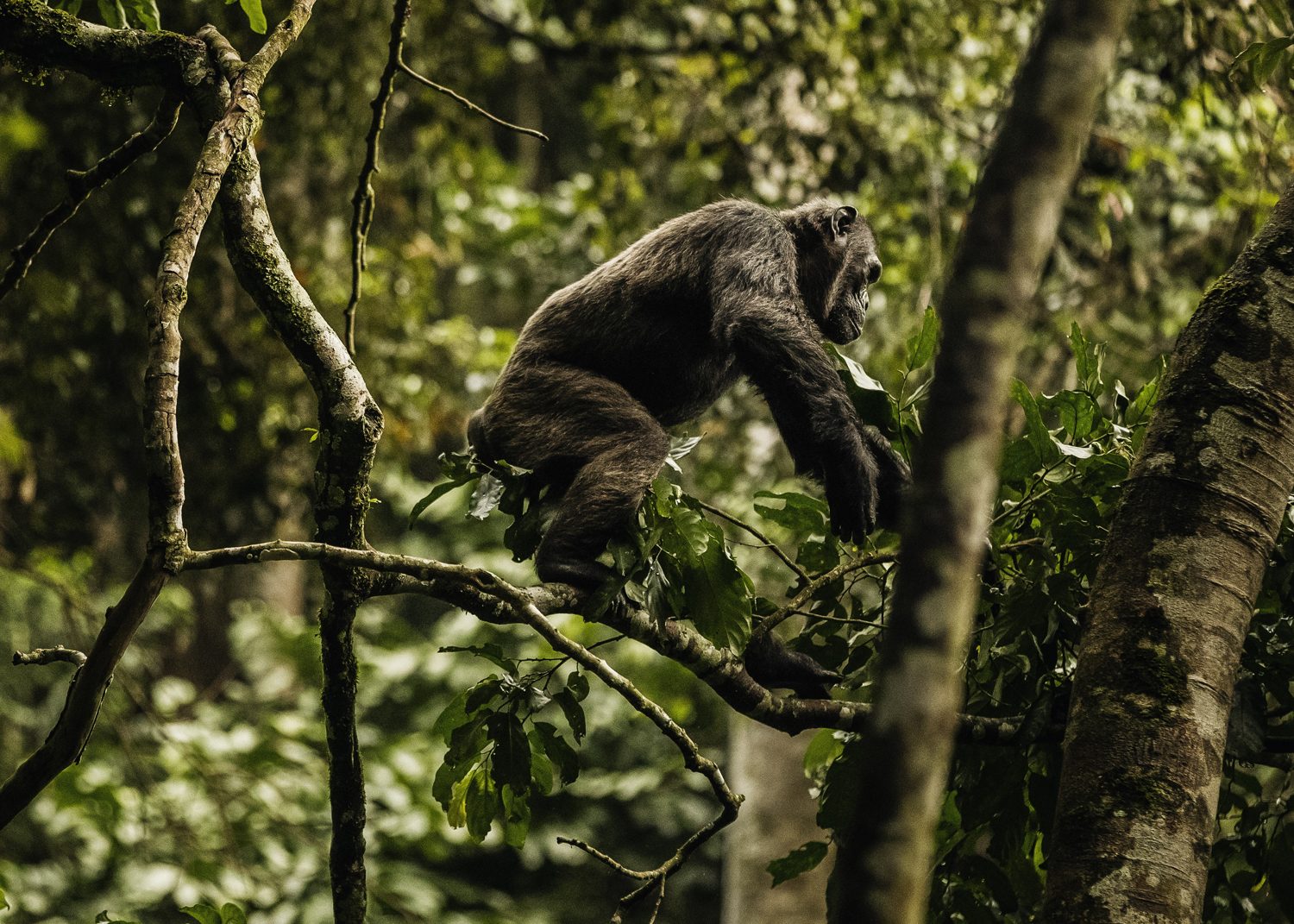
Chimpanzee tracking in the early morning light of Nyungwe

Planning Around Rwanda’s Peak Season

Rwanda’s travel year peaks in the same months as its dry seasons, which means the chimpanzees share their busy calendar with the gorillas of Volcanoes National Park. If your plan includes both treks, the gorilla permits will drive your dates. They are the first to sell out, often months in advance.

Our advice is to fix your travel window early, then lock in permits before lodges. When you book, note that chimpanzee tracking in Rwanda needs less lead time than gorilla permits. The gorilla trek will drive your dates instead, so book that permit first. A 5-day gorilla and chimpanzee safari or a 10-day Rwanda primate itinerary arranges every permit, transfer and night of lodging. The season then works for you rather than against you.

For up-to-the-minute availability and pricing in your chosen month, contact our team. We track permit availability daily. We will tell you honestly which months are tight and which are wide open, so your dates and budget land in the same place.

A Month-by-Month Snapshot

If you want the whole calendar in one glance, here it is:

  • January: dry, warm and busy from the holidays; excellent tracking
  • February: dry and pleasant; a favourite month for photographers
  • March: the long rains begin; the forest turns lush and quiet
  • April: the wettest month; lowest prices, toughest trails
  • May: the rains ease; the green season at its most beautiful
  • June: the dry season begins; the trails firm up quickly
  • July: peak season; clear trails and a busy park, book early
  • August: peak season continues; ideal conditions, full lodges
  • September: still dry; crowds thin out as the holidays end
  • October: the short rains return; a quiet park and fine mornings
  • November: wet and calm; superb value and very few visitors
  • December: drying again; holiday crowds return for Christmas

The bottom line is simple. Chimpanzee tracking in Nyungwe works in every month of the year, and the differences between seasons are differences of comfort and company, not of the animals themselves. Choose the window that suits your budget and your nerve for mud, book it through a reliable operator, and let the forest do the rest. For official visitor information on Nyungwe and Rwanda’s other parks, visit the Visit Rwanda tourism board.

For more on the park itself, from its trails to its lodges, browse our Nyungwe destination guide. And when you are ready to lock in your dates, contact our team. We will take care of the permits, the transport and the timing. All you have to do is show up before dawn and follow the hooting.
10 Essential Things to Pack for Gorilla Trekking in Rwanda

Gorilla trekking in Rwanda is a genuine rainforest expedition: steep volcanic slopes, dense bamboo, stinging nettles, and weather that changes three times before lunch. Pack correctly and the trek becomes one of the great travel experiences of your life; pack wrong and it can become a wet, cold, miserable grind. The difference between the two is entirely in your bag.

This guide covers the 10 essential things to pack for gorilla trekking in Rwanda – and just as importantly, what to leave at home. Every item here earns its place based on real treks in Volcanoes National Park, where rain is guaranteed at some point, mud is a certainty, and comfort is a choice. You can also check the latest park news and travel advice on Rwanda’s official tourism board website.

  • Waterproof everything: jacket, boots, and pack cover are non-negotiable.
  • No cotton: once wet, cotton stays wet and cold; synthetic and merino layers are the only sensible choice.
  • Fit your layers, not the forecast: be comfortable hiking in the warmest layer, with warmer ones in your pack.
  • Test everything before you fly: blisters from untested boots have ended more treks than unfit legs ever will.

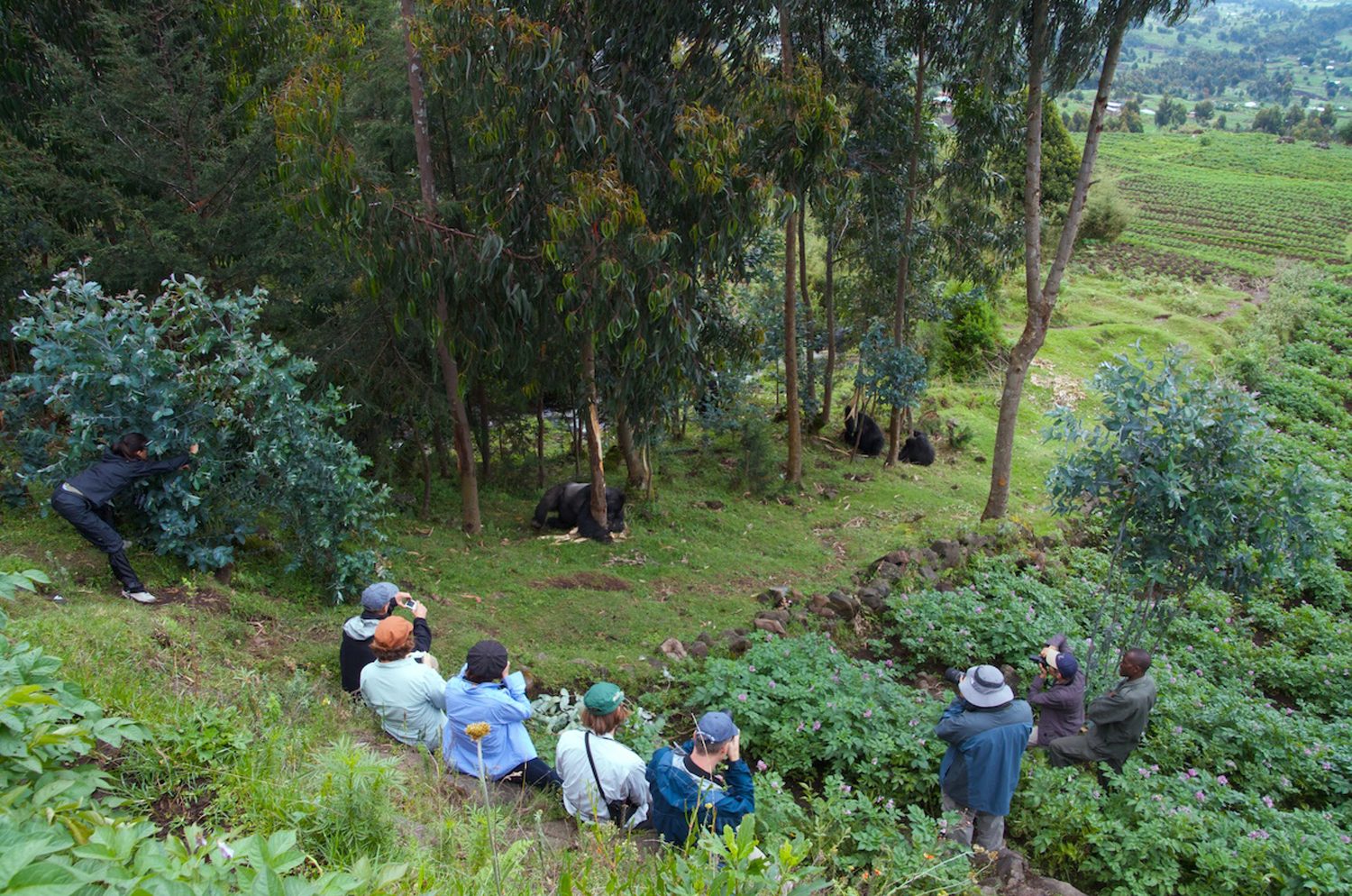
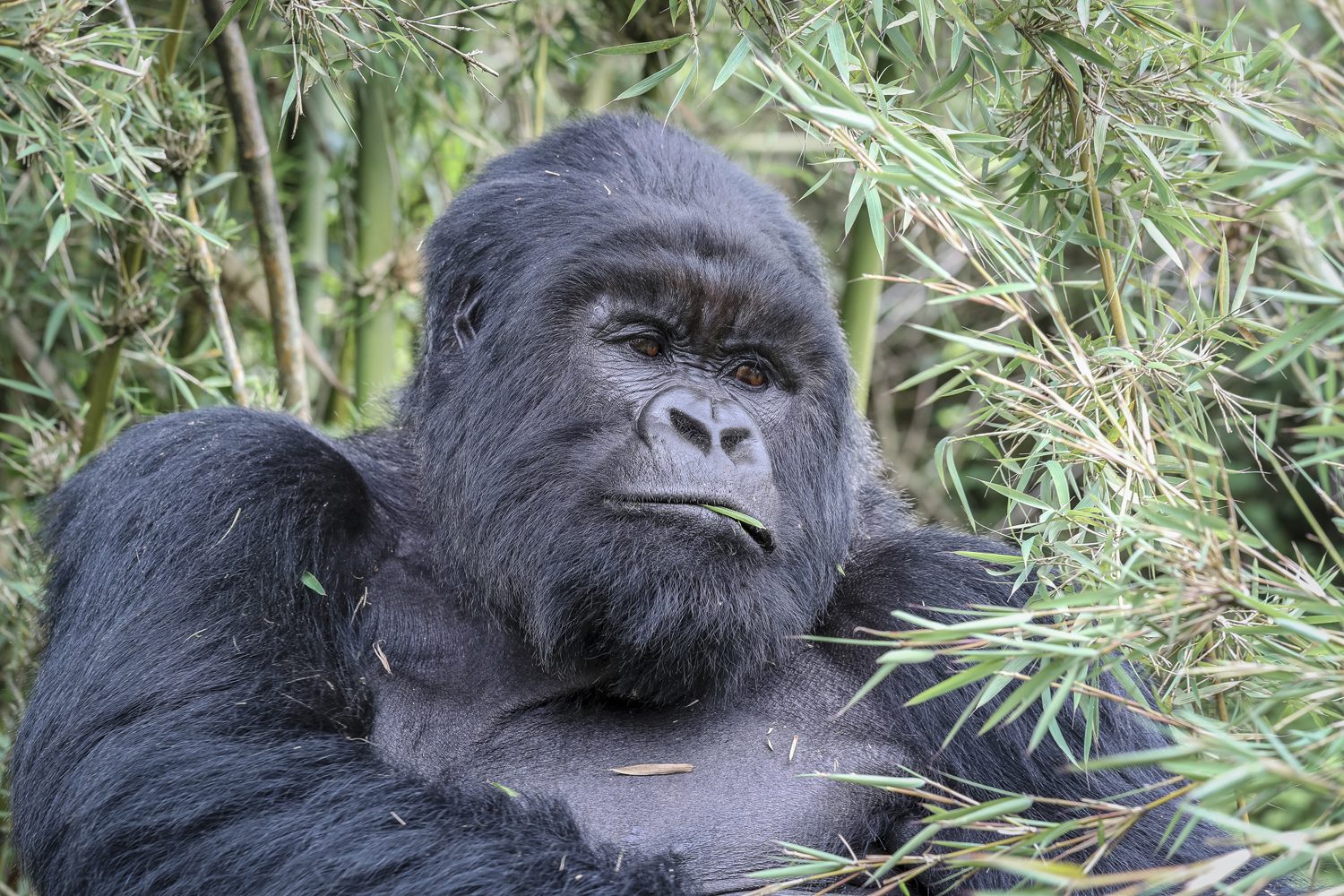
Gorilla trekking in Rwanda through the bamboo of Volcanoes National Park

1. Waterproof Hiking Boots for Gorilla Trekking in Rwanda

If you buy only one thing for a gorilla trekking in Rwanda trip, make it a pair of sturdy, waterproof, broken-in hiking boots with aggressive tread. The trails of Volcanoes National Park are steep, rocky, and slick – after a rainy morning they become rivers of mud, and the difference between gripping boots and smooth-soled sneakers is the difference between a confident hike and a dangerous slip.

Buy them at least a month before travel and wear them everywhere – walking, work, shopping – so they are moulded to your feet by the day of the trek. Expect them to return home as a two-tone artwork of mud and leather; that is the badge of a real gorilla trekker. Lightweight trail runners work for the fit and experienced, but for everyone else, full boots with ankle support are the safer call on slopes that are often more vertical than they look.

Three small upgrades separate great trekking footwear from merely adequate ones: laces that stay tied under strain (or a quick-lace system), a toe cap that survives the rocks and roots of the descent, and insoles you have broken in at home rather than the ones that came in the box. If your boots are at all doubtful, Musanze rents good-quality pairs – but nothing beats your own broken-in boots, and the US$10-15 rental fee is money better spent on a porter.

2. Layered Clothing for Every Condition

The classic layering system works perfectly for gorilla trekking in Rwanda. Base layer: a quick-dry long-sleeved synthetic or merino shirt that wicks sweat and protects your arms from nettles and branches – a sun hoodie is ideal because it also guards your neck. Mid layer: a fleece or thin insulated jacket for the cold dawn hours. Outer layer: the waterproof jacket from your rain kit. Long hiking trousers – not shorts, not jeans – complete the outfit.

In your daypack carry one spare base layer and a pair of dry socks: the moment the trek ends, stripping off wet layers and pulling on dry ones is the most luxurious feeling in Africa. A warm hat and light gloves for the summit sections, plus sunglasses for the sun that always seems to appear on the way back down, round out the system.

3. Rain Jacket and Waterproof Protection

The Virungas generate their own weather – one valley in sunshine, the next in downpour – and a genuinely waterproof, breathable rain jacket is the item trekkers regret leaving home most. Look for taped seams and a hood that fits over a hat; a poncho is a reasonable backup but flops in the undergrowth. Rain trousers are optional: on most treks your legs will get soaked and muddy anyway, and quick-dry hiking trousers recover fast.

Rain decides the mood of many gorilla trekking in Rwanda days, so treat your rain kit as part of the plan, not an afterthought. Waterproof your pack too: a pack cover or a few dry bags inside will keep your spare clothes, phone, and camera safe when the sky opens. Trekkers who follow this simple rule finish the day warm and dry inside; those who do not spend the transfer back to the lodge shivering.

Dressing for the Season: Your Rwanda Gorilla Trekking Kit

Rwanda’s two dry seasons (June to September and December to February) change the kit’s emphasis for gorilla trekking in Rwanda: dust and sun replace mud, mornings are crisp and clear, and the trek can be done in lighter layers. Pack a lightweight sun hoodie, quick-dry trousers, and a foldable windbreaker; a full rain jacket is still worth carrying, because the Virungas reserve the right to rain in any month, but you will likely spend most days in the sun.

In the wet seasons (March to May and October to November), the rain jacket, waterproof boots, and dry bags move to the top of the pack, and an extra pair of socks and a second pair of gloves become genuinely important – wet gear doubles in weight and misery on the return climb. Whichever season you travel in, remember that the park sits at altitude, so a warm layer for the pre-dawn briefing is non-negotiable year-round; you can always shed it as you climb. Check the month-by-month picture in our best time to visit Rwanda guide before you finalise your kit.

4. Gardening Gloves and Trekking Poles

Gardening gloves – the cheap, grippy kind – are the unsung heroes of gorilla trekking. You will grab vegetation constantly for balance on the steep slopes, and in the wet season that vegetation is often stinging nettles, thorny brambles, or simply slippery. A pair of padded work gloves lets you grip fearlessly, saves your hands, and costs almost nothing. Take two pairs: one gets soaked fast.

Trekking poles help far more than people expect – they take the load off your knees on the descent and give you a third point of contact on the worst slopes. Most operators provide them on request, but if you prefer your own, collapsible carbon poles are the ones that earn their place in a carry-on.

5. Your Daypack: What Goes Inside

A 20-30 litre daypack is the right size for gorilla trekking in Rwanda – big enough for everything, small enough that a porter carries it without complaint. Whatever you pack, remember the rules of the forest: no food, no drinks, and no litter are allowed in the presence of the gorillas, so anything consumable stays zipped away until the hour is over.

Plan the hand-off before the trek: most operators let you leave the daypack with a porter at the trackers’ rendezvous point just before the final stretch to the gorillas, so you meet them carrying only your camera. That is the moment your spare layer, water, and snacks become waiting luxuries for the walk back – and it is why your pack contents matter as much as your clothing choices.

  • Water: at least 1.5 litres; a soft flask or hydration bladder is easier than bottles.
  • Snacks: nuts, dried fruit, or an energy bar for the trek itself – eaten away from the gorillas.
  • Dry bag: for your phone, camera, and spare layer if the pack is not waterproof.
  • Sunscreen and lip balm: the sun at 3,000 metres burns fast, even in the wet season.
  • Cash: small notes for tipping your guide and porter on the spot.

6. Photography Gear

You will be within metres of the gorillas, so the rule is: leave the huge lens at home. A mid-range zoom (24-105mm or similar) on a mirrorless or DSLR body covers everything from landscape shots of the volcanoes to tight portraits of a silverback’s face. If you are travelling light, a modern phone camera produces stunning results in the misty forest light – just bring a way to protect it from rain.

Whatever you carry: no flash (strictly forbidden around the gorillas), bring spare batteries and memory cards (cold kills batteries fast), and keep your camera in a dry bag until the family appears. Set your shutter speed to at least 1/320 before the trek – in the low forest light, the gorillas’ gentle movements blur quickly on slower settings. On a gorilla trekking in Rwanda outing, the light shifts constantly, so check your settings before the family appears. And bring a second small camera or keep your phone in a chest pocket: when a baby gorilla rolls past within arm’s reach, the camera you can grab in one second takes the shot you will frame for the rest of your life.

7. Documents and Money

Your gorilla permit is issued electronically and your operator holds it, but carry your passport – it is checked at the park headquarters when your group is registered. Keep a photocopy or photo of the passport and permit in your phone, and make sure your visa for Rwanda is arranged in advance (most nationalities get it on arrival or online before travel). Travel insurance that covers medical evacuation is strongly recommended for a trek at altitude.

If you have not secured your permit yet, start there before anything else – availability at peak times is the single biggest risk to your gorilla trekking in Rwanda trip, and current prices are listed on our gorilla permit costs page. Leave passports and valuables in the lodge safe on trek day, carry a photocopy instead, and keep a photo of your insurance documents on your phone in case you need them on the mountain.

Cash remains king in the park: tip your guide and porter in US dollars or Rwandan francs (US$10-15 per porter is the standard), and carry small notes. Cards work in Kigali and at most lodges, but park services, markets, and Musanze restaurants are predominantly cash.

8. Health and Comfort Items

A compact health kit rounds out the pack. Insect repellent for the forest edges and evening terraces; sunscreen and SPF lip balm for the exposed trails; personal medications plus basic painkillers, plasters, and blister plasters. Altitude is a genuine factor – the park sits above 2,500 metres – so hydration and a light day before the trek matter more than pills, and most visitors feel fine. Altitude affects everyone on a gorilla trekking in Rwanda climb, so sleep well and hydrate the day before.

Consider a buff or neck gaiter (dust, sun, and warmth in one), earplugs for noisy lodges, and a small towel. And if you take daily medication, pack double: Rwanda’s pharmacy network is good in the cities, but specific international prescriptions are harder to find outside Kigali.

Hydration strategy deserves its own mention. Start drinking extra water the day before the trek, sip steadily on the climb rather than gulping at the summit, and plan to finish your first litre before you reach the gorillas – you will not want to stop for drinks once the hour begins. A light electrolyte sachet in your first bottle is a small trick that pays large dividends on the descent.

9. Porters: Local Heroes of Gorilla Trekking in Rwanda

Hire a porter. At around US$15 (plus a good tip), they carry your daypack for a gorilla trekking in Rwanda outing, haul you bodily up the steepest slopes, and their entire income depends on your tip – a direct boost to the local community, as our guide to how trekking supports conservation and communities explains. You can leave your bag at the rendezvous point and visit the gorillas with just your camera; porters make every trek more enjoyable for trekkers of all fitness levels.

Leave the following at home: drones (banned in Rwanda, with real penalties), flash photography, bright-coloured clothing (gorillas react to it), heavy cotton jeans, brand-new unbooted boots, valuables, and anything single-use plastic. And do not bring a suitcase onto the trail – operators store luggage at the lodge, and what you actually need on trek fits in one small pack.

Finally, a note on weight: if you have to choose between items, choose the ones that keep you dry and fuelled over the ones that keep you entertained. A paperback, a second camera body, and extra clothing all feel heavy at 3,000 metres. The perfect trek bag is the one where everything inside was used – and the best memory of the day will not be anything you carried, but the family you met at the end of the trail.

10. The Final Checklist for Gorilla Trekking in Rwanda

Here is the complete list, so packing for your gorilla trekking in Rwanda day takes ten minutes instead of an hour of worrying.

  • Waterproof, broken-in hiking boots
  • Long-sleeved base layer or sun hoodie; mid-layer fleece; waterproof rain jacket
  • Long hiking trousers; spare base layer; dry socks
  • Warm hat, sunglasses, gardening gloves
  • 20-30 litre daypack with pack cover or dry bags
  • 1.5+ litres of water; snacks; sunscreen; lip balm
  • Camera with spare batteries and memory cards
  • Passport, visa, permit copy, insurance details, cash for tips
  • Personal medications and blister kit

Then add the essentials that make the whole trip work: read the full trekking costs and tips guide to understand the day itself, and if you are still planning dates, a 3-day Rwanda gorilla safari is the classic way to turn your gear into the adventure of a lifetime. And if you are unsure about any item or want local advice on renting boots or rain jackets in Musanze, contact our team before you fly – we have answered every packing question you can imagine, and a few you cannot.

Best Time to Visit Rwanda for Gorilla Trekking & Safari: Complete Seasonal Guide

Every year, tens of thousands of travellers fly to Rwanda for one reason above all: to meet the mountain gorillas of the Virunga Volcanoes face to face. But once the flight is booked and the dream is set, the question every visitor asks is the same: what is the best time to visit Rwanda? The honest answer is that gorilla trekking in Rwanda runs all year round, and every month offers a slightly different version of the experience, from sun-drenched dry-season mornings to the lush, misty rainforest of the rainy months.

The short answer for most first-time visitors is that the dry seasons – June to September and December to February – offer the most comfortable trekking conditions, the driest trails, and the most predictable weather. But the best time depends heavily on your priorities: your budget, your fitness, how much you mind a little mud, whether you want to combine gorillas with a wider safari in Akagera or chimpanzee tracking in Nyungwe, and how far ahead you can plan. This guide breaks down Rwanda’s two dry seasons and two wet seasons month by month so you can choose the window that fits your trip perfectly.

Understanding Rwanda’s Climate: Two Dry Seasons, Two Wet Seasons

Sitting just south of the equator in East Africa’s Great Rift Valley, Rwanda has a mild, high-altitude climate with no true summer or winter. Temperatures are remarkably stable throughout the year, driven by altitude rather than season: expect 16-27°C (60-80°F) during the day in most of the country, with noticeably cooler nights in the highlands. What actually changes through the year is rainfall, and the year divides into four distinct windows: the long dry season (June to September), a short rainy season (October to November), the short dry season (December to February), and the long rainy season (March to May).

Because Volcanoes National Park sits between 2,500 and 4,500 metres above sea level, conditions on a trek can swing from warm sunshine to cold drizzle within an hour, no matter the season. The park’s steep slopes and dense bamboo forest mean rain can fall on one side of a ridge while the other stays dry. In practice, treks run every single day of the year – rain never cancels a trek in Rwanda – but the season strongly influences how muddy, how long, and how tiring your trek will be.

  • June to September: long dry season, minimal rain, best all-round conditions, peak crowds.
  • October to November: short rainy season, brief afternoon showers, lush forest, fewer visitors.
  • December to February: short dry season, warm and sunny, a quieter alternative to June-September.
  • March to May: long rainy season, heaviest rainfall, lowest prices, emptiest trails.

The Long Dry Season (June to September): The Classic Trekking Window

If you want the driest possible trails, the clearest views, and the most reliable trekking conditions, the best time to visit Rwanda for most first-timers is between June and September. During these months the forest thins slightly under weeks of steady sunshine, paths stay firm underfoot, and the vegetation between you and the gorillas is less dense, which makes the moment of meeting a family all the more dramatic. Waterfalls of morning mist still cling to the volcano slopes, but by mid-morning the sky usually clears into crisp blue.

best time to visit Rwanda gorilla trekking

August and September also bring one of Rwanda’s most famous events: Kwita Izina, the annual gorilla naming ceremony held at the foot of Volcanoes National Park. Each newly born gorilla is given a name by international guests and local community members, celebrating the conservation success that has rebuilt the population. Travel during the ceremony and you will also find the rest of the country in festive mood, with parades, concerts, and community celebrations around Musanze and beyond.

The long dry season is equally superb for the rest of a Rwanda safari. In Akagera National Park, vegetation thins and wildlife gathers around permanent water sources, so elephant, buffalo, giraffe, zebra, and even leopard sightings become more frequent and more photogenic. It is the best window of the year for a classic East African game drive – the perfect pairing with your gorilla trek.

The Short Dry Season (December to February): A Warm Winter Escape

December to February delivers the second dry window, and for many travellers it is the hidden gem of the Rwandan trekking calendar. If you are escaping a northern winter, this is a superb time to visit Rwanda: warm, sunny, and still green. The weather is warm and sunny, the forest is still relatively dry from the preceding weeks, and the trails through the park are in excellent shape. For those escaping a northern winter, January and February offer a genuinely comfortable tropical escape with long, golden hours of daylight.

There is one seasonal wrinkle: the two to three weeks around Christmas and New Year are among the busiest of the whole year, as international holidays align with ideal trekking weather. If you want the perfect conditions without the crowds, the sweet spot is early February, when the festive rush has gone, schools are back in session, and permit availability improves noticeably. The same window is excellent for combining a gorilla trek with golden monkey tracking and a lake getaway – or for ticking off both of Rwanda’s safari experiences in one trip.

The Short Rainy Season (October to November): Green and Quiet

October and November bring the short rains, but rainy season overstates it. For birdwatchers and photographers, in fact, this is the best time to visit Rwanda of the whole year. Typically the sky is clear through the morning, the trek runs normally, and an intense but brief shower rolls in during the afternoon before the sun reappears. The payoff is a rainforest at its most beautiful: deep emerald greens, flowering plants, and an explosion of birdlife as migratory species arrive from Europe and southern Africa.

This is also the season that many repeat visitors secretly prefer. Trails are quieter, lodges are more affordable, and the forest feels alive in a way the dry months cannot match. If you are a serious birdwatcher or wildlife photographer, or simply a traveller who would rather trade a little mud for solitude and atmosphere, October and November are among the most rewarding months of the year in the Virungas – and across the rest of the country.

The Long Rainy Season (March to May): The Lowest Season

March to May is Rwanda’s wettest period, and while the daily deluges keep most travellers away, the parks remain open and treks still run every morning. On a tight budget, this rainy window is actually the cheapest time to visit Rwanda, and the emptiest. This is the season of lowest demand, lowest lodge rates, and the most available permits – a genuine bargain window for budget-conscious travellers who do not mind working a little harder on the trail. The forest is at its most saturated, so expect mud, slippery slopes, and a longer, more physical trek.

There are real compensations. This is the quietest the park ever gets: you may have the trail, your group, and your guide almost to yourself. For photographers, the constant mist and saturated greens create an atmosphere you simply cannot capture in the dry season. And for chimpanzee tracking in Nyungwe National Park, the rainy months are actually the preferred window – fruiting trees are abundant and the chimps stay closer together, making them significantly easier to find.

Best Time to Visit Rwanda: Month-by-Month Breakdown

If you are trying to pin down a specific date, here is how each month shapes up for trekking, weather, and crowds. Whichever month you are drawn to, keep this simple rule in mind: the best time to visit Rwanda is the season that matches your budget, fitness, and tolerance for mud.

  • June: start of the long dry season; conditions improve rapidly; crowds build as the month progresses.
  • July: peak trekking; firm trails, sunny days, cold misty mornings; book well ahead.
  • August: still prime; Kwita Izina naming ceremony season; the park is at its busiest and most celebratory.
  • September: excellent weather with crowds beginning to thin; one of the best-value dry months.
  • October: short rains begin; afternoons showery, mornings clear; lush forest and quiet trails.
  • November: rainier but peaceful; superb birding; lowest prices of the short-rain window.
  • December: rains ease into the short dry season; the festive weeks are extremely busy.
  • January: dry and sunny; popular with families on school holidays; a wonderful month to trek.
  • February: the dry-season sweet spot – fine weather, thinner crowds, great availability.
  • March: long rains arrive; trails soften; prices fall and the park empties out.
  • April: wettest month; dramatic, green, and quiet; expect genuine mud and a tougher hike.
  • May: rains linger but ease by month’s end; May closes the low season before June’s rebound.

Trail Conditions at the Best Time to Visit Rwanda

Season shapes the trek as much as the gorillas’ movements do, and it is one more reason to choose your time to visit Rwanda deliberately. In the dry season, the steep volcanic slopes of Volcanoes National Park are at their most forgiving: trails are firm, vegetation thins, and treks typically run two to four hours each way, depending on where the family bedded down the night before. In the rainy months, the same slopes become slippery ribbons of mud, growth is dense, and you should plan for a slower, sweatier climb – occasionally five or more hours before you reach the family.

For older travellers, families with young children, and anyone with mobility concerns, the dry seasons are strongly recommended: the trek stays within reach and the risk of slips falls sharply. That said, porters are available year-round for roughly US$10-15 and are worth every dollar: they carry your daypack, steady you on steep sections, and are a major local income source. If your fitness is a worry, choose a dry-season date, train with some hill walking beforehand, and give yourself an extra day to acclimatise around Musanze.

Photographers should think about season too. Dry-season mornings offer clear light and sweeping views of the volcanoes, while wet-season mist produces moody, atmospheric shots of gorillas emerging from the fog. Gorillas themselves behave much the same year-round, though wet-season fur is fluffier and family groups often huddle in tighter, more dramatic formations during downpours.

Crowds and Permit Prices at the Best Time to Visit Rwanda

Demand follows the seasons with absolute predictability. June through September is peak, with July and August the most competitive months; December’s festive weeks are almost as busy. By contrast, March to May is the quietest stretch of the year, and October to November sits happily in between. Lodge pricing mirrors demand – expect to pay substantially more for the same room in July than in April – while the permit itself is fixed at US$1,500 per person year-round, and gorilla permit costs are regulated by the Rwanda Development Board.

Because only 80 permits are issued per day for Volcanoes National Park, and because gorilla families can only be visited by small groups, dry-season permits genuinely sell out. The rule of thumb: book three to six months ahead for shoulder months, and six months to a year ahead for June to September or the festive period. If your dates are flexible, February and September offer the best blend of great weather and real availability – the quiet heart of the dry periods, before the crowds arrive and after they have left.

Seasonal Highlights at the Best Time to Visit Rwanda

A Rwanda itinerary is rarely just gorillas. Up-to-date event dates and seasonal tips are published by Rwanda’s official tourism board, so it is worth checking their calendar when you plan. The seasons shape the wider country too: Akagera’s savannah is at its viewing best in the long dry season, chimpanzee tracking in Nyungwe is most productive in the rainy months, and Lake Kivu – with its beach resorts in Gisenyi, Kibuye, and Cyangugu – is a year-round destination that shines in dry-season sunshine, ideal for kayaking, swimming, and boat trips between the lakeshore villages. Many travellers pair their gorilla trek with two or three of these experiences on a single trip.

best time to visit Rwanda gorilla trekking

To get the most out of a combined itinerary, aim for a window of stable weather: June to September covers gorillas, golden monkeys, and an Akagera safari beautifully, while December to February adds the same stability with more comfortable lodge availability. Whenever you choose, leave yourself at least two full days around the park – one for the trek itself and one to recover, explore the Musanze craft markets, or visit the Dian Fossey memorial sites in the morning light.

One final seasonal note on Kwita Izina: the ceremony is held every year in early September, so if watching a baby gorilla receive its name is on your bucket list, aim for the first week of September and build your trip around it. Hotels in Musanze fill up quickly for that week, so secure your permit and lodging at the earliest opportunity – a task our team handles happily as part of any itinerary you plan with us.

Final Thoughts: Planning Your Rwanda Safari

If you can move freely, plan around the dry seasons: June to September for the classic, peak-season experience complete with Kwita Izina, or December to February for sunshine and slightly easier bookings. If your budget and tolerance for mud are the deciding factors, the rainy months reward you with near-empty trails and dramatically lower prices – just pack waterproof gear. Whichever window you choose, trekking is a year-round certainty, and the gorillas are always waiting.

Once you have picked your dates, lock in your permit before anything else, then build the trip around it. A 3-day Rwanda gorilla safari is the classic introduction, while longer itineraries add Akagera, Nyungwe, and Lake Kivu. Whatever your plan, review our gorilla trekking packing guide before you fly and contact our team to secure your permits and arrange the details.

17 Best Things to Do in Rwanda: Beyond Gorilla Trekking

Rwanda is famous for one thing above all: gorilla trekking in the misty volcanoes of the Virunga Massif. But the best things to do in Rwanda go far beyond the gorillas – the Land of a Thousand Hills is also one of East Africa’s most underrated destinations – a compact, remarkably safe, and gloriously green country where you can track chimpanzees through primeval rainforest, watch lions hunt on an African savannah, kayak across vast inland lakes, and taste some of the continent’s best coffee, all within a few hours’ drive of each other.

Because the country is small (about the size of Belgium) and its road network is excellent, you can pack an extraordinary amount into one itinerary. Whether you have a single spare day after your gorilla trek or a full two-week adventure, this guide to the 17 best things to do in Rwanda beyond gorilla trekking will help you build a trip that shows off everything this remarkable country offers. Start your planning with the official site of Rwanda’s official tourism board, Visit Rwanda.

1. Trek to Observe Mountain Gorillas

Let’s start with the headline act anyway – because even a beyond-the-gorillas guide would be incomplete without it. Trekking to see mountain gorillas in Volcanoes National Park is one of the most profound wildlife encounters on Earth: a guided hike through bamboo and rainforest to spend one unforgettable hour sitting among a wild gorilla family, watching silverbacks, mothers, and babies go about their day.

things to do in Rwanda gorilla trekking

The permit costs US$1,500 per person (full details on gorilla permit costs), issued through the Rwanda Development Board, and the trek itself takes 30 minutes to several hours depending on where the family spent the night. Your once-in-a-lifetime hour costs more than any other wildlife encounter in Africa – and it is worth every dollar.

2. Things to Do in Rwanda: The Ellen DeGeneres Campus of the Dian Fossey Gorilla Fund

Situated on the edge of Volcanoes National Park near Musanze, this modern visitor centre and research hub celebrates the life and legacy of Dian Fossey, the primatologist who devoted her life to saving mountain gorillas from extinction. Highlights include a replica of her mountain cabin, interactive exhibits on gorilla behaviour and conservation science, and beautifully designed gardens with views toward the volcanoes.

Many visitors find the campus so inspiring that it tips them from curious to I-have-to-trek – staff can even help you arrange a trek or a visit to Fossey’s research sites. It is an ideal first stop the day before your trek, and entry fees support the fund’s ongoing field work.

3. Go on Safari in Akagera National Park

Rwanda’s only true savannah park, Akagera National Park, is a remarkable conservation success story: once devastated by poaching, it has been restored over the past decade into a thriving ecosystem holding the Big Five – lion, leopard, elephant, buffalo, and rhino – alongside giraffes, zebras, hippos, crocodiles, and over 490 bird species.

Self-drive safaris cost about US$100 per person, and guided game drives with a spotter start at around US$25 on top of entry. A dawn drive across the savannah, then an afternoon boat trip on Lake Ihema watching hippos and elephants at the water’s edge, makes one of the best full days in Rwanda.

4. Things to Do in Rwanda: Track Chimpanzees in Nyungwe Forest National Park

Nyungwe is one of Africa’s oldest and largest montane rainforests, and tracking its chimpanzees is pure adrenaline in a way gorilla trekking is not. These chimps cover huge distances through dense canopy, and finding them can mean a fast-paced scramble uphill through vines and buttress roots before you finally sit breathless among a family grooming, hooting, and feeding around you.

Only three chimp communities are habituated in Nyungwe National Park, each limited to eight visitors per day, so permits are scarce. Tracking costs US$150 plus US$100 park entry – and the forest itself, with its canopy walkway and 13 primate species, is a destination worth the journey on its own.

5. Things to Do in Rwanda: Marvel at Lake Kivu

One of Africa’s great freshwater lakes, Lake Kivu spreads along the country’s western border with the DRC, fringed by terraced hills and the blue silhouettes of the Virunga volcanoes. Its shores hold three resort towns with distinct personalities: Gisenyi in the north with its beach hotels, Kibuye in the middle with its island-studded waters, and Cyangugu in the south near Nyungwe.

Spend a day kayaking between the fishing villages, swim in the calm, crocodile-free waters (one of the few safe lakes in the region), or simply eat grilled fish on a lakeside terrace watching the sun drop behind the Congo mountains. It is the perfect antidote to trekking days – and one of the most relaxing things to do in Rwanda.

6. Explore Volcanoes National Park

Beyond gorilla trekking, Volcanoes National Park protects five of the eight Virunga Volcanoes and offers a full menu of adventures. Track golden monkeys in the bamboo forest, hike to the summit of Mount Bisoke for its stunning crater lake, walk to the Dian Fossey grave site at Karisoke, or take the climb up Mount Sabyinyo for three-country views.

Each activity has its own small permit and daily limit, so it pays to book ahead through your operator. The golden monkey trek in particular is one of the best-value experiences in the park – energetic, fun, and almost guaranteed to delight.

7. Reflect at the Kigali Genocide Memorial

No visit to Rwanda is complete without understanding its recent history, and the Kigali Genocide Memorial is the essential place to do so. A serene, beautifully designed museum in the capital, it documents the 1994 genocide against the Tutsi through photographs, artefacts, and survivor testimony, and it is the final resting place of more than 250,000 victims.

It is a profoundly moving experience – allow at least two hours, take the audio guide, and visit it early in your trip rather than at the end, as it reshapes how you see the country and its remarkable recovery.

8. Things to Do in Rwanda: Tour a Tea Plantation

Rwanda’s rolling highlands are carpeted with tea plantations, and several offer tours where you walk the green rows with plantation workers, learn how leaf becomes tea, and try your hand at hand-picking the top two leaves and a bud. The most scenic plantations sit near Nyungwe and around the Twin Lakes, with guided walks arranged through local agencies and lodges.

It is a gentle, photogenic half-day excursion – mist over the hills, workers’ baskets, the clatter of the factory sorting lines – and a great way to support rural communities while seeing a side of Rwanda most visitors miss.

9. Discover the Twin Lakes

Lakes Ruhondo and Burera near Musanze are often called the Twin Lakes, and they deliver some of the most cinematic scenery in Rwanda: steep terraced hillsides, banana plantations, and drifting mist below the volcano skyline. Few travellers make it here, which is exactly the appeal.

Rent a dugout canoe with a local fisherman, hike the surrounding ridges, or just sit with coffee watching the light move across the water. Guided cultural walks through the villages above the lakes round out a perfect slow afternoon.

10. Things to Do in Rwanda: Stay Overnight in Gishwati-Mukura National Park

Rwanda’s newest national park, Gishwati-Mukura, is an exclusive, low-impact wilderness that admits only a handful of overnight guests. The park protects recovering rainforest in the western highlands and is home to chimpanzees, golden monkeys, and over 200 bird species – plus a unique community-based tourism model where local guides and cooperatives run the experience.

Stay in one of the small eco-lodges or community campsites, hike with a local guide through the forest trails, learn about traditional plant medicine from village elders, and wake to mist and birdsong in a forest almost no one else gets to experience. Book far ahead – capacity is tiny.

11. Visit the King’s Palace Museum

In Nyanza, an hour south of Kigali, the King’s Palace Museum recreates the royal residence of Rwanda’s pre-colonial monarchy. The centrepiece is a stunning replica of the 15th-century thatched palace, its distinctive geometric architecture built entirely from traditional materials, while the surrounding grounds hold the famous inyambo – the sacred long-horned Ankole cattle whose handlers sing to them.

The singing of the inyambo, performed by their keepers during your visit, is one of the most unique cultural moments you will experience anywhere in Africa. Combined with the neighbouring ethnographic exhibits, it is an unmissable half-day trip from the capital.

12. Hike the Congo Nile Trail

Running roughly 227 kilometres along the shores of Lake Kivu from Rubavu to Rusizi, the Congo Nile Trail is Rwanda’s signature multi-day hiking and mountain-biking route. It threads through five districts, two national parks, tea plantations, and countless village communities, with daily stages that end in lakeside camps or guesthouses where the local food is worth the climb alone.

You can walk or bike the whole trail in about a week, or sample a single stage in two or three days – the sections around Kibuye are especially rewarding. It is the best way to experience rural Rwanda up close, far from the safari crowds.

13. Things to Do in Rwanda: Enjoy Kigali’s Dining Scene

Kigali has quietly become one of East Africa’s best food cities. The dining scene ranges from outstanding Indian at Kurry Kingdom to Afro-fusion tasting menus at MEZA Malonga, wood-fired pizza at Pili Pili, and the famous brochettes and grilled fish at Simba Grill – plus a wave of specialty cafés and bakeries that could hold their own anywhere.

Beyond restaurants, try a dish of the day at a local canteen, hunt for street snacks in the evening markets, or book a cooking class to learn the secrets of Rwandan beans, plantains, and sambaza. Add a night out in the city’s buzzing cocktail bars and you will understand why foodies plan stopovers here.

14. Shop at Caplaki Market

For souvenirs, Caplaki Craft Market in the heart of Kigali is the place. Stalls are piled with wooden gorilla carvings, drums, baskets, textiles, coffee, and traditional crafts – and bargaining is expected, so take your time and start at about half the asking price.

Many travellers save their shopping for the last day, filling their bags here before heading to the airport. It is also worth knowing that crafts sold through cooperatives – including the peace baskets woven by survivors’ associations – carry a story you can bring home with you.

15. Visit the Ethnographic Museum

In Huye (formerly Butare), the National Ethnographic Museum holds one of Africa’s finest collections of ethnological and archaeological artefacts. Seven galleries walk you through Rwandan history: royal regalia, traditional medicine, basket-making, iron-working, agricultural tools, and the stunning geometric imigongo art of the east.

Guides bring the collection to life with stories that connect the objects to everyday Rwandan life past and present. If you are travelling south toward Nyungwe anyway, the museum is an easy and rewarding stop en route.

16. Things to Do in Rwanda: Sip Rwandan Coffee

Rwanda’s high-altitude coffee is among the best in Africa, and the country has built a serious café culture around it. In Kigali, Question Coffee runs a café and roastery that showcases women producers; in Musanze, Crema is the perfect post-trek stop; in Kibuye, Kivu Cup serves lakeside pour-overs. Supermarkets also stock Gorilla’s Coffee beans for the best value per kilo.

For the full story, visit a washing station on a coffee tour (several operate near Lake Kivu and in the south), where farmers will walk you from cherry to cup. Your purchase supports farming cooperatives directly – delicious and genuinely meaningful.

17. Experience Traditional Beekeeping

Around the Twin Lakes and in the western highlands, local villages still practise beekeeping exactly as their ancestors did: long cylindrical hives hollowed from logs, sealed with a paste of cow dung, and hung high in the forest canopy. Visiting a village beekeeping project is a fascinating cultural encounter, and tasting the wild honey – dark, floral, and utterly unlike supermarket honey – is a highlight.

Community associations offer visits with local guides, and honey purchases support the beekeepers’ families. It is a quiet, authentic experience that captures rural Rwanda better than any itinerary item.

Planning Your Beyond-Gorillas Rwanda Itinerary

With 17 experiences on the table, the hardest part is choosing. The good news: Rwanda’s size makes combinations easy. The classic plan gives two to three days to Volcanoes National Park for trekking and golden monkeys, then two days to Akagera for a safari, and a day or two to Lake Kivu and Nyungwe in the west – a loop that can be done in seven to ten comfortable days.

For those short on time, single-day and two-day extensions work beautifully around the trek itself, while longer itineraries such as a six-day loop combine the gorillas with the lakeside towns of Lake Kivu and let you slow down and actually enjoy the journey between destinations. Travellers with more days can add the Congo Nile Trail, Gishwati-Mukura, or a second visit to Nyungwe for the canopy walk, which most people agree is worth doing twice.

Whenever you travel, check the best time to visit Rwanda first, then contact our team to arrange permits, transport, and guides so the only thing you have to do is show up and be amazed.

A Family Safari in Rwanda: Gorilla Trekking with Kids

There is a moment, about an hour into a family gorilla trek in Rwanda, when the forest guide stops and points silently into the bamboo, and it becomes the defining memory of the whole family safari. What happens next depends on your children: some gasp, some freeze, some whisper “there’s a gorilla” a hundred times in a row. But almost every child, whatever their reaction, will describe that moment for years afterwards. A family safari in Rwanda is one of those rare trips that genuinely changes how children see the natural world, and it is far more accessible for families than many parents assume.

This guide covers everything you need to plan a family safari in Rwanda: the minimum ages and the trekking rules, how to prepare children for the forest, what to expect on trek day, where to stay, how to build a balanced itinerary, and the practical details of travelling with kids in a country that is more family-friendly than almost any other destination in Africa. Whether you are travelling with a sturdy nine-year-old or a determined twelve-year-old, a Rwandan safari can be shaped around your family, and this article will show you how.

One of the first questions parents ask is whether a Rwanda family safari is worth the distance, and the answer from families who have done it is a confident yes. A Rwanda family safari can be shaped around children of almost any age, and this guide shows how. Keep it simple, keep the pace gentle, and the country does the rest.

Why Rwanda Works for Families

A Rwanda family safari works because the country is compact, safe and gentle, and it is, in many ways, the easiest country in East Africa to visit with children. It is compact: you can cross the whole country by road in a day, which means no endless game-drive days and no exhaustion-heavy transfers. The roads are good and well maintained, the towns are orderly and welcoming, and the general atmosphere of the country is calm, safe and courteous, which parents notice within the first hour. The climate of the highlands is mild, and the altitude keeps the heat gentle even in the middle of the day.

Then there is the wildlife itself. The mountain gorillas are the most family-friendly of the great animals: they are used to humans, their daily life is slow and unhurried, and their behaviour is endlessly fascinating to watch. Families do not need a dramatic kill or a chase to be thrilled; the quiet minutes of a mother grooming her infant are exactly the kind of wonder that children absorb best. Add the golden monkeys, the chimps of Nyungwe, the boat safaris of Akagera and the beaches of Lake Kivu, and you have a country-sized menu of experiences that suit children of different ages and attention spans.

The other great advantage is the attitude of Rwandans to children. Children are treasured in Rwandan culture, and families are welcomed warmly everywhere, from the park gates to the lodges and the restaurants. The people you meet will dote on your kids, the guides will tailor their explanations to the age of their audience, and the general warmth of the welcome makes parents relax. For a family, this friendliness is not a minor detail; it is the difference between a stressful trip and a joyful one.

The Age Question: How Old Is Old Enough for a Rwanda Family Safari?

The first question every family asks is the age of their children, and the age rules are the first thing to plan in any Rwanda family safari. The official rule of the Volcanoes National Park is that gorilla trekkers must be at least fifteen years old, and this is a firm rule: the minimum age for the gorilla trek is fifteen, and it is enforced at registration, so it is not possible to book a younger child onto the gorilla trek itself. Parents of younger children sometimes find this frustrating, but the rule exists for sound reasons: the trek demands fitness, the forest has no shortcuts, and the experience is intense for both the visitor and the gorillas.

What About Younger Children?

Fifteen is the boundary for the gorillas specifically, but it is not a boundary for Rwanda in general. Children under fifteen can enjoy most of the rest of the country without restriction: the golden monkey trek in the same park is open to younger children, the chimpanzee tracking of Nyungwe is generally open from twelve, the savannah game drives of Akagera are perfectly suited to children of almost any age, and the canopy walkway, the boat trips and the lakeside activities have no serious age limits at all. A family with younger children can build a wonderful Rwandan itinerary around these experiences and save the gorillas for the year the youngest turns fifteen.

It is also worth noting that the age limit is about safety and experience, not about interest. A fifteen-year-old who has been prepared for the trek will be ready; one who has been dragged along without context may struggle with the early start and the mountain slopes. The rule of thumb we share with parents is simple: if your child is old enough, excited enough and reasonably fit, they will love it; and if they are younger, the rest of the country will more than fill the trip.

Preparing Children for Your Rwanda Family Safari

The gorilla trek is the centrepiece of any family itinerary, and preparation is the difference between a great morning and a hard one on a Rwanda family safari. Start with the basics of the day: the trek begins with a morning briefing at the park headquarters, followed by a drive or walk to the trailhead and a climb through farmland, forest and bamboo to reach the gorilla family. The walk can take anywhere from under an hour to several hours depending on the day’s group location, at altitudes above 2,500 metres, which is tiring even for fit adults.

Prepare your children physically with short practice walks in the weeks before the trip, and mentally with books, documentaries and honest conversations about what the day involves. Explain that the gorillas are wild animals, that the rules exist to protect them, and that the best moments come to the patient. Explain the one-hour limit: the visit with the gorillas is strictly one hour, a fact that frustrates adults but actually suits children, whose attention is best served by a focused hour of wonder.

On the day itself, the essentials are the same for children as for adults: good boots that are already broken in, layered clothing, long trousers, gloves for the nettles, plenty of water, snacks, and a waterproof cover in the rainy months. A walking stick from the porters is a genuine help on the slopes, and hiring a porter for the family is one of the best decisions you can make: they carry bags, steady hands on steep sections and lighten the whole morning. Many families also find that a quiet child’s natural instinct to whisper, watch and wait is actually perfect behaviour in the forest, where loud talk is discouraged anyway.

What a Family Trek Day Actually Looks Like

A Rwanda family safari trek day begins early, and the guides match your family to the gorilla group. Most lodges organise wake-up calls and early breakfasts, and the transfer to the park headquarters takes around half an hour from the Musanze and Kinigi area. At the briefing, guides allocate families to gorilla groups, matching the group’s location to the fitness of the visitors, which is a real advantage for families: mention that you have children and the team will do their best to assign you to one of the nearer families on a shorter trek day.

The walk itself is the physical heart of the day. Families ascend through the farmland and the forest edge, and the guides point out birds, tracks, plants and the famous golden monkeys along the way, which keeps younger legs moving. When the trackers have located the group, the encounter begins: the rangers clear a route through the undergrowth, and you spend your hour in the presence of the family, watching feeding, grooming, playing and the sheer presence of animals that weigh more than twice as much as most adult humans.

A family watching mountain gorillas during a trek in Rwanda

The rules for the encounter are strict but easy to follow: keep at least seven metres from the gorillas, do not eat or drink in their presence, keep voices low, and follow the rangers’ instructions exactly. The rangers are experienced at managing families, and their calm authority is part of what keeps the encounter safe for both sides. After the hour, the descent is usually quicker than the climb, and the day ends with a certificate presented to each trekker, which children treasure, and a long lunch, which parents appreciate. The whole family returns to the lodge tired, sunlit and very, very happy.

Choosing Family-Friendly Accommodation

Where you stay shapes the family experience as much as the trek itself, and the Rwanda family safari lodges that genuinely welcome children range from simple guesthouses to premium properties. Around the Volcanoes National Park, in the Musanze and Kinigi area, the range runs from simple guesthouses to comfortable mid-range lodges and a handful of premium properties, and several of the better family-oriented options provide family rooms, interconnecting suites, child-friendly menus and staff who are delighted to look after younger guests during the early trek mornings.

The key question for parents is practical: does the property genuinely suit children, or does it merely tolerate them? Family-friendly lodges in the north offer large enough rooms for the whole family, flexible meal times, gardens and safe outdoor space, and sometimes babysitting or kids’ activities for the early trek mornings and the rest days. The premium lodges of the volcano region, with their fireplaces, views and impeccable service, are popular with multi-generational family groups, while the mid-range properties offer the best balance of comfort, space and price for families on a normal budget.

It is also worth planning the accommodation across the whole country, not just the north. Kigali has excellent family hotels with pools, which children adore after long travel days. The lakeside lodges of Lake Kivu offer beaches, kayaks and swimming, and the lodges of Akagera and Nyungwe provide comfortable bases for the game drives and forest trails. Our team can match each property to your family’s ages and energy levels, which is one of the reasons families book their Rwanda trips through specialists.

Building a Rwanda Family Safari Itinerary: The Right Pace

Pace is the golden rule of any Rwanda family safari, and the second rule is variety. Children do not need to do everything; they need to do the right things with enough time in between to rest, play and digest what they have seen. A typical family week in Rwanda might open with two or three days in Kigali, recovering from the flight and exploring the capital at a gentle speed, followed by the journey north and the gorilla trek with a rest day either side, and then a slower final section at the lake or in the east before flying home.

The volcanoes of the Virunga massif towering over farmland in northern Rwanda

In the north, the combination that families love is the gorilla trek plus the golden monkey trek, which is shorter, cheaper and open to younger children, and which provides a second primate encounter with much less effort. The hike to the top of the volcanoes is available for the adventurous, and the villages, coffee farms and cultural visits of the region give the children a taste of Rwandan life beyond the parks. Every element of the itinerary can be adjusted to the family’s fitness and mood, and good planning leaves room for the unplanned afternoon by the pool.

The Rest of Rwanda for Families

For the rest of the country, the savannah of Akagera National Park is the perfect safari introduction for children, and Akagera’s official site details the family activities: game drives in open vehicles, elephants and giraffes at easy viewing distances, and boat trips on the lakes where hippos and crocodiles put on a show. The rainforest of Nyungwe offers the canopy walkway and the chimpanzees for older children, and the lakeshore of Lake Kivu is the soft landing every family deserves: beaches, kayaks, islands and the famous sunsets, with no wildlife demands at all. A family itinerary that touches the capital, the volcanoes, the savannah and the lake covers every mood of a family holiday.

Packing and Practicalities with Kids

The packing list for a Rwanda family safari follows the adults’ list with a few additions. For the gorilla trek: broken-in boots for every member of the family, long trousers and long sleeves for the nettles, a warm layer and a waterproof layer, gloves, a hat, sun protection, water and snacks, and a spare set of clothes for the ride home. For the rest of the trip, the essentials are comfortable shoes, swimwear for the hotel pools and the lake, insect repellent, a small first-aid kit with plasters and the usual medicines, and a few quiet entertainments for the transfer days.

Health preparation matters more than packing. Check with your travel clinic about vaccinations and malaria advice before you go, and carry the usual remedies for minor stomach upsets and altitude adjustment, which is a mild factor in the volcano region. The altitude at 2,500 metres is not a problem for most children, but it makes the trek harder, which is why the practice walks and the porter hire are good investments. Carry water everywhere, and remember that the sun is strong at altitude even when the air is cool.

The practical infrastructure for families is genuinely good. Kigali airport is efficient and modern, the roads between the parks are sealed and smooth, and the lodges, restaurants and attractions are used to hosting children. Car seats can be arranged with advance notice, and the transfer vehicles used by our team have room for the whole family and all its luggage. Families travelling with younger children can expect the same convenience they would find in Europe or North America, which is rare in the safari world and worth planning around.

The Multi-Generational Safari

A Rwanda family safari is outstanding for multi-generational groups, where grandparents, parents and children travel together, and the country’s calm, gentle character suits the blend of ages. The gorilla trek itself works well across the generations: fit grandparents trek alongside teenagers, while the less mobile members of the family can take the shorter walks, join the golden monkey treks and enjoy the lodges, while the boat safaris of Akagera and the lakeside days of Kivu suit every age at once. The lodges of the volcano region and the lakes handle multi-generational groups with ease, and the shared evening discussions of the day’s wildlife are often the best moments of the trip.

For grandparents who trek, the porters and the walking sticks make the slopes manageable, and the rangers are practised at pacing the group to its slowest member. For those who prefer to opt out, the lodge lounges, gardens and viewpoints of the north are lovely places to spend a morning, and the family can reunite over lunch with the day’s stories. The flexibility of the Rwandan itinerary, where every day can be tailored to different energies, is exactly what multi-generational travel needs.

Safety, Health and Confidence for Parents

Parents planning a Rwanda family safari want to know the trip is safe, and Rwanda’s record makes it one of the easiest countries to reassure yourself about, as Rwanda’s official tourism board explains for family travellers. The country is widely regarded as one of the safest in Africa for visitors: it is orderly, stable and well policed, crime against tourists is rare, and the roads and parks are professionally managed. The park rules that protect the gorillas also protect the visitors, and the trekking operation has an excellent safety record, with experienced rangers controlling every step of the encounter.

The health environment is similarly reassuring. Rwanda’s public health system is among the strongest in Africa, the capital’s hospitals and clinics are well equipped, and the main travel risks are the standard ones of any tropical destination, all of which are addressed by a travel clinic visit before you go. The most common family problems are the universal ones of travel: tiredness, dehydration, and the small accidents of energetic days, all of which are manageable with preparation and a well-stocked first-aid kit.

The final reassurance is the professionalism of the operation. When you book a family safari with our team, the details are handled: the right lodges, the right trek days, the right permits, the transfers with car seats and the advice that comes from decades of hosting families. Our planners are parents themselves, and the itineraries we build for families are designed with the pace, the rest days and the flexibility that children need. You can travel with confidence because the people arranging your trip have already thought about everything that could go wrong, and made sure it does not.

A Rwanda Family Safari Is a Gift

A Rwanda family safari is more than a holiday; it is an experience that your children will carry for the rest of their lives. The moment of meeting a silverback, the hours in the forest, the lakes and the savannah, the warmth of the people: these become reference points in a child’s understanding of the world, the way the natural world should be treated, and the places that deserve protection. The trip is also a lesson in conservation delivered in the most effective way possible: by letting children fall in love with the thing that needs saving.

And the practical side is kinder than you think. The flights are long but manageable, the roads are short, the welcome is warm, and the lodges are ready. The 4-day gorilla trekking safari is a classic shape for families with teenagers, while the longer gorilla and Lake Kivu itinerary adds the lakeside days that families adore. Check the permits for your dates, read our packing guide for the trek, and talk to our team about a family itinerary. The gorillas are waiting, and so is one of the greatest family adventures the continent can offer.

Sustainable Tourism in Rwanda: Travel That Gives Back

People often describe Rwanda as the country that puts conservation at the centre of its national identity, and nowhere is that more visible than in the story of the mountain gorillas. This guide looks at how sustainable tourism Rwanda has built around its parks funds conservation, supports communities, and lets travellers give back.

Half a century ago the population of these great apes was perilously low, and the forests of the Virunga massif were under pressure from poaching, deforestation and a growing human population. Today the story has turned around so completely that the mountain gorilla is the only great ape whose numbers are increasing, and the engine of that recovery is tourism that pays for its own protection. A journey to Rwanda is not just a holiday; it is a direct investment in the survival of a species, and that makes it one of the most meaningful trips a traveller can take.

This guide explores what sustainable tourism Rwanda actually means on the ground, following the direction set by Rwanda’s official tourism board: how gorilla tourism funds conservation, how communities share in the benefits, how parks and lodges reduce their environmental footprint, and how you as a traveller can make choices that give back. It covers the practical details of travelling responsibly, from the ethics of the trek itself to the small daily decisions of your stay. By the end you will understand why Rwanda is held up as a global model, and exactly how your own trip can support it.

Sustainable Tourism Rwanda’s Conservation Miracle

The story begins with a near disaster. In the 1970s and 1980s, poaching, war and habitat loss pushed the mountain gorillas of the Virunga region to the edge of extinction, and at one point fewer than three hundred individuals were thought to remain in the wild. The turnaround came through a simple but radical idea: that the gorillas could pay for their own protection. By developing high-value, low-impact tourism, the parks of Rwanda, Uganda and the Democratic Republic of the Congo made a living gorilla far more valuable than a dead one, and the economics of poaching shifted dramatically.

Today the mountain gorilla population has grown substantially, spread between the Virunga massif and the Bwindi Impenetrable Forest of Uganda, with the majority of groups living in Rwandan territory. The park authorities carefully manage the recovery, and the trekking program revolves around the well-being of the animals: strict group limits, a maximum of eight visitors per gorilla family per day, a one-hour limit on visits, and rules on distance, behaviour and hygiene that protect the gorillas from disease. The system works because the permits are valuable enough to fund constant monitoring, anti-poaching patrols and veterinary care, all of which keep the families safe.

Silverback mountain gorilla in the bamboo forest of Volcanoes National Park, flagship of sustainable tourism Rwanda

This is the heart of the Rwandan model: tourism income that flows back into the parks, the rangers and the science. Every permit you buy from the Rwanda Development Board carries a conservation contribution, and the effect is visible in the health of the forest and the growth of the gorilla families. Visitors do not simply observe the success story; they are part of the machinery that makes it possible. That sense of participation is one of the reasons a gorilla trek in Rwanda feels different from any other wildlife experience.

How the Permit Money Powers Sustainable Tourism Rwanda

The single most direct way that tourism protects gorillas is through the gorilla permit, and it is worth understanding exactly where the money goes. The park authority sets the permit price, one of the highest in the world of wildlife tourism, which is precisely the point: the scarcity of the permits funds the intensity of the protection. Conservation activities in the parks receive a large share of the revenue, including the salaries of rangers and trackers, anti-poaching patrols, research and monitoring, habitat management and the veterinary care that treats injuries and respiratory illnesses in the gorilla families.

Beyond the parks themselves, sustainable tourism Rwanda directs a portion of the revenue to the communities around the volcanoes, through shared revenue programs that fund schools, health centres, water projects and agricultural support. This is a deliberate strategy: when the neighbours of the park are partners in its success, the forest gains local guardians rather than local pressure. Communities that benefit from tourism are far less likely to tolerate poaching or encroachment, and the villages around the Volcanoes National Park have become some of the strongest advocates for conservation in the region.

There is also a broader economic ripple. Each gorilla trekking visit brings spending on accommodation, food, transport, guides and local businesses, and studies of the sector consistently show that the tourism economy around the gorillas supports thousands of jobs. From the porters at the park gate to the drivers, the lodge staff and the market sellers of Musanze, the gorilla dollar travels far beyond the park boundary. When you book a trek, you are funding a conservation economy that employs entire communities.

Community Tourism: The Human Side of Sustainable Tourism Rwanda

One of the most rewarding ways to travel sustainably in Rwanda is to engage directly with the communities that live alongside the parks. Around the Volcanoes National Park, community-based tourism initiatives offer visitors the chance to meet local cooperatives, watch traditional performances, visit craft workshops and learn about daily life in the shadow of the volcanoes. These experiences are small-scale, respectful and owned locally, which means the money stays in the community rather than leaking out to large operators.

There are several strands to this kind of tourism. Cooperative craft groups produce baskets, textiles and art, and visitors can buy directly from the makers. Local guides and cultural performers share the history and traditions of the region, from the farming culture of the highlands to the significance of the mountains in local belief. Some community projects run small guesthouses, restaurants and coffee initiatives, all of which give visitors a more honest view of the country while giving residents a genuine stake in welcoming them.

The etiquette of community visits is simple: go with respect, ask before taking photographs, buy things that are genuinely made locally, and remember that you are a guest. The rewards are considerable. Travellers who take the time to meet the people of the hillsides consistently describe these encounters as among the most memorable of their trip, and they leave with an understanding of Rwanda that no lodge experience can provide. Community tourism is a rare case where doing good and having a great time are the same activity.

Low-Impact Travel: Sustainable Tourism Rwanda in Practice

Sustainable tourism Rwanda goes well beyond the gorillas. The country’s protected areas are managed with conservation science, and the national parks pursue a careful balance between access and protection. The Volcanoes National Park limits daily visitors to the number of permits it issues, with each family receiving a maximum of eight visitors a day, and the golden monkey groups are managed on a similar basis. Tracking rules keep visitors on the trails, minimise disturbance, and require guests to keep a fixed distance from the gorillas, all of which keeps the forest intact.

Akagera National Park in the east is a remarkable example of the model in action. Once degraded by poaching, the park recovered through a public-private partnership that reintroduced lions, rhinos and other species, improved infrastructure and built a sustainable tourism operation that funds the park’s protection. The result is a fully functioning savannah ecosystem, and every safari vehicle in the park is helping to keep it that way. The same partnership model guides the management of Nyungwe, the great rainforest of the southwest, where the canopy walkway and its trails fund the protection of one of the oldest forests in Africa.

The lodge sector has moved decisively in the same direction. The better properties around the parks operate on solar power, treat and reuse water, compost waste and source food from local farms, and several run their own reforestation and community programs. Eco-lodges near the volcanoes have replanted thousands of trees on surrounding hillsides, and conservation concessions protect large tracts of forest from agriculture. Choosing accommodation that invests in these practices multiplies the good your trip does, which is why sustainability should be part of your lodge selection criteria rather than an afterthought.

What to Consider Before You Book

Travelling sustainably in Rwanda starts with a handful of decisions that are easy to make once you know what to look for. The first is to book through an operator who shares the values of the destination: a local team that respects the parks, employs local guides, pays fair wages and keeps group sizes responsible. Our own itineraries are built around these principles, from the briefing standards on trek days to the choice of lodges that give back to their communities. When you book with us, you are supporting a business that is part of the conservation economy, not just a visitor to it.

The second decision, meanwhile, is about the season. Travelling in the shoulder months spreads demand more evenly through the year, which helps lodges and parks run stable operations with year-round employment, and it is also the choice that gives you quieter trails and greener forests. The third is about the small things: carrying a refillable water bottle, avoiding single-use plastics, staying on marked trails, and following every rule of the trek to the letter. Disease transmission is a genuine risk to gorillas, and the park’s rules on masks, distance and hand hygiene exist to protect animals whose immune systems cannot cope with human illnesses.

The fourth consideration is simpler than it sounds: take the time to spend your money locally. Eat in local restaurants, buy coffee and crafts directly from producers, hire porters at the park gate and drivers from the towns, and choose experiences owned by communities. Tourism dollars that circulate locally have a much deeper impact than dollars that never leave a foreign-owned chain, and in Rwanda the local scene is so good that this advice is a pleasure rather than a sacrifice.

Volunteering and Giving Back on Your Trip

Many travellers want to go further than sustainable choices and contribute directly to conservation and community work, and there are several sensible ways to do this. The most reliable is through established organisations: conservation charities that fund ranger training, anti-poaching operations and community health projects in the gorilla regions, and community foundations that support education around the parks. Giving through a reputable organisation ensures your money reaches the ground without waste, and many of these bodies publish their work openly.

For visitors, some projects offer meaningful engagement without disrupting the ecosystem. For example, reforestation initiatives around the volcanoes welcome visitors who want to plant trees, and community cooperatives sometimes offer skills workshops where visitors can learn weaving or coffee processing alongside local artisans. These experiences are modest in scale by design, but they create genuine contact and leave something behind beyond footprints. What is rarely a good idea is unregulated volunteering with wild animals: the gorillas are not a species to handle, feed or approach beyond the strict rules of the trek, and projects that offer such interactions are not part of responsible tourism.

One of the most impactful contributions is also the simplest: telling the story. Every traveller who returns home with photographs of the gorillas and stories of the land of a thousand hills becomes an ambassador for the country and its conservation model. Awareness drives visitors, visitors drive revenue, and revenue drives protection. The loop is self-sustaining, and you become part of it the moment you share your experience.

A Responsible Itinerary: Parks That Give Back

A sustainable Rwandan itinerary can be assembled almost entirely from experiences that reinvest in the country. It typically begins in Kigali, a capital of broad boulevards and green hills, where a visit to the Kigali Genocide Memorial is both an education in the country’s history and a demonstration of its reconciliation, and where the coffee culture supports thousands of smallholder farmers. From there the classic journey heads north to the Volcanoes National Park, whose trekking fees protect the gorillas and whose porters, guides and local businesses form the backbone of the regional economy.

Colobus monkeys in the rainforest of Nyungwe National Park

To the west, Nyungwe National Park protects a vast montane rainforest where the canopy walkway and its trails fund the conservation of chimpanzees, colobus monkeys and hundreds of bird species. To the east, Akagera National Park has become the proof that safari landscapes can be rebuilt, with the big cats and the boat trips on Lake Ihema funding the park’s own protection. And along the shores of Lake Kivu, the guesthouses and kayak operators of the lakeside towns support a region whose scenery rivals the great lakes of Europe. Every stage of such a journey is an investment in the country’s green economy.

For a longer immersion, our 8-day Rwanda best adventure safari combines the gorillas with the rainforest and the lakes in exactly this spirit, and the 9-day luxury flying safari shows how high-end travel can also be high-value for the destination. Whatever the shape of your trip, the principle is the same: choose experiences whose revenue protects what you came to see.

The Future of Tourism in Rwanda

Rwanda’s tourism strategy is explicit about the direction of travel: a premium, sustainable model in which quality of experience and quality of conservation rise together. The government has repeatedly rejected the path of mass tourism in favour of a model where the country hosts fewer, better visitors who stay longer, spend more and leave the parks untouched. The strategy has its critics, because high permit prices make the experience inaccessible to some travellers, but its defenders point to the results: a species saved, forests intact, and a tourism economy that rewards protection.

The challenge ahead is to keep the model equitable, and there are encouraging signs that this is being taken seriously. Investments in regional airports, transport and local training spread the benefits of tourism beyond the narrow corridor of the parks, and community revenue programs continue to grow. The question for every visitor is not whether the model works, but whether they will participate in it. Choosing Rwanda is choosing conservation, and the evidence of that choice is visible on every hillside.

Travel That Gives Back

The sustainable tourism Rwanda offers is not a niche option; it is the mainstream of the country’s travel offer, and it is one of the few places on Earth where the headline wildlife experience and the responsible choice are exactly the same thing. The gorilla trek that tops your bucket list is the same activity that saves the species, and the permit that seems expensive is the price of the forest’s survival. That alignment of self-interest and virtue is rare, and it is worth travelling for.

If you want your trip to give back, the practical steps are simple: book with operators who invest locally, choose lodges that conserve, spend your money in the communities, follow the rules of the parks, and share your story when you return. Plan your dates with the seasons in mind, secure your gorilla permit, and talk to our team about an itinerary that supports the people and the parks of Rwanda. The gorillas survived because people decided to protect them; every traveller who follows that decision adds to the story.

Rwanda on a Budget: How to Save on a Gorilla Safari

Rwanda has a reputation as one of the more expensive destinations in East Africa, but this Rwanda budget travel guide exists to show how far your money can go. But it is equally true that the rest of a Rwandan itinerary can be planned to fit a wide range of budgets, and that the country offers outstanding value in many areas: local food, transport, less famous activities and a good share of its accommodation. With sensible planning and the right approach, a gorilla safari is manageable on a budget, and travellers do it successfully every year.

This Rwanda budget travel guide looks honestly at the costs of a trip, where the money goes and where you can save without harming the experience. It covers the gorilla permit, the single biggest line item, along with accommodation, food, transport and activities. It also flags the areas where economising makes sense and the few where it does not. If you are planning a bucket-list trek on a tighter budget, this article will help you make it real.

The Big Picture: A Budget Travel Guide to Rwanda’s Costs

The core message of this Rwanda budget travel guide is simple: the permit dominates, everything else is negotiable. The most important thing to understand about a Rwanda budget is that the gorilla permit dominates it. For the majority of international visitors the permit is by far the biggest single cost of the whole trip, larger even than many flights. It is a fixed price set by the park authority and cannot be negotiated, so the smartest approach is to treat it as a known and settled expense and to plan the rest of the itinerary around it. The permit funds the conservation of the gorillas and the well-being of the parks, so it is money that does real good.

Rwanda budget travel guide: Kigali skyline from a budget-friendly viewpoint

Outside the permit, the picture is much brighter for budget travellers. Local accommodation in Kigali and the towns is inexpensive by international standards, public transport is affordable, and eating where Rwandans eat is genuinely cheap. Many visitors are surprised to find that, once the permit is paid, a week in Rwanda costs little more than a modest European holiday. The key is to let the permit be the one big line item and to choose smartly everywhere else.

The Gorilla Permit: The Largest Cost in Your Rwanda Budget Travel Plan

Treat the permit as the anchor of your Rwanda budget travel plan. The gorilla permit is the true centre of the budget, and it should be booked well in advance, because permits sell out during the popular months. The price is officially set by the Rwanda Development Board, with a lower rate for East African community residents and a full rate for international visitors, and it covers the essential work of the parks: the rangers, the trackers, the medical monitoring of the gorillas and the conservation of the forest. It is a fair price for a rare experience, and the money stays in Rwanda.

Because the permit is the major fixed cost, the sensible approach is to treat it as the anchor and then build the rest of the budget around it. For a short trip, the permit plus a modest shared tour is enough; for a longer journey, the permit becomes a smaller proportion of the whole, and a reasonable package soon looks quite good. Either way, booking through our team means the permit, the trekking logistics and the park fees are all arranged in one go, with no hidden surprises on the day.

Getting There: Flights for Budget Travel in Rwanda

Flights are where a flexible Rwanda budget travel plan saves the most. After the permit, the international flight is usually the largest expense. To save here, be flexible with your dates and compare the airlines that serve the region, including routes through the Gulf and the East African hubs, which can be significantly cheaper than direct flights in the high season. Booking a few months ahead, travelling midweek and considering a two-stop routing can all bring the fare down noticeably. The flight is worth some care, because it is one of the two big costs that you control.

Ground transport is the pleasant surprise. Shared buses connect Kigali with the main towns, and simple car transfers are affordable, especially when shared between travellers. Public transport is cheap, and a good budget itinerary can be built with local buses and the motorbike taxis of the city. For transfers around the airports and the parks, negotiated private drivers still represent very good value in Rwanda. Travel is not where a budget trip will be squeezed.

Accommodation: The Second Big Lever

Accommodation is the second big lever in any Rwanda budget travel guide, and it is where you can control the largest share of the budget after the permit, because the range in Rwanda is genuinely wide. In the capital and the towns, guesthouses and simple hotels offer clean, private rooms for very moderate amounts, and even the mid-range properties are affordable by safari standards. The expensive cluster is the lodges of the volcanoes and the lakes: they are beautiful, but they are the least economical part of the trip. A simple guesthouse or a local bed-and-breakfast is a far more cost-effective step.

Street scene in Musanze near the gorilla park

On a budget, staying in Musanze or close to the park at a modest property works perfectly: you simply rise early, share a taxi or shuttle to the briefing point before dawn, and spend your day in the forest exactly as any guest of a luxury lodge would. Lodge choice changes the bill and the soft furnishings, but never the trek itself. On a budget, we direct the money to the permit and keep the bed simple, because where you sleep does not change the quality of your day with the gorillas.

Food: Eat Like a Local

Food is one area of Rwanda where the budget traveller truly wins. In Kigali and the towns, local restaurants serve a generous plate of beans, rice, grilled fish, plantains, chapati, brochettes, cabbage salad and fruit for extremely modest prices, and the markets offer a rainbow of fresh produce. Eating where locals eat is not only cheap; it is a pleasure and a genuine part of the travel experience, from the banana juice of the hills to the sizzling street food of the towns.

If you also want to taste the finer side of Rwanda, keep a little aside for a meal in the better restaurants and lodges along the way. The contrast between the cheap-and-fantastic local food and the elegance of a safari lodge dinner becomes a memory in itself, and even the most budget-conscious traveller finds room for the occasional treat. Just keep the daily background cheap and make the exceptional evenings rare ones.

Free and Low-Cost Highlights

Some of the very best experiences in Rwanda cost nothing, or very little. The city walks and the markets, the arts scene and the coffee culture of the capital, the churches and the viewpoints over the hills are all inexpensive, and the Kigali Genocide Memorial is a modestly priced and deeply important visit. Walking through the countryside, through the villages and across the vistas of the land of a thousand hills, forms the core of the trip for pennies.

  • City walks, markets and the evenings in Kigali cost almost nothing,
  • Coffee tours and cultural evenings are low-cost and delicious,
  • The miles of the Congo Nile Trail are free to walk,
  • The golden monkey trek near the volcanoes is modestly priced,
  • The birdwatching trails of the western forest cost nothing at all,
  • The viewpoints and sunsets over the hills are completely free.

For a low-cost day in the north, the golden monkey trek offers a wild encounter at a fraction of the gorilla rate, and the volcano hikes reward you with views of the crater lakes for very little outlay. The classic combination leaves you satisfied and your budget intact. Even on a tight budget, an evening on a hillside watching the sunset over the western clouds is free, and the best viewpoints cost nothing at all.

When to Travel to Rwanda on a Budget

Seasonal timing is the secret weapon of every Rwanda budget travel guide. Timing is the least painful way to stretch a Rwanda budget. The permit is the same price all year round, which is unusual, and the true peak seasons around the dry months are the most expensive for flights and lodges. Outside the very busy periods and the holidays, flights and hotels often drop in price, and you have a wider choice of rooms. The shoulder seasons and the months of rain are green, quiet and beautiful, with the forest at its most lush and the trails pleasantly uncrowded.

Midweek travel, shorter stays and a willingness to match your dates to the season can trim a real amount, and the price calendars published by Rwanda’s official tourism board are worth a look before you book. For the best value, the shoulder periods around the long rains in April and the short rains of November are often the sweet spot between price and conditions. Talk to our planners about your flexibility, and they will suggest the dates that combine the best value with the best weather for your trip.

Putting Together Your Rwanda Budget Travel Plan

For the lowest-cost gorilla safari, this Rwanda budget travel guide recommends combining a shared transfer, one modest night near the park, local food and the single big item of the permit. The simplest version is our 1-day gorilla trekking tour from Kigali, which does everything the trek requires in one day with one permit, leaving the rest of your time and money for other adventures. It is a solution that fits the tightest budgets and the tightest schedules.

A second night near the park, in a simple guesthouse, adds very little to the cost and transforms the experience: you arrive the afternoon before, sleep in the cool mountain air, wake without a pre-dawn dash from the capital, and trek with fresh legs. The guesthouses of Musanze are accustomed to early breakfasts and will have your coffee ready before the briefing. For a budget itinerary, this one extra night is the single best value purchase you can make, because the trek day itself, the part you will remember forever, goes far better rested and calm.

If you can spend three days, the 3-day gorilla trekking safari is the best value in our portfolio: two comfortable nights, the permit, the transfers and the guidance for a price that removes the guesswork of planning it all yourself. It balances cost and comfort in the way that most budget guests find ideal, and it keeps the whole experience in one accountable package.

Budget Traps: Where Money Leaks in Rwanda Travel

Budget travellers often find that their costs rise not in the obvious places but in a series of small leaks, which is why the Rwanda budget travel guide below lists them all in advance: and knowing them in advance is worth more than any single discount. The first leak is accommodation choices at the extreme ends: the cheapest beds in the big cities are rarely worth the risk to your rest, while the famous lodges of the volcanoes will quietly consume a week’s food budget in a single night. The middle of the market, a clean guesthouse in a good location, is almost always the best value in Rwanda.

The second leak is transport taken piecemeal. A sequence of last-minute taxis, one-off airport transfers and negotiable fares adds up far faster than a single, well-priced transfer package, and it costs you time in negotiating and waiting. The third is activities booked on the spot at premium walk-in rates, when the same experiences arranged in advance with a tour operator cost less and come with transport included. And the fourth is simply the exchange rate: changing money at the airport desk, paying hotel mark-ups on services and carrying the wrong mix of cash all nibble at the pot. Plan these four areas before you go, and the budget you set in advance will be the budget you spend.

The Bottom Line: Rwanda Budget Travel

A budget Rwanda is not an impossible budget: it is a manageable one when you understand the few big costs and spend carefully around them. If you fly on the right dates, stay in simple but clean accommodation and eat the way Rwandans do, the cost of your week is essentially the permit plus a normal vacation. That combination gives you one of the world’s great experiences for a sum significantly lower than the country’s reputation suggests.

And the value of the money you do spend is unusually good: the takeaway of this Rwanda budget travel guide is that the cost of your week is essentially the permit plus a normal vacation. Your permit keeps the gorillas safe, and your trip brings income and pride to Rwanda. For help putting a budget itinerary together, our planners can compose the dates, the transport and a mix of the simple and the lovely exactly for you. Check the best time to book and talk to our team about your dates. The mountains of Rwanda are waiting, and a well-planned budget trip will carry you there.

The Ultimate Rwanda Honeymoon Itinerary

A honeymoon in Rwanda might not be the first idea that springs to mind, but it has become one of the most romantic and talked-about destinations in East Africa. The country offers everything a memorable honeymoon needs: breathtaking mountains, silent forests, luxury lodges with fireside baths, and a stillness and serenity that is hard to find elsewhere. From watching the sun rise through the mist over the Virunga volcanoes to floating in a dugout canoe on the glass-like waters of Lake Kivu, Rwanda weaves together adventure and intimacy in a way that very few destinations can match.

This guide lays out a honeymoon itinerary that combines the country’s greatest experiences, along with practical advice on where to stay, what to book and when to go. Whether you dream of ten days lost in the hills or a full two weeks that takes in the savannah and the rainforest, we have the route to inspire you. Every element can be tailored by our team, from the choice of lodge to the private boat trip and the surprise celebration over a sunset. Rwanda is ready to make your story one for the years to come.

Why Rwanda Is a Brilliant Honeymoon

The romance of a Rwanda honeymoon has nothing to do with clichés. It lies in the sheer scale of the landscape, the small scale of the lodges and the gentle warmth of the people. There are no big crowds; the parks are calm, the roads are quiet, and a honeymoon here always feels private and unhurried. The climate is mild and the light is beautiful, with the golden tones that photographers love in the morning and evening. Add the intimacy of the gorilla trek, which is a shared, unforgettable goal, and the package is complete.

Rwanda is also a genuinely safe and relaxed country to travel through, another factor that makes it a superb honeymoon destination for first-time safari travellers. The standard of the lodges is world-class, and yet the pace is far more personal than the bigger, more celebrated African safaris. You will not feel part of a conveyor belt; you will be guests in a calm, beautiful home in the hills, woken by the morning birds and settling in front of the fire at night. For a couple wanting both a wildlife adventure and total tranquility in one trip, it is a perfect match.

Arrival in Rwanda: Honeymoon Night One in Kigali

The honeymoon begins at Kigali International Airport, a short, orderly flight from the world. Most couples arrive in the afternoon and are driven to a hotel in the capital for the first night. This is a good moment to recover, adjust to the altitude and delight in the first taste of Kigali at dusk, its lights spread over the hills. Many hotels offer rooftop dining and private balconies with city views, and a quiet first dinner eases the transition from home to adventure.

If you arrive in the morning, we can arrange a gentle afternoon city tour: a drive through the hills, a visit to the memorial, a taste of local art and coffee, or simply a slow walk to stretch your legs. The best advice is to keep the first day low and slow; rest, walk, sleep. A good night’s rest is the foundation on which the wilder part of the journey is built. The next morning, your driver will collect you for the transfer north.

The Transfer to the Hills

The road from Kigali to the gorilla region, about two and a half hours, is one of the most beautiful drives in Africa. You wind through hills covered in tea and banana plantations, and every few kilometres there is a new view to stop for. Your driver will be happy to pause at local markets, for roadside fruit and for photographs of the distant Virunga volcanoes rising ahead. It is a drive that promises everything to come on a Rwanda honeymoon, and it gives you a first glimpse of the green, quiet country the trip will revolve around.

Depending on how your itinerary is shaped, many couples spend a night in the hill town of Musanze or drive directly to a lodge near the park for two nights. Nothing is rushed. As the afternoon closes in, the lodge staff will brief you on the early start that the gorilla trek demands, and you will lay out your kit for the morning. This is why lodge selection in this area matters so much, and we will make sure you have the comfort, the bath and the warm fireplace for your evening together.

The Gorilla Trek: A Rwanda Honeymoon Moment

The gorilla trek is the heart of every Rwanda honeymoon. You wake before dawn, share a quiet breakfast, and reach the briefing point at the national park in the first grey light. Groups gather and a ranger allocates you to a gorilla family. A careful walk through the mountain forest, through mud and bamboo, builds excitement with every step and every bird call. Then the moment comes: a flash of black fur in the vegetation, and the family is there before you.

Spending one hour with a gorilla family is the most profound wildlife encounter in the world. Silverbacks, mothers with infants and playful juveniles go about their day while you watch from a close, magical distance, and the rangers ensure respect on both sides. For a honeymoon, this shared hour becomes the defining memory of the trip, something you will describe a thousand times in the years together. To watch the world’s greatest primates in the company of the person you love is a once-in-a-lifetime combination.

Back at the lodge you will be celebrated. A warm welcome awaits, the hot tub is ready, a chilled drink is poured and a storytelling dinner rounds off the day. The next day, if you have time, take the gentler forest trails for golden monkeys, or walk through the village and the farmland that lives in the shadow of the volcano. The mountain world asks nothing of you, and you will relax into the pace easily together.

Down to the Lake: Gisenyi and Kibuye

Islands of Lake Kivu seen from above on a Rwanda honeymoon

After the mountains, the calm of Lake Kivu is the perfect second act of a Rwanda honeymoon. A transfer of a few easy hours brings you from the volcanoes to the shores of the vast lake, where the lakeside towns of Gisenyi and Kibuye await. The lake is a mystical, deep body of water set among green hills, far quieter than most African lakes, and its silence is one of the great joys of a honeymoon. Sunsets over the water are matched only by the quality of the lakeside lodges.

At the lake, kayaks and quiet boats carry you to islands such as Napoleon Island, filled with weaver birds and fruit bats, or across the open water entirely alone. You can walk the famous Congo Nile Trail along the shore, relax on the beach in the warm afternoon, or simply eat well from the lake’s fish and the region’s famous coffee. It is a very comfortable, intimate and unhurried finale to a week in the highlands, and it is the reason the 6-day gorilla trekking and Lake Kivu tour is our most loved combination for couples.

Two-Week Honeymoons: Akagera or Nyungwe

If you have two weeks, which is ideal for a honeymoon, you can enjoy even more of the country. A detour to the savannah of Akagera National Park is a wonderful contrast: open plains, big game, lions and flocks of birds, far from the forests of the volcanoes. A night or two in the park, with sunset game drives and a classic safari camp, gives you the traditional African safari on top of the mountain silence of the west, and the pairing is genuinely popular with couples.

The alternative is the greenest corner of the west, Nyungwe National Park, with its canopy walkway hanging over a sea of rainforest and the chance to track chimpanzees and troops of monkeys in the mist. There too the lodges open onto the forest, and the atmosphere is private and calm. When you plan a longer honeymoon, our team will balance your days between the zones so the trip flows without a single rushed morning.

Choosing Rwanda Honeymoon Lodges

Kayaking on the calm waters of Lake Kivu

The lodges of Rwanda are a spectacular draw on a honeymoon, and they deserve careful planning. In the volcano region, the luxury lodges offer private verandas facing the mountains, hot tubs on the suite terraces and candlelit dinners under the stars. On the lake, boutique and luxurious shoreline properties offer private pools and direct beach access. In Nyungwe, a handful of eco-lodges with hidden decks balance forest immersion with excellent service.

When we book your honeymoon, we look for private terraces, views and quiet corners, and we arrange the small gestures that turn a good stay into a romantic one: private dinners, sunset canapés, a massage after the trek and a surprise on arrival. A honeymoon is the fine art of small surprises, and Rwanda does it particularly well. If you prefer to fly between the highlights, the 9-day luxury flying safari pairs the finest lodges with light-aircraft transfers that turn travel itself into a sightseeing tour.

Romantic Details That Elevate the Trip

The best honeymoon lodges and operators in Rwanda understand that romance lives in the details, and there is a whole layer of small arrangements that can turn a beautiful trip into something unforgettable. Many properties offer private dining, where a table is set for two on a deck overlooking the volcanoes or the lake, lit by lanterns and brought course by course to your own quiet corner of the lodge. In-villa breakfasts, a champagne sundowner packed for a viewpoint, a fireside bath drawn before dinner and a welcome note and gift in your suite are all arrangements that our team makes happen regularly for couples.

Outside the lodges, a private guide can tailor whole days to your pace: a sunrise walk with no one else on the trail, a picnic lunch in a quiet meadow with the garden of the hills around you, a private boat on the lake instead of a shared trip, or a coffee ceremony at a local farm arranged just for two. Photography is another gift worth planning; a professional shoot one morning in the landscape of your choice gives you a permanent record of the trip. When you brief us on the occasion, the anniversary or the reason you are celebrating, we shape these details around it.

Practicalities: When to Go and What to Know

The best times for the gorilla trek are the dry months from June to September and the period around December and early January, when the trails are at their driest. Rwanda is a comfortable destination all year round, however, and the rains usually arrive as short afternoon showers, so a Rwanda honeymoon works in every season. The shoulder months of October, November, March and April are quieter and often excellent value, which can stretch a honeymoon budget pleasantly further.

A few practical notes for couples: your travel insurance should cover altitude and activities, your gorilla permits should be booked months ahead through the Rwanda Development Board, and comfortable walking shoes for the forest are essential. For the lodge stays, allow two nights where you can, so the experience is unhurried. Pack for dinner as well as for the trek, bring swimwear for the lake, and let the order and safety of Rwanda remove any worry so that you can dedicate every hour to each other and the hills. For the latest travel guidance and visitor updates, Rwanda’s official tourism board is the first place to look.

Planning Your Rwanda Honeymoon

No two Rwanda honeymoons are alike, but the recipe is a proven one: the volcano day and the lodge, the lake at the end, the forest for intensity. You can plan it as a custom journey built by our specialists, or adapt a proven route such as the 8-day Rwanda best adventure safari, which our team regularly reworks for couples. Whether you dream of a week in the mountains or two full weeks of islands and plains, the trip will come together easily with good advice.

When you are ready, we would be delighted to build a honeymoon that fits you both, down to the last detail of dates, lodges, private moments and surprises. Browse our itineraries for inspiration, and then contact our planners so the secret wish becomes your reality. In Rwanda the hills hold romance between the silence and the sky, and the days redefine the best of travel and of love. Lake Kivu and the mountains are waiting for you both.

Is Rwanda Safe for Tourists? A Practical Safety Guide

Is Rwanda safe for tourists? It is the first question most travellers ask before booking a gorilla safari, and it deserves an honest, detailed answer. Rwanda has one of the most remarkable modern histories of any country, and its reputation for safety is genuinely well earned. Today the country is consistently ranked among the safest destinations in Africa, with low crime, orderly cities, respectful people and a government that has made security and stability a national priority. For the vast majority of visitors, Rwanda feels safe from the moment they arrive until the moment they leave.

This guide takes a practical, clear-eyed look at safety in Rwanda, covering the cities and the countryside, the national parks and the roads, health and money, and the experience of travellers who go alone or as women. We will give you honest information about the moments that call for a little extra care, balanced against the overwhelmingly positive experiences of the tens of thousands of tourists who visit each year. If you are wondering whether Rwanda is the right choice for your next adventure, the evidence is clear: with sensible precautions, it can be one of the safest and most welcoming trips you will ever take.

Is Rwanda Safe? The Stability Behind the Answer

Is Rwanda safe? The key to answering lies in understanding the country today. Rwanda has rebuilt itself remarkably over the past three decades, and the priority placed on peace, order and reconciliation runs through every part of society. Policing is professional and visible, the rule of law is taken seriously, and the population in general is law-abiding and supportive of the security forces. This is not a country where visitors feel watched by an oppressive presence, but simply one where daily life runs on mutual respect and well-functioning systems.

The result is a country where violent crime against tourists is extremely rare and where petty crime, while it can happen anywhere in the world, is far less common than in most other destinations. Rwandans are genuinely welcoming to visitors, proud of their country and its recovery, and eager to share it. As a tourist you will find yourself greeted with courtesy almost everywhere you go, from the airport to the smallest village. This atmosphere, combined with very efficient policing, is the foundation of Rwanda’s excellent reputation for travel safety. Rwanda is safe in the way that matters most: predictably.

Is Rwanda Safe in Kigali?

Kigali at dusk: orderly, safe and welcoming - a city where Rwanda is safe at every hour

Kigali is widely regarded as one of the safest capital cities in Africa. The streets are clean, well lit and clearly orderly, and the city has invested heavily in public safety, with police posts, street lighting and a visible presence in the main districts. Visitors walking around the city centre by day, or taking evening strolls in the better areas, generally feel completely at ease. Reported cases of theft, mugging or harassment against tourists are very rare compared with most major cities anywhere.

As in any city, it is sensible to take simple precautions. Keep valuables out of sight, use registered taxis and hotel transfers at night, and avoid unlit or isolated spots after dark. That said, the spirit of Kigali is overwhelmingly one of safety and courtesy, and solo travellers, couples and families all routinely report feeling comfortable and happy here. The compact city centre, its cafés and its hillside neighbourhoods are all genuinely pleasant places in which to spend time on foot during the day. If you are wondering is Rwanda safe after dark, Kigali’s well-lit streets offer a clear yes.

Is Rwanda Safe in the National Parks?

Rwanda’s national parks are run to rigorous international standards, with trained rangers, strictly enforced rules and experienced guides. Gorilla trekking in Volcanoes National Park is perhaps the best-regulated wildlife experience in Africa: Rwanda is safe here by design, because every group is accompanied by armed rangers whose job is to protect both the visitors and the gorillas. The briefings and ground rules, such as keeping a sensible distance from the gorillas and showing them calm respect, are simple and effective, and incidents are extremely rare.

Akagera’s savannah, home to lions, elephants and other big game, is explored only in closed vehicles with experienced guides, so the risks are minimal. Nyungwe, the rainforest, is trekked along maintained trails. There are real considerations in the parks to take seriously, but they are not of the kind that visitors fear: they are the practical matters of terrain, weather and wildlife. Wear proper footwear, listen to your ranger, keep the group together, and the parks will feel every bit as safe as they truly are. The ranger teams are trained, experienced and genuinely excellent at what they do.

Is Rwanda Safe on the Roads?

Rwanda is safe on the road too: it has some of the best and safest roads in Africa, and the standard of driving, while not perfect, is good by regional comparison. Main roads are well surfaced, signage is clear, and speed limits and traffic rules are enforced seriously by the police. Drivers on Rwanda’s roads are generally calm and courteous, and the country has worked hard on road safety, installing speed bumps, lighting and check points on the main routes. This is a genuinely safe country in which to travel, whether you drive yourself or, far more commonly, are driven by professionals.

For most travellers the safest and simplest choice is to travel with an experienced driver-guide, which is why all our itineraries include local drivers who know every road. If you drive yourself, the standard precautions apply: avoid driving after dark in rural areas, expect cyclists and pedestrians on the roads, and never drive when tired or after drinking. Rwandan police are professional and helpful with visitors. The car journey to the volcanoes is a beautiful one, made safe by the country’s excellent infrastructure.

Health and Medical Security

Healthcare in Rwanda is safe, improving in leaps and bounds and continuing to develop year by year, and Kigali has a number of private clinics and hospitals of genuinely good standard. Travellers’ health needs planning: the usual vaccinations, anti-malaria measures where recommended, and comprehensive travel insurance that covers medical evacuation. City water in Kigali is widely treated, and hygiene in the lodges and restaurants used by tourists is generally good.

  • Carry your yellow fever certificate; it may be required on arrival,
  • Take malaria prophylaxis if your itinerary includes lower-altitude areas,
  • Drink bottled water and use hand sanitiser as the norm everywhere,
  • Buy comprehensive travel insurance including medical evacuation,
  • Carry personal medications and a small first-aid kit with you.

The biggest health risks in Rwanda are those common to the region, such as stomach bugs that can be managed with care about food and water. For the mountains, altitude and cold are physical matters rather than health hazards, and health facilities are friendly to travellers. Overall, healthcare planning for Rwanda is exactly the same as it is for any well-organised destination, and the pleasant surprises of the country’s infrastructure make it far easier than public expectation.

Money, Scams and Common Sense

The Kigali skyline seen from the surrounding hills

Money is one of the places where safety matters most in daily travel. Rwanda’s banking system is very robust; ATMs are widespread in the cities, and cards are accepted in most hotels, restaurants and lodges. The currency, the Rwandan franc, is stable and easily exchanged, and visitors find that cash is still necessary in markets, for small purchases and for a driver’s tip. Using official bank ATMs, avoiding casual street money-changers, and keeping a modest reserve of dollars are the simple rules. With official ATMs and a stable currency, Rwanda is safe for money in ways most destinations are not. Visa requirements are published on the Rwanda Development Board’s website.

Tourist scams in Rwanda are rare but not absent. A market trader may try to negotiate a price a little high, or a driver might quote a fare that has not been agreed; these are the minor frictions of any country and are easily handled by politeness and a clear bargain. There is little, if anything, to worry about in terms of serious fraud against travellers. The tourist police in Kigali and other centres respond quickly and efficiently to incidents, and the country’s authorities very much want visitors to have a smooth, happy experience.

Women Travellers and Solo Travellers

Rwanda is widely considered one of the safest countries in Africa for women travelling alone. Female visitors report that they are treated with respect in Kigali, in the towns and along the trekking trails, and the government has made equality a central theme of its policy. The manner of locals is calm and respectful, and reported harassment is extremely rare compared with many countries. This makes Rwanda one of the few destinations in Africa where the experience of a woman alone, on overland journeys and in the bush lodges, is generally a very pleasant and freedom-filled one.

For solo travellers of any gender, Rwanda is easy: the people are friendly, the logistics are reliable, and the country is the ideal place for a first solo adventure in Africa. A private driver, a well-organised itinerary and the warm welcome of the lodges make solo travel ordinary and enjoyable. Solo travellers on our small-group itineraries are also welcome to join other travellers, and the social scene of the lodges and the community is warm. If you prefer your own space, it is also fine to enjoy the calm, the order and the magnificent silence of the hills by yourself.

Trek Day: Wildlife, Terrain and the Real Risks

It is worth being precise about what the real safety considerations of a gorilla trek are, because they are not what most first-timers imagine. The gorillas themselves are gentle and familiar with visitors, and the rangers manage the encounter with complete professionalism; the genuine challenges are the terrain and the conditions. The climb to the gorillas runs through steep farmland, dense forest and bamboo at altitudes above 2,500 metres, so the physical effort, the slippery slopes and the stinging nettles are the real considerations of the day. Good boots, gloves, long trousers and a porter to carry your bag are the honest safety kit.

Rangers enforce a minimum distance from the gorillas, and the rules exist to protect both sides: do not eat or drink in front of them, keep your voice low, and follow instructions instantly if the group moves. As long as these rules are respected, an encounter with a gorilla family is one of the safest large-animal experiences in the world. The same applies elsewhere: the golden monkeys of the volcanoes, the chimps of Nyungwe and the game of Akagera are all visited under strict ranger supervision. The parks are the easiest part of the trip to feel safe in, precisely because their systems are so well designed.

Family Safety and Travelling with Children

Rwanda is safe for families: travelling with children is unusually easy here. The country’s low crime, orderly streets and courteous culture mean the everyday worries of travel with kids barely arise, and Rwandans are famously warm and attentive to children, so families are looked after everywhere they go. On the roads, children should be secured with appropriate seats, which our team arranges in advance; in the parks, the rangers take particular care with younger guests; and in the lodges, staff are practised at keeping family groups comfortable and safe.

The one genuine family consideration is the terrain on trek day. Children under fifteen cannot join the gorilla trek itself, but they can enjoy the golden monkeys, the savannah of Akagera and the lakes, all under supervision. For older children on the trek, the porter and the walking stick make the slopes manageable, and the rangers pace the group to its slowest member. Families who travel with a reputable operator, who stay in family-friendly lodges and who follow the same common-sense habits they would use at home will find Rwanda one of the simplest and safest family destinations in Africa.

Practical Tips for a Safe Visit

To keep your Rwanda trip as safe and smooth as possible, here are the practical pointers you will actually use:

  • Listen to the park rangers and guides; their word is law in the forest,
  • Use hotel or tour-provided vehicles for evening movements,
  • Dress appropriately; modest clothing is both respectful and practical,
  • Keep valuables in your bag and use the hotel safe for documents and cash,
  • Stay on the marked trails and follow the golden rules of the parks,
  • Arrange your permits, visas and tours with a professional team before you fly.

Rwanda is, in truth, one of the very safest destinations a traveller can choose in Africa, and the greater part of the anxiety about it is fiction rather than fact. For the latest travel advice and entry requirements, see the official site of Rwanda’s tourism authority., born of old news rather than of the present. With sensible, easy precautions, your whole itinerary from landing in Kigali to the etiquette of the mountains can be one of total peace of mind. You can read all the details of the gorilla permits, book a spot on a 3-day Rwanda gorilla trekking safari or a 2-day gorilla trekking option, and let our team arrange every detail of the day. If you are ready to explore the peaks and valleys of the safest country on the continent, contact us, and let us get you to the heart of the Land of a Thousand Hills.

What to Wear in Rwanda: A Complete Clothing Guide

One of the most common questions first-time visitors ask is what to wear in Rwanda, and the honest answer is that it depends on where you are going and what you are doing. Rwanda’s nickname, the Land of a Thousand Hills, hints at the real story: altitude is everything. The country sits at elevations that give it a mild, temperate climate year-round, with warm days, cool nights and, in the mountains, genuinely cold conditions at times. The key to comfortable travel is layering. Choose clothes that perform well whether you are in the forest, the city or on a boat on Lake Kivu.

This guide covers what to wear in Rwanda for every part of the journey. It runs from specialised gorilla trekking gear to smart-casual outfits for Kigali’s restaurants. Footwear, fabrics and the small items that make all the difference are all covered. We also explain what you can safely leave at home. Packing light is one of the secrets of a smooth trip on winding mountain roads. Whether you are a dedicated hiker or a first-time safari traveller, this guide will help you look, feel and perform your best. For the complete essentials, see our packing list for gorilla trekking.

What to Wear in Rwanda: Understanding the Climate

Rwanda sits just south of the equator, yet its climate is nothing like the tropical stereotype. Most of the country lies between 1,000 and 1,600 metres above sea level, and the gorilla region is higher still, topping out around 2,500 metres on the volcano slopes. This altitude keeps temperatures comfortable. Daytime highs in Kigali rarely reach the high twenties, and nights are cool all year round. In the mountains, the difference between sun and shade, and between day and night, is dramatic. Being able to add and remove layers is essential.

The country has two rainy seasons, typically from March to May and from October to December, and two drier seasons between them. Even in the dry season, mountain rain is possible. The volcanoes make their own weather, and showers in the forest can arrive with little warning. For practical purposes, every day can bring sun, cloud, wind and rain. The well-dressed traveller literally has all of them covered. A good rain jacket is not an optional extra. It is the single most useful item in your bag for the mountain parts of the trip. The Visit Rwanda tourism board publishes monthly forecasts for travellers.

What to Wear in Rwanda: The Layering Principle

The fastest way to dress for Rwanda is to think in layers rather than in outfits. A base layer next to your skin that wicks sweat, a mid layer such as a fleece for insulation, and a waterproof breathable shell against rain and wind make up the system. In the morning, when the mountains are cold and misty, you will want all three. By lunchtime, when the sun is high, you can strip back to the base layer. This flexibility is invaluable. The temperature, cloud and wind can change within a single hour of a forest hike.

Fabrics matter as much as the number of layers. Synthetic materials such as polyester and nylon, and merino wool, dry quickly, breathe well and insulate even when damp. Cotton is best avoided for trekking. It absorbs moisture, stays wet and chills you quickly when you stop moving. For city clothes cotton is fine, but in the forest choose performance fabrics. And wherever you go, a spare dry set of underlayers packed in a dry bag will rescue you after some mud or a wet afternoon.

  • Base layer: a breathable, quick-drying thermal vest or shirt,
  • Mid layer: a light fleece or down jacket for cold mornings,
  • Shell: a waterproof, windproof and breathable jacket with a hood,
  • Legs: quick-drying trekking trousers that tuck neatly into boots,
  • Feet: supportive, broken-in footwear suited to the day’s activities.

What to Wear in Rwanda Gorilla Trekking

Gorilla trekking is the moment your clothing choices really matter, because you will be hiking through dense, muddy forest that can be steep, slippery and stinging with nettles. The right kit keeps you comfortable and protects you for hours of walking. Start with a long-sleeved shirt in a muted colour. Earth tones, olive, brown and dark green are best, both to blend into the forest and to keep vegetation off your skin. Bright colours and white are discouraged, as they can startle the gorillas and make you stand out in a wildlife environment.

Below the waist, wear sturdy full-length walking trousers, not shorts. Full coverage protects against stinging nettles, low-hanging branches and the insects that live in the undergrowth. Choose trousers made of strong, quick-drying fabric with a bit of stretch. Consider tucking them into your socks or gaiters to keep mud and forest debris out. For the top half, pair your long-sleeved shirt with a lightweight jacket or fleece that you can remove when you warm up. Carry a waterproof shell in your pack at all times, because rain in the forest can arrive without warning.

Your footwear is arguably the most important item you pack for the whole trip. A pair of sturdy, waterproof, broken-in walking boots with good grip and ankle support will carry you safely over muddy slopes, roots and slippery rocks. Hiking shoes can work in the dry season, but wellies are not needed and trail runners are risky on the steepest slopes. Two pairs of walking socks, used alternately, will prevent blisters. Wear your boots in at home before you travel. Do not break them in on trek day, when there is no time to recover.

Trekkers watching mountain gorillas in Volcanoes National Park, Rwanda

Layer Up for the Summit Climbs

A trekker walking up a misty slope in the land of a thousand hills

If your itinerary includes one of the park’s scenic summit hikes, such as Mount Bisoke or Mount Karisimbi, the clothing rules change dramatically. These climbs start warm in the forest but end at altitudes where the summit can be close to freezing. The mist that often shrouds the peaks makes it feel colder still. You will need your warmest layers at the top of your bag. Pack a quality down or fleece jacket, a windproof outer layer, a warm hat and gloves, and a thermal base layer under your trekking clothes. The climbs are physically demanding. You must stay warm at the summit while managing heat on the way up.

The same attention to layering applies to the golden monkey trek, a gentler half-day walk in the bamboo forest. It is cooler and damper than the gorilla forest, and a light fleece and waterproof shell are the most valuable items in your pack. For all the mountain activities, balance warmth and breathability. You will switch between steamy exertion and sudden cool stops in the mist. A lightweight sitting pad and an extra warm layer for breaks complete the summit kit.

Kigali and the Towns: What to Wear in Rwanda

Kigali is a smart, modern city, and how you dress there is noticed and respected. Rwandans take pride in their appearance, and smart casual is the norm in restaurants, offices and the evening bars. For women, a modest dress or skirt that covers the knees, or smart trousers and a blouse, works beautifully; for men, a collared shirt and tailored trousers fit in everywhere. Smart, clean shoes matter too. The country’s culture values neatness, and visitors who dress with care find the warmest welcome in return.

At the same time, Kigali is a comfortable, walkable city on gentle hills, and a proper pair of walking shoes will serve you well through the galleries, the markets and the memorial gardens. Leave beachwear and gym kit at the lodge; in the capital, neat and tidy is the style. Evenings in Kigali can be cool once the sun goes down. Although most restaurants are indoors, you will thank yourself for a light jumper or scarf in your bag.

Lake Kivu: Swimwear, Sandals and Light Layers

Lake Kivu is one of the great pleasures of a Rwandan holiday. It is a vast, beautiful freshwater lake ringed by beaches and forested hills. Temperatures are warmer here, and the pace is slower. For the lake days, pack a swimsuit or trunks, a rash guard or an old T-shirt for the water, a sarong or light shorts and sturdy sandals that can get wet. The lake shore makes for a perfect afternoon. The water is generally safe for swimming, though you should always check local conditions and follow the advice of your guides.

Even on the lake, the climate can surprise you. A warm afternoon on the water can turn into a cool evening breeze. Boat trips to the islands can be chilly on the return. A light waterproof layer and a sweatshirt for the boat are wise additions, and the late afternoon will often find you reaching for a pullover. If you are kayaking or on the water in the mornings, remember the lake can be cooler than the air. A light swim top and quick-drying board shorts are good investments.

Nyungwe Forest: The Wet West

Nyungwe, the great rainforest of the west, is the wettest part of the country and deserves its own clothing plan. Waterproof is the watchword. A fully taped jacket with a hood, a dry bag for your belongings, and footwear that drains well will make the difference between a miserable hike and a beautiful one. The canopy walk and the chimpanzee trek happen in dense, dripping forest. A change of clothes in a dry bag in the car is compulsory. Nyungwe’s entry fees are set by the Rwanda Development Board.

The trails here are well built and less steep than those in the Volcanoes, but the forest is cool and damp, so layers are again the answer. A trek that starts cool and quickly warms will have you stripping off and adding layers through the day. The mist can roll in at any moment. Take the same long-sleeved, quick-drying, muted-colour clothing you used for the gorillas. Keep your camera in a waterproof pouch, and leave the white clothes at home.

What to Leave Behind

Just as there are things to bring, there are things you may safely leave at home because they are deadweight in the Rwandan reality. Formal suits and demanding high fashion have little place in the mountains and the forest. You will be far happier in smart outdoor wear and neat casual clothes. Heavy winter coats are not needed, since the climate is mild by any standard, and bulky cotton items will simply sit unused in your bag. Pack light, and the rewards are obvious on every transfer.

Electronics are useful but keep them minimal: a good smartphone with a camera, a power bank and a waterproof pouch for your essentials cover almost every need. Drones and large specialist equipment are restricted in many parks, so leave them behind unless you have specific permission. The forests are wet and the transfers are long, so anything you carry must justify its place in your luggage. The simpler your kit, the more you will enjoy the freedom of the hills.

The Final Packing Formula: What to Wear in Rwanda

Putting it all together, the formula for the perfect Rwandan wardrobe is simple. Use the layering system for the mountains and waterproof protection for the lakes and forests. Choose smart casual for the cities and the right footwear for every step. Add a daypack for the trek, dry bags for your electronics and a little space for local market purchases, and you are set. If you have any doubts, explore our gorilla trekking packing list as a printable checklist, and match it to the season using our seasonal guide to visiting Rwanda.

When you plan what to wear in Rwanda, think about the season as well as the destination. The dry months call for lighter layers, while the rains demand waterproofs. The mountains stay cool all year, so a fleece always earns its place. In short, what to wear in Rwanda is the same answer in every season: layers.

Rwanda is a deeply rewarding country to visit, and the right clothing makes every day feel effortless. It is not about endless gear, but about the essentials: one great rain jacket, a fleece that folds away, a pair of boots you trust and smart clothes that keep you comfortable in the city. If you want to talk through what to wear in Rwanda and what to pack, our team is happy to give you practical, location-specific advice. You can then travel knowing you have every layer covered and focus your energy on the hills, the forest and the wildlife around you. Contact our tour specialists to build your Rwanda plan.