Gorilla Permits Rwanda — 6 Years of Trusted Service
Chimpanzee tracking in Rwanda runs year-round, but the seasons shape your experience in real ways. Ask ten safari guides when to go and you will hear ten variations on the same theme: any time, because the chimpanzees of Nyungwe National Park are resident all year round. Rainforest chimpanzees do not pack up and leave when the seasons change. They are always there, feeding, travelling and calling through the ancient forest of south-west Rwanda.
That does not mean the calendar is irrelevant. The seasons of Nyungwe shape your experience in dozens of practical ways. Mud, rain, crowds, prices and permit availability all shift with the calendar. Choosing the right window is really a matter of matching your expectations to the forest’s moods.
This guide breaks down Nyungwe’s seasons month by month. It explains what each one means for chimpanzee tracking, and helps you pick the window that fits your travel style. The honest headline is this: there is no bad month for chimpanzee tracking in Rwanda, only different kinds of good.
One more thing to say at the outset: the answer that matters most is the one that fits your life. A family constrained by school holidays will make one choice. A photographer chasing the dry-season light will make another. A budget traveller with flexible dates will find their own window, and everyone will have a wonderful time.
There is one more consideration that most visitors overlook: your chimpanzee dates do not exist in isolation. The same dry seasons that suit Nyungwe also drive demand for gorilla permits in Volcanoes National Park. A combined itinerary, the kind most travellers want, is easiest to build in the shoulder weeks around the peaks. A 5-day gorilla and chimpanzee safari is a good example, and it works particularly well in June, September and February.
Nyungwe is a mountain rainforest, and its weather follows mountain rules. The park stretches across altitudes from roughly 1,600 metres to nearly 3,000 metres, and cloud wraps its upper slopes for much of the day. It is one of the wettest parts of Rwanda, with rain in every month of the year. The rain is not uniform: the forest experiences two drier seasons and two wetter ones. The Rwanda Development Board manages the park and publishes the current entry fees.
Temperatures are mild by African standards. Daytime highs sit in the low twenties, and nights can dip sharply, so warm layers matter more than sun cream. The practical effect is simple: the chimpanzees live in a forest that is always damp and often beautiful. The question of best time becomes a question of how much wetness you will embrace.
The wet seasons are not a barrier to tracking, and it is worth saying this loudly. The park’s guides track chimpanzees 365 days a year. The habituated groups around Uwinka, Gisakura and Cyamudongo are located daily, rain or shine. Rain may slow your boots, but it never stops the hunt.
There is one consequence of the climate that surprises many visitors: because Nyungwe is so wet, the dry seasons matter even more than they would elsewhere. A week without heavy rain transforms the trails completely, which is why the firm ground of the dry months attracts so many travellers.

For most visitors, the long dry season from June to September is the easiest choice, and the park’s popularity reflects it. Trails are at their firmest, and views of the surrounding hills are at their clearest. The forest floor, while never fully dry, is far more forgiving underfoot. This is also the classic window for the rest of Rwanda’s wildlife calendar.
Chimpanzee tracking in these months typically means brighter mornings and earlier sightings. The chimps are easier to locate when the undergrowth is less dense and the canopy is more open. The trade-off is company. Nyungwe receives more visitors in the dry season, and lodge beds fill quickly. The most experienced guides are in high demand, so book well in advance.
For photographers, July and August offer the best light of the year, with soft morning sun filtering through the canopy instead of grey drizzle. If your goal is the classic image of a chimpanzee backlit by rainforest light, this is the window to aim for. Our 2-day Nyungwe package handles all the logistics, so you can concentrate on the shot.
There is a further argument for the dry season that has nothing to do with weather: the forest is at its most accessible. Waterfalls are still flowing, the canopy walkway is at its clearest, and the full menu of Nyungwe activities, from birding to the colobus trek, operates without interruption.
One caution: the dry season is popular for a reason, and it is not only international visitors who know it. Rwandans travel to their own parks too, especially during school holidays, so July and August can feel lively. If your dates are fixed to those months, book your permits and lodges early. Ideally book several months ahead, and trust your operator to hold the arrangements together.
The short rains arrive in October and continue through November. They are exactly what their name promises: showers rather than storms, usually concentrated in the afternoons. Mornings are often fine, which suits chimpanzee tracking perfectly, since the treks begin before dawn and end around midday.
What the short rains lack in glamour they make up for in atmosphere. The forest turns a deeper, glossier green, the waterfalls swell, and the birdlife is at its most vocal. Visitor numbers drop noticeably, lodges become easier to book, and those who do travel find a quieter, more personal park. For seasoned travellers, this is the secret sweet spot of the Nyungwe calendar.
A practical word about the trek itself in the short rains: your boots will get wet. Your morning will start in the dark, and the first hour of walking may be through drizzle. That is also when the forest is at its most private. The guides, who have walked these trails in every weather, take it all in their stride. Pack a warm layer and a waterproof cover for your bag, and you will hardly notice the difference.
The long rains from March to May are Nyungwe at its most dramatic. Expect days of persistent drizzle, cloud in the valleys, and trails that turn to serious mud. This is the true low season, and the park is at its emptiest. Accommodation prices are at their most flexible, and travellers with flexible schedules can stretch their budgets considerably further.
None of this stops the chimpanzees, and it should not stop you either, provided you come dressed for it. Waterproof everything, boots with serious grip, and a change of clothes waiting at the lodge turn the long rains into an adventure rather than an ordeal. The chimps are found daily in every month, and the reward for braving the mud is a forest almost entirely to yourself.
There is a particular magic to Nyungwe in heavy rain. The hooting of chimpanzees carries further in wet air, and the canopy walkway becomes a tunnel through cloud. The sense of being inside a living rainforest is overwhelming. Travellers who come in these months often describe the experience as the most immersive of their lives.

The second dry window runs roughly from December to February, and it offers much of the first’s appeal with a different rhythm. December brings the festive holiday rush, when local and international visitors converge on Rwanda’s parks. January and February settle into a calmer, drier stretch that many call the most comfortable of the year.
The chimpanzees remain as reliable as ever, and the combination of manageable trails and warm, clear days makes this a popular choice for families and photographers. If you are planning a Christmas or New Year safari, start your enquiries early. The weeks around the holidays are among the busiest in the Rwandan tourism calendar.
February deserves a special mention. It is often the driest, sunniest month of the year, with the festive crowds departed and the long rains still a month away. Travellers who can arrange their dates for late January or February often find the perfect balance of weather, prices and emptiness.
It helps to separate what the seasons do and do not change. They do not change the chimpanzees’ residency, their habituation, or the basic rhythm of the trek, which runs every morning of every month. What they change is your comfort, the trail conditions, the crowds and the price. In short:
The guides’ knowledge absorbs the seasons. Fruiting trees shift the chimpanzees’ movements throughout the year. The tracking teams keep daily tabs on where the parties feed, so sighting rates stay consistent in every month. What changes is the scenery you walk through to reach them, and the character of the forest itself.
It is also worth remembering that dry season and no rain are not synonyms. Even in July the forest can produce a sudden shower, and the guides carry on regardless. What the dry months reliably change are the trail surface and the visibility, and those two factors alone justify the planning.
Within any chosen month, the time of day matters more than the season. Chimpanzees are at their most active in the first hours after dawn. They feed intensively before the warmth of the day, so tracking begins in the dark. Expect the pre-dawn wake-up, the briefing by torchlight, and the drive to the trailhead while the stars are still out.
This early start has a wonderful side effect for visitors. The forest at first light is one of the great experiences of Rwanda. Mist hangs in the valleys, birds begin to call, and you enter a world that does not know you are coming. It is also the best photographic light of the day, soft and golden rather than harsh.
Plan your itinerary so that nothing pushes your Nyungwe mornings later than they need to be. The hour you spend with the chimpanzees is the fixed point of the day, and everything else, from breakfast to the drive home, should bend around it.
Chimpanzee tracking in Rwanda follows this morning rhythm every day of the year. Your chimpanzee tracking day starts with a pre-dawn wake-up call. The guides locate the groups overnight, so the walk begins with a clear destination. Even in the wettest month, the forest delivers a sighting more often than not.
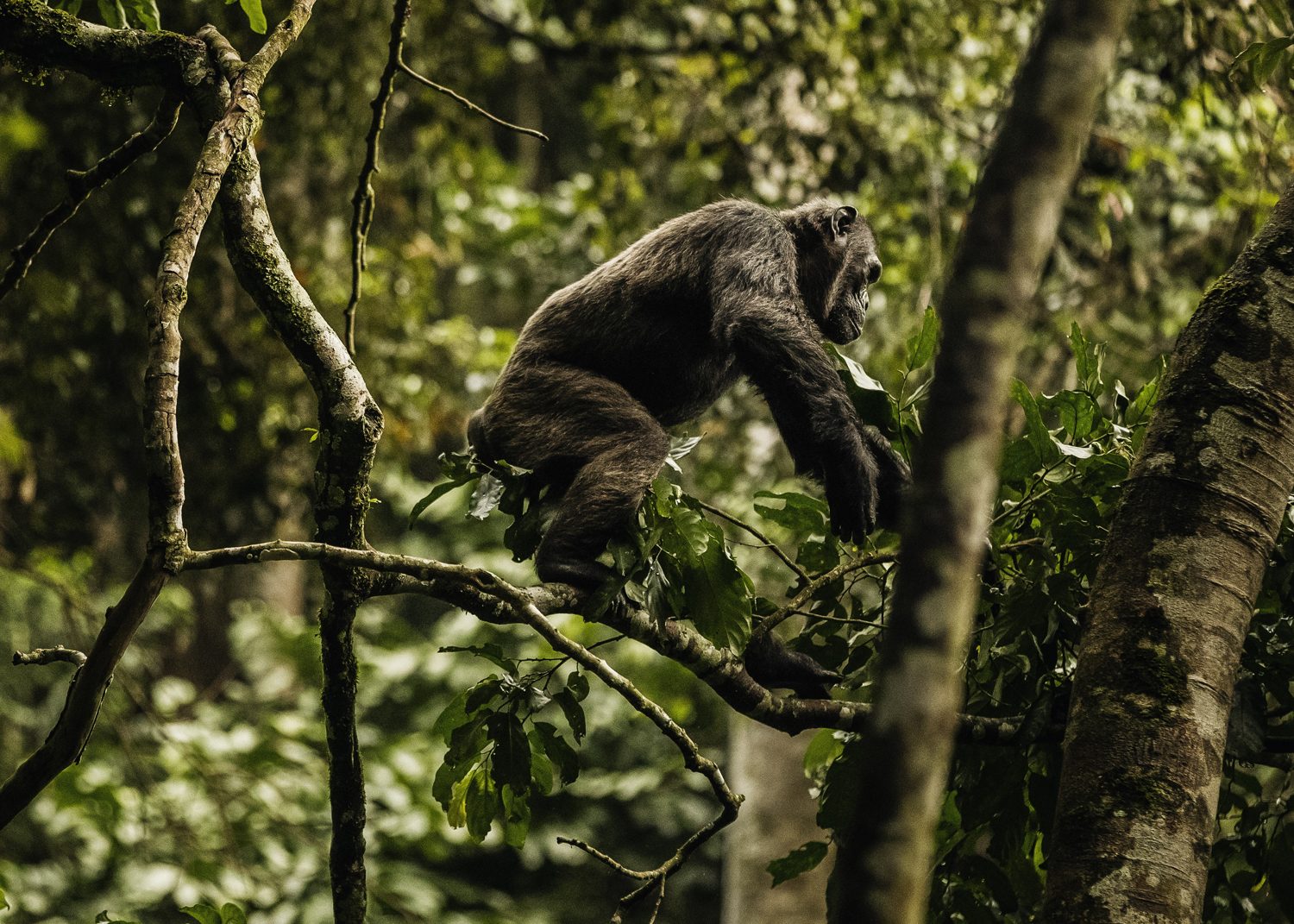
Rwanda’s travel year peaks in the same months as its dry seasons, which means the chimpanzees share their busy calendar with the gorillas of Volcanoes National Park. If your plan includes both treks, the gorilla permits will drive your dates. They are the first to sell out, often months in advance.
Our advice is to fix your travel window early, then lock in permits before lodges. When you book, note that chimpanzee tracking in Rwanda needs less lead time than gorilla permits. The gorilla trek will drive your dates instead, so book that permit first. A 5-day gorilla and chimpanzee safari or a 10-day Rwanda primate itinerary arranges every permit, transfer and night of lodging. The season then works for you rather than against you.
For up-to-the-minute availability and pricing in your chosen month, contact our team. We track permit availability daily. We will tell you honestly which months are tight and which are wide open, so your dates and budget land in the same place.
If you want the whole calendar in one glance, here it is:
The bottom line is simple. Chimpanzee tracking in Nyungwe works in every month of the year, and the differences between seasons are differences of comfort and company, not of the animals themselves. Choose the window that suits your budget and your nerve for mud, book it through a reliable operator, and let the forest do the rest. For official visitor information on Nyungwe and Rwanda’s other parks, visit the Visit Rwanda tourism board.
For more on the park itself, from its trails to its lodges, browse our Nyungwe destination guide. And when you are ready to lock in your dates, contact our team. We will take care of the permits, the transport and the timing. All you have to do is show up before dawn and follow the hooting.