Gorilla Permits Rwanda — 6 Years of Trusted Service
Some wildlife encounters are dramatic, some are moving, and some, like the colobus monkey trek in Nyungwe National Park, are simply joyful. There is no permit lottery, no agonising over the season, no dawn panic: just a walk into one of Africa’s oldest rainforests to meet one of its most spectacular residents, the black-and-white colobus.
The Ruwenzori colobus of Nyungwe live in troops that can number four hundred individuals, among the largest gatherings of colobus monkeys ever recorded, and watching such a troop move through the canopy is one of the most exuberant sights in African wildlife. This guide explains what the trek involves, why it is so special, and how to add it to your itinerary.
If you have ever wanted a wildlife experience that feels less like an expedition and more like a celebration, the colobus trek is it.
The colobus trek deserves a wider reputation than it has. It lacks the prestige of the gorillas and the drama of the chimpanzees, so it slips quietly under many itineraries, yet regular visitors to Rwanda often name it as their favourite morning in the whole country. This guide is our attempt to fix that oversight.
The Ruwenzori colobus is one of the most beautiful monkeys in Africa: a glossy jet-black coat, a dramatic white mantle spilling down the back and shoulders, a long white-tipped tail, and a face framed in white. The name colobus comes from the Greek for mutilated, a reference to the species’ missing thumbs, an adaptation to a life spent gripping branches and leaping through the trees.
Colobus monkeys are specialists of the leaves. Where other primates compete for scarce fruit, colobus digest foliage with a large, multi-chambered stomach, filling a dietary niche that allows huge numbers of them to live together in the same forest. It is this adaptation, more than anything else, that makes the enormous troops of Nyungwe possible.
Because they are leaf-eaters, colobus have also shaped the forest itself. Their feeding trims young growth at the canopy edge, their dung fertilises the soil, and their sheer numbers make them one of the most influential animals in Nyungwe’s ecology. In a very real sense, the forest and the monkeys made each other.
Troop sizes of a few dozen are typical for colobus elsewhere in Africa, which makes Nyungwe’s gatherings of several hundred individuals genuinely remarkable. Scientists have debated why this forest produces such super-troops; whatever the explanation, for the visitor the result is an experience with no equivalent anywhere else on the continent.
The Nyungwe colobus are also among the best studied in Africa, which means your guides can tell you exactly which troop you are watching, how it is related to its neighbours, and what the morning’s movements are likely to be.
The name Ruwenzori points to the mountain range that runs along the border between Uganda and the Democratic Republic of Congo, and the species ranges across the Albertine Rift’s forested highlands. It is in Nyungwe, however, that the colobus reaches its astonishing numbers, which makes this corner of Rwanda the best place on the continent to see it.
Watch a troop of colobus for ten minutes and you will understand the joy. The animals are constant motion: leaps of several metres between branches, white mantles flaring, infants tumbling and somersaulting, adults settling into long grooming sessions that look like the most peaceful moments in nature. The more you know about the monkeys, the richer the colobus trek becomes, and there is an infectious lightness to the whole spectacle.
The trek itself is lighter too. Compared with the early starts and long pursuits of chimpanzee tracking, the colobus trek is a gentler, more forgiving outing, usually lasting a few hours at a moderate pace. It is an ideal first experience of Nyungwe, a perfect family activity, and a wonderful way to recover the day after a tougher trek.
And then there is the sound. A large colobus troop produces a constant low thunder of calls and crashing branches, so you often hear them long before you see them. The moment the first white mantles flash between the leaves, every face in your group is smiling.
There is genuine science in the joy too. Leaf-eating animals have huge amounts of free time, because foliage does not run away, and colobus spend their surplus energy in play, grooming and socialising. What looks like pure spectacle is actually a healthy society at leisure, and the guides will happily decode it for you.
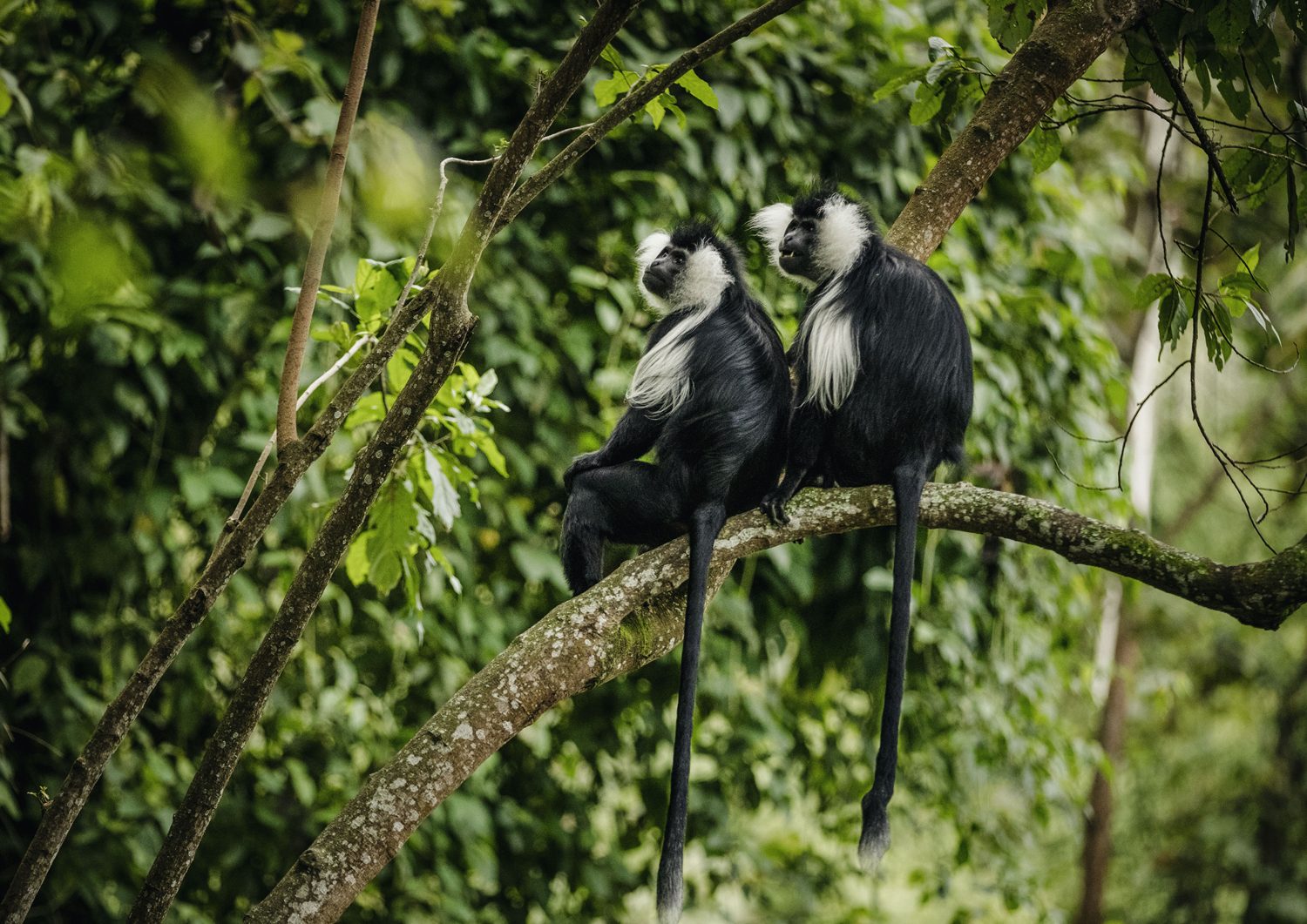
The colobus trek sets out from the park’s trail network around Uwinka and Gisakura, where the habituated troops are found. After a briefing at the trailhead, a guide leads you into the forest along well-worn trails, and the search begins for the troop’s position, usually marked by its rolling calls and the sound of feeding.
Because colobus are canopy animals, the walk is as much about looking up as about walking: your guide reads the movement of the branches, and when the troop is located, you settle in to watch. Treks typically last between two and three hours, and the pace is adjustable to your group’s fitness.
The permitting system is simpler and cheaper than for the chimpanzees, making the colobus trek an easy addition to any Nyungwe visit. Park entry, guiding and permits are all arranged for you when you book the trek as part of a package, so the only decision on the day is which lens to mount.
Do not be surprised to cross paths with chimpanzee trekkers at the trailhead; the two activities share the same forest. Comparing notes over lunch, they envy your relaxed start while you envy the hooting they heard in the distance, and together the two experiences make the case for doing both.
One small note of advice: the colobus move quickly when they choose to, and they choose to fairly often. Follow your guide’s lead rather than the monkeys’, and you will see far more than the people who chase after every leap.
Children love the colobus trek, and the feeling is mutual. The monkeys are endlessly entertaining, the walk is short enough for small legs, and the troop’s sheer size means there is always something happening somewhere. For families weighing up which Nyungwe activity to choose, the colobus trek is the safest bet on the list.
The colobus trek is a photographer’s dream and a photographer’s challenge in equal measure. Black-and-white fur against green canopy is a high-contrast subject, and the monkeys never hold still, so success favours fast autofocus, a long telephoto and a willingness to shoot through branches. The reward is some of the most striking wildlife images Rwanda has to offer.
Light is everything. Early morning, when the sun slants through the canopy, turns the white mantles silver and gives the black coats a rich sheen, while the soft overcast of the wet seasons is almost as good, taming the contrast. Bring more batteries than you think you need, keep the camera in a rain cover, and resist the urge to photograph everything: watch for a while, and the best moments will come to you.
Whatever gear you bring, shoot in short bursts and review sparingly. Colobus movement is fast and unpredictable, and a burst of ten frames will usually contain the one that matters; the skill is being aimed when the burst starts. And remember the cardinal rule of rainforest photography: the batteries are always emptier than you think.
Smartphone shooters need not despair: the light of the forest is flattering even for phone cameras, and a pair of binoculars to your eye will beat a camera on the memory card any day.
Timing your visit for mid-morning is a quiet art. The first hour of daylight belongs to the trekkers heading for the chimpanzees, while the colobus, who keep no early appointment, tend to be at their most active a little later, once the canopy has warmed. A later start also gives you the softest light and the quietest trails.
The colobus trek moves through some of the richest forest in Africa, and the troop is rarely the only wildlife you will see. L’Hoest’s monkeys watch the trail from the understorey, blue monkeys and grey-cheeked mangabeys feed overhead, and with luck you may hear, or glimpse, the chimpanzees of a neighbouring valley.
Above it all flies Nyungwe’s other great spectacle: the great blue turaco, a bird the size of a crow in electric blue and crimson, and the Rwenzori turaco, equally vivid in green and red. Add orchids by the hundred and the famous canopy walkway, and a morning that began with colobus monkeys ends as a full portrait of the rainforest.
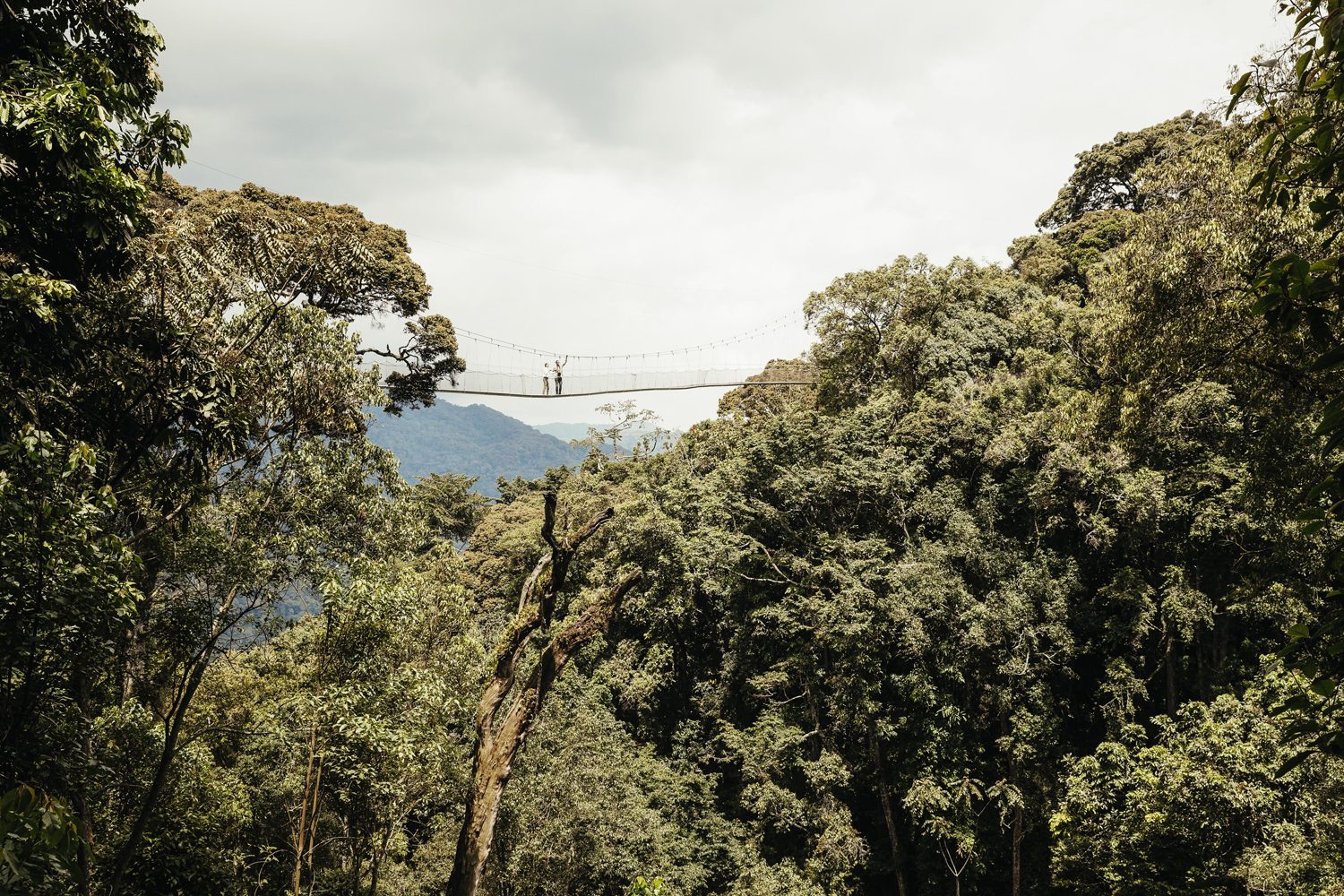
The canopy walkway is a natural extension of the colobus morning. Suspended high above the forest floor, it puts you at the level of the very branches where the monkeys feed, and sightings from above have a completely different character from those at eye level. Most of our Nyungwe itineraries bundle the two, and the combination takes less than a day.
The colobus trek is accessible to most travellers, and the park’s official website has the current trek schedules and trail conditions. The walking is moderate, the duration is short, and the fitness requirements are far more forgiving than for chimpanzee or gorilla tracking. What matters is standard rainforest kit:
As with every trek in Nyungwe, dress in muted colours, keep your voice low, and never attempt to feed or touch the monkeys. The troops are habituated, but habituation depends on visitor conduct, and the park’s rangers enforce the rules firmly. Travel in the dry seasons for the firmest trails, and in the green seasons for the quietest forests.
The colobus trek also makes an excellent second day in the park, pairing beautifully with a chimpanzee morning, a canopy walk or an afternoon of birding on the tea estate roads.
For older travellers and anyone with mobility concerns, the colobus trek is the most accommodating of Nyungwe’s signature outings: the trails are walked at your pace, the guides adjust the distance, and a porter can carry your daypack for a modest fee. It is the rare wildlife experience that can be shaped to the visitor rather than the other way around.
The colobus trek is at its best as part of a wider Nyungwe programme. Our 2-day Nyungwe package pairs a chimpanzee tracking morning with a colobus trek and the canopy walkway, delivering four of the park’s headline experiences in two days. It is the most popular way to see the park, and the two treks together show off the full range of the forest’s moods.
For longer itineraries, the colobus trek fits naturally into the 10-day Rwanda primate safari, which also takes in the mountain gorillas and, if you wish, the golden monkeys of the Virungas, covered in our golden monkey guide. The colobus trek is also a superb first taste of Rwanda for families and first-time safari-goers.
Every colobus trek sold supports the park’s rangers, and the troops are more than a spectacle: they are the visible evidence that Nyungwe’s protection is working. A forest that can support troops of four hundred leaf-eaters is a forest of immense size and health, and the presence of these monkeys is a daily demonstration of why the park, and the communities around it, defend the trees.
Tourism revenue from the colobus trek flows into park management, ranger patrols and community projects, creating a virtuous circle in which seeing the monkeys pays for protecting them. Every visitor who joins the trek is voting, in the most practical way possible, for more rainforest and fewer chainsaws.
And so the joyful trek turns out to be a serious act. You will leave Nyungwe smiling, your camera full of white mantles and green light, and somewhere in the middle of all that joy you will have helped keep the forest standing for the next generation of travellers. For more on the park and its wildlife, browse our Nyungwe destination guide, and when you are ready to plan your visit, contact our team.
A final image to leave you with: a hundred white mantles moving through green shade, the calls rolling like distant thunder, and a group of strangers grinning at each other in the middle of an ancient forest. That is the colobus trek in one frame. The monkeys will be there, and the forest will be there; all that remains is for you to join them.