Gorilla Permits Rwanda — 6 Years of Trusted Service
The economics of gorilla conservation begin at the gates of Volcanoes National Park, where every visitor starts the day the same way. Boots are laced, rain jackets are zipped. A queue of travellers from half a dozen countries gathers at the park headquarters while trekking groups are assigned to gorilla families. At the centre of that morning ritual sits one number that powers almost everything else: US$1,500, the price of a single gorilla permit. At first glance it feels like a luxury purchase, even a barrier. But that one payment is the quiet engine behind one of the great conservation recoveries of modern times: the mountain gorilla population of the Virunga Massif. Climbed back from the edge of extinction to more than one thousand animals in the space of a few decades.
If you are planning a trip, or simply wondering why Rwanda charges what it charges, it is worth understanding what that fee buys. The economics of gorilla conservation explain every line of it. Not for you, though you certainly get your money’s worth in experience. For the forest, for the gorillas. For the people who live around the park boundaries. This article follows the money from your bank account to the bamboo slopes of the Virunga volcanoes and shows why conservation here is, quite literally, an economic system that works.
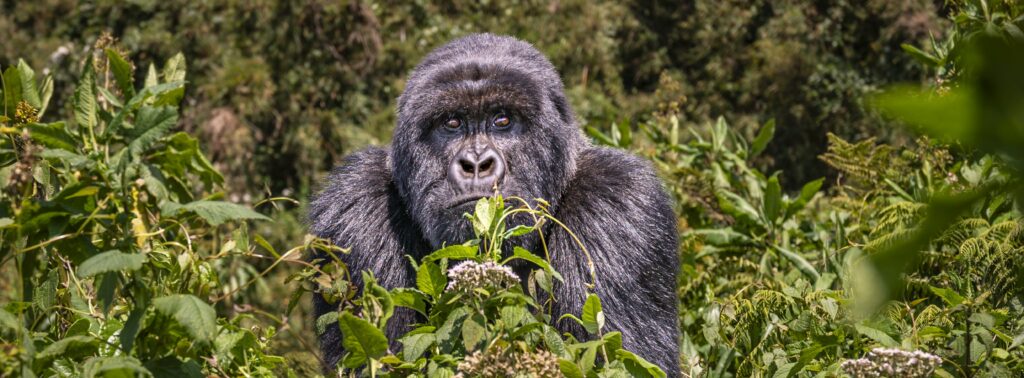
The first thing to understand is that your permit fee is not a ticket collected by a private company that keeps the profit. Gorilla permits are issued and priced by the Rwanda Development Board, the government body that manages Volcanoes National Park, and the revenue flows into a conservation economy with clearly assigned jobs. The fee is deliberately high. That is not an accident. Rwanda has chosen a policy of fewer visitors paying more, rather than many visitors paying little. The gorillas can only tolerate so many human visits per day.
Each habituated gorilla family receives a maximum of around eight visitors per day. That limit is enforced by the park. High prices, combined with strict caps, protect the animals from stress and disease while simultaneously guaranteeing that the money raised is enough to run a serious conservation programme. In economic terms, Rwanda has made the gorillas a scarce, valuable resource that is worth more alive than dead. Once the gorillas became worth more alive than dead, the incentives that had driven hunting and habitat destruction began to reverse.
At its heart, the economics of gorilla conservation are the economics of scarcity: few visitors, high value, protected animals. This is the core logic of the whole system: a budget line of US$1,500 per visitor, multiplied across the trekking season, pays for the salaries, patrols, veterinary interventions, and the research that keeps the gorilla population growing. When you buy a permit, you are not buying a commodity. You are funding a budget that has specific jobs to do. Those jobs are the difference between a gorilla population that rises and one that disappears.
So where does the revenue go once it leaves your card? Following the money is the fastest way to understand the economics of gorilla conservation. The money collected from gorilla permits enters the national system and is distributed through a structure designed in the early 2000s to make conservation self-funding. A substantial portion is allocated to the Rwanda Development Board’s conservation budget. It covers the day-to-day running of Volcanoes National Park: ranger salaries, anti-poaching patrols, equipment, vehicles, fuel, and the monitoring teams that track every gorilla family every single morning. Habitat restoration along the park boundary is funded from the same pot.
A second portion goes to the general government budget, funding public services across the country. A third portion is the famous revenue-sharing arrangement. Under Rwandan law, ten percent of the park tourism revenue is returned directly to the communities living around the park, a scheme introduced in 2005 and strengthened in later years. That ten percent is not a symbolic gesture. It has built schools, clinics, roads. Water systems. It pays for livelihoods projects that give local people an economic stake in keeping the forest intact.
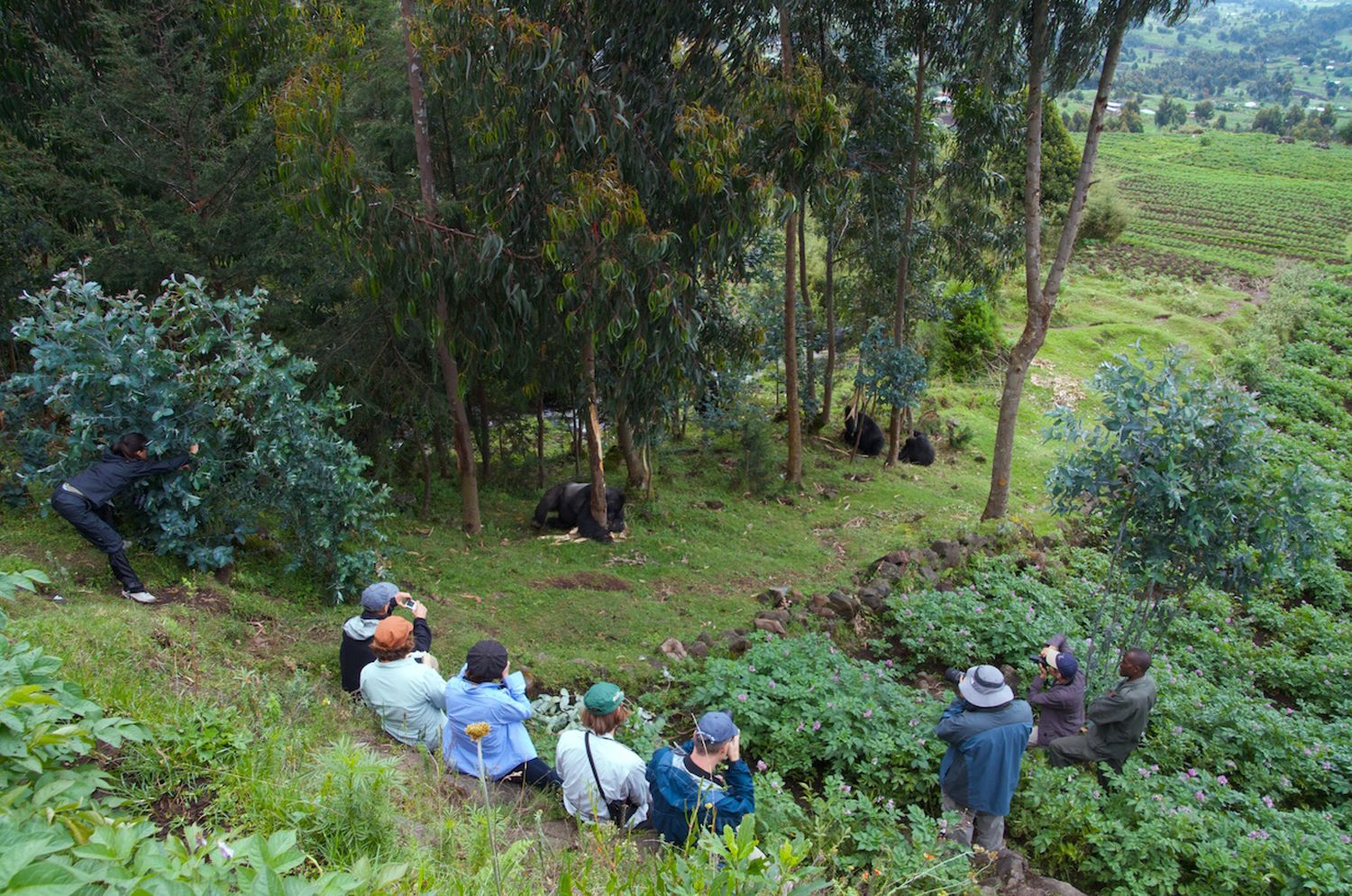
There are also layers on top of the permit itself. Trekking guides and porters are hired at the trailhead. The accommodation, food. Transport that surround a gorilla trip all feed the same circular economy. Hotels near Musanze, restaurants in Kigali, drivers. The guides who lead the treks all depend on the gorilla economy one way or another. The permit is the keystone. The structure around it is a full regional economy that touches thousands of households.
The revenue-sharing scheme deserves a closer look, because it is the least glamorous but most political part of the economics of gorilla conservation. The communities around Volcanoes National Park lived with the park for generations before seeing regular benefits from it. Resentment over closed forests and lost access fuelled poaching and illegal harvesting of bamboo and firewood. The ten percent scheme was designed to change that relationship. It has, with measurable results on the ground.
Money from permits is pooled, then distributed to the districts that border the park. Allocate it to community-selected projects. The results are visible all around the park perimeter: modern classrooms, health centres, clean water systems. The famous beehive fences that deter elephants from raiding crops. Communities also receive livestock, farming inputs. Support for small businesses. Some funds go to building and maintaining the roads that connect villages to markets in Musanze and beyond.
A typical list of revenue-sharing projects around the Virunga volcanoes includes:
Every one of these projects is a small advertisement for conservation. When a village gets a school because of gorilla tourism, the argument for protecting the forest becomes an argument the community itself makes. Poaching becomes less attractive not only because the law exists, but because the gorillas literally pay for the classroom roof, the clinic and the clean water in the tap.
To understand what this funding has achieved, look at the numbers, which form the strongest argument in the economics of gorilla conservation. In 1981, the mountain gorilla population of the Virunga Massif had collapsed to an estimated 254 individuals, the lowest point ever recorded. Poaching, habitat loss, civil conflict. Disease had pushed the species to the brink. By 2018, the last complete census of the massif confirmed that the population had grown to more than one thousand mountain gorillas, a more than fourfold recovery that moved the species from critically endangered to endangered on the IUCN Red List.
That recovery did not happen by accident, and it did not happen on goodwill. It happened because the conservation programme had a reliable income stream. The money paid for anti-poaching patrols and snare sweeps, veterinary care, and the daily monitoring of every habituated family. It also funded long-term research and the community programmes described above. When disease outbreaks threatened the gorillas, the veterinary teams could respond quickly because the funding existed to support them.
Rwanda, Uganda, and the Democratic Republic of Congo share the Virunga Massif. The recovery is a regional achievement coordinated with partners such as the International Gorilla Conservation Programme. Rwanda’s permits, however, have been the single largest and steadiest source of conservation funding for the ecosystem. The mountain gorilla is now the only great ape population on Earth known to be increasing, a statistical anomaly in a century of ape declines. The funding model is the reason.
Beyond the headline numbers, the economics of gorilla conservation fund the daily machinery of protection. Every morning before dawn, monitoring teams from the Rwanda Development Board leave their bases to track the gorilla families through the bamboo forest, checking their health, movements. Numbers. Those teams are paid out of the conservation budget. Their data feeds both science and management decisions about how the park is run.
The same budget supports the anti-poaching units that sweep the forest for snares, the ranger posts along the boundary. The rapid-response teams that intervene when a gorilla is injured or ill. Veterinary support is provided in partnership with the Gorilla Doctors programme, the group formerly known as the Mountain Gorilla Veterinary Project. The costs of those interventions sit within the broader funding ecosystem. A gorilla with a snare wound, a respiratory infection, or an infant in distress has a medical response available because permits are being sold.
None of this work is glamorous, and most of it is invisible to the visitor who spends one morning in the forest. But it is the layer of the system that turns money into survival. Every dollar of your permit fee that ends up in the monitoring and veterinary budget is a direct, traceable investment in an individual gorilla family’s chances of living to see another generation.
In 2020, the economics of gorilla conservation were stress-tested in the hardest possible way. The pandemic closed Rwanda’s borders, tourism stopped completely. The permit revenue that had funded conservation for two decades disappeared almost overnight. No visitors, no revenue sharing, no conservation budget to draw on. The Rwanda Development Board had to restructure, lodge staff were sent home. Communities that relied on tourism income felt the shock immediately.
Yet the gorillas survived, and the monitoring never stopped. The trackers continued their morning visits to every family, the veterinarians continued their health checks. The rangers continued their patrols. That resilience was built on the structure created in the years of plenty. It proved a point: conservation funded by tourism is vulnerable. Conservation funded by high-value tourism is worth protecting through the bad years. The lessons of 2020 prompted Rwanda to diversify its park funding and to recommit to the model that had worked. When the borders reopened, the permit system came back stronger than before.
There is one more layer to the economics of gorilla conservation: the multiplier effect. The US$1,500 permit is only part of what a visitor spends. Travel to Kigali, hotels, flights, food, transport, porters, guides. Shopping all feed money into the economy. Studies of tourism in Rwanda consistently show that gorilla visitors are among the highest-spending travellers in Africa. That spending supports thousands of jobs directly and many more indirectly.
At the trailhead, the porters who carry your bags are local people employed because tourists exist. The drivers, the lodge staff, the farmers who supply the lodges with vegetables. The artisans in Musanze all belong to the same economy. A single trekking day in Volcanoes National Park can touch the lives of dozens of households before the visitor returns to Kigali. The permit is the engine. The economic reach extends far beyond the forest boundary.
If the economics of gorilla conservation sound like a system worth supporting, the good news is that you can do it simply by coming. Booking a 3-day gorilla safari with a reputable operator ensures that your permit is bought through the official channel at the official price, so your money flows into everything described above. It also protects the day itself, from the morning briefing to the walk in the forest.
Before you book, read our gorilla permits guide, which covers pricing, availability, and how to secure permits for your dates. If you want the full picture of how your visit ripples outward, our article on how trekking supports conservation goes deeper into the community side of the story.
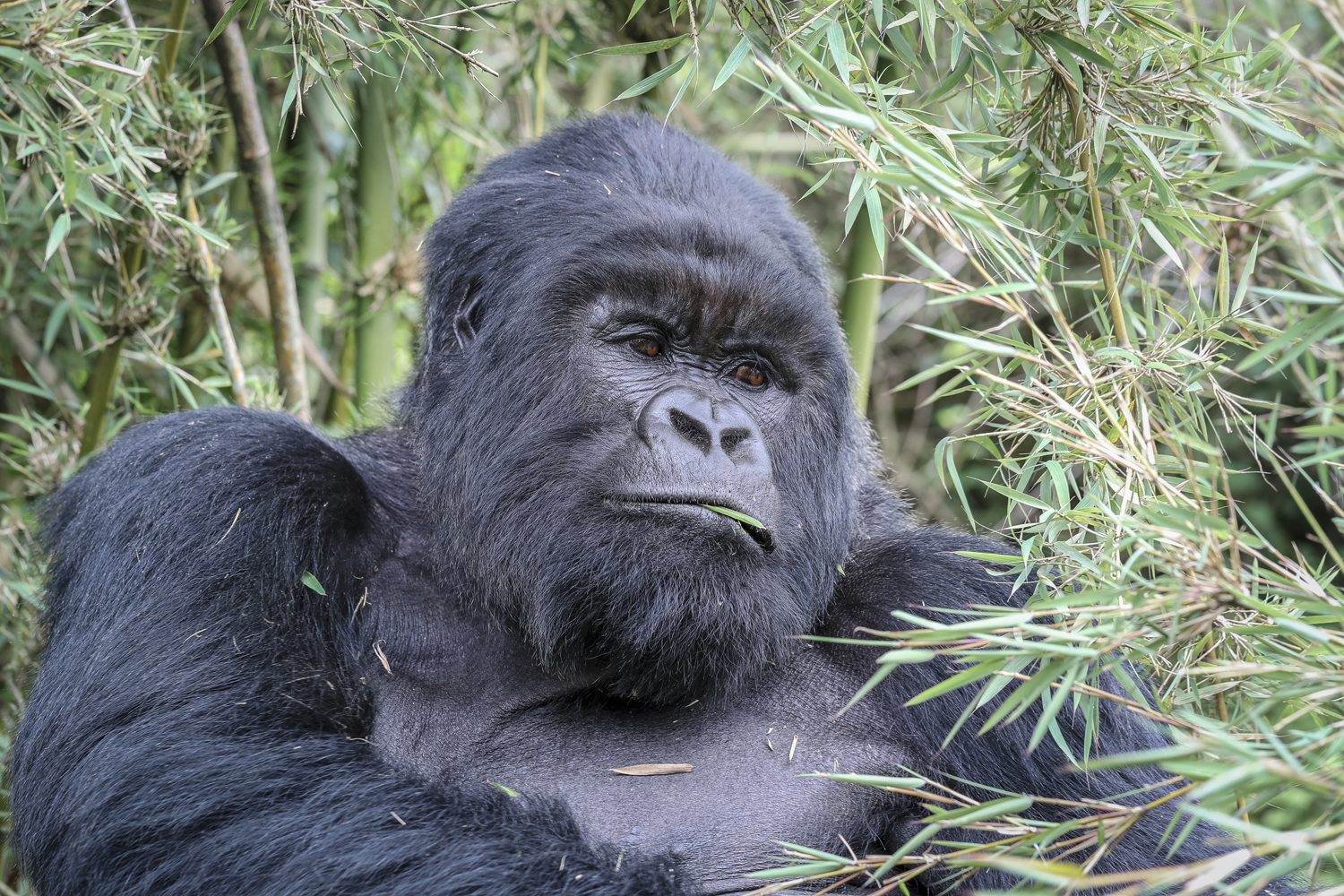
When you stand on the slopes of the Virunga volcanoes, mist rolling through the bamboo, a silverback watching you from twenty metres away, you will not think about budgets or revenue streams. You will think about the animal in front of you. But it is worth remembering, in that moment, that the tracker who found the family this morning, the vet on standby for the afternoon report. The school roofs in the villages below all run on one thing: the decision of visitors to buy a permit, and to buy it properly. That is the economics of gorilla conservation. It works.