Gorilla Permits Rwanda — 6 Years of Trusted Service
On any given morning in the Virunga Massif, a team of veterinarians is somewhere in the forest, working without anaesthesia. One vet will find a position close enough to a resting gorilla family to examine them with binoculars, checking for wounds, swelling, discharge, or abnormal behaviour. Another will be updating the medical record of every gorilla in the population. This is the daily work of Gorilla Doctors, the veterinary programme formerly known as the Mountain Gorilla Veterinary Project, and it is one of the least visible and most important parts of Rwanda’s conservation machine.
Mountain gorillas die from mundane causes as much as dramatic ones: snares that cut off their hands, respiratory infections caught in the cold and damp, diseases passed from humans, injuries from falls and fights. Without veterinary care, many of those deaths are inevitable. With it, the population has not only survived but grown to more than one thousand individuals across the Virunga Massif, a recovery that would have been impossible without the intervention of field vets. This article explains who the Gorilla Doctors are, what they do, and why their work matters to every visitor who straps on boots for a trek.
The Gorilla Doctors veterinary programme operates across the whole Virunga Massif, and understanding it changes how you watch a family of gorillas. The gorilla doctors veterinary programme is funded by conservation budgets, and in Rwanda those budgets come largely from your trek. This article explains who the Gorilla Doctors are, what they do, and why every visitor depends on them.
The programme began in the mid-1980s, out of an emergency, and the gorilla doctors veterinary programme grew directly from that crisis. In 1986, a group of mountain gorillas died in a suspected outbreak, and wildlife veterinarians from the United States were called in to investigate. What they found was a species with almost no veterinary safety net: sick or injured gorillas had essentially no medical care, and researchers could only watch as injuries and diseases ran their course. The Mountain Gorilla Veterinary Project was founded in response, with the support of the gorilla conservation charity, initially treating the gorillas of Rwanda and Uganda and later extending its reach into the Democratic Republic of Congo.
The project’s model was a radical idea for its time: that wild animals, not just captive ones, deserve modern veterinary medicine. The founders argued that each mountain gorilla is so rare, and so valuable to science and to the world, that the cost of intervention is justified. That argument won. Over the decades the project grew into a permanent, year-round team of veterinarians and veterinary technicians, and in the 2010s it rebranded as Gorilla Doctors, a name that made its mission instantly understandable.
Today, Gorilla Doctors operates across the whole Virunga Massif, the protected area shared by Rwanda, Uganda, and the Democratic Republic of Congo. The team includes Rwandan, Ugandan, Congolese, American, and British veterinarians, and it works in close partnership with the three national park authorities. Its clinics, laboratory, and offices are based in Musanze, the gateway town to Volcanoes National Park, from which vets deploy into the forest at short notice.
The heart of the Gorilla Doctors system, and of the whole gorilla doctors veterinary programme, is its medical records. Since the 1980s, the programme has maintained individual health records for as many mountain gorillas as possible, tracking births, deaths, injuries, illnesses, and treatments for animals across the entire massif. That archive is one of the longest-running medical databases ever assembled for a wild species, and it has fundamentally changed how conservationists understand gorilla health.
Because the gorillas of the Virunga Massif are habituated to human presence, the vets can monitor them without anaesthesia most of the time. They know the families individually, can recognise a limp or a swelling at a glance, and can track a group’s health over months and years. When something looks wrong, the response is coordinated: trackers report, vets assess, and a decision is made about whether to intervene.
Intervention is the last resort, not the first. The guiding principle of the programme is to treat gorillas as wild animals first: most conditions are left to resolve naturally, and medical intervention is used only when the animal’s survival or the health of the group is at risk. But when intervention is needed, it is serious medicine: teams will anaesthetise a gorilla for surgery, remove a snare from a hand, clean and suture a wound, or treat a respiratory infection with antibiotics. Every intervention is documented, and the outcomes are tracked over years.
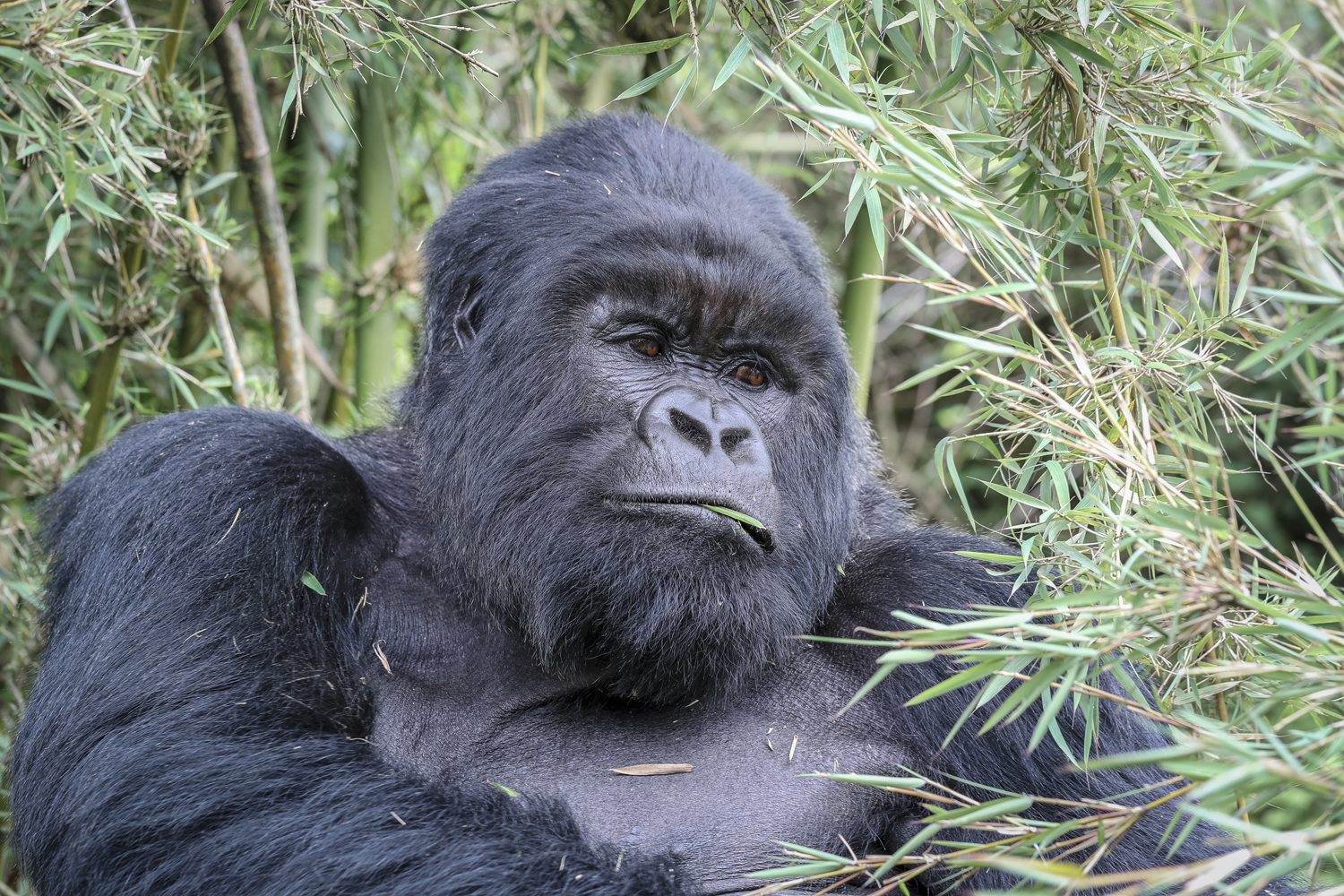
The single most common reason for surgical intervention is the snare, and snare removal is the most frequent surgery in the gorilla doctors veterinary programme. Snares set for antelopes and other game, made from wire or rope, catch gorillas indiscriminately, and a gorilla caught in a snare often suffers a devastating injury. The wire digs into a hand or foot, cutting through muscle and tendon, and an animal that survives the initial catch can lose the use of a limb. In the worst cases, an infant with its hand trapped can be lost by its group or starve.
Gorilla Doctors has performed hundreds of snare removals over the decades, and the operation is one of the great unheralded conservation stories of the modern era. Each removal is a race against infection and tissue death, and each success is a gorilla that keeps its hand, keeps its place in the group, and keeps its chance of passing its genes to the next generation. The sight of a silverback missing a hand, common among older generations of gorillas, is far rarer among the young today, and that is direct evidence of the veterinary programme’s work.
Prevention is just as important as cure. The vets work with the anti-poaching teams to find and destroy snares, they train trackers and park staff to recognise injury, and they feed information back to park managers about where snares are being laid. A single snare can kill a gorilla; a single veterinary team can save the population from a hundred such deaths.
Disease is the second great front, and respiratory outbreaks are the invisible battle of the gorilla doctors veterinary programme. Mountain gorillas share almost all of their DNA with humans, and they can catch our diseases. Respiratory infections, in particular, have been a recurring killer: outbreaks of flu and other respiratory viruses have spread through gorilla families, and infants and elderly animals are the most vulnerable. Because gorillas live in close-knit groups, an outbreak can sweep through a whole family within days.
Gorilla Doctors has developed a specialised field response for respiratory outbreaks. Vets observe the family, collect samples when safe, and treat affected animals with antibiotics when a bacterial infection is suspected. The programme has also invested heavily in prevention: trackers and guides wear masks around the gorillas, visitors are screened for illness, and the famous rules of trekking, keeping a safe distance, turning away when you cough, and never trekking when sick, are direct products of veterinary knowledge.
The wider threat is what conservationists call the disease continuum: pathogens moving between people, livestock, and gorillas. Gorilla Doctors supports health screening for the people who work most closely with the gorillas, and it partners with human health projects in the surrounding communities. Treating a tracker’s cold protects the gorillas; keeping cattle healthy in a village protects the forest. Veterinary conservation in the Virunga Massif is, in practice, a one-health programme that treats humans, animals, and the ecosystem as a single system.
The gorilla doctors veterinary programme has been involved in celebrated rescues over the decades, and the interventions are not limited to emergencies. The programme has been involved in celebrated rescues: gorilla infants lost from their families and hand-reared until they could be reintegrated, silverbacks with horrific wounds nursed back to health, and populations given second chances that would not have existed without a standing veterinary team. These stories matter individually, but their cumulative effect matters more.
Every gorilla saved by veterinary medicine is a gorilla that can reproduce. Population modelling of the Virunga Massif has repeatedly shown that the growth from the low hundreds to more than one thousand animals cannot be explained by birth rates alone: survival rates among infants and adults improved dramatically during the same period, and veterinary care is a large part of the reason. The gorilla population did not just birth its way back; it was nursed back.
The programme also feeds science. Every veterinary intervention is an opportunity to learn: samples are collected for genetics, disease surveillance, and health baselines, and the resulting data has made mountain gorillas among the best-studied great apes in medical terms. The archive built by Gorilla Doctors is a permanent scientific asset, and it has informed conservation practice far beyond the Virunga Massif, including for chimpanzees and other great apes across Africa.
Gorilla Doctors is often described as the model for great ape conservation worldwide, and the gorilla doctors veterinary programme has been replicated for chimpanzees, elephants and other species across Africa and Asia. It pioneered the concept of a standing veterinary clinic for a wild population, and the model has been replicated for chimpanzees, elephants, and other species across Africa and Asia. The vets themselves are a generation in training: the programme employs local veterinarians and veterinary students, building capacity that will outlast any single project.
The partnership structure matters too. Gorilla Doctors works under the authority of the Rwanda Development Board and its counterparts in Uganda and the Democratic Republic of Congo, which means the vets’ presence is integrated into park management rather than bolted on. When the pandemic closed the borders in 2020, the vets stayed in the forest, and the health monitoring of every gorilla family continued without interruption. The programme’s continuity through crisis is a large part of why the gorillas came through those years intact.
For the visitor, the programme’s presence translates into confidence: the gorillas you meet in Volcanoes National Park are among the most closely monitored wildlife on Earth, as Rwanda’s official tourism board notes in its conservation coverage, and the rules of trekking exist because veterinarians proved that human diseases threaten the population. When your guide asks you to keep your distance, or to turn away if you need to cough, you are participating in a veterinary protocol that has literally helped save the species.
The economics of the programme come back to the permit, because the gorilla doctors veterinary programme is funded by a mix of international donors and conservation budgets. Gorilla Doctors is funded by a mix of international donors and the conservation budgets of the three park authorities, and in Rwanda those budgets are overwhelmingly financed by gorilla permit revenue. The US$1,500 permit that seems expensive in your bank account is, in part, a subscription to the world’s best-equipped wildlife hospital.
The connections run through every layer of your visit. The conservation funding that trekking supports pays for the monitoring teams that find the gorillas each morning, and those same teams are the eyes and ears of the veterinary programme. If a gorilla in your trekking group has a fresh wound, the trackers will have already reported it, and the vets will already be planning their response.
If you want to see the programme’s work up close, a 4-day gorilla safari gives you multiple mornings in the forest and the chance to meet the trackers and guides who work alongside the vets. The visit is the fundraiser, the education, and the celebration of everything the Gorilla Doctors have built: a veterinary service that has helped turn the mountain gorilla from an animal on the edge of extinction into the only great ape on Earth whose population is growing.
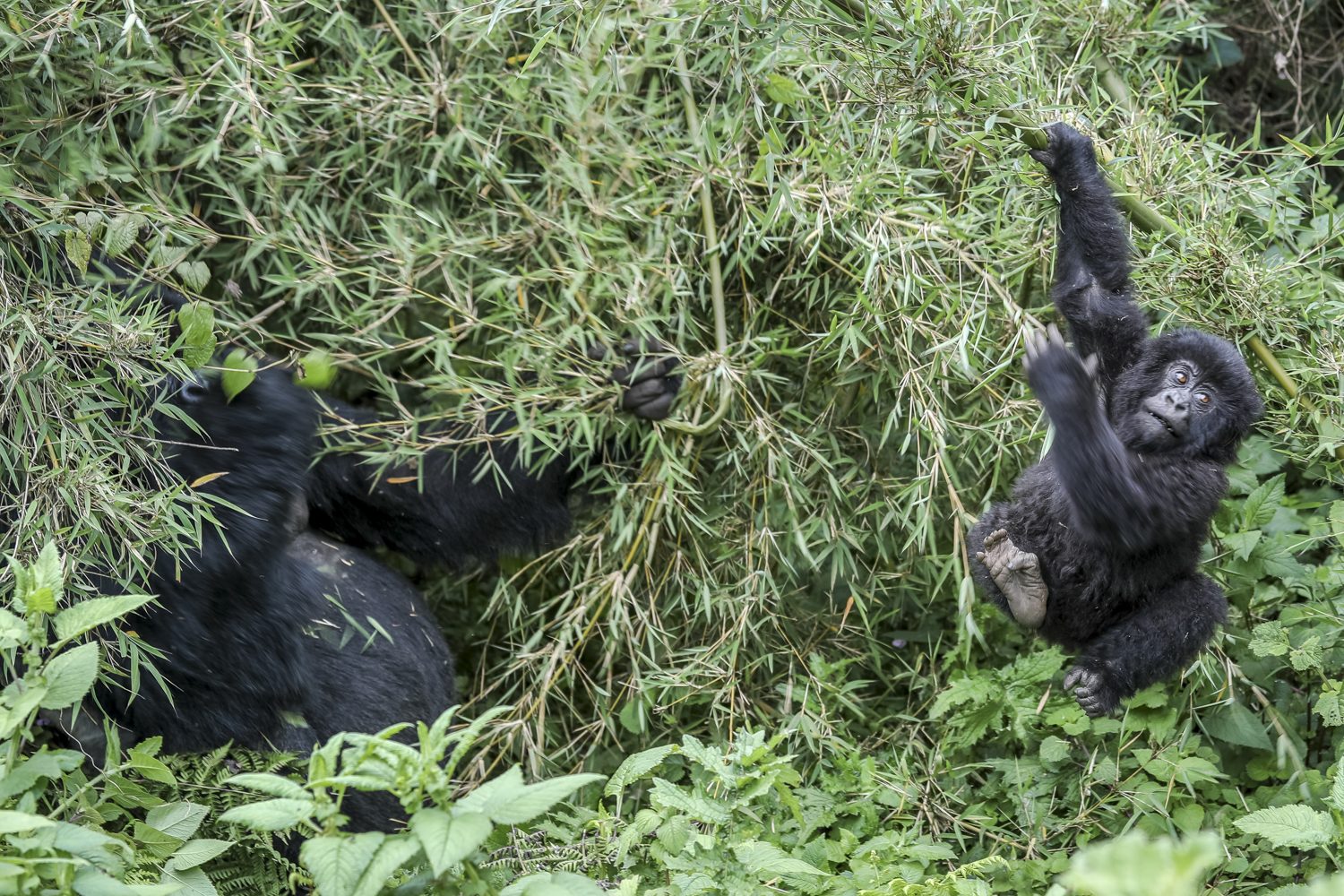
The next time a silverback looks at you from the bamboo, consider the medical file attached to him. Somewhere in the Gorilla Doctors archives is a record of his birth, his childhood illnesses, his wounds, and his recoveries, kept by vets who have never met him personally but have watched over his family for years. That archive is the reason he is alive, the reason his children will be born, and the reason your grandchildren will still be able to buy a permit and walk into the mist. The Gorilla Doctors are the quietest heroes in the gorilla story, and they are on duty every single day.
A year with the gorilla doctors veterinary programme follows the seasons and their risks, and it is the best way to understand the work. To understand the programme, imagine a year of work with the Gorilla Doctors. The seasons bring different challenges: the rainy season means mud, slippery slopes, and an increase in respiratory illness as the animals huddle against the cold; the dry season brings easier tracking but also new snare lines as hunters move through the forest. The vets rotate between base, where they run the laboratory and maintain records, and the field, where they deploy for scheduled health checks and emergency call-outs.
A routine health check is a small operation in itself for the gorilla doctors veterinary programme. The team follows a family, observes it for signs of illness, and collects data where conditions allow. An emergency, by contrast, is a race: a report comes in from the trackers, the vet team assembles, and everything from darting equipment to surgical kits is packed for the walk in. The procedures are performed under anaesthesia, with every member of the team watching vital signs, and the recovery is monitored for hours until the gorilla rejoins its group.
The work demands more than medical skill. A gorilla vet must be a climber, a tracker, a diplomat with the rangers, and a scientist who understands population biology. The rewards, as every vet on the team will tell you, come in moments: a hand that was bound in a snare healed and gripping bamboo again; an infant that was fading from respiratory disease back in its mother’s arms; a family that was sick in July showing clean health records in December. Those moments, repeated across the years, are the real statistics of the programme.