Gorilla Permits Rwanda — 6 Years of Trusted Service
The Dian Fossey Karisoke story begins in September 1967, when a thirty-five-year-old American primatologist arrived in Rwanda with her camping equipment, her notebooks, and a conviction that the mountain gorillas of the Virunga volcanoes were worth saving. Dian Fossey had already spent time in the forests of the Democratic Republic of Congo studying gorillas with the encouragement of the anthropologist Louis Leakey, but political upheaval had driven her out. Rwanda offered a new beginning, and Fossey took it, pitching her camp in the saddle between two great volcanoes, Karisimbi and Visoke, at an altitude of around three thousand metres. She called the camp Karisoke, a blend of the two mountain names, and from that muddy clearing she would launch a one-woman war for the survival of the mountain gorilla.
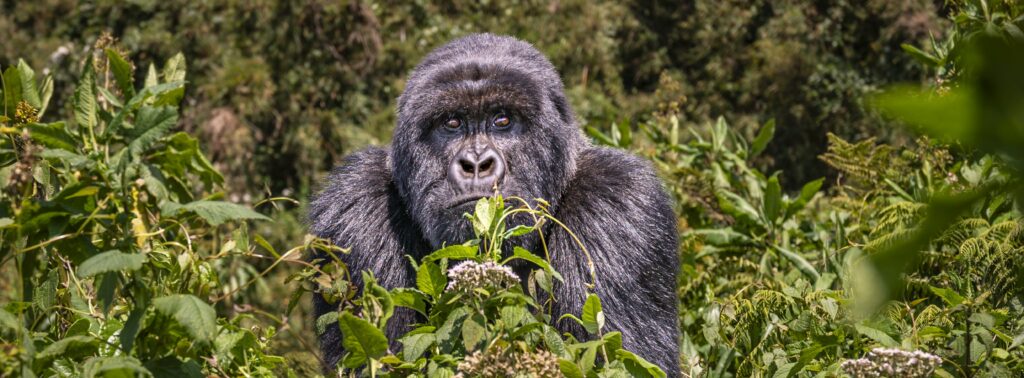
It is hard today, when more than one thousand mountain gorillas live in the Virunga Massif and travellers watch them from a few metres away, to remember how close the species came to vanishing. When Fossey arrived, the population was in freefall. Poachers killed gorillas for their hands and heads, collectors took infants, and the forest itself shrank under pressure from farmers and herders. The established opinion of the time held that the species faced extinction and that research mattered more than rescue. Fossey rejected that logic completely. This article tells the story of how Karisoke came to be, how its founder fought, and how a research camp that began as one woman’s obsession became the foundation of modern gorilla conservation.
Fossey came to Rwanda with a letter of support from Leakey, the celebrated paleoanthropologist who had already sponsored Jane Goodall in Tanzania and would later support Birute Galdikas in Borneo. Leakey’s belief was that observing great apes in the wild would reshape our understanding of human evolution, and he recruited Fossey to do for the gorillas what Goodall had done for chimpanzees: live among them, document them, and bring their world to the public. He was right, but neither he nor Fossey predicted the other role she would take on: that of defender.
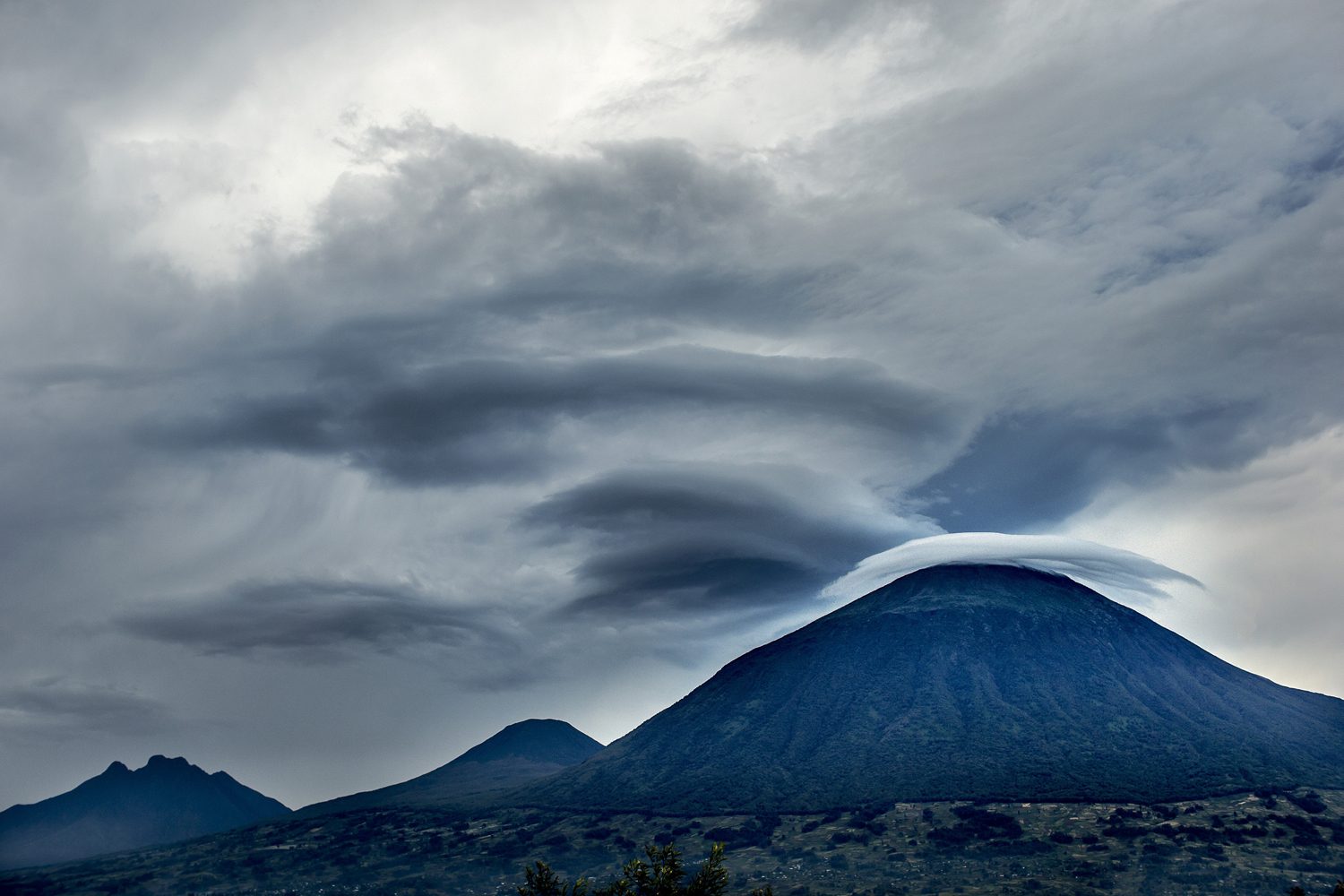
The site Fossey chose, however, was dramatic. The Dian Fossey Karisoke camp sat on the slopes of Mount Visoke, looking across the saddle to the snow-dusted peak of Karisimbi, the highest volcano in the range at more than four thousand metres. The altitude was punishing, the rain almost constant, and the mud became legendary. Her original camp was a pair of tents surrounded by bamboo, and porters carried everything, from food to scientific equipment, up the mountain. The nearest town, then called Ruhengeri and now known as Musanze, was hours away over rough tracks.
From the beginning, Fossey understood that the fate of the gorillas was tied to the people who lived around the forest. The park boundary drawn in the colonial era was porous, and the volcano slopes were under steady pressure from cattle, farms, and firewood collection. Gorilla habitat was shrinking, and every lost acre pushed the animals closer to extinction. Karisoke was founded not just as a research station but as a stake in the ground: a permanent human presence in the forest, a set of eyes that refused to look away.
The first years at Karisoke went to the hardest work of all: habituation. Fossey’s methods were unorthodox for the time. She moved through the forest openly, made sounds that imitated gorilla vocalisations, and presented herself to the silverbacks as curious, slow, and submissive rather than threatening. It took months of patient daily contact before the gorillas tolerated her presence, and years before she could sit among them as they fed and rested.
The families that accepted her became the core of her research. Fossey named the gorillas individually, a decision that seems obvious now but was radical then, when wild animals were expected to be numbered rather than named. Her subjects included the silverback Digit, the dominant male Peanuts, and families whose individual life histories became a landmark scientific record. By naming the gorillas, Fossey forced the scientific world and the wider public to see them as individuals with personalities, histories, and claims to life.
Her research output, moreover, was enormous. She documented the gorillas’ social structure, their feeding behaviour, their vocalisations, and the famous chest-beating displays of the silverbacks, and she spent more than four thousand hours in direct observation, a standard of fieldwork that few researchers have matched since. Her findings replaced the image of the gorilla as a violent beast with a portrait of gentle, family-centred animals with complex emotional lives. That portrait, more than any economic argument, changed the world’s relationship with the mountain gorilla.
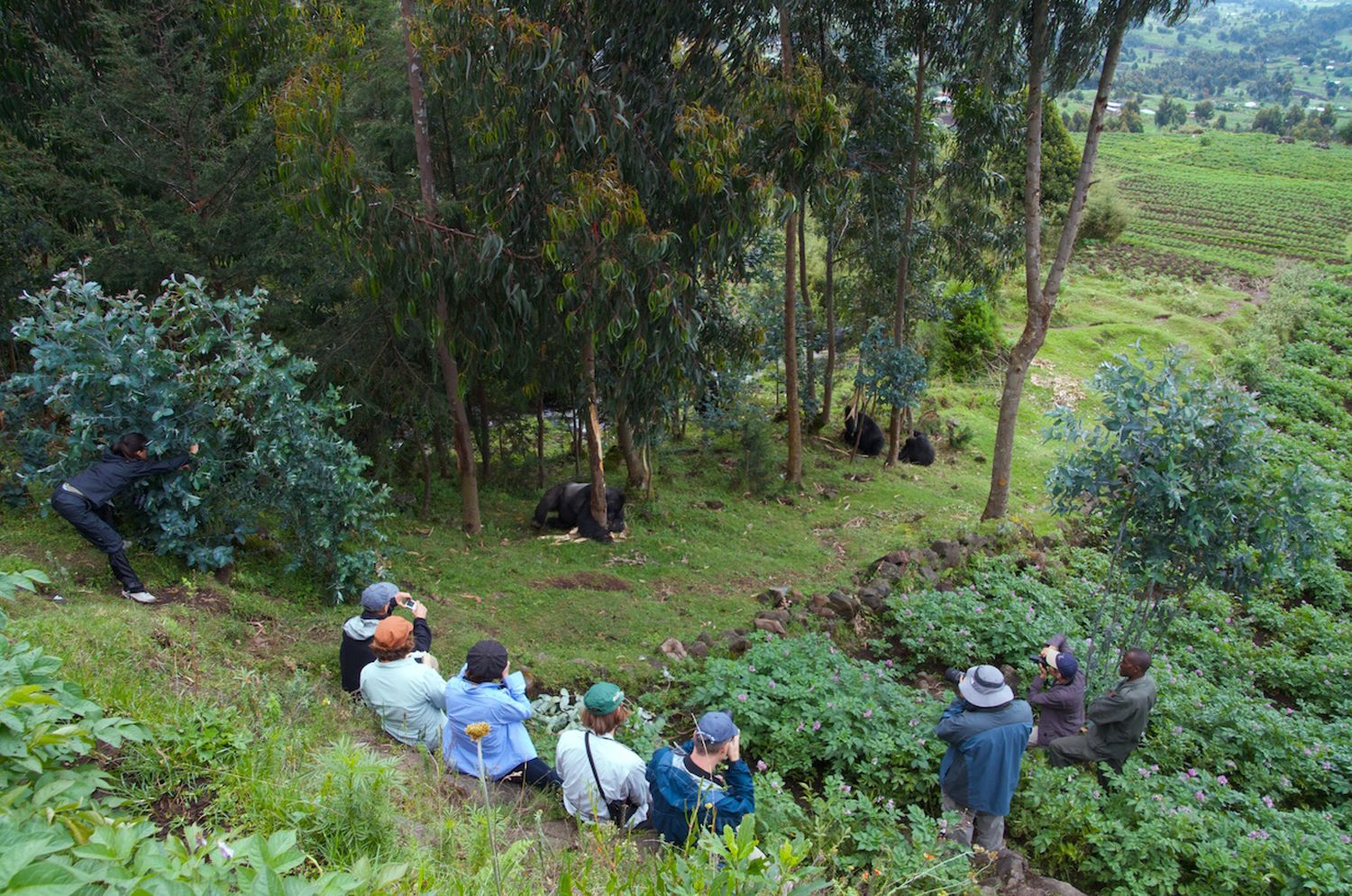
The rhythm of Karisoke, meanwhile, was gruelling and precise. Fossey and her assistants rose before dawn, dressed against the mountain cold, and set out to find the day’s focal group, using the nests left from the previous night to trace the gorillas’ movements. Observation sessions lasted for hours, with behaviour, weather, feeding, and social interactions recorded in obsessive detail in the field and typed up at camp in the evenings.
That same discipline continues today in the Dian Fossey Karisoke research programme: the trackers who locate the gorilla families for today’s trekking groups are the direct heirs of Fossey’s field teams, and the monitoring reports they file every morning are the inheritance of her method. When you join a family for a trek in Volcanoes National Park, that family has a full documented history: births, deaths, transfers, and injuries, known in detail because Fossey proved that systematic records were possible and essential.
What visitors rarely see is the physical price of that record. Fog, torrential rain, steep ravines, stinging nettles, and the thin air of three thousand metres are the working conditions of gorilla monitoring, and they were Fossey’s conditions too. She lost weight, suffered illness, and spent years in near-isolation, but the notebooks accumulated, and the notebooks became the backbone of every conservation decision made in the decades since.
The turning point of Fossey’s story is the death of Digit. In 1977, poachers attacked Digit’s group and killed the silverback, hacking off his head and hands to sell as trophies. Digit’s murder devastated Fossey, and it radicalised her. She had already fought poaching in her own way, destroying snares and confronting hunters, but after Digit she escalated into an open, public campaign.
Fossey took Digit’s story to the world and made the killing public, and donations began to flow. She used the money to fund anti-poaching patrols and to reward informants who reported hunters. She also fought in ways that made her deeply unpopular with authorities: confronting poachers in person, disabling their traps, seizing their dogs and machetes, and publicly attacking the institutions she believed were failing the gorillas. Her methods were controversial, and her relationship with the Rwandan park administration and the scientific establishment became increasingly fraught, but there is no question that she made poaching visibly, dangerously expensive.
Digit’s legacy outlived his killer. His death gave birth to the fund that bore his name, which became the Dian Fossey Gorilla Fund International, an organisation that continues to fund anti-poaching patrols, monitoring, and research in the Virunga Massif to this day. A single silverback, killed for the value of his hands, became the martyr of a global campaign, and the money that followed his death bought years of protection for the population as a whole.
Fossey’s second great weapon was the written word. In 1983, she published “Gorillas in the Mist”, a memoir that combined precise science with fierce advocacy. The book became an international bestseller, and it did something almost unprecedented: it made millions of ordinary readers care about the fate of a species most of them would never see in person.
The film adaptation of the book followed in 1988, starring Sigourney Weaver, and carried the story to an even wider audience. Whatever its dramatisations, it captured the essence of Fossey’s message: gorillas are individuals, their loss is a moral tragedy, and the forests they inhabit are worth fighting for. The film appeared after Fossey’s death, but it kept her story, and her cause, alive for a new generation.
It is hard to overstate what this public visibility achieved. The gorilla became, for the first time, a global celebrity species, and celebrity translates into money. Donations flowed to the fund she founded, governments began to take the gorilla’s survival seriously, and the growing tourist economy in Rwanda made the gorilla an economic asset rather than a pest. Fossey’s words did what her patrols alone could not: they changed the politics of gorilla conservation.
On the morning of 27 December 1985, someone found Dian Fossey murdered in her cabin at Karisoke, killed with a machete. Nobody definitively solved the crime, and the theories and disputes about it continue to this day. What is beyond dispute is the manner of her death: she died in the forest she had fought to protect, and her grave, at her own request, lies in the gorilla cemetery at Karisoke, beside Digit and the other gorillas who had been killed during her years on the mountain.
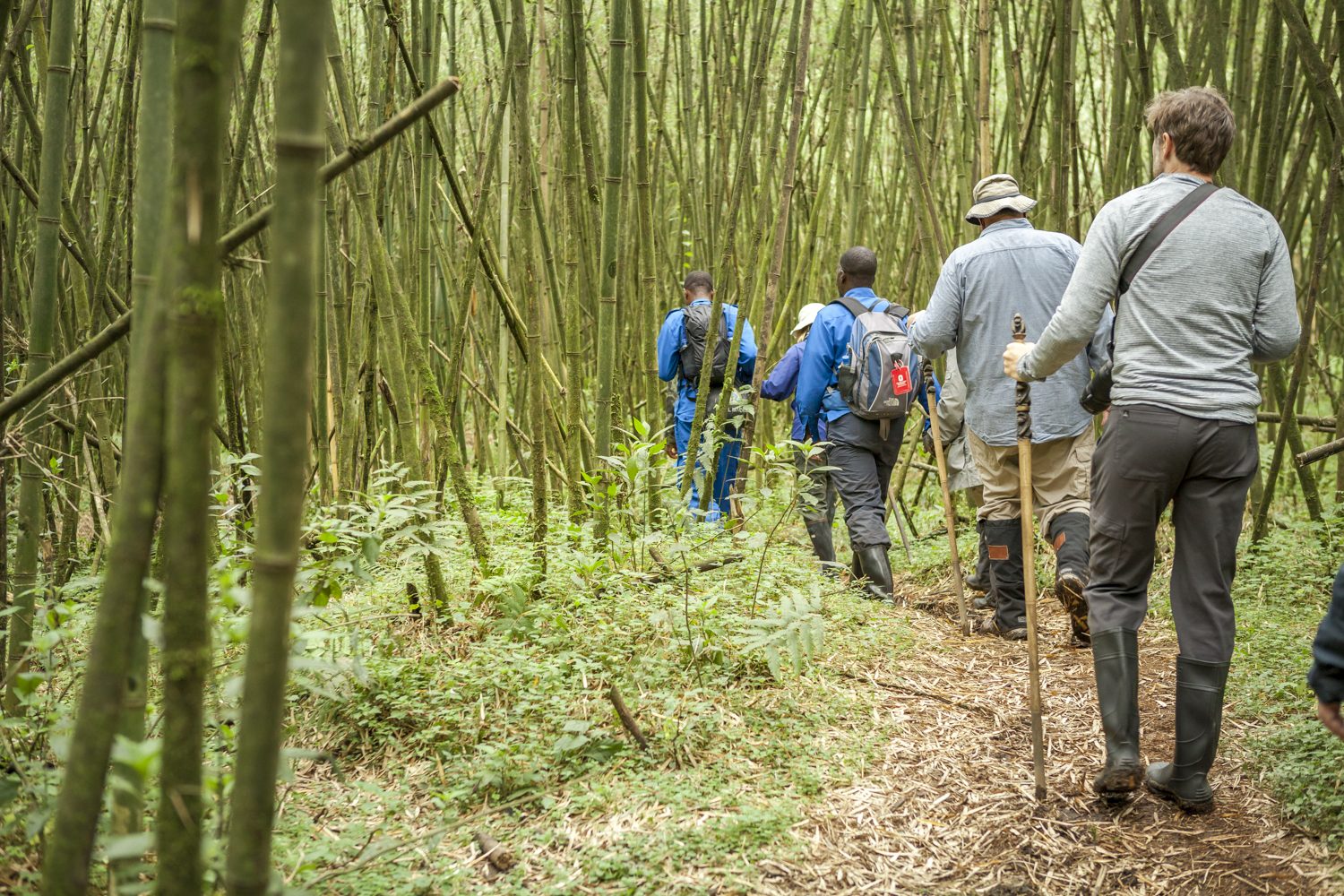
Her grave has become a place of pilgrimage for conservationists, scientists, and travellers, who reach it on foot through the very forest she protected. The trek to her grave is a fitting tribute: you walk the same muddy paths, through the same bamboo, under the same cold mountain rain that she walked daily for eighteen years. Her death did not end her work; the research continued, the monitoring she invented became the standard of the park, and the gorilla families she named survived and multiplied.
The Dian Fossey Karisoke research centre, founded in two leaking tents, is today a major conservation hub, run by the Dian Fossey Gorilla Fund in partnership with the Rwandan authorities. Its programmes employ Rwandan conservationists, train the next generation of scientists, and continue the daily monitoring that began with Fossey’s notebooks. Its influence extends far beyond the Virunga Massif: the model of long-term, individual-based study of great apes that Fossey pioneered has been replicated across Africa and Asia.
The system that grew from Dian Fossey Karisoke is now powered by tourism. Every gorilla permit sold by the Rwanda Development Board funds the anti-poaching patrols and monitoring teams that do today what Fossey once did alone, and the conservation and community programmes around the park are the institutional heirs of her campaign. The gorillas she fought for are now the flagship species of one of Africa’s most successful conservation economies.
Visiting the forest that Fossey called home is a way of continuing her work. A 3-day gorilla safari in Volcanoes National Park puts you on the same slopes, among the descendants of her study groups, and the permit you buy funds the patrols that carry her legacy forward. If you wish to see the camp and her grave, our team can arrange the longer trek to Karisoke, which begins in the same forest where she began her work in 1967.
Dian Fossey was complicated: brilliant, obsessive, confrontational, and lonely. Poachers hated her, some colleagues feared her, and the public worshipped her. But the record is unambiguous on the only question that matters: when she arrived in 1967, the mountain gorilla was sliding toward extinction, and when she died in 1985, the momentum had already turned. The population has now more than quadrupled from the low point she documented, and every silverback in the forest today carries a piece of her story in his family’s history. Karisoke began as one woman’s refusal to accept extinction. It became the foundation of everything that has followed.
It would be dishonest to tell Fossey’s story without acknowledging the controversy that surrounded her. Her methods of fighting poachers were aggressive by any standard: she destroyed traps, confiscated equipment, and confronted hunters directly in the forest. Some conservationists admired her courage; others believed she was endangering her own mission, alienating the very institutions and communities whose cooperation was needed for long-term protection. The arguments she had with the Rwandan park administration, with scientists, and even with her own assistants became part of the legend.
The passage of time has made the debate more nuanced. On one side, her enemies accused her of vigilante justice and of treating the gorillas as personal property. On the other, defenders point out that the established systems of the day were failing: the poaching continued, the gorillas kept dying, and her radical tactics were the only thing that visibly changed the equation in the field. What is rarely disputed is her result: the death rate among gorillas in the Karisoke study area fell during her campaign, and the world’s attention, which no institution had managed to secure, followed her everywhere she went.
Modern conservation has learned from both halves of her legacy. Today’s patrols are professional, trained, and run in partnership with communities, not against them, but they exist because Fossey proved that protection requires force as well as persuasion. The rangers of Volcanoes National Park walk the forest with the authority she never had; the community programmes that make poaching unprofitable are the mature version of the war she waged alone. The debate about Fossey will continue, but the lesson of her career is already written into the structure of every patrol team and every snare sweep in the park today.