Gorilla Permits Rwanda — 6 Years of Trusted Service
There is a school in a village on the edge of Volcanoes National Park whose classrooms were built with money from gorilla permits. A few valleys away, a clinic was stocked with the same funds, and in the fields beyond it, beehive fences funded by tourism protect crops from elephants that would otherwise raid them at harvest time. None of these places is inside the national park. All of them exist because of it. This is the quiet genius of Rwanda’s community conservation model, a system in which the people who live closest to the wildlife are also the people who benefit most from it.
The idea is simple on paper and revolutionary in practice: if conservation is to survive, it must pay its own way, in places and not just in the abstract. For decades, national parks across Africa struggled because the people around them saw only the costs of protection, lost farmland, restricted access, and the danger of wild animals, while the benefits flowed elsewhere. Rwanda decided to change that arithmetic. Under a revenue-sharing scheme that returns ten percent of park tourism income to neighbouring communities, the gorilla economy now pays the people who protect it, and the results can be seen in classrooms, clinics, water systems, and the attitudes of a whole generation.
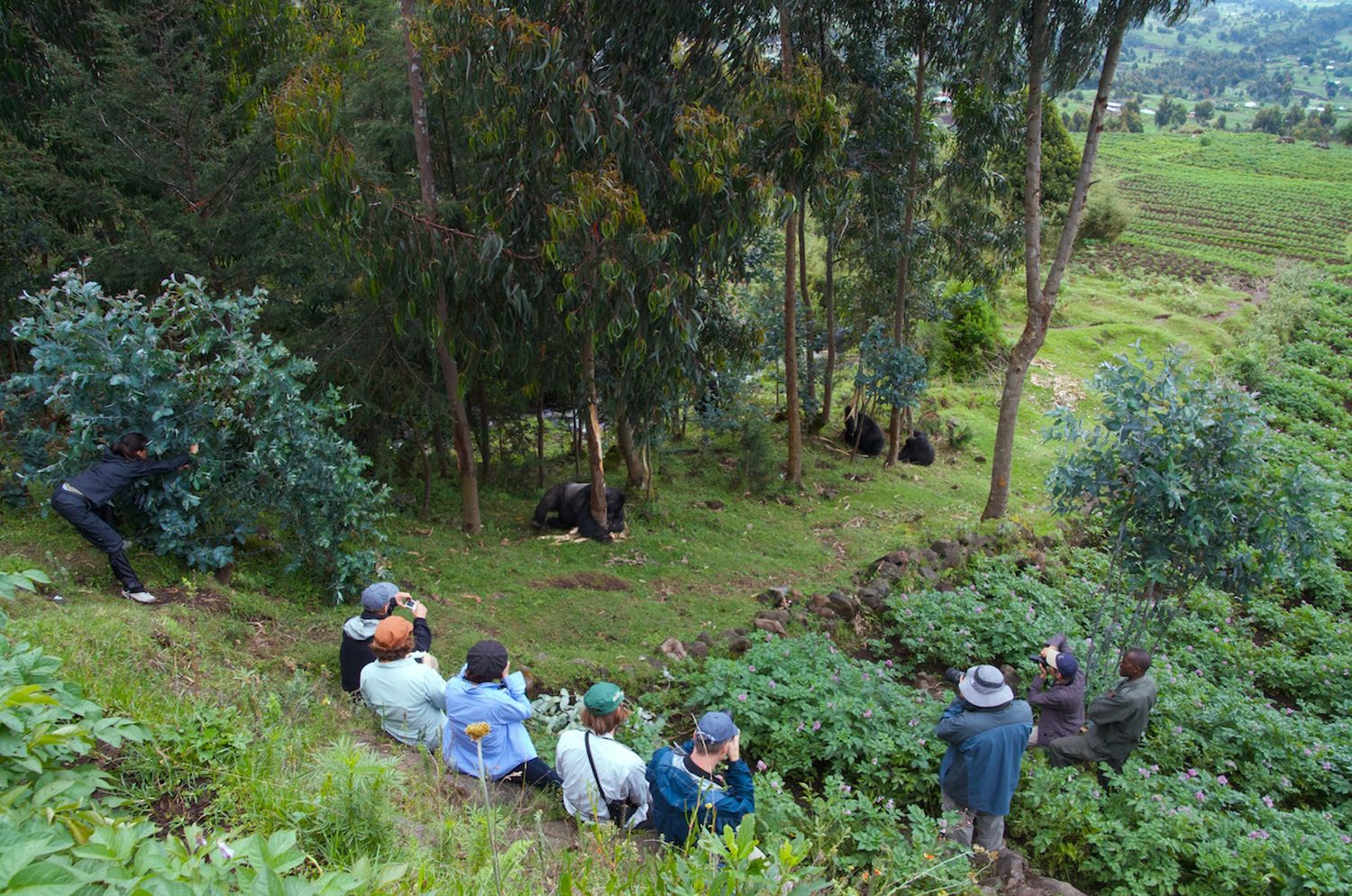
Whenever a visitor buys a gorilla permit or steps into one of Rwanda’s national parks, a share of the money does not stay with the park administration. Since 2005, Rwandan law has required that ten percent of the revenue collected from tourism in and around the parks be returned to the communities that border them, through a process of selection, planning, and payment that is designed to be transparent; the money is administered by the Rwanda Development Board and the projects are chosen by the communities themselves. The ten percent figure is fixed and public, and the projects it funds are chosen by the communities themselves, not dictated from the capital.
The rationale is economic as much as it is ethical. Communities that receive tourist money have a direct stake in the survival of the tourism industry, and that industry depends on the survival of the park and its wildlife. When a village’s school is repaired with gorilla permit revenue, the perceived value of the gorilla changes. The animal becomes not a nuisance that tramples crops and blocks the forest, but an asset whose continued existence keeps the money flowing. Poaching becomes a threat to the income of the village, not just to the law.
This is the inverted incentive that makes Rwanda’s model work. Instead of asking communities to protect the forest for the sake of the forest, it pays them to do so. The result is a rare thing in world conservation: a system in which local people become the loudest defenders of the park. Farmers who once might have quietly tolerated a snare now report it; herders who once grazed their cattle on park land now help patrol the boundary; and children who grow up seeing the money the park brings are the next generation of rangers and guides.
These projects are community conservation in its most practical form: they are chosen locally, and the priorities of the mountain districts have been remarkably consistent over two decades: schools, health, water, and ways to make a living without the forest. A village that asks for a classroom gets a classroom; a village whose children walked two hours for water gets a borehole and a piped system. The schemes are small in the national budget, but they are large in the life of a mountain village, and they are the difference between a community that tolerates the park and one that embraces it.
Health is where the tenth plays its most quietly crucial role. Park environments sit at the edges of rural life, and the clinics built by revenue sharing improve care for thousands of people who previously had to travel long distances for treatment. Vaccination campaigns, clean water, and better nutrition for children improve the health of the community that lives alongside the wildlife, and a healthy community is a stable one. The gorillas do not cure malaria, but the funding that protects them helps pay for the clinic that does.
The infrastructure also reaches the household economy. Road and market improvements from revenue sharing open routes that were impassable before, letting farmers take their harvests to market more easily and buy at better prices. Every improvement raises the visible worth of the park in the sum of the household budget and, in doing so, reinforces the message that conservation and prosperity are the same project.
Livelihood support is the quiet half of community conservation, because money is not the only form of sharing. The model also invests in livelihoods, so that communities can earn without cutting the forest or hunting its animals. Around the parks, revenue-sharing funds and partner projects support beekeeping, which produces honey and, at the same time, the famous beehive fences that keep elephants out of the crops. They support livestock, tree nurseries, mushroom farming, and cooperatives, and they help small businesses such as handicrafts and guesthouses that serve visitors.
Tourism itself is the largest livelihood provider of all. The porters who carry bags at the trailhead, the guides, the drivers, the lodge staff, the market sellers in Musanze and the artisans who sell souvenirs, all of them work because visitors come. Revenue sharing multiplies that effect by putting the income directly into community hands, and it is why a single trekking day in the Virungas can touch the lives of dozens of households before the visitor returns to Kigali.
In the villages of the buffer zone, the combination of jobs and funded projects has changed the relationship with the park boundary. The beehive fences protect the maize; the clinic treats the children; the cooperative pays for the school fees; and the forest, which once looked like a rival for the land, looks like a partner. That is the buffer zone working as it should: a strip of villages that are prosperous enough to want the park, and secure enough to defend it.
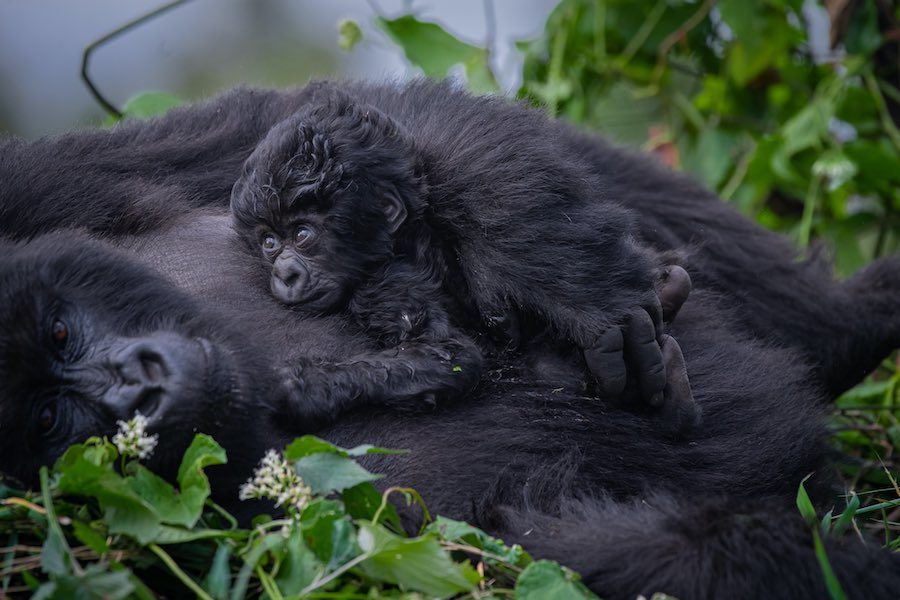
The clearest measure of the model’s success is what has happened to poaching. The link between income and wildlife safety is the core of community conservation: when communities have a financial stake in the park, the incentives of the illegal economy weaken. A family that earns from tourism or revenue-sharing projects is less tempted by the money a poacher offers; a village that has seen its school built by the park is quicker to report a stranger laying snares; and a young person with a job in the visitor economy has no reason to risk prison for a bushmeat sale.
This is not to say the problem has vanished. Poaching still happens, and the anti-poaching teams still work hard every day. But the context has changed: today the rangers who sweep the forest for snares are supported by communities that largely share their goals, and informants are more common than they were a generation ago. The combination of enforcement and incentive is what conservationists call a conservation economy, and Rwanda is its most successful example in Africa.
There is also a direct social dividend. As the visible benefits of the park spread, the tolerance for poaching has fallen in village courts and family conversations. Parents who once saw the forest as a hunting ground now see it as their children’s employer. The social pressure against poaching, which no law can create, has grown naturally out of the sharing of the wealth.
The same community conservation principles apply in the east and the south-west, because the revenue-sharing principle is not limited to the gorillas. The same ten percent model applies across Rwanda’s national parks, including Akagera National Park and Nyungwe National Park, and the communities along each boundary receive their share. The elephants of Akagera and the chimpanzees of Nyungwe are not as famous as the gorillas, but they are governed by the same economics: their tourism must reach their neighbours, or they will have no future.
In the east, around Akagera, the return of the lions and the rhinos is part of the same narrative. Communities have watched the tourism income from the Big Five grow, and the park has become an employer and a partner in rebuilding after years of decline. In the south-west, the communities around Nyungwe earn from the chimpanzee treks and the canopy walk, and their schools and clinics carry the same funding signature. The principle has become national: a park that does not share is a park that will not survive.
Other African states have borrowed the Rwandan revenue-sharing scheme, and international conservation organisations point to it as one of the most successful in the field. But the model is not exported easily, because it depends on two things Rwanda possesses in abundance: a secure park system and a government that keeps its promises to the communities. The tenth is not a theory, it is a bond, and the trust it builds is Rwanda’s most valuable conservation asset.
The scale of the programme is significant for a small country. Over the years, revenue sharing has funded hundreds of projects around the parks, and the sums involved have grown as tourism has grown. Every increase in visitor numbers translates directly into more money for the villages, which is why the districts themselves now champion the parks: a school built by the park is a lesson in economics that no campaign can match.
The results of community conservation can be counted in the classic conservation currency: the mountain gorilla population of the Virunga Massif, which has grown from a low point of around 254 individuals in 1981 to more than one thousand in the last census. They can also be counted in the classrooms and clinics that dot the park boundaries, in the beehive fences along the elephant routes, and in the pride with which village councils report their projects. Conservation has become a source of prosperity, and prosperity has become a guardian of conservation.
The model is not finished. Communities still ask for more: more schools, more clinics, more direct employment, and a faster flow of the benefits they have been promised. The government and its partners continue to refine the system, improving transparency and pushing more of the decision-making into the villages. Conservation, like any living system, is always being improved, and the Rwandan model is no exception.
The key measure of success is one that statistics cannot fully capture: the attitude of the neighbours. Ask a farmer on the edge of the Virungas what the park means, and the answer today is rarely a complaint about confiscated land. More often it is a calculation, an account, of what the forest has brought the village: the school, the clinic, the water, the jobs. That change in attitude, from resentment to ownership, is the real product of revenue sharing.
Every trekking visit supports conservation and communities in Rwanda, because the price of your permit funds the tenth that reaches the villages. That is the direct line from your boots to the school roof. If you want to see the full circle, spend time in the villages as well as the forest: visit the market in Musanze, hire a porter, buy from the cooperatives, and stay in the community projects that have grown up around the parks.
A longer itinerary gives you the whole picture. Our 6-day gorilla and Lake Kivu safari combines the volcano slopes with the lakeside communities of the west, and our 3-day gorilla safari covers the classic trekking experience. Whenever you come, and however you travel, contact our team and we will make sure your visit is arranged with local guides, local lodges, and the community in mind.
Rwanda’s conservation story is often told as a story of gorillas. The deeper story is a story of people: the people who share the forest’s edge, who keep the beehives, who fill the classrooms, who guard the boundary, and who have learned, through a simple act of accounting, that the wild places are worth more alive than dead. That is the community conservation model, and it is why the gorillas are still here.