Gorilla Permits Rwanda — 6 Years of Trusted Service
Chimpanzees vs gorillas: Rwanda offers travellers a decision that very few places on Earth can make – whether to spend your wildlife days on mountain gorillas, on chimpanzees, or on both. The gorillas of Volcanoes National Park have long been the country’s headline act, and deservedly so, but the chimpanzees of Nyungwe National Park have become a serious rival in recent years, and more and more visitors want to see both.
The chimpanzees vs gorillas comparison starts here: the two treks share a magical quality, yet they differ in almost every practical detail: cost, terrain, length, difficulty and the character of the encounter itself. This guide sets out the differences honestly, so you can choose the trek, or the combination, that fits your budget, fitness and travel style.
A note on phrasing before we begin: when we say gorillas in this guide, we mean the mountain gorillas of Volcanoes National Park, the only place in Rwanda you can see them. When we say chimpanzees, we mean the eastern chimpanzees of Nyungwe National Park, an entirely different corner of the country with a completely different forest. The two treks are about as different as two wildlife experiences can be, which is exactly why comparing them is worth your time.
Before we dive into detail, here is the quick comparison every traveller asks for:
Neither experience is better in any absolute sense. They are simply different, and the trick is to match the trek to your priorities.
If you are weighing chimpanzees vs gorillas, keep two numbers in mind. The first is one thousand five hundred, roughly the dollar price of a gorilla permit. The second is one hundred and fifty, roughly the dollar price of a chimpanzee permit at the top of its range. Everything else, from difficulty to scenery to the character of the animals, flows from that single difference in cost.
A gorilla trek begins in the Virunga highlands of northern Rwanda, where Volcanoes National Park protects a population of mountain gorillas split among habituated family groups. Each family, typically ten to thirty individuals and presided over by a dominant silverback, is followed daily by trackers, and your group of eight will be assigned one family for the morning.
The hike takes you up through a mosaic of farmland, bamboo forest and dense cloud forest. Altitudes climb well beyond two and a half thousand metres, so the air is thin and the paths are steep, but porters are plentiful and the climb usually takes a few hours at most. Then the trackers step aside, the foliage parts, and you meet the gorillas.
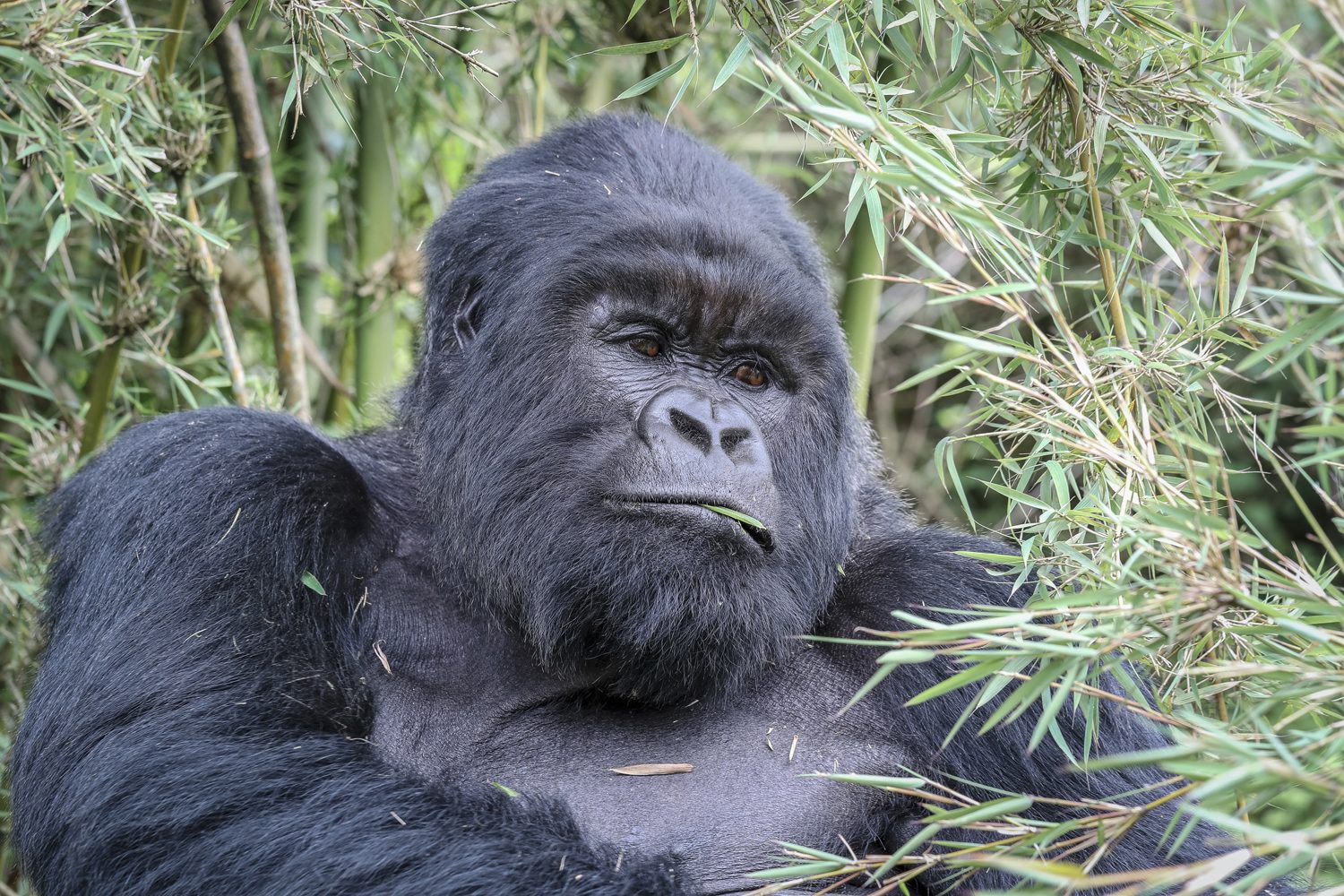
What follows is the closest thing wildlife tourism has to theatre: silverbacks that weigh more than ten times your average traveller, infants tumbling through the undergrowth, and females grooming each other within arm’s reach. The gorillas largely ignore you, which is precisely the point. You spend one hour among them, and for most visitors it is the single greatest hour of their African journey.
Part of what makes the gorilla encounter so moving is knowing how close it came to never happening. Mountain gorillas were nearly extinct half a century ago, hunted and displaced as farming advanced up the volcano slopes, and their recovery is one of the great conservation stories of the modern era. Every permit you buy funds rangers, veterinary work and community programmes, which means your hour with a silverback is also a direct investment in the species’ future.
It is also a question of atmosphere. Visitors who complete the gorilla trek often describe a quiet kind of awe, the wonder that comes from standing beside something ancient, powerful and irreplaceable. The silverback does not perform for you; he simply sits, feeding and watching, and your visit becomes a form of respect. For many travellers, that hour in the bamboo forest is the truest moment of their entire African journey.
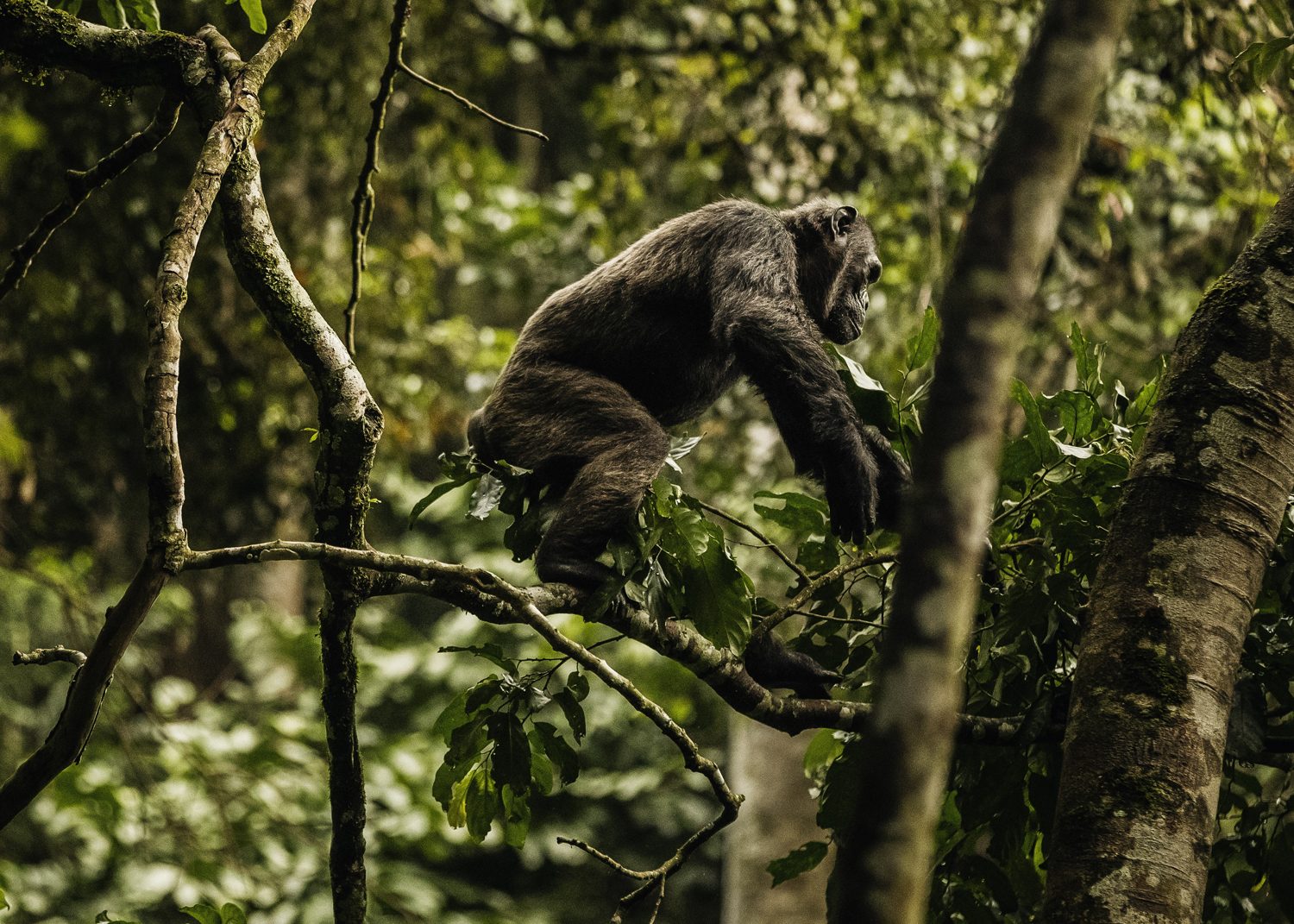
Chimpanzee tracking in Nyungwe is a different animal altogether. The day begins before dawn, with a drive to the trailhead and a briefing by torchlight, and the trek itself is a true pursuit: your guides follow calls, tracks and feeding signs through one of Africa’s oldest rainforests until the chimpanzees are found. Once located, you spend about an hour with the party, watching a far more fast-moving, vocal and unpredictable set of behaviours than any gorilla family will show you.
Where gorilla viewing is contemplative, chimpanzee viewing is electric. Chimps travel, feed, groom and squabble constantly; they make tools, fish for termites, and react to each other and to you with transparent emotion. Because the habituated parties in Nyungwe are small, the encounter has an intimacy that the gorillas, for all their drama, rarely deliver.
The setting deserves its own paragraph. Nyungwe is one of the oldest rainforests in Africa, a vast green basin of ancient trees, orchids and more than three hundred bird species, crossed by a famous canopy walkway suspended above the forest floor. Where the gorilla trek is an encounter with a single great animal, the chimpanzee trek is an encounter with an entire ecosystem, and the forest itself steals scenes throughout the morning.
The financial gap is enormous and, for many travellers, decisive. A gorilla permit from the Rwanda Development Board costs around US$1,500 per person, making it one of the most expensive single wildlife experiences in Africa, while a Nyungwe chimpanzee permit typically runs from US$90 to US$150. For the price of one gorilla permit, you could fund a week of chimpanzee tracking, park entry and lodge nights.
Demand differs too. Gorilla permits for the busiest months sell out months in advance and are allocated to a fixed daily quota, whereas chimpanzee permits are easier to secure at shorter notice. Whichever you choose, book through a trusted operator; the current permit rates for both species are published on our gorilla permit page, and we handle the paperwork for you.
If your budget decides the chimpanzees vs gorillas question, a sensible compromise is to take the gorilla trek and spend the savings on a fuller Nyungwe stay, where the chimpanzees, colobus monkeys and canopy walkway will keep you busy for days.
There is also a softer economic argument for the chimpanzee trek. Because a gorilla permit absorbs so much of a safari budget, many travellers end their trip the day after the gorillas and miss the rest of the country. A cheaper chimp permit frees up money for Nyungwe’s canopy walkway, a boat trip on Lake Kivu or a dedicated birding morning, which is how many of our guests end up seeing more of Rwanda than they ever planned.
There is no simple answer, because the difficulty is of different kinds. A gorilla trek is a short, steep climb into high altitude, where the thin air and volcanic slopes test your lungs; a chimpanzee trek is longer and more relentless, with several hours of muddy, slippery forest walking at lower but still meaningful altitude.
Both treks are achievable for anyone with a reasonable level of fitness, and both can be eased with the help of porters. Tell your operator honestly about your mobility and stamina, and we will match you with the right trek and pace. Nobody should skip these experiences for fear of the climb.
One further difference is worth naming: the gorilla trek has a definite shape. You reach your assigned family, spend your hour, and descend, so the day is predictable from the briefing onward. The chimpanzee trek does not offer that certainty, because the chimpanzees keep moving, and your guides may lead you for hours over steep terrain before contact is made. If you are the kind of traveller who enjoys a pursuit, that unpredictability is a feature rather than a flaw.
The settings are as different as the animals. Volcanoes National Park is dramatic, open and mountainous, with bamboo stands, giant lobelias and the jagged silhouettes of the Virunga chain visible for much of the trek. The views are some of the finest in East Africa, and on clear days you can look across the border into the Democratic Republic of Congo.
Nyungwe is enclosed, ancient and dripping: one of the oldest rainforests in Africa, full of ferns, orchids and birdsong, crowned by the famous canopy walkway suspended high above the forest floor. Where the volcanoes reward you with panorama, Nyungwe rewards you with immersion.
Both parks offer more than their headline animal. In Volcanoes you can add the golden monkeys of the Virungas, a separate permit and a walk through sprawling bamboo forest that many visitors rate nearly as highly as the gorillas themselves, and our golden monkey guide covers that trek in detail. In Nyungwe the extras are the colobus monkeys, the birding and the canopy walkway, which means a single Nyungwe visit can feel like three different excursions.
The gorilla trek is the most sought-after wildlife experience in Rwanda, and it shows. In peak months every permit is taken, visitor groups must keep strict distance from the families, and your hour is fixed by regulation. Chimpanzee tracking runs in smaller groups to quieter corners of a much larger park, so the overall experience feels more exclusive and more spontaneous.
Time is another factor. A gorilla trek fits neatly into a 3-day Rwanda gorilla trekking safari from Kigali, while a Nyungwe chimpanzee trek is best paired with an overnight in the park, as our 2-day Nyungwe package demonstrates. If you are short on days, the gorillas are the quicker win; if you have time to spare, the forest rewards the slower traveller.
Booking advice applies equally to both treks: use a licensed operator, confirm the exact permit date before you pay, and leave room in your itinerary for the small delays that mountain roads and rainforest weather can introduce. A professional operator holds your permits, coordinates the briefings and handles the paperwork, so that your only task on the day is to arrive at the trailhead with your boots laced.
If this is your first visit to Africa and you want the continent’s most iconic moment, choose the gorillas. Nothing photographs, or lingers, quite like a silverback. If you are a wildlife enthusiast on a budget, choose the chimpanzees: you will see more behaviour, more movement and more of the forest for a fraction of the price.
Families should note that both treks carry minimum age rules, usually fifteen years, so check current regulations when you book. And if you cannot decide, you do not have to: the majority of our guests now choose to see both animals on one itinerary, and most describe the pairing as the defining experience of their Rwanda holiday.
Photographers face a genuine dilemma, because the two animals demand opposite techniques. Gorillas sit still, which rewards slow, careful composition; chimpanzees never stop moving, which rewards fast autofocus, a long lens and the courage to shoot through branches. Bring the longest telephoto you can carry, protect it from the rain, and you will come home with two very different portfolios.
There is no wrong answer in the chimpanzees vs gorillas choice, and no shame in letting your wallet decide for you. A traveller who sees chimpanzees in Nyungwe and returns a year later for the gorillas will enjoy two completely different holidays, while a traveller who sees both in a single week enjoys the greatest wildlife double-header Rwanda has to offer. Choose the animal that makes your heart beat faster, and let your operator handle everything else.
Rwanda is small, and its two great primate experiences sit at opposite ends of a drive that takes about a day. A combined itinerary lets you compare a silverback’s stillness with a chimpanzee’s cunning, and you will leave with two completely different stories to tell. Our 5-day gorilla and chimpanzee safari and our 10-day Rwanda primate itinerary are designed for exactly this purpose.
The permits, the park logistics and the transport all become our problem, not yours. If you would like help deciding, or simply to lock in your dates, contact our team and we will put together the perfect primate adventure for you.
Whichever you choose, remember that both treks are privileges that millions of travellers will never experience. Whether you spend your hour with a silverback or your morning chasing chimpanzees through an ancient forest, you will return with stories that make every other holiday feel like a warm-up. The only wrong answer is never going at all.