Life as a Rwanda Park Ranger: Guardians of the Forest
Before the first trekking group arrives at the park gate, before the mist lifts off the volcano, the Rwanda park rangers who act as guardians of the forest have already begun a long day in the country’s national parks. Trackers are walking into the bamboo to locate the gorilla families. Anti-poaching patrols are moving along the boundary fences. Rangers are checking the previous night’s reports, the equipment, and the weather. By the time visitors meet their guides at the park headquarters, the work of the day has been underway for hours, and the gorillas that the trekkers are about to see have already been found, counted, and checked.
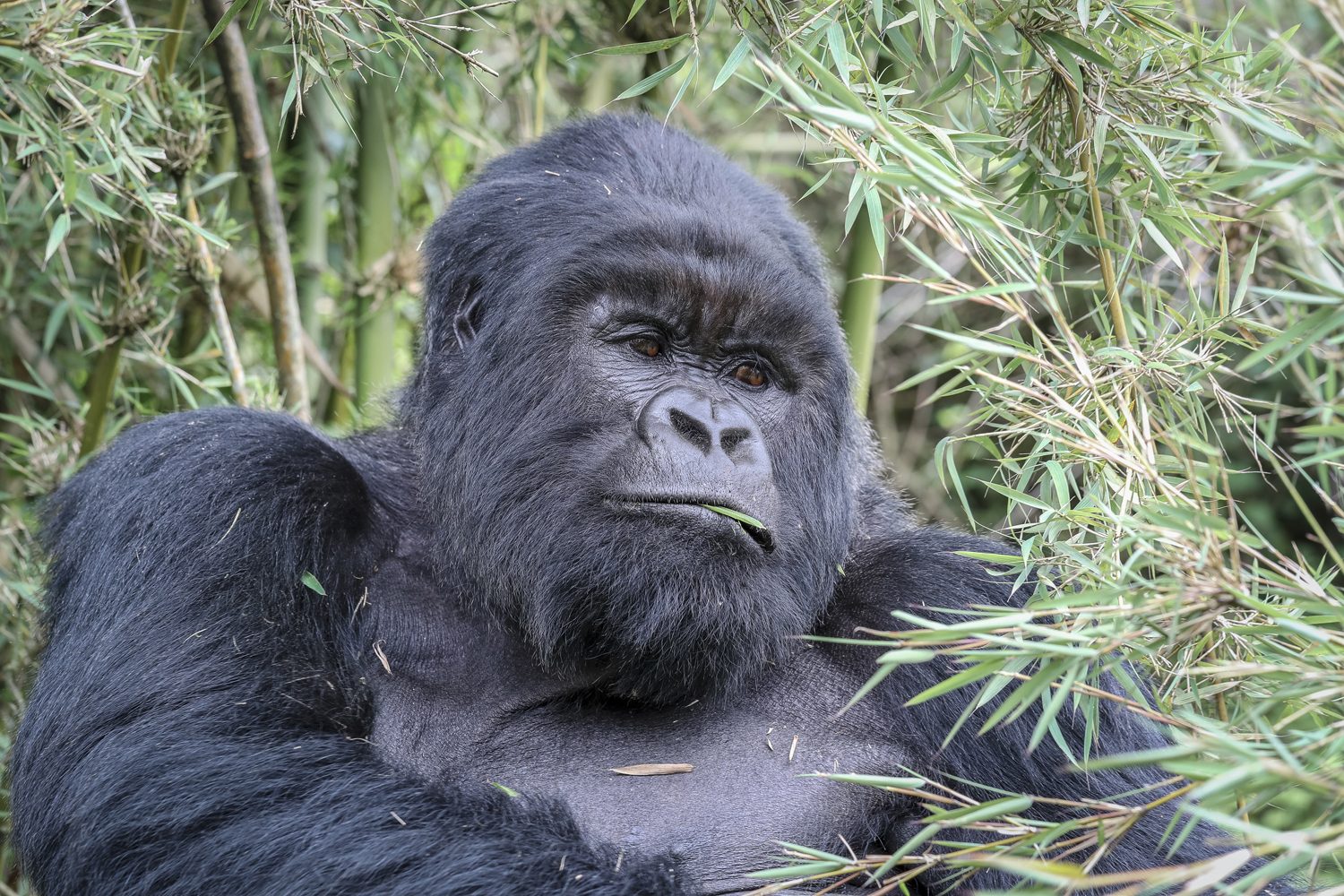
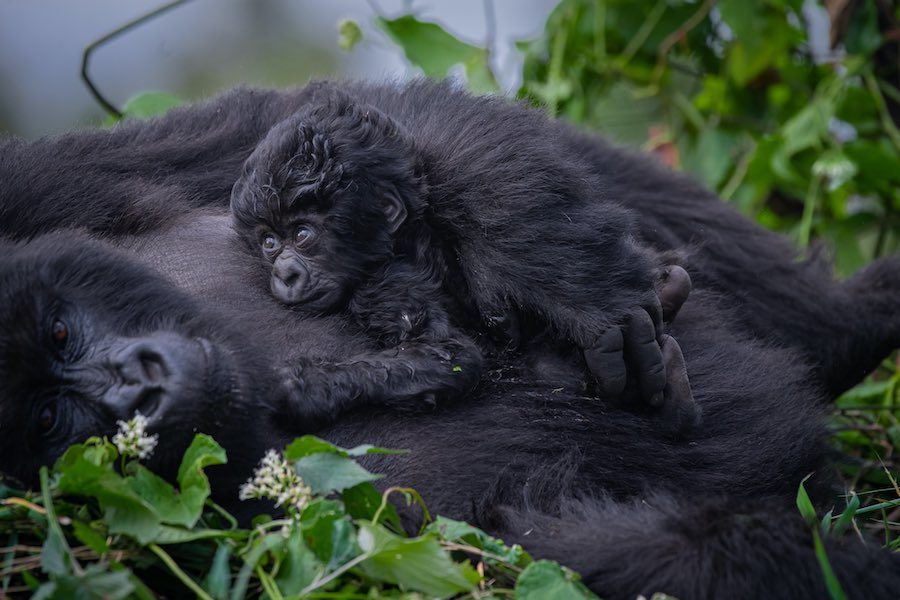
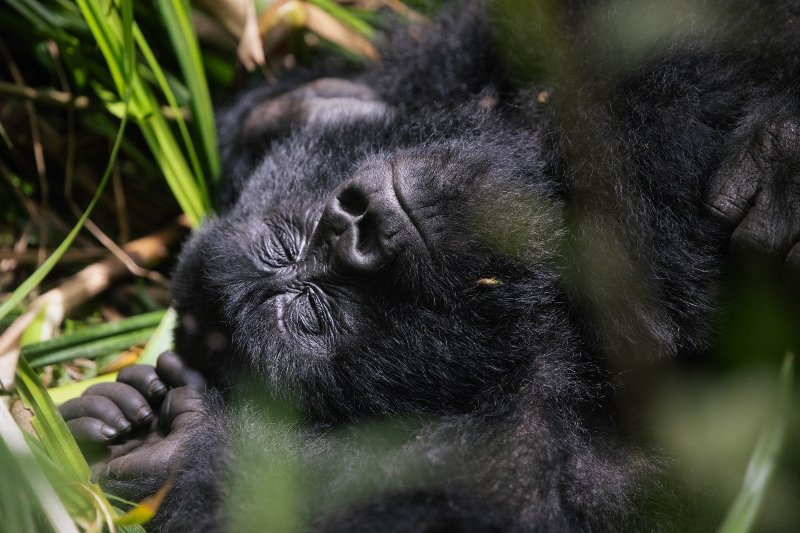
Rangers are the quiet heroes of Rwanda’s conservation story. The mountain gorilla population of the Virunga Massif has risen from a low of around 254 individuals in 1981 to more than one thousand today; the lions and rhinos have returned to Akagera; and the forests of the volcanoes are being restored. None of this happened on its own. All of it is overseen, guarded, and made possible by the men and women who patrol Rwanda’s parks every single day. This article explains who the rangers are, what their work involves, and why they are the true guardians of the forest.
The rangers of Rwanda are the guardians of the forest in the truest sense: they patrol it, they read it, and they defend it every single day. This article tells the story of the Rwanda park rangers who make the country’s wildlife miracle possible, from the dawn trackers to the anti-poaching patrols. By the end, you will know exactly whose hands the future of the gorillas rests in.
Rwanda Park Rangers’ Morning in the Forest
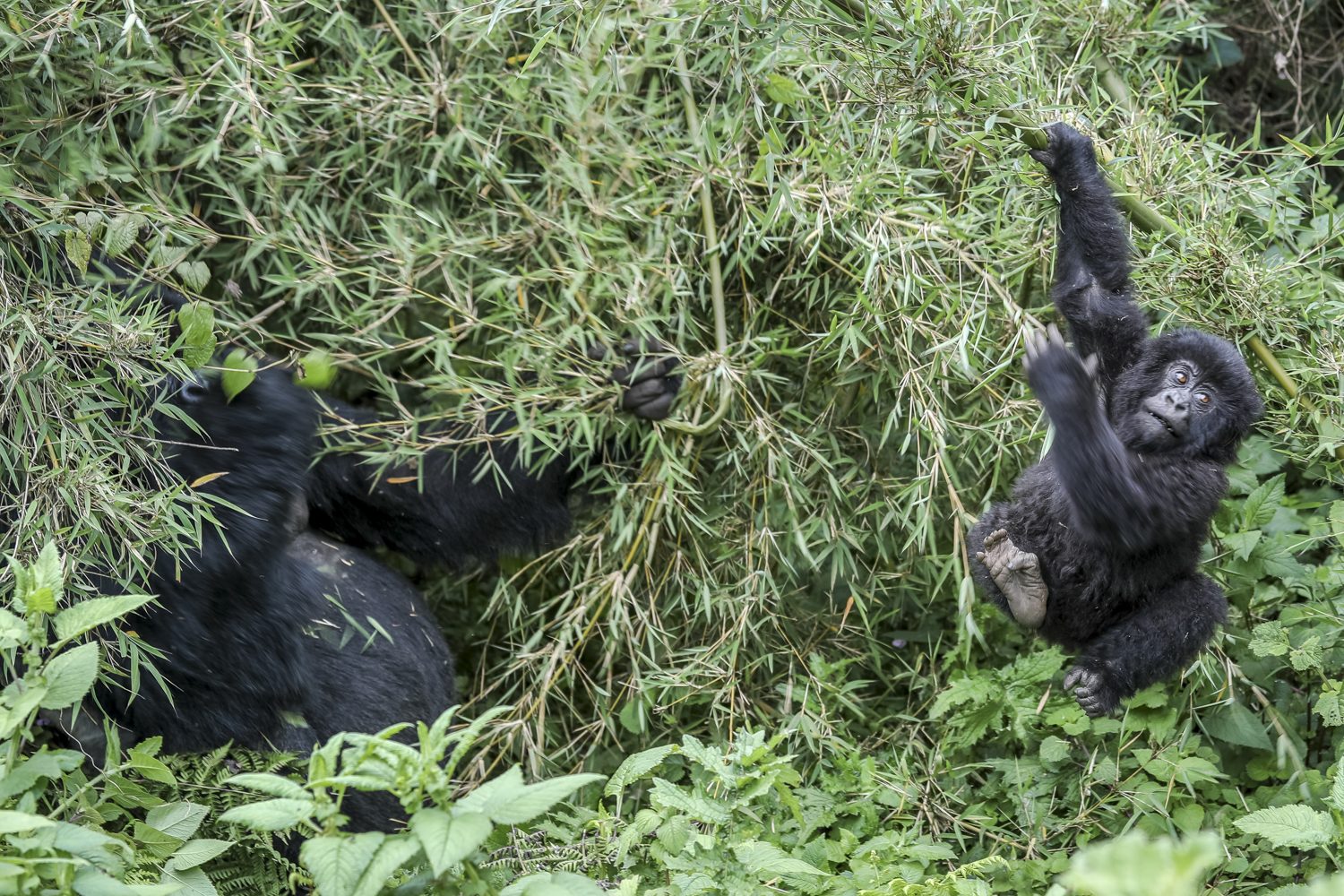
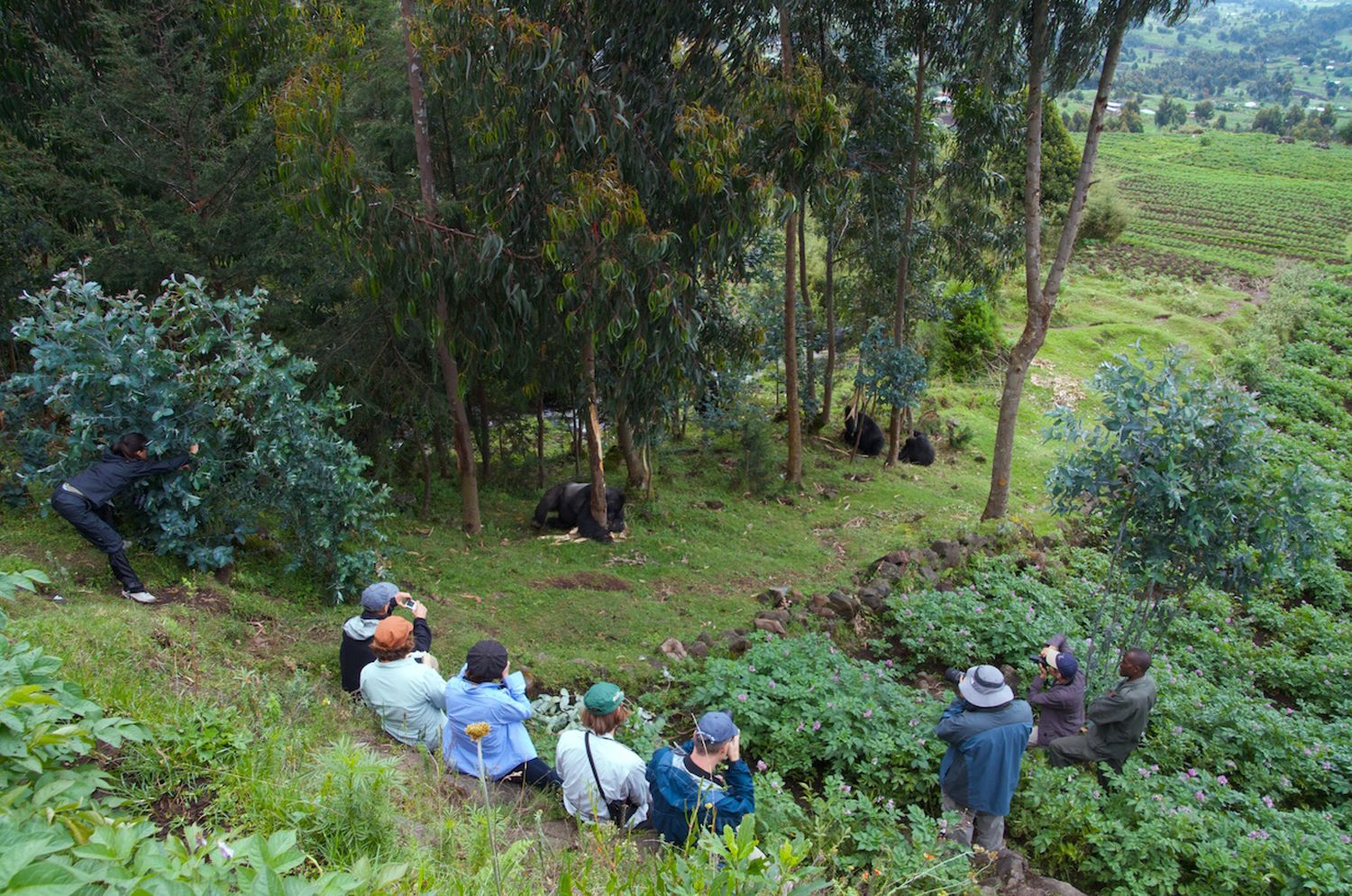
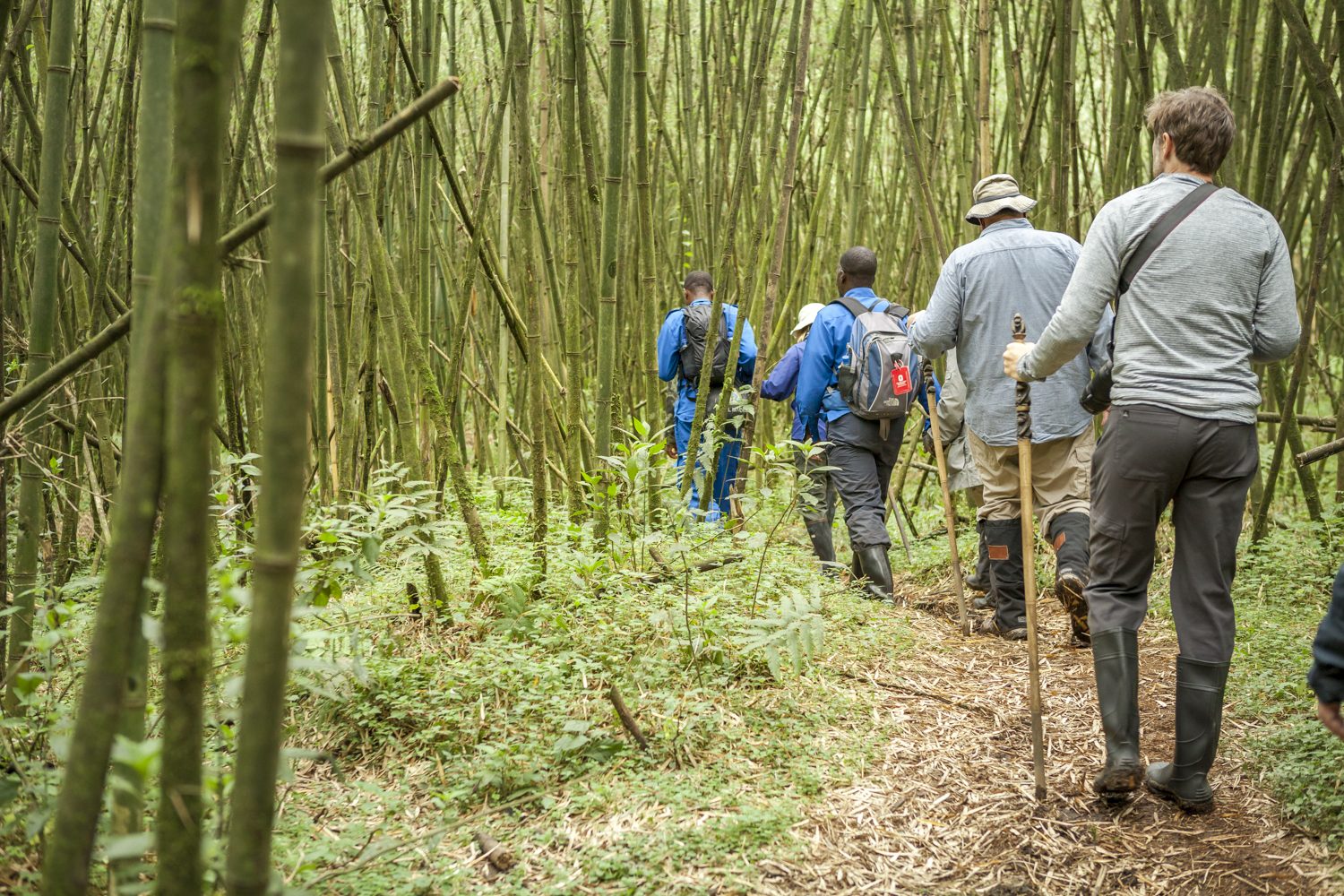
A ranger’s day starts long before dawn, and these morning walks are the core of what Rwanda park rangers do, because they are the guardians of every gorilla family’s day. In Volcanoes National Park, the first task is to find the gorillas: the monitoring teams, usually working in pairs, track each family from the nests of the previous night to the place where it has settled for the day, checking for injuries, illness, new births, or any sign of trouble. It is a walk that happens every morning, in rain and in cold, across steep volcanic slopes at altitudes of three thousand metres and more, and it is the foundation of the entire trekking system that brings visitors to the park.
The Physical Demands
The physical demands are considerable, and they make the Rwanda park rangers among the fittest guardians in Africa. The Virunga volcanoes are steep and slippery, the forest at high altitude is dense and wet, and the climate swings between chill winds and drenching storms. On a single morning a team may climb many hundreds of metres of altitude, push through bamboo thickets, and cross ravines that leave fit hikers breathless. The rangers do it daily, at dawn, in uniform, and they do it knowing that a missed sign could mean a gorilla family in distress going unnoticed.
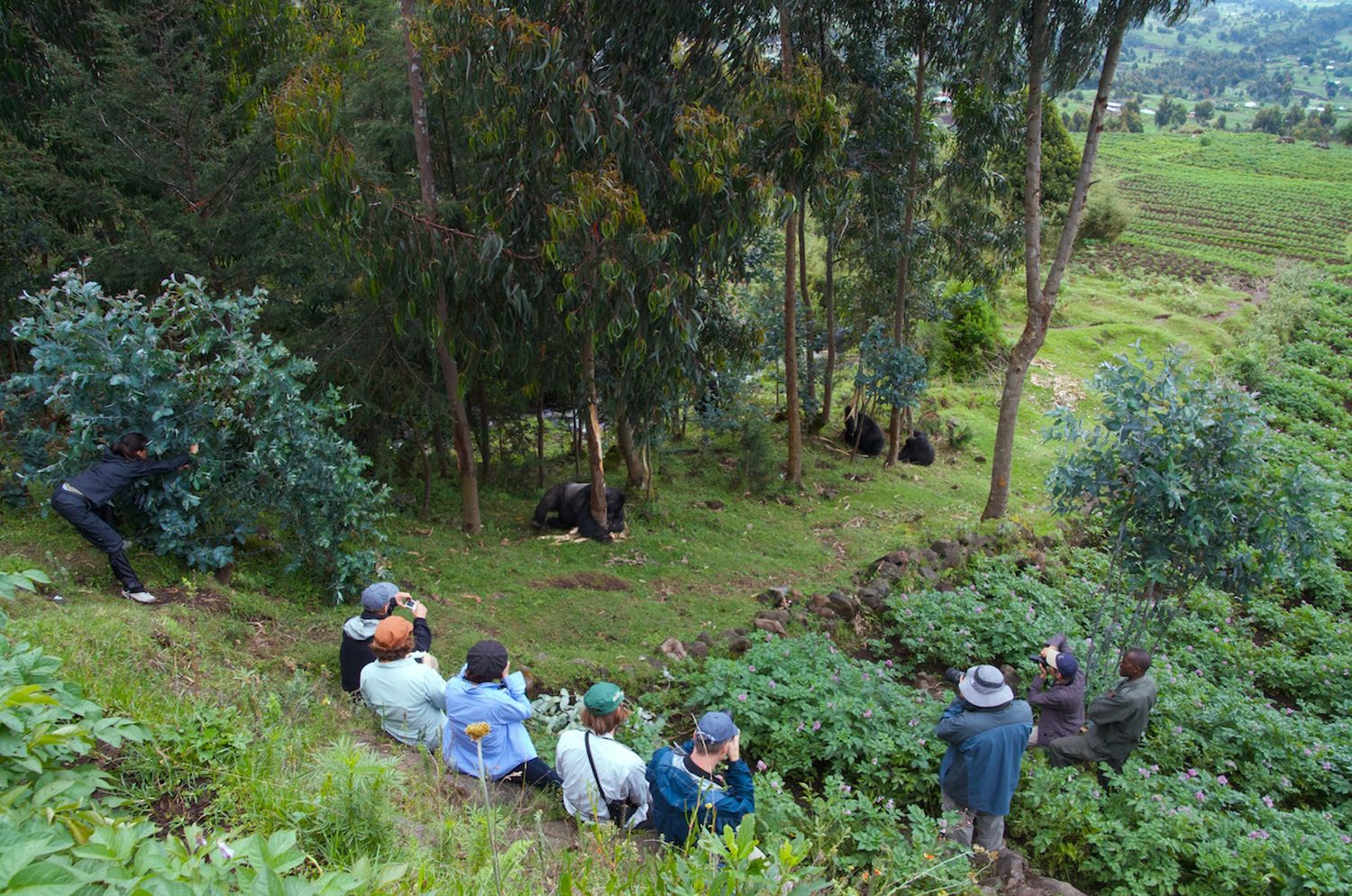
For the visitor, the ranger is the face of everything: the guide who leads the trek, the expert who explains gorilla behaviour, the escort who keeps the group at the correct distance and the peace of the forest. But the real work happens out of sight. By the time a trekking group is shown a gorilla family at nine in the morning, the trackers have been climbing since before five, have located the animals, confirmed their health, and radioed the information that makes the trek possible. The visitor sees the result of hours that belong entirely to the rangers.
Rwanda Park Rangers: Anti-Poaching and the Savannah Patrols
Beyond the gorilla families, the rangers run the protection of the entire park, and the patrols are the long defence that the Rwanda park rangers lead as the guardians of four decades of progress. Anti-poaching patrols sweep systematically through the forest, hunting for snares, watching for boundary crossings, and responding to any alarm. In the mountains, gorilla poaching has become rare, thanks to decades of enforcement combined with community programmes, but the work never stops: snares are still set for other animals, and each patrol is a step in the long defence of four decades of progress.
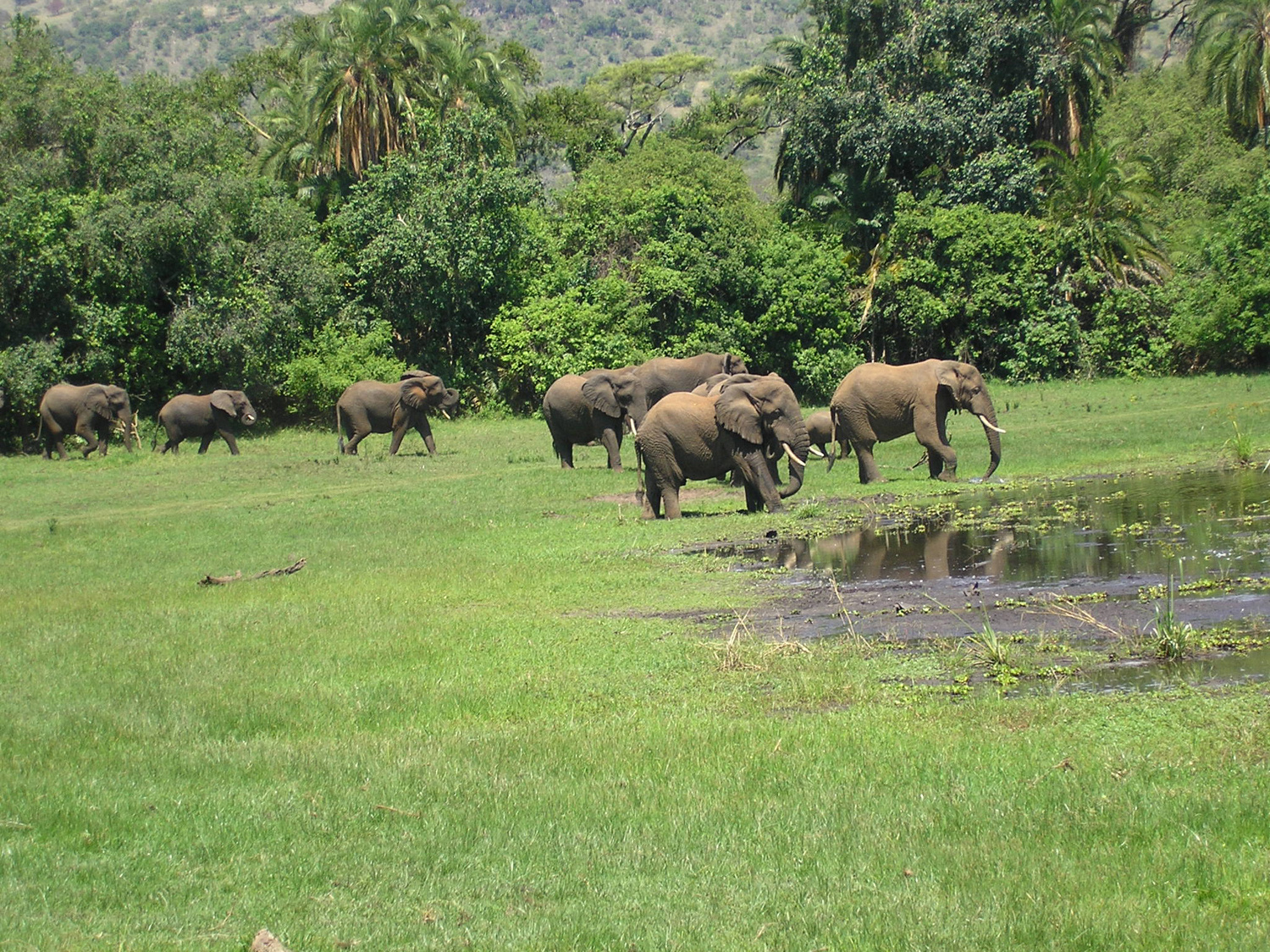
In Akagera National Park the mission is different in kind but equally urgent, and the park’s official website describes the patrol work and the canine unit. There the rangers guard a vast savannah against elephant poaching, the setting of snares that kill antelopes, and the risks that come from a park surrounded by farmland. Akagera’s anti-poaching teams include a canine unit, and its patrols cover long distances on foot and by vehicle, because the park’s wildlife, including the rhinos reintroduced in 2017 and 2019, is the target of the strongest commercial pressure in Africa: the rhino horn trade.
Technology has transformed the work, but the Rwanda park rangers remain the guardians who read the forest. Modern park management in Rwanda uses vehicles, radios, GPS tracking, and coordinated operations centres to cover terrain that cannot be walked in time. But the soul of protection remains human. The ranger on the ground is the one who reads the sign, who knows the sounds and the silences of the forest, who follows a suspicion through the mud, and who is prepared to stand between an animal and the person hunting it.
The Trackers: Guardians Among the Rwanda Park Rangers
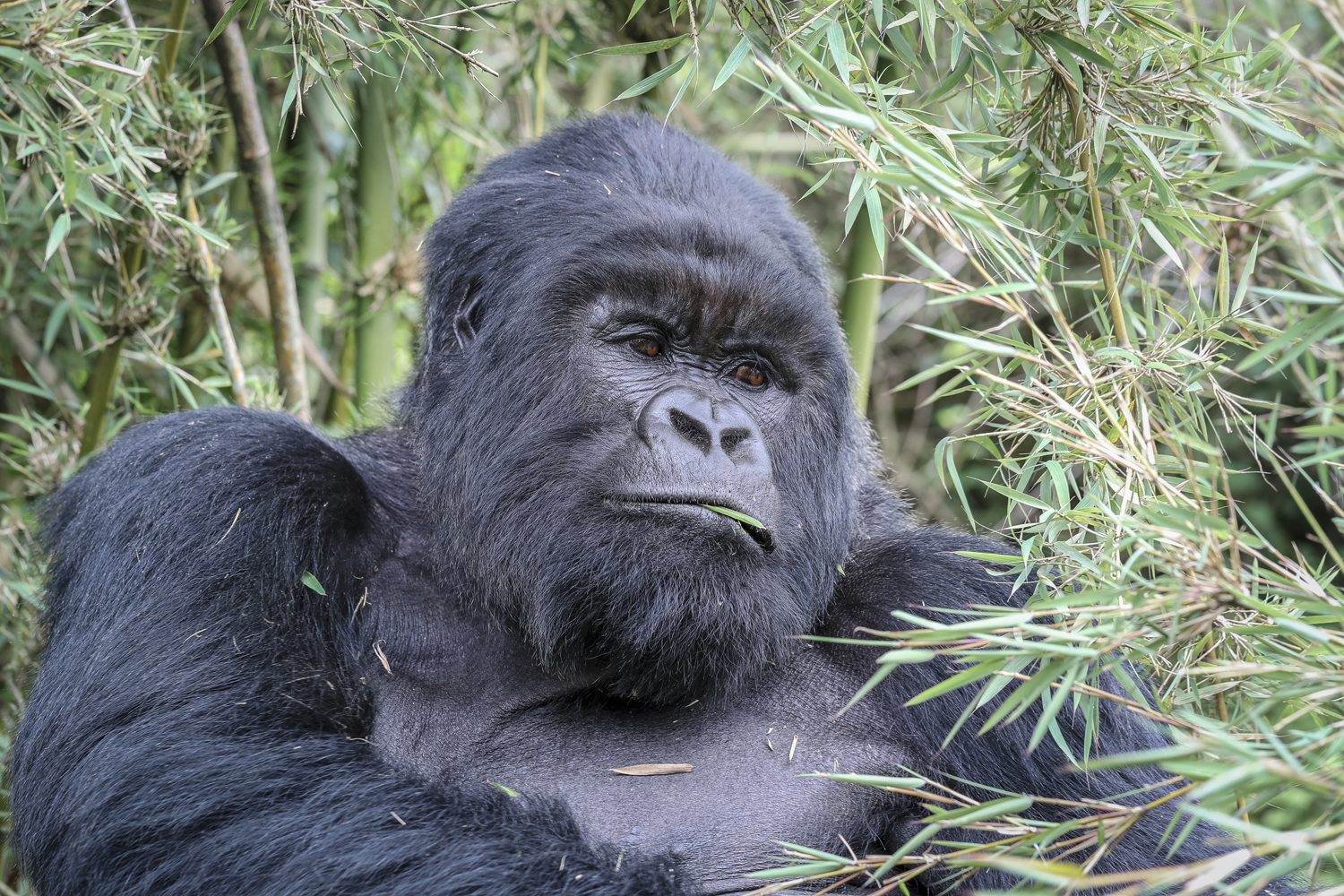
One of the most distinguished roles in the ranger family is the tracker, and the trackers are the oldest guardians among the Rwanda park rangers. Trackers in Volcanoes National Park have, in a deep sense, grown up with the forest: they can read a broken branch, a night nest, a twist of bamboo stem, the entire code through which a gorilla’s movement is written, and they know each family and each silverback by name. Their morning reports, recording where every family is, how large it is, and whether any member is sick or missing, are the collected intelligence that the conservation programme runs on.
Some trackers carry decades of experience. The older generation began their work when the gorilla population was at its lowest and the forest was a battleground, and they have watched, over forty years, the population rise from the low hundreds to more than a thousand. There is a bond between the veteran trackers and the silverbacks they follow each day that cannot be photographed, only described: two old companions at opposite ends of the species scale, each of whom has spent a lifetime reading the other’s world.
None of this is academic. The trackers’ information determines where the trekkers go, which families the veterinarians check, and when a group must be left alone. When a respiratory cough is reported in a silverback, it is the trackers who confirm it. When a new baby gorilla is born, it is the tracker who sees it first; when a gorilla disappears, it is the tracker who goes looking. The entire apparatus of gorilla conservation rests on these trained eyes and legs.
Rwanda Park Rangers as Guardians of Community Conservation
Rwanda’s rangers are not only the force on the boundary; they are the bridge to the people across it, and the Rwanda park rangers are the guardians of that trust. Many of the rangers come from the very communities that border the parks, so that when a farmer sees a ranger walking past, it may be the same child who went to school in the village, now in uniform. That trust is one of the most precious assets of the protection system, and the work of the guardians extends far beyond the fence.
In the village fringe, the rangers explain the buffer zone: why the beehive fences are built, how crop damage from elephants is handled, what the revenue-sharing money pays for when it returns to the villages. When a farmer loses maize to an elephant, the local ranger is usually the first official to arrive, and the way the issue is handled decides whether the community grumbles against the park or supports it. The ranger, in that sense, holds in his hands a piece of the entire model: for the village to be on the park’s side, the ranger must be on the village’s side.
The change in the relationship is measurable. Once, the park was a rival for the land; now, the villages defend the ranger’s office, the schoolchildren draw the gorillas, and parents speak of a career in the uniform as an ambition for their children, a story that Rwanda’s official tourism board tells to visitors. Enforcement is still there, but it is now supported by community goodwill. Where there is goodwill, the protection multiplies: the rangers patrol the forest, and a thousand eyes in the villages watch the boundary with them.
Women of the Wild
A striking change in the ranks of the Rwandan rangers is the growing number of women, who now serve among the Rwanda park rangers as some of the guardians the communities trust most. In the savannah parks such as Akagera, women serve among the patrol units and the anti-poaching teams, and in the volcanoes, women are a visible part of monitoring and guiding. A profession that once belonged almost exclusively to men is now one of the most diverse in Africa, and Rwanda has become a regional example of what it means to open the ranger’s uniform to women.
The women’s careers have changed what local girls see as possible. A girl who grows up in the shadow of the mountains, whose family farms the hard-won fields, who hears the rangers’ stories at the village well, can now imagine herself in the uniform. The ranger story in Rwanda is therefore not only a story of animals; it is a story of hope among the communities, of parents who now take for granted that a daughter can guard the forest.
The diversity strengthens the whole force. In the villages, the women rangers often have the first and deepest conversations, and the schools respond warmly when a woman in uniform visits. The patrol that includes women commands a different kind of trust and a different network, and it reflects the people it serves and the country it protects. The forest needs all hands, and Rwanda’s provinces are all on deck.
The Long Years and the Quiet Risks
The long years are the quiet price the Rwanda park rangers pay as guardians of the forest, and for all its beauty, the ranger’s work is a long river of risk. In the volcanoes, the weather is a harsh enemy of its own; in the savannah, the elephants are heavy and unpredictable, the buffalo are vigilant, and the rhino, the rarest and the most dangerous, will treat the careless visitor as a threat. The men and women of the patrols walk every day, through a forest that has its own dangers, and they walk it knowing that no patrol ends with a total guarantee.
The Rewards of the Work
There is no reward in the ranger’s life without consequence. The pay is modest for the nobility of the role, and the life of patrol imposes long absences from the village, the family, the farm. Yet the rangers who have spent their entire careers in the forest stay for the love of it: for the day when a silverback they protected as an infant returns to them as an adult, for the day a child in the village asks to become a ranger, for the day they count the gorillas and the number has grown again.
That tireless work is why the guardians of Rwanda’s parks deserve more than respect; they deserve the support of every visitor. Many of them have lost colleagues, men and women, and their history with poachers runs deep. The rangers do not do it for the glory; they do it because the forest is their whole life’s meaning, and because they have understood that conservation is not a campaign with an end date. It is a long, daily, uncounted labour, and it never ends.
- Dawn monitoring of every gorilla family, every day of the year.
- Anti-poaching patrols and snare sweeps across the parks.
- Community engagement and buffer-zone support.
- Guiding and protection of trekkers in the forest.
- Reporting and data collection that drives conservation decisions.
The Rangers You Meet on Trek
When you climb toward the mist in Volcanoes National Park, or follow a lion track across the plains of Akagera National Park, you will be in the hands of the rangers, the same guardians of the forest described throughout this guide. The man who raises a machete to clear the path, the woman who reads the bent bamboo, the tracker who announces the gorillas to the group, the anti-poaching captain who secured the boundary before the first engine started, they are all part of the same family, and the family carries the forest.
The trekking that supports conservation in Rwanda pays for the rangers’ salaries, their training, and their equipment, with the Rwanda Development Board overseeing the park budgets, because the permits and fees that a trip brings are a significant part of what keeps the protection intact. It is not just the view that the visitor pays for: it is the patrol, the veterinary team, the monitoring teams, and the trackers that the forest needs.
A Final Word
So when your trek ends and you shake the hand of the guard who guided you, stop and think of the work that made it possible. Before dawn, in the rain, in the cold, it is the rangers who were already there. They walked in the dark so that you could walk in the light. They came to the mountain daily so that the gorillas could have a home. Rwanda, the small country with the huge hearts of its guardians, protects the forest with everything it has.
And for a moment, at the end of your trip, do something simple: meet the rangers, thank them, shake their hands. You are holding in that hand the life of the forest, the slow careful years of the men and women who have held the line before you. The rangers are the guardians of the forest, they are what the whole miracle stands on, and they deserve a place in the story you take home with you.